

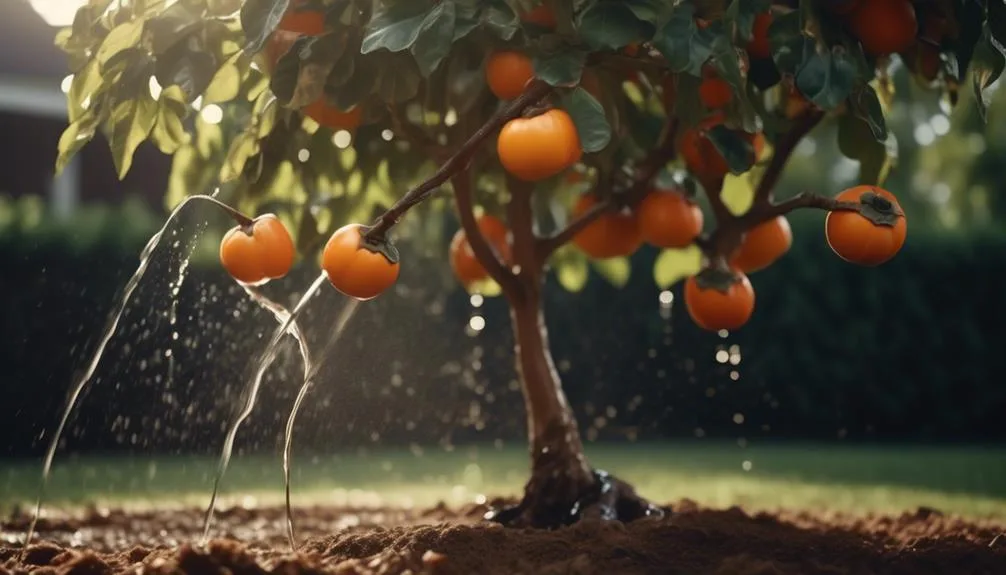
Properly watering persimmon trees is crucial for their health. It's a delicate balance that requires considering their unique needs. So, how do you make sure your persimmon trees get the right amount of water?
Let's explore the key factors to master this essential aspect of tree care.
Key Takeaways
- Water persimmon trees deeply and evenly throughout the growing season, ensuring watering penetrates the root depth of up to 3 feet.
- Adjust watering frequency based on weather conditions, increasing during hot and dry periods and decreasing during cooler and wetter periods.
- Regularly monitor soil moisture and adjust watering schedule accordingly, maintaining consistent soil moisture levels throughout the growing season.
- Utilize deep watering techniques and delivery systems such as drip irrigation to encourage deeper root growth and avoid surface runoff.
Watering Frequency
To ensure healthy growth, water your persimmon trees deeply and evenly, providing them with consistent moisture throughout the growing season. Persimmon trees have a deep root system, which can extend up to 3 feet in the soil. This means that watering should penetrate to this root depth to ensure proper hydration.
During seasonal variations, such as hot and dry periods, increase the frequency of watering to prevent the soil from drying out completely. Conversely, during cooler and wetter periods, adjust the watering frequency to prevent waterlogging the soil.
It's important to monitor the soil moisture regularly and adjust your watering schedule accordingly. By understanding the root depth and adapting to seasonal variations, you can effectively water your persimmon trees to support their healthy growth and fruit production.
Recommended Products

Accurate Soil Moisture Detection: The XLUX Soil Moisture Meter can tell you if the soil deep inside your pot or garden is dry, moist or wet; whereas your eyes and fingers can only determine the moisture level of the soil surface. The probe is 5.5 inches (14 cm) longer than regular styles, allowing it to measure the soil moisture at the bottom of larger and deeper flower pots.

Trusted Since 2015: Become one of the many plant lovers who rely on the proven accuracy of XLUX. Established in 2015, our soil moisture meter has earned over 60,000+ verified ratings for its consistent performance. While many many newer brands come and go, we provide the long-term reliability and quality that American households have trusted for over a decade.

Accurate Soil Moisture Detection: The XLUX Soil Moisture Meter can tell you if the soil deep inside your pot or garden is dry, moist or wet; whereas your eyes and fingers can only determine the moisture level of the soil surface. The probe is 5.5 inches (14 cm) longer than regular styles, allowing it to measure the soil moisture at the bottom of larger and deeper flower pots.
Soil Moisture Requirements
Maintain the soil moisture levels consistently to support the healthy development of your persimmon trees throughout the growing season. Understanding the soil moisture requirements is crucial for the overall health and productivity of your trees. Here are some key points to keep in mind:
- Root Depth: Persimmon trees have shallow root systems, so it's essential to maintain moisture in the top 12-18 inches of soil where the majority of the roots are located.
- Mulching Benefits: Applying a 2-4 inch layer of organic mulch around the base of the tree helps retain soil moisture, regulates soil temperature, and reduces competition from weeds, promoting optimal growing conditions.
- Watering Schedule: Monitor soil moisture levels regularly and adjust your watering schedule based on weather conditions to ensure the soil remains consistently moist but not waterlogged.
Watering Techniques
When watering your persimmon trees, ensure that the water penetrates the top 12-18 inches of soil to reach the shallow root systems for optimal moisture absorption. Deep watering encourages the roots to grow deeper, making the trees more resilient to drought and environmental stress. To achieve this, use a hose or drip irrigation system and water slowly to allow for deep penetration rather than causing surface runoff. Here's a table to illustrate the different watering techniques:
| Watering Technique | Description | Benefits |
|---|---|---|
| Deep Watering | Slow, deep watering to penetrate soil | Encourages deeper root growth |
| Drip Irrigation | Provides slow, consistent water flow | Minimizes surface runoff |
| Mulching | Helps retain soil moisture | Reduces water evaporation |
Adopting these techniques will ensure that your persimmon trees receive the appropriate amount of water without causing surface runoff, promoting healthy growth and fruit production.
Recommended Products

NO MORE HARD INSTALLATION - SET UP IN MINUTES. Tired of struggling with stiff barbed fittings? This drip irrigation system features quick-connect fittings that let you push, lock, and secure tubing effortlessly. No tools, no leaks, just a smooth setup experience. Enjoy a frustration-free installation and get your garden watering system running in minutes.
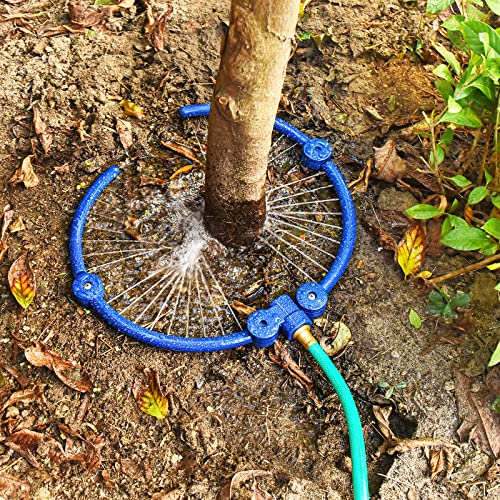
【Specially Designed for Trees and Shrubs】 The Watering Ring is a multi-purpose irrigation ring that attaches to a garden hose to efficiently water young trees shrubs vegetables or flower beds using drip or trickle irrigation.It directs water to the root perimeter of the plant to give them a good start during the first two growing seasons or through periods of drought.

SAVE TIME AND EFFORT: This plant watering kit has everything you need to get started with drip irrigation and precisely water up to ten individual plants. Use the kit to build, expand, or repair a drip irrigation system
Irrigation Considerations
Considering the importance of deep watering for encouraging deeper root growth and minimizing surface runoff, it's vital to now explore irrigation considerations for your persimmon trees.
When it comes to watering your persimmon trees, there are a few key factors to keep in mind:
- Drip Irrigation: Implementing a drip irrigation system can help deliver water directly to the roots, minimizing water loss due to evaporation and ensuring a consistent supply of moisture.
- Watering Schedule: Establish a regular watering schedule, especially during the tree's establishment period and dry spells. This will help maintain optimal soil moisture levels and support healthy root development.
- Monitoring Soil Moisture: Utilize moisture meters or simply check the soil moisture regularly to ensure it remains within the ideal range for persimmon tree growth.
With these irrigation considerations in mind, you can effectively support the health and vitality of your persimmon trees.
Recommended Products
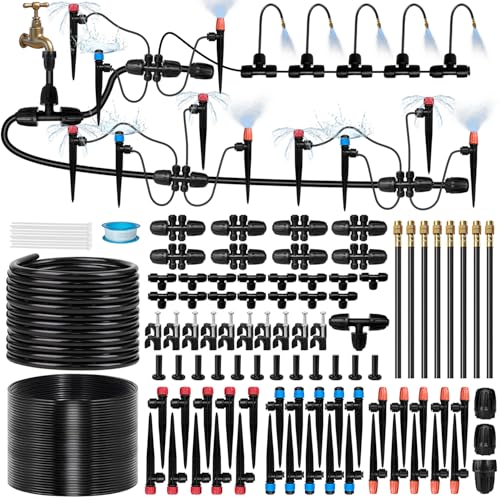
【Upgraded Tube Design & Water Saving】 Our garden watering system is upgraded to 1/2” diameter to support high water pressure. The 1/2” tee connector allows seamless splitting into 2 independent zones for customized watering schedules. By delivering moisture directly to root zones, this drip Irrigation system significantly reduces evaporation and runoff—saving more water compared to conventional sprinklers while eliminating the need for manual watering.

Unique Design: 1/4" drip emitter ensures wide water passages, large deep and wide cross-section that improves clogging resistance for Garden Pots, Trees and Shrubs

[Strong Deep Watering Flow]This pressure compensating drip irrigation spot watering dripper delivers a powerful and steady flow, specially designed for deep root watering of shrubs, small fruit trees, vines and deep root plants, penetrating soil to nourish deep roots
Signs of Overwatering or Underwatering
To determine whether your persimmon trees are receiving the right amount of water, it's important to be aware of the signs of overwatering or underwatering. Overwatering can lead to leaf discoloration, wilting, and even root rot, while underwatering may cause wilting and fruit drop. Monitoring these signs can help you adjust your watering practices accordingly. Here's a handy table to help you recognize these signs:
| Signs of Overwatering | Signs of Underwatering |
|---|---|
| Leaf discoloration | Wilting |
| Wilting | Fruit drop |
| Root rot |
Keep an eye out for these indicators to ensure your persimmon trees are getting the right amount of water.
Conclusion
To maintain the health and productivity of persimmon trees, it's crucial to water them properly. Understanding the watering frequency, soil moisture needs, and using the right techniques is key to ensuring your trees thrive.
Keep an eye out for signs of overwatering or underwatering, and make any necessary adjustments to keep your trees happy and healthy.
With the right care, your persimmon trees will continue to yield delicious fruit for years to come, providing a bountiful harvest and adding beauty to your landscape.
