


I tried making a temperature blanket a couple of years ago to track the weather in my area.
It was interesting to see how the colors changed as the seasons went by.
Since then I have looked at different ways to choose the colors and patterns for these projects.
Some ideas focus on using certain stitches while others play with the layout of the rows.
These are some options that seem practical for a year long project.
Bobble Cloud Garland for Monthly Temperature Tracking

A garland of small cloud motifs works as a temperature tracking project by assigning each cloud a color based on average monthly temperatures and connecting them on a simple yarn string. The dense bobble or popcorn texture creates the rounded cloud shape without needing complex shaping, and the compact size lets you finish one motif per month without committing to a full blanket. Pastel shades keep the color shifts visible while staying easy to match to temperature data ranges. This approach fits the decor category and hangs anywhere you need a quick visual record of the year.
What makes this idea useful is that each cloud stays small enough to complete in an evening, so you can update the garland month by month without a large ongoing project. The structure adapts easily by adding or removing clouds if your color palette changes, and the finished piece takes up little space compared with a blanket. For gifts, a design like this lets you customize the length and colors to match someone else’s local weather data. The simple string base also makes it straightforward to repair or expand later if you want to track multiple years.
Temperature Scarf With Color Coded Ranges

A temperature scarf is a long narrow panel worked row by row, with each color tied to a specific temperature range so the finished piece records a full year of weather data. You switch yarns when the daily high or low falls into a new bracket, creating clean horizontal stripes that stack into a smooth gradient. The narrow width keeps the project manageable while still producing something long enough to wear as a scarf. This format turns a simple data log into a wearable accessory.
What makes this idea useful is that the narrow shape works well as an actual scarf without turning bulky. You can swap in your own temperature breaks or yarn colors to match your climate and stash. A project like this works especially well as a year-end gift because the stripes reflect the actual weather someone experienced. The structure makes this a smart option for anyone who wants a long term project that stays portable and ends up functional.
Crochet Thermometer Plush for Daily Temperature Tracking
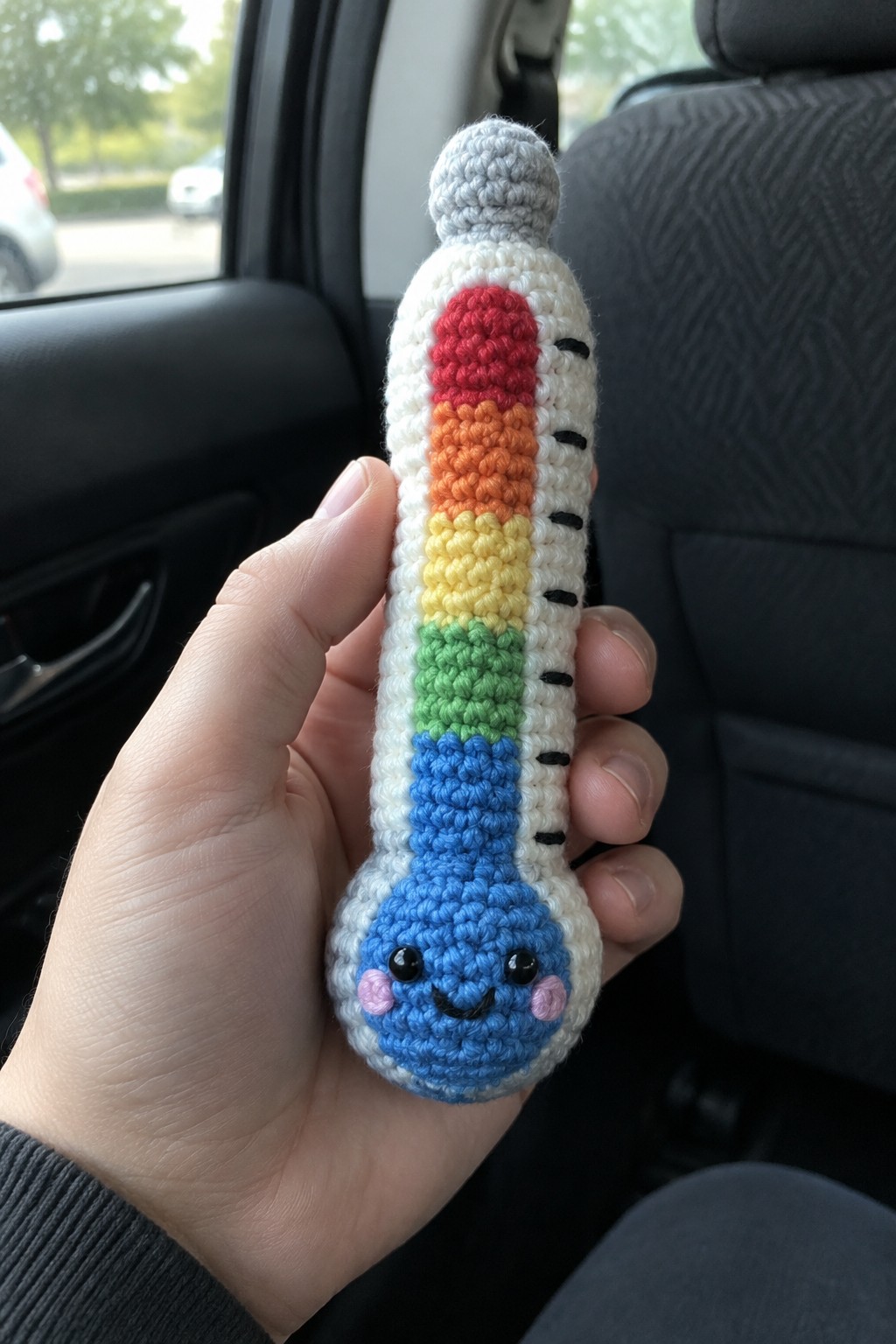
A crocheted thermometer turns temperature tracking into a small three-dimensional project where color bands stack vertically to mark different temperature ranges. The rounded bulb at the base holds simple face details while the straight body displays the color sequence, making the tracking system easy to read at a glance. This approach fits the plushie or desk decor category and keeps the shape functional so the color order stays visible without needing a large surface.
What makes this idea useful is how the narrow shape lets you finish it faster than a full blanket while still showing a full year of data. You can change the color order, shorten the length, or scale the whole piece up or down depending on where you plan to display it. For gifts, a design like this works well for anyone who tracks weather or wants a compact record they can keep on a shelf.
Monthly Granny Square Temperature Blanket

A granny square temperature blanket uses one square per month, with yarn colors chosen to match that month’s average temperatures. Each square follows the same basic pattern and size, so the finished pieces join easily into a standard afghan once the year is complete. The layout keeps the color changes visible in a grid, letting the temperature shifts show across the blanket without daily rows on a single large piece.
What makes this idea useful is that you finish one small square at a time instead of maintaining a long blanket throughout the year. The small scale makes this easy to adapt by swapping in different square patterns or adding extra rounds if you need a larger throw. A project like this works especially well as a lap blanket or couch throw where the monthly color blocks stay readable. You can also personalize it by pulling temperature data from a different city or by starting mid-year with the current month.
Heart Garland for Monthly Temperature Tracking

A garland of crocheted hearts lets you track temperature changes through color without making a full blanket. Each heart uses one color from your chosen palette, worked in a compact round shape with a decorative edge, then threaded onto a length of yarn or cord. The format works as both a year-long project and finished decor, since the hearts stay visible when hung and the string allows easy additions or rearrangements.
What makes this idea useful is the low yarn commitment and flexibility. You can complete one heart per month using your temperature data, then string them together once the year ends. The small scale makes this easy to adapt into a wall hanging, crib accent, or even a shorter version for a single season. For gifts, a design like this finishes quickly and still displays the full color sequence from your tracking year.
Chevron Ripple Temperature Afghan

A chevron or ripple stitch blanket tracks daily temperatures by changing colors according to a set range and working one or two rows at a time. The repeating V pattern creates clear horizontal bands that make the color progression easy to read across the full width. This style works best as a throw or bed blanket because the open texture stays light while still covering a large area.
What makes this idea useful is how the strong zigzag lines keep shifting colors distinct even when the palette stays within one family. You can adjust the number of chevron repeats to fit a twin or queen size without changing the stitch pattern. The design also translates well to cooler or brighter palettes if you want to track a different climate or season. For gifts the blanket grows fast enough that you can finish a full size in a few months of steady rows.
Concentric Mandala Blanket for Temperature Tracking

A mandala blanket made from concentric rounds lets each ring stand for a temperature range so the colors build outward in sequence. The circular layout keeps the data readable as a single growing shape while different stitch patterns between rounds create natural breaks between color bands. This approach suits a decor piece like a lap blanket or wall hanging where the full year stays visible without rows or grids.
What makes this idea useful is the simple way you can add or remove rounds to fit your exact number of data points. Start small for a table mat or grow it larger for a throw by changing hook size or yarn weight. The radial structure also works for gifts because the finished size stays easy to customize once you pick your color set.
Bobble Rows for Daily Temperature Tracking

A temperature blanket worked in horizontal rows uses clusters of bobble stitches to create raised dots across the surface. Each row stands for one day or week, and the number or spacing of bobbles shifts with the temperature range so warmer periods show more texture while cooler ones stay flatter. The simple repeat of plain rows between bobble rows keeps the fabric stable and easy to count. This approach turns the blanket into a tactile record that still works as a usable throw.
What makes this idea useful is that the bobble count per row can be changed to match temperature brackets without rewriting the whole pattern. A project like this works especially well as a couch throw or bed blanket where the raised dots show up clearly in photos. For gifts, a design like this can be sized down to a lap blanket by dropping a few rows. The structure makes this a smart option for year-long projects since the rows build steadily and mistakes stay easy to spot.
Crochet Fruit Keychains

Crocheted fruit keychains use basic amigurumi construction to form compact pear, lemon, and cherry shapes in solid colors. Each piece adds a small leaf detail and a metal keyring for function as an everyday accessory or giftable item. The rounded forms and simple surface stitching keep the focus on color blocks rather than complex patterns. This approach suits quick projects that use small amounts of yarn.
The small scale makes this easy to adapt by changing the fruit type or swapping colors to echo a temperature blanket palette. A project like this works especially well as a bag charm or zipper pull when keychains are not needed. For gifts, a design like this can be made in sets using the same yarn as a larger blanket for matching pieces. The structure makes this a smart option for testing how certain colors read at a small size before starting a full year-long project.
Sun Motif Garland for Tracking Warm Temperature Ranges

Crochet small sun motifs in shifting shades of yellow and orange, then string them along a length of cord to create a hanging garland. Each motif uses a tight spiral center with pointed rays that let the color changes show clearly from one sun to the next. This format works as a linear temperature record that can be added to throughout the warmer months without committing to a full blanket. The compact size keeps the project portable and easy to store between seasons.
What makes this idea useful is the flexibility to adjust motif size or ray count when temperatures spike or drop within a narrow range. The structure makes this a smart option for renters or small spaces where a blanket feels too large. You can start with just a few suns and keep adding as the season advances, then hang the finished garland across a shelf or window frame. For gifts, the same pattern works well scaled down to a shorter string using only the recipient’s local temperature data.
Rainbow Striped Temperature Blanket

A temperature blanket built from horizontal stripes lets each color band stand for a week or month of recorded temperatures. The design uses simple rows of basic stitches so the color shifts create the main pattern without added motifs. This approach turns a standard throw into a record of the year while keeping the construction straightforward enough to work on over time. The blanket suits everyday use as a bed or sofa layer where the full length displays the sequence.
What makes this idea useful is how the even stripes keep the focus on the temperature data rather than complex patterning. You can change stripe width to match daily, weekly, or monthly tracking or swap yarn weights to adjust drape and warmth. A project like this works especially well as a large throw because the long format shows the full color run clearly. For gifts, a design like this can be adapted by selecting a custom palette that fits the recipient’s space instead of following a standard rainbow order.
Hexagon Motif Temperature Blanket

Crochet a temperature blanket by assigning each day’s temperature range to a color and working it into a hexagon motif with a contrasting center. The motifs join along their edges to build the blanket gradually, creating a scattered color layout rather than straight stripes. This format suits a full-year project because the hexagons stay small and portable until assembly.
What makes this idea useful is that you can finish motifs one at a time and join them whenever enough accumulate. The shape lets you change the overall outline or add extra rows without restarting the whole piece. For gifts, a design like this works well as a lap blanket since the finished size stays flexible based on how many days you track.
Mini House Keychain as a Quick Crochet Accessory

A small house motif crocheted in sections creates a compact keychain or bag charm. The rectangular body paired with a sloped roof gives the shape clear definition even at tiny scale, while color blocks mark the door, windows, and chimney. This approach keeps the project in the accessory or giftable item category and requires only basic color changes rather than intricate patterning.
The small scale makes this easy to adapt by swapping roof or trim colors to match a real home or personal palette. A project like this works especially well as a last-minute gift or key fob since it uses scraps and finishes fast. You can add a loop or keyring attachment during the final round to keep the back clean. For everyday carry, the dense stitches hold their shape without extra stuffing.
Textured Squares for Tracking Temperature Ranges

Small crocheted squares with changing stitch patterns work well as the building blocks for a temperature blanket. Each square can represent a specific temperature range through its color choice and texture, letting you record daily or weekly data without committing to one repeating stitch across the whole project. The modular format keeps the blanket easy to expand or rearrange if your color plan shifts mid-year.
The small scale makes this easy to adapt by adjusting square size or adding more texture changes for finer temperature increments. You can join the squares in straight rows for a clean grid or stagger them for a different layout. This approach stands out on Pinterest because the visible stitch variety shows the data story even before the blanket is finished.
Star Shaped Temperature Pillows

A temperature blanket can be worked in a continuous spiral that forms a five pointed star instead of a rectangle. Each round changes color according to the daily high or low, building a visible record from the center outward. The finished piece stuffs into a pillow cover, turning the data into a usable cushion. The bumpy popcorn or bobble border adds texture that outlines the star points without extra finishing.
The small finished size makes this easy to complete in a single season and simple to store or gift. You can adjust the number of rounds to match the exact days you want to track or scale the star down for a set of matching cushions. A project like this works especially well as bedroom decor because the radial color bands read clearly from across the room. For gifts, a design like this lets you pick a color sequence that matches the recipient’s location or the year the data came from.
Center-Out Gradient Square Temperature Blanket

A square blanket built from the center outward in joined rounds or motifs lets you track temperatures by changing colors as the project grows. Each new round or section can represent a day, week, or month, with the color shifts forming visible rings that show the full year at once. The open stitch pattern and square format create a lightweight throw that drapes well over furniture or beds. This approach fits the decor category because the finished piece works as both a functional blanket and a visual record.
What makes this idea useful is that the shape stays balanced as you add rounds, so you never have to rearrange pieces or worry about uneven edges. You can start small and keep going until the blanket reaches the size you want, which makes it easy to adapt for different bed sizes or even turn it into a wall hanging. The gradient does most of the visual work, so you can focus on just picking the next color based on your temperature data. A project like this also photographs clearly for sharing progress, which helps if you want to document the year online.
Crochet Cupcake Sets for Monthly Temperature Tracking

Small crocheted cupcakes combine a simple cylindrical base with a textured, piled top layer that can change color to mark temperature ranges. Each cupcake represents one month or temperature bracket, so the full set becomes a compact record of the year without needing a large blanket. The round shape and stacked construction keep the pieces stable on a shelf or desk while the color shifts do the tracking work. This format fits the decor or giftable item category and stays small enough to complete one per month.
What makes this idea useful is the option to finish and display pieces gradually instead of waiting for a full blanket. You can vary the top texture or add small details like dots to highlight temperature spikes without changing the overall size. For decor, this kind of shape works especially well in kitchens or offices where a blanket would take up too much room. The small scale also makes it easy to adapt the same pattern for keychains or package toppers if you want to share the project.
Hanging Monthly Pocket Organizer

A temperature blanket can be turned into a wall-hanging organizer made of twelve crocheted pockets arranged in a grid. Each pocket is worked in a color tied to that month’s temperature range, then joined together and hung from a dowel with a simple braided cord. Month labels stitched onto the front keep the layout clear while the open pockets give a place to tuck daily swatches, notes, or small mementos.
What makes this idea useful is that the finished piece serves as both tracker and storage. You can change the grid size to match your wall space or swap pocket colors to track rainfall or daylight hours instead. A project like this works especially well in a hallway or craft room where you want the year’s colors on display without taking up blanket space.
Crochet Leaf Motifs for Monthly Temperature Tracking

Crocheted leaf motifs let you track temperature by assigning each leaf a color that matches a temperature range or month. The design uses a raised center line in a contrasting shade to form the vein, which adds definition without extra layers. These flat pieces suit appliqué work or can be joined edge to edge to form sections of a blanket. The repeated shape keeps the project manageable while the color shifts carry the data.
The small scale makes this easy to adapt by changing hook size to fit more or fewer leaves across a row. You can keep the same leaf pattern and simply swap colors to match your local yearly data, or mix leaf shapes slightly for visual interest without changing the overall layout. For gifts, a set of these leaves works well as a compact wall hanging that still shows a full year of color changes. The structure makes this a smart option for anyone who prefers working in small units rather than large continuous fabric.
Striped Temperature Throw in Layered Neutrals

A temperature blanket records daily or weekly temperature data through color changes worked in horizontal rows across the full width of the fabric. This version forms a standard lap or sofa throw with thick stripes that shift gradually through greens, blues, grays, creams, and browns. The simple textured stitch creates a dense, even surface that shows each color block clearly without complicated shaping. The rectangular shape and balanced stripe widths make it function as both a practical blanket and a subtle record of seasonal changes.
What makes this idea useful is how the stripe width can be changed from single days to full weeks or months to match the time frame you want to track. The neutral color range fits most rooms and can be swapped for brighter or cooler tones if your local climate runs to different temperatures. A project like this works especially well as a year-end gift because the finished size stays easy to adjust by adding or subtracting rows.
Moon Mobile with Shifting Color Rows

Crocheted crescent moons worked in a tight spiral stitch form the main elements of this hanging mobile, each finished in a different shade that moves from off-white through gray to blue-gray. Small yellow stars are added on separate strings, and the whole set hangs from a simple wrapped ring. The graduated colors and repeated moon shape create a clear visual sequence without needing extra embellishment. This type of project falls into the decor category and works as a compact way to display color changes.
What makes this idea useful is how the color shifts can directly mirror a temperature tracking system across the year. The small scale makes this easy to adapt by adding more moons for additional temperature ranges or changing the yarn colors to match your local data. A project like this works especially well as a wall or ceiling piece when a full blanket feels too large. For gifts, a design like this can be adjusted to a single color family or scaled down to fit a smaller space.
Weather Motif Garland for Temperature Tracking
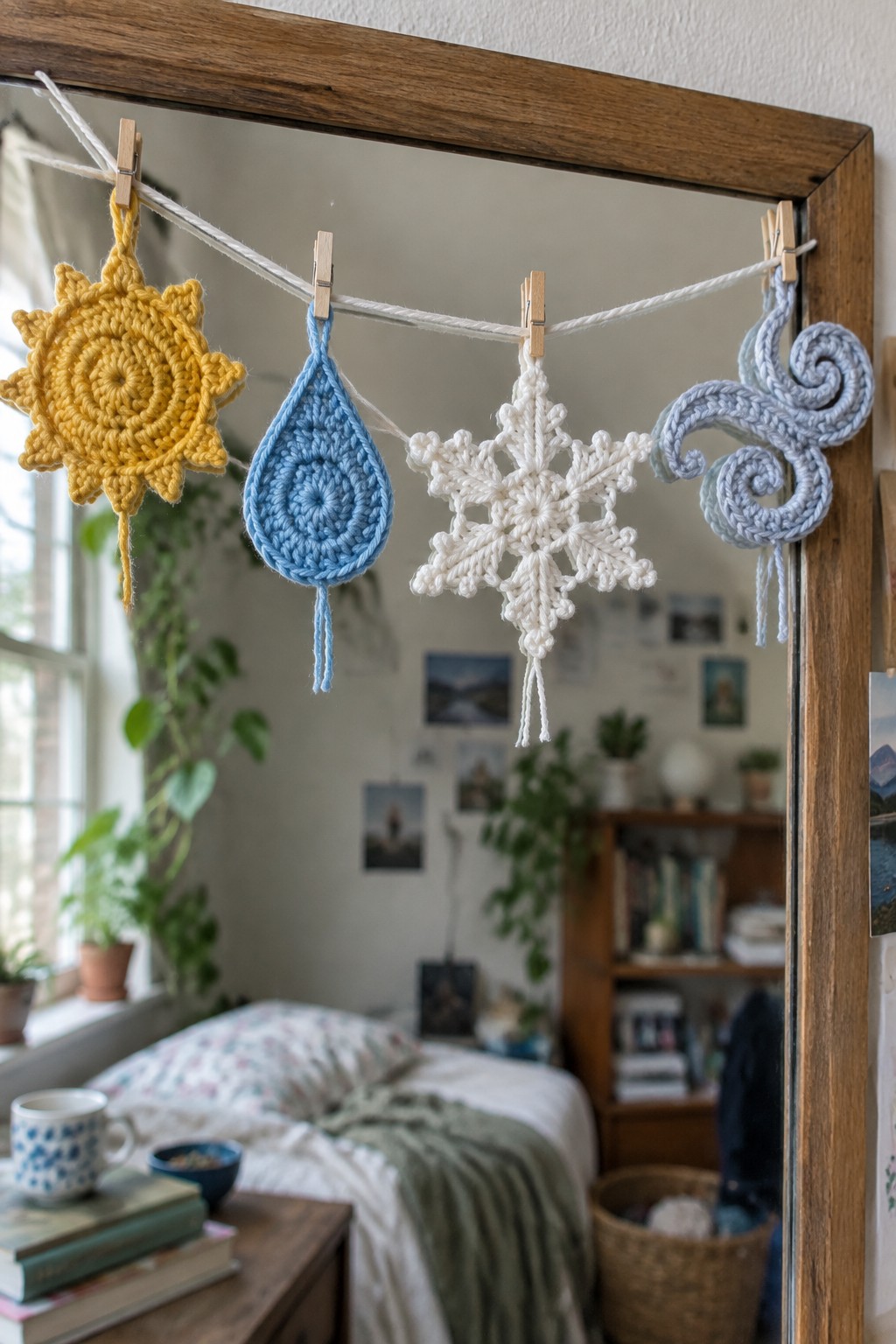
Crochet small weather symbols such as suns, raindrops, snowflakes, and swirls, then hang them on a simple string to create a garland. Assign each motif to a temperature range so the finished piece records the year’s weather patterns through shape and color instead of rows alone. The circular centers and radiating details keep the pieces compact while the limited palette makes temperature shifts easy to read at a glance. This approach turns a garland into a functional temperature project that can later be sewn onto a blanket or used as wall decor.
The small scale makes these motifs quick to finish and simple to adapt for different data sets. You can swap in new symbols for unusual temperature spikes or resize the same pattern for blanket squares. A project like this works especially well as a lightweight alternative to a full blanket when space or time is limited. For gifts, a design like this gives the recipient a finished record they can rehang each season.
Frequently Asked Questions
1. How do I select a color palette that works well for tracking temperatures over a full year? Start by deciding on 8 to 12 colors that represent temperature ranges in 5 or 10 degree increments, such as blues for cooler days and oranges or reds for warmer ones. Test the palette by crocheting a small swatch for each range using your chosen yarn. This helps ensure the colors flow nicely together when the blanket grows. Many of the 22 ideas use gradient or themed palettes, so pick one that matches your home decor or personal style for long term enjoyment.
2. What yarn weight and fiber type work best for a project that lasts an entire year? Worsted weight acrylic or cotton blends are ideal because they are durable, easy to care for, and hold up to daily handling without stretching too much. Aim for the same brand and dye lot if possible to avoid color shifts, or plan to buy extra skeins at the start. These fibers also make the finished blanket machine washable, which is helpful after months of adding rows or squares.
3. How can I stay consistent with daily temperature tracking without falling behind? Set a simple routine such as checking the weather app each evening and noting the high temperature on a calendar or spreadsheet. If you miss a day, add the row or square the next time you crochet to keep the sequence accurate. Some of the 22 ideas include built in trackers like printable charts or apps that make this step easier and reduce the chance of errors over 365 days.
4. What if I want to start one of these blankets partway through the year? You can begin with the current date and continue forward, or gather historical temperature data from a reliable weather site to fill in past months. Adjust the size by making fewer rows or using a smaller hook for the remaining sections. Several dreamy ideas in the collection adapt well to shorter timelines by focusing on seasons or using larger blocks for quicker progress.
5. How do I finish and care for the blanket once the year is complete? Once all temperatures are added, crochet a simple border in a neutral color to frame the design and prevent curling. Weave in all ends securely and wash the blanket on a gentle cycle before use. This step gives the project a polished look and ensures it lasts for years as a meaningful record of the seasons.
