


Fall weather makes me want to pick up my crochet hook again.
I’ve been looking at blanket patterns that use rust and mustard tones along with other earthy colors.
Some of these are ones I’ve tried before and others are new to me.
They seem like good projects for the next couple of months.
I decided to put together a list of them.
Granny Square Throw with Tassel Border

A granny square blanket built from joined motifs creates a flexible throw that works on a couch or bed. The squares are arranged in rows with an earthy mix of rust, mustard, olive, and brown so the colors shift gradually across the surface. Tassels added to one edge give the blanket weight and keep it from sliding when draped. This approach fits the decor category because the finished piece is large enough to use daily but simple to fold and store.
What makes this idea useful is how quickly you can change the size by working more or fewer squares. The tassel fringe can be left off or replaced with a plain border if you want a different finish. A project like this works especially well as a seasonal layer that pairs with existing furniture without needing new pillows or curtains. For gifts, the same square layout can be scaled to a lapghan or baby size using the same color order.
Chevron Ripple Bed Throw

A ripple or chevron crochet blanket built from repeating zigzag rows works well as a full-size bed throw. The design uses wide horizontal stripes in rust, mustard, and cream that shift direction at regular intervals to form the peaks and valleys. This structure keeps the pattern simple to track while the color changes add interest across the surface. It fits the category of seasonal home decor that layers easily over neutral bedding.
What makes this idea useful is how the stripe repeat lets you swap colors or widths without changing the base pattern. You could shorten the length for a sofa throw or narrow the overall width for a child-size version. The earthy tones blend with other fall pieces like pillows or curtains without clashing. For gifts, a project like this stands out because the finished size and pattern both read as substantial yet stay straightforward to complete.
Diagonal C2C Blanket with Stepped Color Blocks
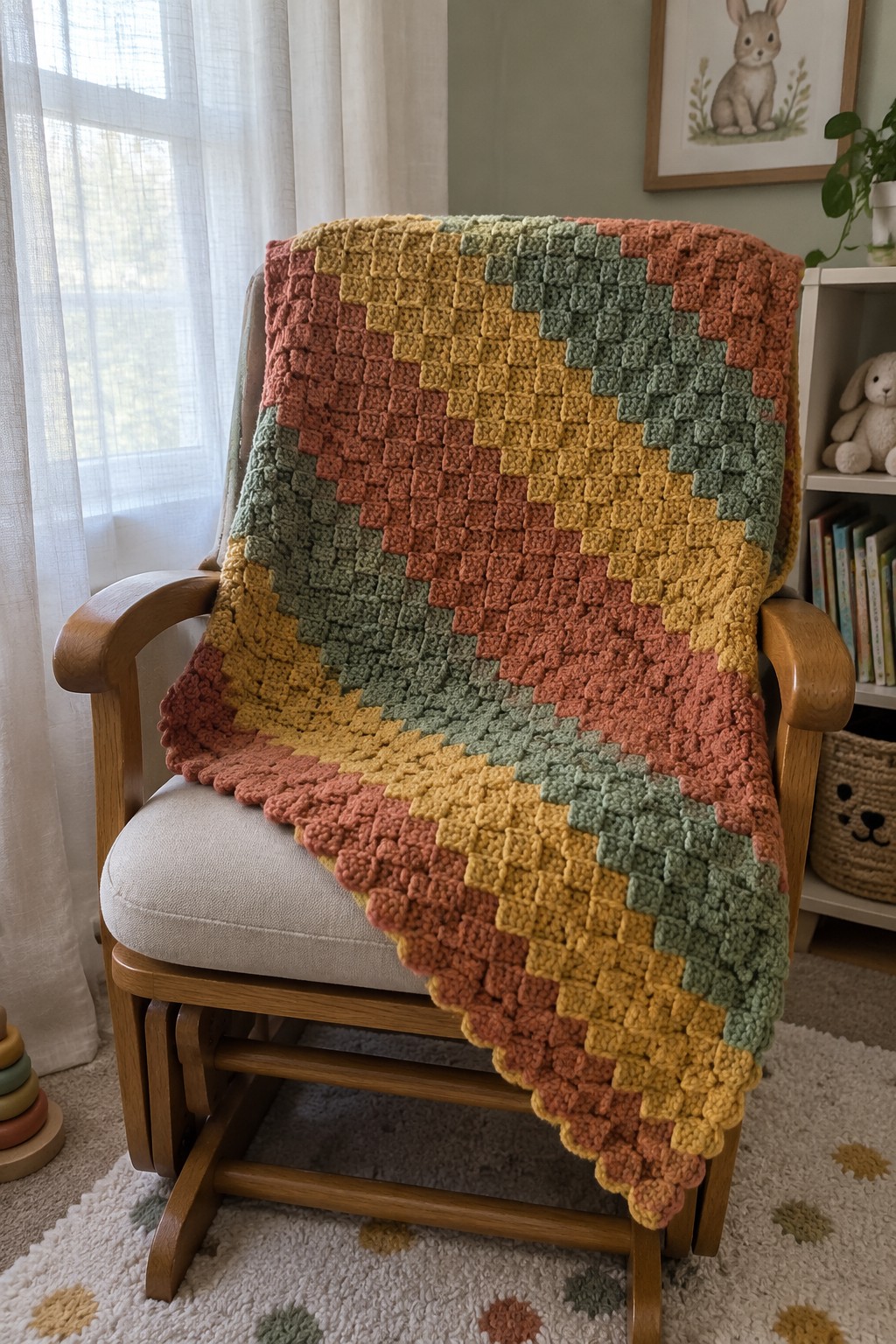
A corner-to-corner crochet blanket made from diagonal rows of solid color blocks produces a clean geometric pattern that shifts naturally across the surface. This construction suits a medium-size throw meant for chairs, sofas, or beds in living areas. The simple block layout in rust, mustard, sage, and terracotta creates visual movement without extra shaping or complex stitches. The project fits the home decor category and works as a lightweight layer that can be folded or draped.
What makes this idea useful is how quickly the size can be adjusted by changing the number of starting chains or rows. You can swap any of the four colors for others already in your stash or match existing room textiles. A project like this works especially well as a weekend make because the repeating diagonal sequence requires little counting once the first few rows are set. For gifts, the same pattern scales down easily into a baby blanket or pet throw by stopping the increases earlier.
Bobble Texture Throw in Rust and Brown

A blanket built from rows of raised bobbles creates a dotted, three-dimensional surface that catches light across the fabric. This project works as a lap or sofa throw in the home decor category. The variegated yarn shifts through rust, brown, and ochre on its own, so the bobbles read clearly without extra colorwork. The dense stitch pattern gives the piece weight and structure while keeping the overall shape simple and rectangular.
What makes this idea useful is how the yarn does the color blending, letting you focus on repeating one texture stitch. You can change the starting chain to make a smaller couch blanket or a wider bed layer without altering the pattern. For gifts, a design like this finishes quickly once the repeat is established and travels well as a rolled throw. The structure makes this a smart option for anyone who wants a substantial blanket that still uses only one skein type.
Striped Bobble Throw with Scalloped Border

A blanket worked in repeating stripes of mustard, rust, and cream uses bobble rows to create raised dots that stand out against the smoother sections. The scalloped border in solid mustard yarn gives the edge a finished look without extra trim layers. This style suits a medium throw meant for a couch or bed, where the horizontal pattern can be seen from a distance.
What makes this idea useful is how the bobble rows break up the stripes and add texture with a simple repeat. You can change the stripe widths or drop one color to fit a smaller space or different yarn stash. For gifts, the same pattern works as a lap blanket or baby size by shortening the length and keeping the border width the same.
Patterned Throw with Repeating Motif Bands

A crochet blanket built from horizontal rows of repeating motifs creates a balanced design that works as a full-size throw. The color shifts between rust, olive, and beige sections keep the eye moving across the surface while the motifs stay consistent in scale. This approach fits the decor category because the finished piece layers easily over furniture or at the foot of a bed.
What makes this idea useful is how the banded layout lets you swap in new colors every few rows without reworking the whole pattern. You could shorten the length for a lapghan or widen the motifs slightly for faster progress on a larger bed blanket. For gifts, a design like this travels well since it folds flat and shows the colorwork clearly in photos.
Pumpkin Motif Round Throw
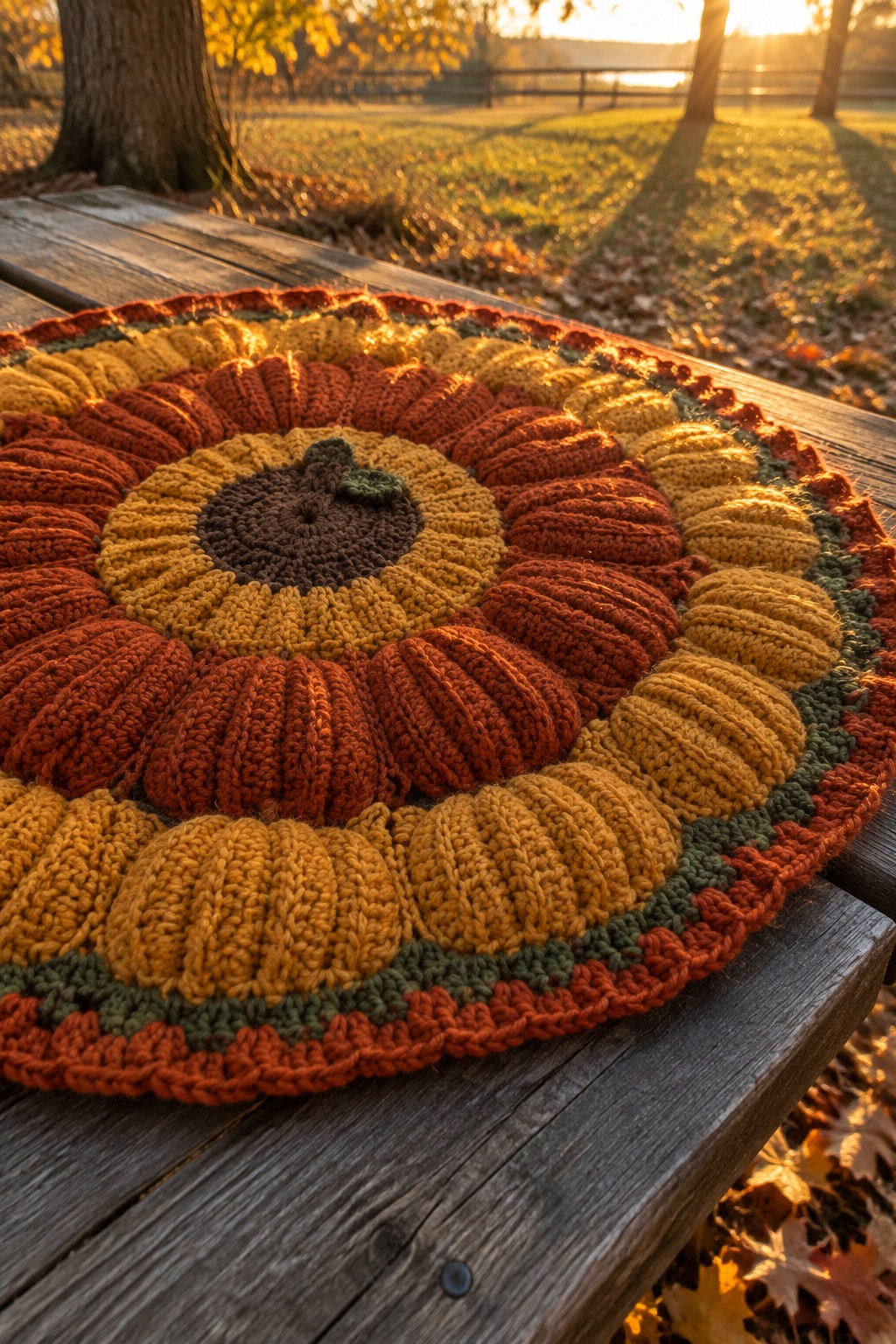
A round crochet blanket centered on a pumpkin motif works as a lap throw or small floor mat for fall. The design stacks concentric rings of ridged texture around a dark center to form the pumpkin, then shifts outward through mustard and rust bands before finishing with a narrow green edge. This layout keeps the eye moving from the middle out while the repeating bumps give each ring its own depth without extra stitches.
The color choice does a lot of the work here by limiting the palette to three main tones that still read as autumn. You can change the finished size simply by adding or removing rings, which makes the same pattern suit a chair pad or a larger bed blanket. For gifts, a design like this stays practical because it uses basic increases and works in any medium-weight yarn you already have on hand.
Earth Tone Basketweave Throw with Leaf Appliqués
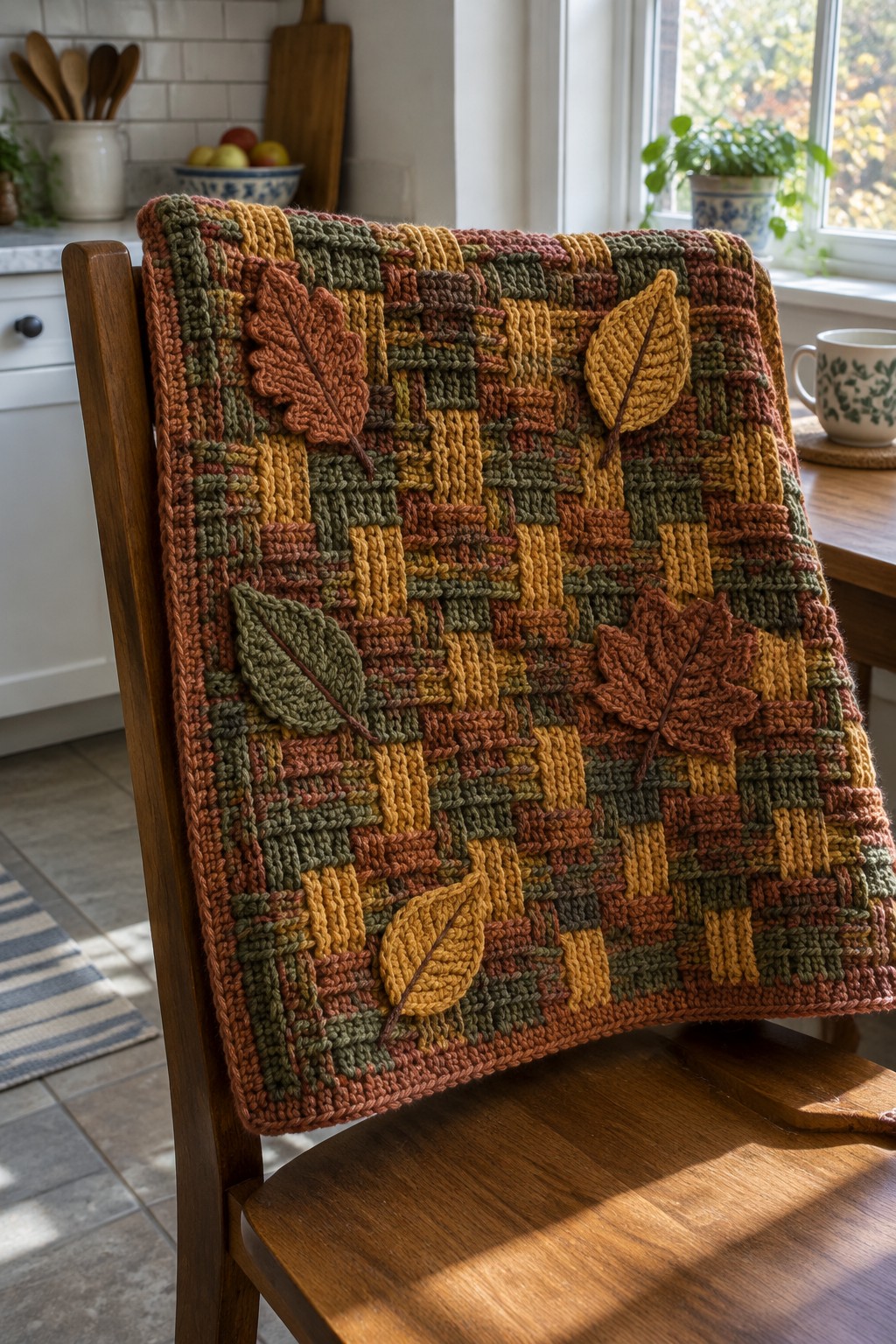
A crocheted throw worked in a dense textured stitch that mimics a woven or basketweave pattern uses short color changes across rust, mustard, olive, and terracotta yarns to build a plaid-like effect. Separate leaf shapes are crocheted in the same palette and sewn onto the surface in scattered positions. This type of project fits the decor category and works well as a medium-sized lap or chair throw because the rectangular shape stays simple while the surface details supply the main interest.
What makes this idea useful is that the appliqué leaves can be added in any quantity or arrangement after the base is finished, so you can adjust the look without reworking the whole piece. The same base pattern could be made larger for a sofa or smaller for a baby blanket, and the leaf count can be reduced for a quicker version. For gifts, a design like this stands out on Pinterest because the added motifs give a clear seasonal focus that plain striped blankets do not.
Wide-Stripe Textured Throw in Rust and Mustard

A blanket worked in wide horizontal stripes of rust and mustard uses a repeating cluster or shell stitch to create raised texture across each band. The simple two-color repeat keeps the pattern easy to track while the texture gives the surface visual interest. This approach suits large throws meant for sofas or beds where the stripes can show off the full length without complicated color changes.
What makes this idea useful is how the stripe width can be changed to match any blanket size or yarn amount on hand. The design works especially well as a quick seasonal layer because only two colors need to be carried at a time. For gifts, keep the same stitch and swap in different earthy tones to fit the recipient’s room.
Striped Throw with Tassel Corner

A striped crochet blanket makes a practical lap throw or car blanket for cooler months. The design uses wide horizontal bands of rust, mustard, and neutral browns that repeat across the surface for a clean, graphic look. A single tassel attached at one corner finishes the edge without adding much extra work. This project falls into the category of seasonal decor or quick giftable textiles.
What makes this idea useful is how easily the stripe widths and color order can be changed to fit different yarn scraps or room palettes. You can make the blanket smaller for a wheelchair lapghan or wider for a full bed throw. The tassel can be omitted or replaced with simple fringe if you want a faster finish. A project like this shows up well in photos because the strong color blocks stand out against plain backgrounds.
Pumpkin Hooded Baby Cocoon

This crochet project creates a hooded baby blanket shaped like a pumpkin. The main section is worked in the round with orange yarn to form a circular base that wraps around an infant. A wide yellow ruffle is added along the edge, and a small green stem with a leaf is attached to the hood to complete the pumpkin look. The design works as a seasonal wearable for newborns or as a photo prop.
What makes this idea useful is how the round shape and ruffle turn a simple blanket into something that closes naturally around a baby. You can easily change the main color or swap the ruffle for a different width to match other nursery items. The small scale also means it works well as a quick gift for fall baby showers or as a prop for monthly milestone photos. For decor, the same shape could be scaled up slightly to make a throw for a toddler bed.
Bobble-Stitch Throw in Shifting Autumn Stripes

A bobble stitch throw blanket works well when worked in wide horizontal bands that shift through rust, mustard, orange, and brown. The raised texture stands out against the flatter sections between color changes, while the scalloped edge and tassels give the lower border a clean finish that drapes over the sides of seating. This style fits the category of a medium-weight lap or sofa throw meant for everyday use rather than a full bed covering.
What makes this idea useful is how the stripe widths can be adjusted to use up partial skeins without disrupting the overall look. You can shorten the length for a chair-sized piece or widen the bands for faster progress on a larger version. The tassels add just enough weight to keep the bottom edge from curling when the blanket hangs over furniture. For gifts, the same pattern works in any three or four colors that already sit well together in your stash.
Bobble Stitch Stroller Blanket in Fall Colors

A bobble stitch blanket creates a raised, bumpy texture by working clusters of stitches into the same spot and pulling them tight on the front side. This version uses repeating rows of bobbles in a shifting palette of mustard, rust, and warm orange to form a compact cover. The small scale and soft drape make it practical as a stroller blanket or lap throw rather than a full bed size.
What makes this idea useful is the compact width that stays put on a stroller without slipping off the sides. You can easily change the starting chain length to turn the same pattern into a car seat cover or a larger sofa throw. The color repeats work well for fall decor because they blend with existing rust and gold tones in a room without needing extra accents.
Rust Circular Motif Throw

A blanket made from repeated circular motifs joined together produces an open, textured cover that drapes easily over furniture. The rust tone keeps the design grounded in fall colors while the repeating rounded shapes create visual rhythm across the surface. This style works as a full-size throw because the motifs build quickly and the open spaces prevent the fabric from feeling heavy. It fits the category of seasonal home decor rather than a fitted bedspread.
What makes this idea useful is how simple it is to change the finished size by adding or removing rows of motifs. The same pattern adapts well to smaller projects like a lap blanket or even a large wall hanging if you want something lighter. For decor, this kind of blanket works especially well layered over a neutral couch or chair where the color can stand out. You could shift the palette to mustard or olive by changing just the yarn while keeping the motif layout the same.
Mustard Bobble and Rust Chevron Panel Combo

A blanket built from alternating panels uses a dense bobble or popcorn texture in mustard yellow next to a chevron pattern in rust orange. The raised clusters create a chunky surface that contrasts with the angled ridges of the chevron, giving the finished piece clear visual separation between sections. This approach works as a throw or lap blanket where the two textures can be repeated side by side or in blocks. It belongs in the decor category as an afghan that relies on stitch contrast rather than added borders or fringes.
The small scale of these panels makes it easy to adapt by changing their width or repeating one texture more than the other across a full blanket. What makes this idea useful is how the two patterns balance each other so the design stays interesting without extra color changes or complicated joins. A project like this works especially well as a quick seasonal throw since each section can be worked separately and seamed later. You can shift the proportions or swap in other fall tones to match existing furniture or yarn on hand.
Granny Square Throw in Rust and Mustard

A blanket built from separate granny squares lets you mix rust, mustard, olive, and deep red without planning a single large color sequence. Each square starts with a small center motif and grows through rounds of changing shades before the pieces are joined with a consistent border color. The square format keeps the color shifts organized so the blanket reads as one piece rather than scattered scraps. This approach suits a medium-weight throw meant for a sofa or the foot of a bed during cooler months.
What makes this idea useful is how simple it is to change the finished size by adding or subtracting squares. You can work the squares one at a time in whatever order the colors appear, then join them once you have enough. For gifts, a design like this works especially well because the individual pieces travel easily and the final assembly can be done in a weekend. The structure also makes it straightforward to replace a few squares later if a color no longer fits the room.
Oak Leaf Vine Appliqué Blanket

A crocheted throw uses an open lace stitch as the base and adds oak leaf and acorn motifs that connect along curving lines. The appliqués sit on top of the fabric rather than being worked into it, so they create raised texture while the main blanket stays lightweight. The vine layout spreads the motifs across one side and corner instead of scattering them evenly. This keeps the project in the seasonal home decor category and makes the fall theme clear without covering the entire surface.
What makes this idea useful is that the motifs are made separately, so you can change their number or curve to fit any blanket width. The same vine can be shortened for a baby blanket or lengthened to run down a larger afghan. A neutral background lets you reuse the pattern with different leaf colors for spring or winter versions. The separate pieces also mean you can finish the motifs first and attach them last, which helps when you want to test placement before committing.
Bobble Stripe Throw in Mustard and Rust

A striped crochet blanket alternates solid rows in mustard yellow with bands of raised bobble stitches in rust orange. The pattern repeats across the full width to create a simple, graphic layout that suits a lap blanket or couch throw. The bobbles sit on a single background color in each stripe so the texture stays visible without extra color changes inside the rows.
What makes this idea useful is how easily the stripe widths can be changed to match any blanket size. A project like this works especially well as seasonal decor because the two-tone layout shows up clearly from across a room. The color choice does a lot of the work here by using two high-contrast fall shades that still blend with most living spaces. For gifts, shortening the length while keeping the same stripe sequence produces a quicker finish that still reads as a full blanket.
Rustic Patchwork Throw with Mixed Stripes and Blocks

A rectangular crochet blanket uses vertical ribbed sections across the top half and a grid of smaller blocks below, switching between solid panels and narrow stripes in rust, mustard, and warm brown. The design keeps the eye moving by varying the width and texture of each color section rather than repeating one pattern across the whole piece. This approach suits a medium-size throw meant for a couch or chair, where the warm palette blends easily with other fall textiles. The clear division between striped and blocked areas also makes the blanket simple to work in stages.
What makes this idea useful is the way the color changes do most of the visual work, so you can use up several skeins of similar tones without needing complex stitches. You can scale it down to a baby blanket by keeping only three or four blocks across, or widen it for a bed by adding more vertical panels. The structure also works well for scrap projects since each block or stripe can be finished with leftover yarn as long as the colors stay within the same family. For decor, this kind of layout stands out in photos because the lines stay straight and the color blocks read clearly from a distance.
Striped Throw with Pumpkin Appliqués

A striped throw blanket uses a neutral base fabric worked in wide horizontal bands of mustard and rust. Separate pumpkin shapes in the same colors are crocheted flat, each finished with a short stem, then sewn on as appliqués across the stripes. The pumpkins sit at different angles and sizes so the eye moves across the blanket without a rigid grid. This keeps the main fabric simple while adding a clear seasonal layer on top.
What makes this idea useful is that the appliqués can be added after the striped section is complete, so you can test placement or change the number without reworking the whole piece. The small scale of each pumpkin makes them good for using up scraps and lets you adjust the design for a baby blanket or a larger sofa throw. For gifts, you can keep the same stripe sequence and just vary how many pumpkins you attach. The contrast between the flat stripes and the raised shapes helps the blanket photograph clearly for pattern shares or project boards.
Frequently Asked Questions
What yarn weights and fiber types work best for creating cozy fall blankets in these colors?
Worsted weight acrylic or wool blends offer excellent stitch definition and warmth while holding up to regular use. Acrylic is machine washable and budget friendly, while wool adds natural insulation. For a softer drape, consider a cotton wool mix in rust and mustard shades to prevent pilling over time.
How do I scale the blanket patterns to fit different bed sizes or make them smaller for throws?
Start by checking the gauge in the original pattern and adjust your hook size if needed. Multiply the starting chain or motif count by the desired width and length ratio. Many of the earthy tone designs use repeating granny squares or stripes, so adding or removing rows keeps the color balance intact without altering the festive look.
Which color pairings from the rust, mustard, and earthy palette create the most balanced contrast?
Pair deep rust with soft mustard for a warm glow, then add olive green or taupe for grounding. Use mustard as an accent border on a rust main body, or alternate earthy browns with mustard stripes to mimic falling leaves. Test small swatches first to see how the tones interact under your room lighting.
Are these blanket ideas suitable for beginners, or do they require advanced stitches?
Several patterns rely on basic single and double crochet with simple color changes, making them accessible for newcomers. Others incorporate popcorn stitches or leaf motifs that build on those basics. Choose designs with fewer color shifts at first, then progress to the more detailed options once comfortable with tension control.
How should I wash and store finished blankets to preserve the vibrant fall colors?
Turn the blanket inside out and wash on a gentle cycle with cold water using a mild detergent free of bleach. Air dry flat to avoid stretching, and store folded in a breathable cotton bag away from direct sunlight. This approach prevents fading in the rust and mustard tones while keeping the earthy shades rich.
