Close Menu
    Fruit Tree Hub
    • Home
    • Apple Trees
    • Lemon Trees
    • Mango Trees
    • Orange Trees
    • More Trees
      • Best Fruit Trees
      • Apricot Trees
      • Cherry Trees
      • Fig Trees
      • Lime Trees
      • Mulberry Trees
      • Peach Trees
      • Pear Trees
      • Plum Trees
      • Pomegranate Trees
    • Tips and Advice
      • Tools
    • About Us
      • Contact
      • Privacy Policy
    Fruit Tree Hub
    Home»Fruit Trees»Persimmon Trees»How to Identify Different Persimmon Tree Varieties
    Persimmon Trees

    How to Identify Different Persimmon Tree Varieties

    Lucy SmithBy Lucy SmithFebruary 4, 20244 Mins Read
    Share Facebook Twitter Pinterest WhatsApp Email
    identifying persimmon tree varieties
    Share
    Facebook Twitter LinkedIn Pinterest Telegram Email

    Walking through an orchard, you'll notice the beautiful variety of persimmon trees. Each tree has its own unique characteristics, like people. But how can you tell them apart?

    Contents show
    1 Key Takeaways
    2 Shape and Size of Leaves
    3 Fruit Characteristics
    4 Bark and Trunk Features
    5 Flower and Fruit Color
    6 Growth Habit and Form
    7 Conclusion

    The secret is in paying attention to their leaves, fruit, bark, and flowers. By learning to spot these differences, you'll develop a deeper appreciation for the many types of persimmon trees.

    Let's explore together and learn how to identify these amazing trees.

    Key Takeaways

    • Leaf characteristics can vary between American persimmon and Japanese persimmon trees, including shape, color, arrangement, and size.
    • Astringent persimmons are acorn-shaped and must be fully ripe before eating, while non-astringent persimmons can be eaten when still firm and have a tomato-like shape.
    • Pay attention to the bark texture, color, and overall growth habit of the tree to help identify different persimmon tree varieties.
    • Flower and fruit colors can vary between different persimmon tree varieties and are influenced by climate preferences.

    Shape and Size of Leaves

    When identifying persimmon tree varieties, observe the shape and size of the leaves to distinguish between different species. The leaf color of persimmon trees can vary from glossy green to dark green, and the arrangement of leaves on the branches may be alternate or opposite.

    For instance, the American persimmon tree has elliptical leaves with a glossy green color, while the Japanese persimmon tree features broader, leathery leaves with a dark green hue. Additionally, the size of the leaves can differ between varieties, with some having smaller, narrower leaves and others displaying larger, wider leaves.

    Recommended Products

    Tree Finder: A Manual for Identification of Trees by their Leaves (Eastern US) (Nature Study Guides)
    Tree Finder: A Manual for Identification of Trees by their Leaves (Eastern US) (Nature Study Guides)

    Wilderness Press Tree Finder Eastern by May Theilgaard Watts - 912550015

    VIEW LATEST PRICE

    As an affiliate, we earn on qualifying purchases.

    Trees of the Carolinas Field Guide (Tree Identification Guides)
    Trees of the Carolinas Field Guide (Tree Identification Guides)
    VIEW LATEST PRICE

    As an affiliate, we earn on qualifying purchases.

    2 Persimmon Trees Live Plants, 1-2 Feet Tall Bareroots, Hardy Persimmon Fruit Tree for Outdoor Planting, No Leaves, Dormant
    2 Persimmon Trees Live Plants, 1-2 Feet Tall Bareroots, Hardy Persimmon Fruit Tree for Outdoor Planting, No Leaves, Dormant

    2 Persimmon Trees Live Plants, 1-2 Feet Tall Bareroots, Hardy Persimmon Fruit Tree for Outdoor Planting, No Leaves, Dormant

    VIEW LATEST PRICE

    As an affiliate, we earn on qualifying purchases.

    Fruit Characteristics

    Observe the glossy green or dark green leaves and their arrangement on the branches to distinguish between persimmon tree varieties.

    Then shift your focus to the fruit characteristics, which hold key distinctions between different species.

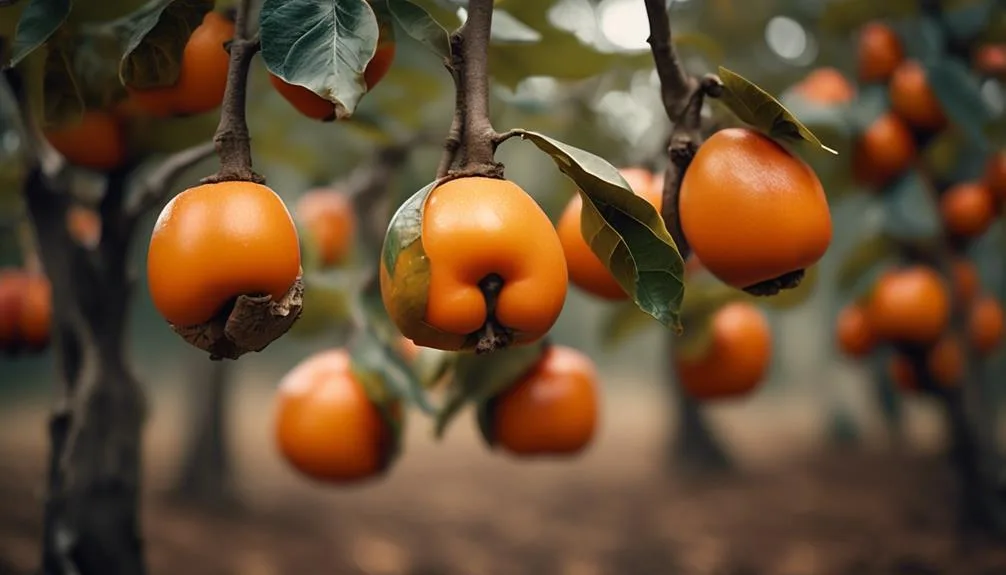
    Persimmons come in two main types: astringent and non-astringent. Astringent persimmons are typically acorn-shaped and must be fully ripe before eating. When ripe, they're soft and have a sweet, custard-like taste.

    Non-astringent persimmons, on the other hand, can be eaten when still firm, and they're usually shaped like tomatoes.

    Look for ripe persimmons with vibrant color and taut skin. Ripeness indicators include a deep orange color and a slight give when gently pressed.

    Harvest astringent persimmons when fully colored but still firm, while non-astringent varieties can be harvested when fully colored and slightly soft.

    Store ripe persimmons in the refrigerator for up to a month.

    Recommended Products

    Whole Dried Persimmons, No Sugar Added Persimmon Fruit, 14.11oz Soft and Chewy Dehydrated Unsweetened Driedfruit Gift Box, Traditional Handmade for Snacking & Baking.
    Whole Dried Persimmons, No Sugar Added Persimmon Fruit, 14.11oz Soft and Chewy Dehydrated Unsweetened Driedfruit Gift Box, Traditional Handmade for Snacking & Baking.

    PREMIUM FRUIT, HAND-SELECTED :We use only premium, fully ripened persimmons. Each piece is selected for its plumpness, vibrant color, and consistent quality to ensure a delightful treat.

    VIEW LATEST PRICE

    As an affiliate, we earn on qualifying purchases.

    Bella Viva Dried Persimmons, 1.5 lb – California Dried, Upcycled Persimmon Slices – No Sugar Added, No Sulfites – Soft & Chewy Dry Persimmon Fruit – Single Ingredient, Non-GMO, Gluten-Free
    Bella Viva Dried Persimmons, 1.5 lb – California Dried, Upcycled Persimmon Slices – No Sugar Added, No Sulfites – Soft & Chewy Dry Persimmon Fruit – Single Ingredient, Non-GMO, Gluten-Free

    Soft, chewy & naturally sweet-spiced: Hand-harvested California persimmons with a tender bite – not tough or leathery. Upcycled from perfectly tasty fruit with slight cosmetic imperfections. Their signature sweet, almost-spiced flavor and vibrant color shine through in every slice. Snack straight from the bag, add to charcuterie boards, oatmeal, yogurt, or cocktail garnishes.

    VIEW LATEST PRICE

    As an affiliate, we earn on qualifying purchases.

    Fresh Persimmons- 5LBS
    Fresh Persimmons- 5LBS

    Persimmon is very low in Saturated Fat, Cholesterol and Sodium; It is also a good source of Vitamin C, and a very good source of Dietary Fiber, Vitamin C and Manganese

    VIEW LATEST PRICE

    As an affiliate, we earn on qualifying purchases.

    Bark and Trunk Features

    Examine the bark and trunk of the persimmon tree to identify key features that can help distinguish between different varieties.

    1. Bark Texture: The bark of persimmon trees can vary from smooth to rough, with some varieties exhibiting distinct patterns or fissures. Pay attention to the texture and pattern of the bark, as it can differ significantly between varieties.
    2. Trunk Color: Take note of the trunk color, as it can range from grayish-brown to dark brown. Some varieties may have a more prominent reddish hue, especially on younger trunks.
    3. Form Symmetry: Observe the overall growth habit and form symmetry of the tree. Different persimmon varieties may exhibit varying growth rates and branch structures, leading to differences in overall form and symmetry.

    Flower and Fruit Color

    After examining the bark and trunk features of the persimmon tree, your attention can now turn to the captivating array of flower and fruit colors that distinguish different varieties. The seasonal changes bring a vibrant display of colors, from delicate white and pink blossoms in spring to the rich, deep orange hues of ripe fruit in the fall. Each variety offers its own unique visual spectacle, creating a delightful visual feast for any observer. The climate preferences of the tree also play a significant role in determining the intensity and shades of the colors. Below is a table showcasing the stunning flower and fruit colors of different persimmon tree varieties:

    VarietyFlower ColorFruit Color
    FuyuWhiteOrange
    HachiyaPinkBright Red
    ChocolateCreamy YellowDark Brown
    TanenashiLight YellowOrange
    SaijoCreamy YellowDark Orange

    The diverse range of colors offers a visual treat throughout the year, making persimmon trees a delightful addition to any landscape.

    Growth Habit and Form

    The persimmon tree's growth habit and form are characterized by its graceful, spreading canopy and a sturdy, often gnarled trunk, creating a picturesque silhouette in any landscape.

    When observing the growth habit and form of a persimmon tree, you'll notice the following key characteristics:

    1. Branch Structure: The branches of a persimmon tree tend to grow outward and upward, creating a broad and expansive canopy. The branches are often adorned with glossy, dark green leaves that provide a lush and vibrant appearance.
    2. Overall Appearance: The overall appearance of a persimmon tree is striking, with its wide-spreading canopy and often asymmetrical form. The tree's unique growth habit and form make it a captivating addition to any garden or orchard, adding both visual interest and natural beauty to the landscape.

    Conclusion

    Keep an eye out for the distinct features of persimmon trees in your area.

    From leaves and fruit to bark and flowers, understanding their unique characteristics will deepen your appreciation for these beautiful trees and their delicious fruit.

    Happy persimmon tree spotting!

    Share. Facebook Twitter Pinterest LinkedIn Tumblr Email
    lucy smith
    Lucy Smith
    • Website

    Lucy Smith is a highly experienced horticulturist with a passion for fruit tree cultivation. She holds a degree in Horticulture from the University of California, Davis, and has worked in various roles in the industry. With over 10 years of experience, Lucy is dedicated to using eco-friendly methods for sustainable gardening practices.

    Related Posts

    Why Do Persimmon Trees Have Distinctive Bark

    February 12, 2024

    Can Persimmon Trees Adapt to Climate Change

    February 12, 2024

    Creating a Wildlife Habitat With Persimmon Trees

    February 12, 2024

    Where Are Persimmon Trees Considered Invasive

    February 12, 2024

    Is Persimmon Tree Pollen Allergenic

    February 11, 2024

    Can Persimmon Trees Be Used in Herbal Teas

    February 11, 2024
    Leave A Reply Cancel Reply

    Affiliate Disclosure

    As an Amazon Associate I earn from qualifying purchases.

    Recommended Reading

    How to Crossbreed Fruit Trees: A Step-by-Step Guide to Creating Unique Hybrid Fruits

    How to Make an Apple Tree Not Bear Fruit: Effective Techniques for a Fruitless Garden

    Are Any Fruit Trees Evergreen: Discover Vibrant Options for Year-Round Gardens

    Why Do Guava Trees Require Well-Drained Soil

    How to Keep Bugs Off Fruit Trees Naturally: Effective Tips for a Healthy Harvest

    How to Grow a Fruit Tree: Essential Steps for a Bountiful Harvest in Your Backyard

    5 Best Bird Nettings for Your Garden: Protect Your Plants With Confidence

    Why Do My Nectarines Rot on the Tree? Expert Strategies to Prevent Tree Nectarine Rot

    When Do You Spray Fruit Trees with Copper for Maximum Health and Yield?

    Why is My Grapefruit Tree Losing Its Leaves? Expert Tips to Maintain Tree Health

    Fruit Tree Hub

    Fruit Tree Hub is a website dedicated to providing you everything you need to grow fruit trees successfully at in your own yard.

    Contact us at: [email protected]

    - AFFILIATE DISCLOSURE: As an Amazon Associate I earn from qualifying purchases.

    Latest Posts

    Can Fig Trees Grow in Charlotte, NC? Piedmont Region Tips

    Grapefruit Trees in Kansas City, MO: Regional Success Guide

    Papaya Trees in a Pot in San Jose, CA (Silicon Valley Harvest)

    Lime Trees in Madison, WI (Upper Midwest Winter Success)

    Lemon Trees in Chandler, AZ (Low-Water Desert Strategies)

    Growing Quince Trees in a Pot in Pennsylvania (Pro Tips)

    Papaya Trees in a Pot in Wisconsin: Northern Winter Care Manual

    Persimmon Trees in Alaska (Surviving Extreme Northern Climates)

    Categories
    • Almond Trees
    • Apple Trees
    • Apricot Trees
    • Best Fruit Trees
    • Blackberry
    • Cantaloupe
    • Cherry Trees
    • Crochet Ideas
    • Crochet Ideas for Beginners
    • Cucamelon
    • Easy Crochet Ideas
    • Easy Knitting Projects
    • Fig Trees
    • Grapefruit Trees
    • Grapes
    • Guava Trees
    • Honeydew
    • Jujube Trees
    • Kiwi
    • Knitting For Beginners
    • Knitting Ideas
    • Knitting Inspiration
    • Lemon Trees
    • Lime Trees
    • Loquat Trees
    • Mango Trees
    • Mulberry Trees
    • Nectarine Trees
    • Olive Trees
    • Orange Trees
    • Papaya Trees
    • Peach Trees
    • Pear Trees
    • Persimmon Trees
    • Planting
    • Plum Trees
    • Pomegranate Trees
    • Quince Trees
    • Raspberry
    • Reviews
    • Small Crochet Ideas
    • Star Fruit Trees
    • Summer Crochet Ideas
    • Tamarind Trees
    • Tangerine Trees
    • Tips and Advice
    • Tools
    • Uncategorized
    • Walnut Trees
    © 2026 Fruit Tree Hub
    • Home
    • About Us
    • Contact
    • Privacy Policy
    • Terms and Conditions
    • Disclaimer
    • Editorial Policy
    • Affiliate Disclosure

    Type above and press Enter to search. Press Esc to cancel.