

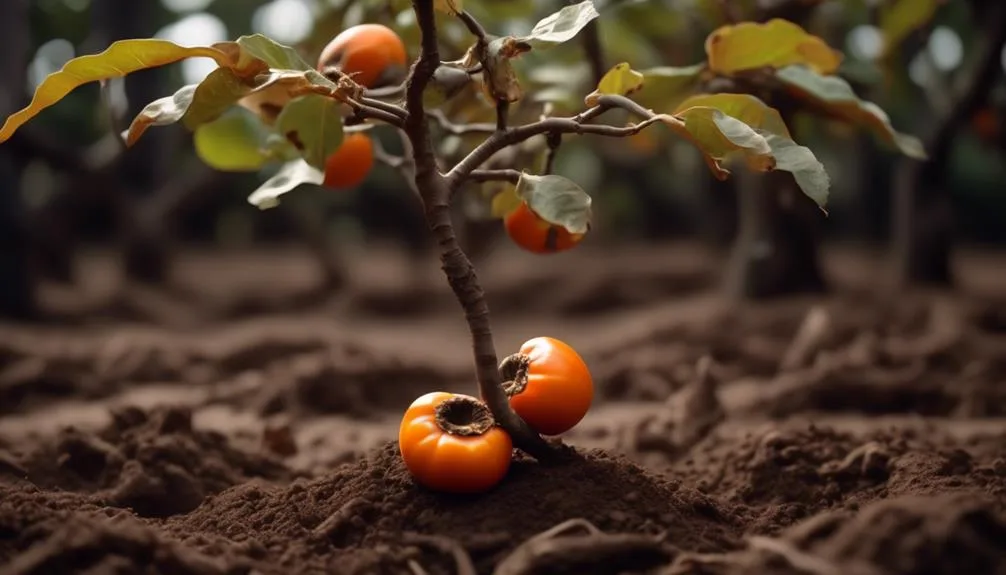
The type of soil you use for growing persimmon trees can make a big difference. Different soil types can impact the health and yield of your trees.
Let's take a look at the best soil types for persimmon trees and how they can affect the success of your orchard.
Key Takeaways
- Optimal soil pH for persimmon trees is between 6.0-6.5, which can be achieved through soil testing and amendments such as elemental sulfur or acidic organic materials.
- Well-draining soil is crucial for persimmon tree health and growth, as it prevents waterlogging and root rot. Incorporating organic matter like compost or peat moss can improve soil structure and promote nutrient availability.
- Loamy soil, which is balanced in composition and provides good drainage, moisture retention, and aeration, is ideal for persimmon trees. Seeking areas with loamy soil can promote overall tree health and productivity.
- Sandy soil, with its excellent drainage and good aeration, is also suitable for persimmon trees. However, it requires more frequent irrigation due to lower water retention capacity. Sandy soil warms up quickly in spring, aiding early root growth and tree development.
Acidic Soil
To ensure the optimal growth of your persimmon trees, it's essential to provide acidic soil conditions that support their nutrient uptake and overall health. Start by conducting a soil test to determine the pH level of your soil. Persimmon trees thrive in acidic soil with a pH level between 6.0 and 6.5.
If your soil isn't within this range, consider incorporating soil amendments such as elemental sulfur or acidic organic materials like pine needles or peat moss to lower the pH. These amendments can help create the ideal acidic environment for your persimmon trees to flourish.
Regular soil testing and appropriate soil amendments are crucial for maintaining the acidic soil conditions necessary for the healthy growth of persimmon trees.
Recommended Products

Package contains 6 pounds organic soil acidifier grains and is produced to avoid wasteful runoff, mess, hazards and smells

Enhanced Plant Soil Biodiversity: Boost your garden soil's biodiversity with Sulfur, promoting a balanced ecosystem for thriving plants. This friendly soil amendment increases the variety of organisms in your soil, enhancing overall health.

FOR USE ON: For all Acid-loving plants; Use Espoma Organic Soil Acidifier for azaleas, hydrangeas, rhododendrons, blueberries, evergreens, strawberries, camellias, and all plants that thrive in acidic soils
Well-Draining Soil
Ensuring that your persimmon trees have well-draining soil is crucial for their overall health and growth, especially after creating the ideal acidic environment for them. Well-draining soil facilitates water retention, allowing the roots to access moisture while preventing waterlogging, which can lead to root rot.
This type of soil also promotes nutrient availability, ensuring that essential minerals are readily accessible to the tree's roots. To achieve well-draining soil for your persimmon trees, consider incorporating organic matter, such as compost or peat moss, to improve soil structure. Additionally, adding perlite or coarse sand can enhance drainage, preventing water from pooling around the roots.
Ensuring proper drainage will help your persimmon trees thrive, promoting healthy growth and bountiful fruit production.
Recommended Products

🍊 PROFESSIONALLY MIXED IN THE USA - Each bag is hand blended on our small family farm with premium horticultural grade ingredients: Canadian Peat Moss, Perlite, Worm Castings and Lime - 1 QUART BAG

Grows in direct sunlight for steady development

Enhanced Growth Benefits: Supports optimal plant health with superior aeration, effective drainage, excellent nutrient retention, and a balanced pH – everything citrus plants need to thrive.
Loamy Soil
How can you identify if the soil in your persimmon tree's planting area is loamy?
Loamy soil is characterized by its balanced composition of sand, silt, and clay, making it ideal for persimmon trees.
To determine if your soil is loamy, take a handful of damp soil and squeeze it. If it forms a loose ball that crumbles easily, with a texture that feels neither too gritty nor too smooth, you likely have loamy soil.
This type of soil composition provides excellent plant nutrition for persimmon trees by offering good drainage, moisture retention, and aeration. The balanced mixture of particles allows for proper root development and nutrient uptake, promoting healthy growth.
When planting persimmon trees, seeking out areas with loamy soil can significantly contribute to their overall health and productivity.
Sandy Soil
After identifying whether your soil is loamy, you can now explore the characteristics of sandy soil, which also plays a crucial role in the growth of persimmon trees.
Sandy soil is known for its loose, gritty texture and is composed of larger particles compared to other soil types. Its composition allows for excellent drainage, preventing waterlogging and root rot. However, due to its larger particles, sandy soil has lower water retention capacity, requiring more frequent irrigation.
The light and airy nature of sandy soil promotes good aeration, allowing roots to breathe and absorb nutrients effectively. Additionally, sandy soil warms up quickly in the spring, aiding in early root growth and overall tree development.
- Loose, gritty texture
- Excellent drainage
- Lower water retention capacity
- Good aeration
Recommended Products

Feed the soil not the plants - stimulate microbial activity in your soil and boost probability of success with all types of plants… like composting but faster

【Ideal pH Balance】Our citrus soil is carefully calibrated to maintain an optimal pH level between 6.0 and 7.1, ensuring your citrus trees can absorb essential nutrients efficiently and thrive

PRODUCT IMAGE DISCLAIMER: The main image is for reference only. The plant you receive may not look exactly the same as shown in the first image
Fertile Soil
Looking to optimize the growth of your persimmon trees? Let's delve into the characteristics and benefits of fertile soil for fostering robust and healthy tree development.
Fertile soil benefits persimmon trees by providing essential nutrients and minerals necessary for their growth. It promotes greater root development, which in turn enhances water and nutrient uptake. Soil fertility management is crucial for maintaining the balance of nutrients and organic matter in the soil, creating an optimal environment for persimmon trees.
Fertile soil also supports the growth of beneficial microorganisms that aid in nutrient recycling and disease suppression. To manage soil fertility effectively, consider using organic matter such as compost and well-rotted manure to enrich the soil and sustain long-term fertility.
Conclusion
In choosing the right soil type for persimmon trees, it's essential to prioritize acidity, good drainage, and fertility. Whether it's loamy, sandy, or well-draining soil, meeting these criteria will support healthy growth and a bountiful harvest.
By understanding and meeting the specific needs of persimmon trees, you can ensure their thriving success for years to come. So, be mindful of the soil type you provide, and watch your persimmon trees flourish.
