
Close Menu
    Fruit Tree Hub
    • Home
    • Apple Trees
    • Lemon Trees
    • Mango Trees
    • Orange Trees
    • More Trees
      • Best Fruit Trees
      • Apricot Trees
      • Cherry Trees
      • Fig Trees
      • Lime Trees
      • Mulberry Trees
      • Peach Trees
      • Pear Trees
      • Plum Trees
      • Pomegranate Trees
    • Tips and Advice
      • Tools
    • About Us
      • Contact
      • Privacy Policy
    Fruit Tree Hub
    Home»Fruit Trees»Persimmon Trees»Can Persimmon Trees Grow in Cold Climates
    Persimmon Trees

    Can Persimmon Trees Grow in Cold Climates

    Lucy SmithBy Lucy SmithFebruary 5, 20244 Mins Read
    Share Facebook Twitter Pinterest WhatsApp Email
    persimmon trees and cold
    Share
    Facebook Twitter LinkedIn Pinterest Telegram Email

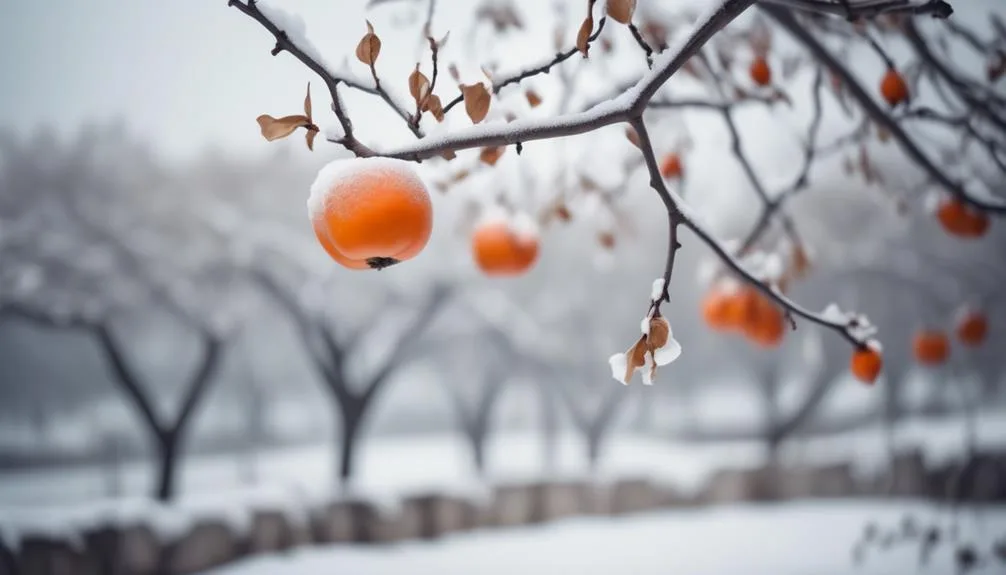
    If you've always wanted to grow persimmon trees but live in a cold climate, you might be in luck. It's possible to make persimmons thrive in chilly weather, and we'll show you how.

    Contents show
    1 Key Takeaways
    2 Suitable Persimmon Tree Varieties for Cold Climates
    3 Cold Hardiness of Persimmon Trees
    4 Winter Protection for Persimmon Trees
    5 Planting and Care Tips for Cold Climate Persimmon Trees
    6 Harvesting Persimmons in Cold Climates
    7 Conclusion

    But before you start planning your orchard, there are some important things to think about.

    Key Takeaways

    • American persimmon is a suitable variety for cold climates, as it is hardy and reliable.
    • Persimmon trees are generally hardy to USDA zones 4-9, with American persimmons being more cold-hardy than Asian persimmons.
    • Winter protection measures such as mulching, wrapping the trunk, building shelters, and pruning dead branches are important for safeguarding persimmon trees during harsh weather conditions.
    • Frost-resistant varieties should be chosen for successful harvesting in cold climates, and persimmons should be harvested before the first hard frost to avoid fruit damage.

    Suitable Persimmon Tree Varieties for Cold Climates

    When looking for persimmon tree varieties that thrive in cold climates, consider the American persimmon as a hardy and reliable option. This variety is well-suited for colder regions and offers fruit that's typically smaller in size compared to Asian persimmons.

    When planting, ensure adequate spacing between trees, as American persimmons can spread up to 25 feet wide. Regarding pollination, this variety may require a separate male tree for fruit production.

    Additionally, it's important to be mindful of common fruit pests such as aphids and Japanese beetles. By maintaining proper care and addressing pollination needs and potential pests, you can successfully grow American persimmon trees in cold climates, yielding delicious fruit and adding natural beauty to your landscape.

    MUST READ
    How to Identify Different Persimmon Tree Varieties

    Cold Hardiness of Persimmon Trees

    To ensure successful growth of persimmon trees in cold climates, it's crucial to understand their cold hardiness and how to protect them from harsh winter conditions.

    Persimmon trees are generally hardy to USDA zones 4-9, but their specific cold tolerance can vary depending on the variety. American persimmons (Diospyros virginiana) are more cold-hardy than Asian persimmons (Diospyros kaki), with the ability to withstand temperatures as low as -25°F once established.

    When cultivating persimmon trees in cold climates, it's important to select a site with well-draining soil to prevent waterlogging, which can lead to root rot. Additionally, a sunny location and protection from strong winds can help mitigate cold damage.

    Mulching the soil around the base of the tree can also provide insulation and protect the roots during winter.

    Winter Protection for Persimmon Trees

    For effective winter protection of your persimmon trees in cold climates, consider implementing mulching and wrapping techniques to safeguard them from harsh weather conditions.

    Here are some tips to help protect your persimmon trees during winter:

    • Mulching: Apply a thick layer of mulch around the base of the tree to insulate the roots and retain moisture.
    • Wrapping: Wrap the trunk of the tree with burlap or tree wrap to shield it from freezing temperatures and harsh winds.
    • Shelter building: Construct a simple shelter around the tree using stakes and burlap to provide additional protection from snow and ice.
    • Pruning: Trim any dead or damaged branches before winter to promote healthy growth and reduce the risk of breakage from heavy snow or ice.
    MUST READ
    Why Do Persimmon Trees Lose Leaves in Autumn

    Planting and Care Tips for Cold Climate Persimmon Trees

    Pin This Now to Remember It Later
    Pin This

    After safeguarding your persimmon trees from harsh winter conditions, it's essential to focus on proper planting and care tips to ensure their thriving in cold climates. Below are some essential planting and care tips for cold climate persimmon trees:

    Pruning TechniquesSoil Preparation
    Prune persimmon trees in late winter to early spring to remove dead or diseased branches and to shape the tree for better sunlight exposure.Ensure the soil is well-draining and slightly acidic with a pH of 6.0-6.5. Incorporate organic matter such as compost or well-rotted manure into the soil before planting to improve soil structure and fertility.

    Recommended Products

    Money Tree Soil (4 Quarts), Potting Mix for Planting/Repotting Pachira Aquatica, All-Natural Custom Soil Blend
    Money Tree Soil (4 Quarts), Potting Mix for Planting/Repotting Pachira Aquatica, All-Natural Custom Soil Blend

    Hand Blended Money Tree Soil- Hand blended soil perfect for growing money tree plants, Great for repotting or planting money trees.

    VIEW LATEST PRICE

    As an affiliate, we earn on qualifying purchases.

    GARDENWISE Premium Organic Citrus Potting Soil for Indoor/Outdoor Plants - Perfect for Oranges, Lemons, Limes & Grapefruits Trees - Hand Blended for Optimal Growth (3 QUARTS)
    GARDENWISE Premium Organic Citrus Potting Soil for Indoor/Outdoor Plants - Perfect for Oranges, Lemons, Limes & Grapefruits Trees - Hand Blended for Optimal Growth (3 QUARTS)

    OPTIMAL GROWTH FORMULA: Expertly crafted Citrus Potting Soil ensures your citrus trees thrive, offering the perfect balance of nutrients for peak health and productivity. Unleash the full potential of your garden with our scientifically developed soil.

    VIEW LATEST PRICE

    As an affiliate, we earn on qualifying purchases.

    Soil Sunrise Citrus Tree Potting Soil Mix (8 Quarts) Special Blend for Indoor Oranges, Lemons, Limes and More
    Soil Sunrise Citrus Tree Potting Soil Mix (8 Quarts) Special Blend for Indoor Oranges, Lemons, Limes and More

    100% Natural: Expertly hand-blended with premium ingredients for potted citrus trees, ensuring your trees receive the purest, chemical-free nutrients. Contains no artificial additives.

    MUST READ
    How to Identify Different Persimmon Tree Varieties
    VIEW LATEST PRICE

    As an affiliate, we earn on qualifying purchases.

    Harvesting Persimmons in Cold Climates

    When harvesting persimmons in cold climates, timing is crucial to ensure you gather ripe and flavorful fruits. Here are some tips for cold weather harvesting:

    • Choose frost-resistant varieties to withstand colder temperatures and ensure a successful harvest.
    • Monitor the weather closely and harvest your persimmons before the first hard frost, as this can damage the fruit.
    • To determine ripeness, look for a deep color and slightly soft texture. Persimmons are ready to harvest when they easily come off the tree with a gentle twist.
    • Consider using protective coverings or blankets to shield the fruits from early frosts, extending the harvesting period.
    • Once harvested, store persimmons in a cool, dark place to allow them to continue ripening and develop their sweet flavor.

    Harvesting persimmons in cold climates requires careful attention to weather conditions and fruit ripeness to ensure a successful harvest.

    Conclusion

    In cold climates, persimmon trees can thrive with the right care and suitable varieties. By choosing cold-hardy options like the American or Asian persimmon and following our planting and care tips, you can enjoy a successful harvest of delicious fruits.

    Consider the possibilities of growing your own persimmon tree in a cold climate and savor the rewards of your efforts. Happy growing!

    Share. Facebook Twitter Pinterest LinkedIn Tumblr Email
    lucy smith
    Lucy Smith
    • Website

    Lucy Smith is a highly experienced horticulturist with a passion for fruit tree cultivation. She holds a degree in Horticulture from the University of California, Davis, and has worked in various roles in the industry. With over 10 years of experience, Lucy is dedicated to using eco-friendly methods for sustainable gardening practices.

    Related Posts

    Why Do Persimmon Trees Have Distinctive Bark

    February 12, 2024

    Can Persimmon Trees Adapt to Climate Change

    February 12, 2024

    Creating a Wildlife Habitat With Persimmon Trees

    February 12, 2024

    Where Are Persimmon Trees Considered Invasive

    February 12, 2024

    Is Persimmon Tree Pollen Allergenic

    February 11, 2024

    Can Persimmon Trees Be Used in Herbal Teas

    February 11, 2024
    Leave A Reply Cancel Reply

    Affiliate Disclosure

    As an Amazon Associate I earn from qualifying purchases.

    Recommended Reading

    When Do Macadamia Trees Fruit and How to Harvest for Best Quality Nuts

    When Do Grapefruit Trees Put Out New Leaves? Tips for Healthy Leaf Growth

    Can You Plant Fruit Trees Near Oleanders: Tips for Safe and Successful Gardening

    Mastering the Art of Straining Seeds from Blackberries: Tips, Tricks & Recipes

    What Fruit Trees Can I Grow in Pennsylvania for a Bountiful Backyard Harvest

    How to Plant a Dragon Fruit Tree for Vibrant Fruits and Thriving Growth

    Can You Grow a Fruit Tree from a Branch: Step-by-Step Guide for Successful Propagation

    Growing Avocado Trees in Kansas City, MO: Regional Planting Guide

    Can Apple Trees Grow in South Dakota? (High Plains Secrets)

    How to Keep Raccoons Away from Fruit Trees: Effective Tips and Strategies for Garden Protection

    Fruit Tree Hub

    Fruit Tree Hub is a website dedicated to providing you everything you need to grow fruit trees successfully at in your own yard.

    Contact us at: [email protected]

    - AFFILIATE DISCLOSURE: As an Amazon Associate I earn from qualifying purchases.

    Latest Posts

    Lemon Trees in South Carolina: Southern Growth Secrets

    Mulberry Trees in Maryland (Mid-Atlantic Planting and Care)

    Grapefruit Trees in Wichita, KS: High Wind Success Tips

    Can Tangerine Trees Grow in Missouri? Expert Variety Guide

    How to Grow Fig Trees in Vermont: Cold-Climate Success Tips

    Mulberry Trees in New Mexico (High Desert Planting Success)

    Persimmon Trees in a Pot in Tennessee: Middle Tennessee Success

    How to Grow Lime Trees in Vermont: Northern Climate Tips

    Categories
    • Almond Trees
    • Apple Trees
    • Apricot Trees
    • Best Fruit Trees
    • Blackberry
    • Cantaloupe
    • Cherry Trees
    • Cucamelon
    • Easy Knitting Projects
    • Fig Trees
    • Grapefruit Trees
    • Grapes
    • Guava Trees
    • Honeydew
    • Jujube Trees
    • Kiwi
    • Knitting Designs
    • Knitting For Beginners
    • Knitting Inspiration
    • Lemon Trees
    • Lime Trees
    • Loquat Trees
    • Mango Trees
    • Mulberry Trees
    • Nectarine Trees
    • Olive Trees
    • Orange Trees
    • Papaya Trees
    • Peach Trees
    • Pear Trees
    • Persimmon Trees
    • Planting
    • Plum Trees
    • Pomegranate Trees
    • Quince Trees
    • Raspberry
    • Reviews
    • Star Fruit Trees
    • Tamarind Trees
    • Tangerine Trees
    • Tips and Advice
    • Tools
    • Uncategorized
    • Walnut Trees
    © 2026 Fruit Tree Hub
    • Home
    • About Us
    • Contact
    • Privacy Policy
    • Terms and Conditions
    • Disclaimer
    • Editorial Policy
    • Affiliate Disclosure

    Type above and press Enter to search. Press Esc to cancel.