


As the climate changes, many plant species are being put to the test. Persimmon trees are no exception. Their ability to adapt to rising temperatures and unpredictable weather is a hot topic.
What traits do persimmon trees have that help them survive in changing environments? And what challenges do they face?
We'll explore these questions and more to understand how persimmon trees might cope with the impacts of climate change.
Key Takeaways
- Shifting growing seasons and unpredictable weather patterns are negatively impacting persimmon trees' fruit development and quality.
- Persimmon trees possess adaptive traits such as wide genetic diversity, resilience, phenotypic plasticity, and acclimatization, which enhance their ability to adapt to changing climate conditions.
- Extreme weather events, altered precipitation patterns, and the spread of pests and diseases pose significant challenges to persimmon tree adaptation.
- Strategies for assisting adaptation include assisted migration, promoting genetic diversity, utilizing assisted reproductive techniques, enhancing pest management strategies, and proper soil management.
Current Climate Change Impact on Persimmon Trees
Adapting to the current climate change, persimmon trees are experiencing shifting growing seasons and unpredictable weather patterns, impacting their fruit production and overall health.
The shift in growing seasons has disrupted the delicate balance these trees rely on for optimal fruit development. As temperatures fluctuate and growing seasons become less predictable, persimmon trees struggle to flower and set fruit at the right times. This directly affects the quantity and quality of the fruit they produce.
Additionally, irregular weather patterns can lead to increased susceptibility to diseases and pests, further compromising the trees' overall health.
These challenges pose a significant threat to the sustainability of persimmon orchards and the livelihoods of those who depend on them. Understanding and mitigating these impacts is crucial for the future of persimmon cultivation.
Adaptive Traits of Persimmon Trees
The persimmon tree possesses a range of adaptive traits that enable it to withstand and thrive in varying environmental conditions. These traits ensure its resilience in the face of climate change. One important trait is genetic diversity. Persimmon trees have a wide genetic diversity, allowing them to adapt to different environmental stressors and changing climate conditions. This diversity provides a pool of genetic resources that can be drawn upon to ensure the survival of the species.
Another key trait is resilience. The trees exhibit remarkable resilience, with the ability to recover and adapt to disturbances such as extreme weather events or changes in temperature and precipitation patterns. This resilience allows them to bounce back from challenges and continue to thrive.
Furthermore, persimmon trees demonstrate phenotypic plasticity and acclimatization. They have the ability to adjust their physical and biochemical traits in response to environmental cues, which is known as phenotypic plasticity. Additionally, they can acclimatize to new conditions, further enhancing their adaptability.
Recommended Products

🌳 PERSIMMON TREE SEEDS FOR HOME GARDENS: Persimmon tree seeds are ideal for backyard gardens, raised beds, or seed-starting before transplanting outdoors in suitable climates.
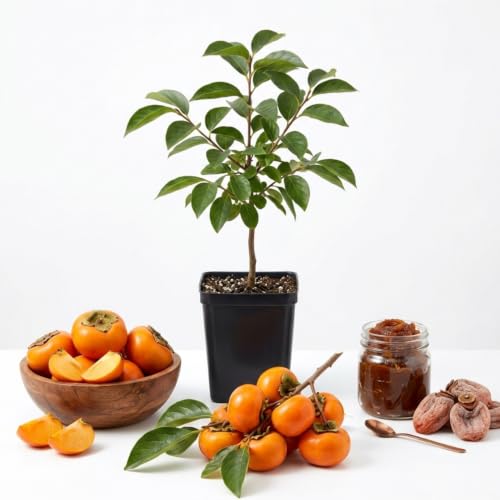
Sweet American Persimmon Trees Live Plants, Dormant Seedlings,6-12 Inches Well Rooted, Winter Hardy Persimmon Tree Fruit

LIVE AMERICAN PERSIMMON TREES: Includes American Persimmon live trees potted in quart pot, measuring 6-12 inches tall. Trees may arrive as a dormant plant (without leaves) depending on the season, ready for planting.
Potential Challenges for Adaptation
As persimmon trees face the ongoing challenge of climate change, they encounter potential hurdles in adapting to shifting environmental conditions. Challenges such as extreme weather events, changes in precipitation patterns, and the spread of pests and diseases can hinder their ability to thrive. To illustrate the severity of these challenges, consider the following table:
| Potential Challenges | Impact | Resilience Strategies |
|---|---|---|
| Extreme weather events | Damage to fruit production | Selecting more resilient varieties, implementing protective measures |
| Altered precipitation patterns | Water stress and reduced fruit yield | Implementing irrigation systems, developing drought-resistant cultivars |
| Spread of pests and diseases | Increased susceptibility to infections | Enhancing pest management strategies, promoting biological control methods |
Understanding these challenges is crucial for developing effective resilience strategies to ensure the continued adaptation of persimmon trees to a changing climate.
Strategies for Assisting Adaptation
Facing potential hurdles such as extreme weather events, altered precipitation patterns, and the spread of pests and diseases, persimmon trees require robust strategies to assist their adaptation to shifting environmental conditions.
To aid their adaptation, consider the following strategies:
- Assisted migration: This involves moving persimmon tree populations to more suitable habitats to match their preferred climate conditions.
- Genetic diversity: Promoting genetic diversity within persimmon tree populations can help increase their ability to adapt to changing environmental conditions.
- Assisted reproductive techniques: Utilizing techniques such as selective breeding and hybridization can help develop persimmon varieties that are better equipped to withstand climate-related challenges.
In addition to these strategies, proper soil management can also play a crucial role in supporting persimmon trees' adaptation to climate change.
Recommended Products

🌳 PROFESSIONALLY MIXED IN THE USA - Each bag is hand blended on our small family farm with premium horticultural grade ingredients: Canadian Peat Moss, Perlite, Worm Castings, Lime, Sand.


Natural Money Tree Soil: Pure blend of peat moss, coconut coir, perlite, bark and humus for healthy indoor plants—no additives, just earth-friendly goodness.
Future Outlook for Persimmon Trees
Looking ahead, consider the potential impact of climate change on the growth and production of persimmon trees, as well as the adaptations that may be necessary to ensure their continued success.
Genetic diversity plays a crucial role in the future outlook for persimmon trees. It will be essential for breeding programs to focus on preserving and enhancing genetic diversity to develop varieties that are more resilient to changing environmental conditions.
Geographic distribution also becomes a key factor, as the suitable regions for persimmon cultivation may shift due to climate change.
The future outlook for persimmon trees will depend on the ability to adapt to these changes, and this will require a proactive approach in understanding and harnessing genetic diversity as well as reevaluating the geographic distribution for optimal growth and production.
Conclusion
In light of their adaptive traits and potential strategies, there's hope for persimmon trees to survive in the face of climate change. However, challenges persist in their adaptation process.
Continued monitoring and support are essential to ensure a positive future for persimmon trees. How we assist their adaptation will shape their resilience and the broader ecosystem.
