


I have been trying out sage, cream, and dusty blue in my crochet blankets for a while now.
These shades seem to pair nicely without feeling too bold or busy.
I usually start with cream as the main color and add the others in small sections to keep things balanced.
It is interesting to see how different amounts of each one change the overall feel of the blanket.
I thought I would share some combinations that turned out well in my own projects.
Sage Green Shell Stitch Blanket With Cream and Blue Stripes

This blanket is made with rows of shell stitches that form a scalloped edge along the sides. The design alternates blocks of sage green, cream, and dusty blue to create clear horizontal stripes across the fabric. The repeating shell pattern gives the blanket a light texture while keeping the overall shape simple and rectangular, which suits it for use as a baby blanket or small throw.
What makes this idea useful is how the color blocks let you use up smaller amounts of yarn without breaking the flow of the pattern. You can change the stripe widths or repeat just two colors if you want a simpler version. A project like this works especially well as a gift because the soft palette fits many different rooms and the shell stitch stays quick to repeat once you have the rhythm.
Striped Bobble Throw with Sage Accents

A striped crochet blanket that places bobble rows only in the sage sections while keeping the cream and dusty blue rows flat creates clear contrast without overwhelming the design. The repeating horizontal bands make it simple to work in one piece on a large hook, and the finished size suits a sofa throw or bed layer. This approach fits the decor category because the color sequence and texture changes give enough interest to stand out on their own.
What makes this idea useful is that the bobble placement can be moved to any color stripe or spaced farther apart to change the look quickly. You could shorten the repeat for a baby size or widen the stripes for a larger afghan without changing the stitch pattern. The same color order also works on a smaller scale as a cushion cover if you want to test the combination first.
Chevron Ripple Throw in Muted Stripes

A ripple blanket uses repeating rows that create soft waves across the fabric instead of straight lines. The design alternates wide stripes of sage green, cream, and dusty blue so the colors shift gradually from one section to the next. This approach suits a lap blanket or sofa throw because the pattern stays simple to repeat while the color changes add visual interest without extra stitches.
What makes this idea useful is how the stripe order can be rearranged to use up leftover yarn from other projects. A project like this works especially well as a quick gift because the finished size is easy to adjust by adding or removing rows. The same color sequence also translates to a smaller baby blanket or a larger bed throw by changing the starting chain length.
Granny Square Blanket in Sage Cream and Dusty Blue

A blanket built from granny squares lets you work in small pieces that join into a larger throw. Each square uses a round center motif worked in dusty blue, then shifts to sage green and cream in the outer rounds. The squares are arranged in a loose grid and joined with cream yarn so the colors stay balanced across the whole piece. This format works for any size blanket since you can stop adding squares whenever the width and length reach the size you need.
What makes this idea useful is how simple it is to swap one color for another without changing the pattern. You can make the blanket larger for a bed or smaller for a lap throw just by changing how many squares you join. The same layout also works as a wall hanging if you add a hanging sleeve along the top edge. For gifts, a design like this travels flat in a bag and can be finished with a simple border in any of the three colors.
Coordinating Blankets in Sage, Dusty Blue, and Cream with Varied Textures

Mix three soft colors across separate blankets and change the stitch texture on each one to show how the palette holds together. One blanket uses an open lace pattern in sage green, another works raised bobbles in dusty blue, and the third keeps a dense textured stitch in cream. The simple rectangles make the color shift and texture contrast the main focus. This approach suits bedroom throws or a set of smaller lap blankets.
What makes this idea useful is that each blanket can be finished on its own, so you can start with any color or stitch you like. Scale the size up for a full bed or down for a baby gift without changing the color plan. The structure makes this a smart option for trying new textures while still ending up with pieces that look like they belong together. For decor, this kind of shape works especially well folded at the end of a bed or stacked on a shelf.
Chevron Throw in Sage Cream and Dusty Blue

A chevron blanket uses repeating zigzag rows to create a throw or sofa cover. Color changes at each peak and valley keep the lines sharp and prevent the stripes from blending together. The sage green, cream, and dusty blue sequence gives enough contrast to show the pattern clearly while staying within a soft palette. This style works as a standard home decor item that can be sized up or down with simple chain adjustments.
What makes this idea useful is the way the chevron shape stays balanced even when you change the number of color repeats. You can shorten it into a baby blanket or lengthen it into a bed throw without altering the stitch pattern. The flat shape also makes it simple to store or pack for gifts. Switching the order of the three colors gives a fresh look without learning new stitches.
Hexagon Motif Throw in Sage Cream and Dusty Blue

A blanket made from joined hexagonal motifs creates a honeycomb layout that grows by connecting small shapes rather than working in rows. Each hexagon uses rings of dusty blue, sage green, and cream that repeat across the piece, with the cream sections forming the joining lines. This motif style fits a throw or lap blanket because the hexagons produce a scalloped edge without extra shaping.
What makes this idea useful is the option to adjust the finished size by adding more motifs before assembly. The color repeat stays balanced for living room throws or bedroom layers where you want soft contrast without strong patterns. You can turn the same motif into a smaller baby version by stopping each hexagon after fewer rounds or change the outer color to match different room tones.
Sage Cream and Dusty Blue Ripple Throw

A ripple stitch blanket creates gentle waves across the fabric through repeating increases and decreases in each row. Horizontal stripes in sage green, cream, and dusty blue run the full width, giving a balanced striped look that stays soft rather than bold. This style suits lap throws or small bed blankets because the repeating pattern builds quickly once the color sequence is set.
What makes this idea useful is how easy it is to adjust stripe widths or swap in extra rows of one color to change the balance. The rectangular shape scales to different blanket sizes without changing the stitch pattern. For gifts, a design like this works well because the three-color repeat stays simple to track while still looking finished.
Rolled Blankets with Contrasting Stitch Textures

Three blankets rolled and stacked together create an easy way to show off multiple textures in one color scheme. The top cream blanket uses a tight raised stitch, the sage green one in the middle has an open pattern with spaces, and the bottom blue blanket features rounded clusters. Keeping the same soft palette across all three lets the different stitches stand out without clashing. This setup works as both a storage method and a quick display option on a shelf.
What makes this idea useful is how the rolled shape saves space while still showing off the full length and texture of each blanket. You can change the order of the colors or swap one stitch for another to match whatever yarn you already have. For gifts, rolling them keeps the set compact and makes it simple to tie on a tag. The mix of dense and open stitches also gives you options to match different seasons or room styles.
Lacy Motif Blanket with Leaf Accents
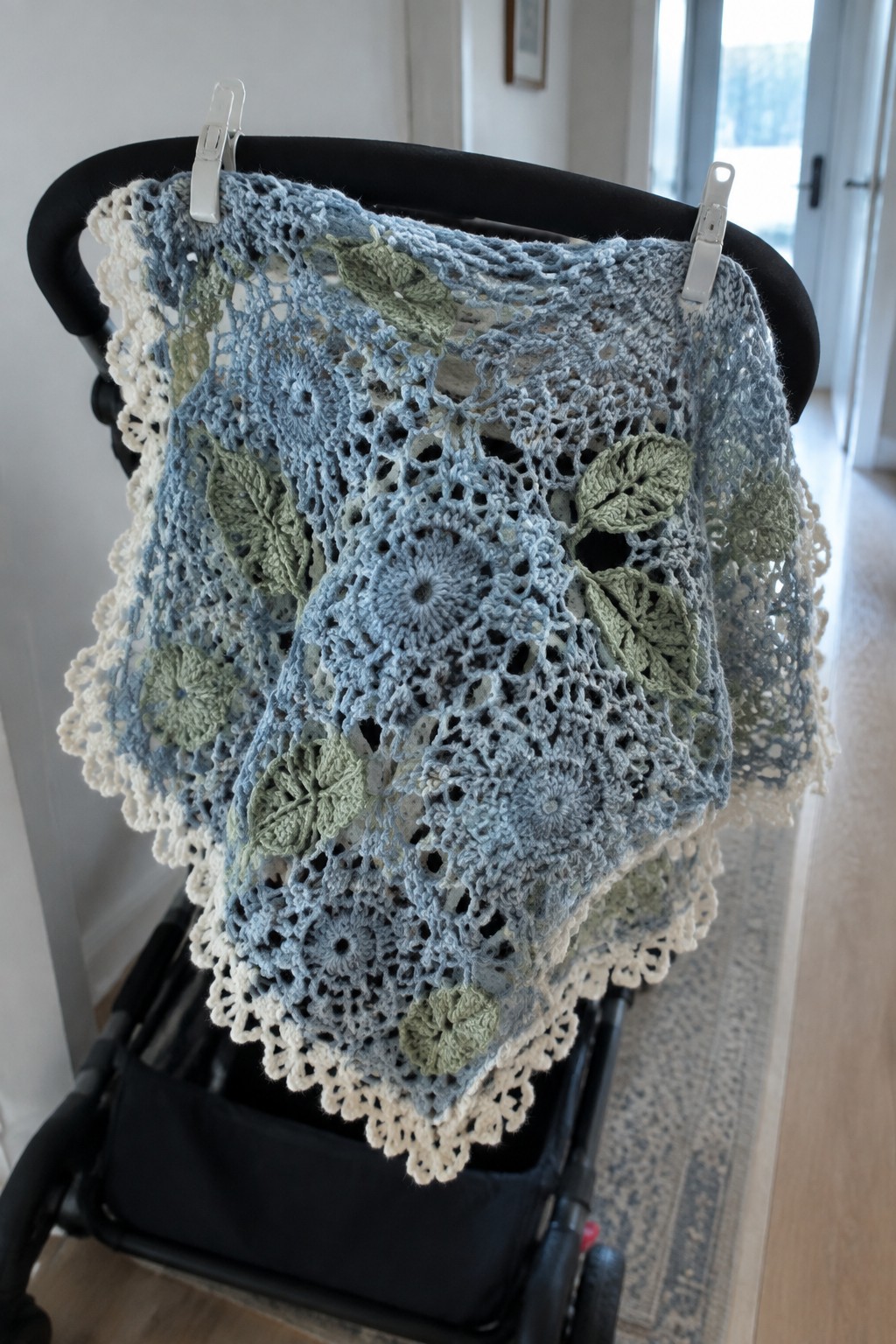
A blanket made from joined square motifs works well as a stroller or bassinet cover when the centers stay solid and the outer rounds turn lacy. The design mixes dusty blue rounds with sage green leaf shapes and cream borders so the colors blend without clashing. Placing the leaf motifs at different angles keeps the surface from looking too uniform while the open stitches prevent the blanket from feeling heavy. This approach fits easily into baby gift or small decor projects because the squares let you build the size you need.
What makes this idea useful is how the openwork texture stays light enough to layer over a stroller without trapping heat. You can swap in different motif sizes to make a larger throw or shrink the whole thing into a lovey by using fewer squares. The color order shown here also helps use up partial skeins since each square only needs a small amount of each shade. For gifts, a design like this travels well because it folds flat and still shows the handmade detail once unfolded.
Textured Checkered Throw

A checkered blanket pattern works by repeating blocks of cream against sage green and dusty blue squares. The design uses a raised looped stitch in the colored sections to create contrast with the flatter cream areas. This approach suits a medium-sized throw meant for layering on a bed or couch. It fits into the home decor category as a simple color-block project.
What makes this idea useful is how easily the block size can be adjusted to change the scale of the pattern. You can swap in other shades from the same palette or add rows to make a larger version. For decor, this grid layout stands out because the texture changes how light hits each square. A project like this works especially well as a gift because the repeating blocks keep it interesting without complex shaping.
Gradient Circle Throw in Dusty Blue and Sage

A circular blanket started from the center and worked outward in expanding rounds suits this color mix well. Dusty blue fills the middle, sage green takes over in the wider bands, and cream finishes the edge with a scalloped border. The bobble texture in the outer rings gives the surface some depth while the color shifts create a clear focal point without extra patterning. This shape works as a lap throw or small blanket for a chair or crib.
What makes this idea useful is how easy it is to adjust the size by adding or dropping rounds to hit the diameter you need. The same layout can be turned into a floor mat or wall hanging if you change the yarn weight. A project like this stands out on Pinterest because the round format and soft color bands photograph cleanly from above. You can swap the cream for another neutral if you want it to match different furniture.
Granny Square Blanket for Stroller Use

A blanket built from joined granny squares in sage, cream, and dusty blue makes a practical cover for a stroller or car seat. The squares create a flexible fabric that folds easily and stays light enough for a child. Keeping the three colors balanced across the squares gives the finished piece a calm, even appearance without extra borders or patterns.
What makes this idea useful is how quickly you can change the size by adding or removing squares to match different carriers. For gifts, a design like this can be adjusted by swapping which color sits in the center of each square. The structure makes this a smart option for everyday use since the clips keep it in place during short trips and the whole piece packs flat.
Striped Throws with Varied Border Finishes

Striped crochet blankets use repeating rows of sage green, cream, and dusty blue to form a simple color sequence across the fabric. The horizontal stripes stay consistent while the borders change between fringe, small bobbles, and scalloped edges. This keeps the overall look coordinated but gives each blanket its own finish. The style works for baby blankets or small throws meant for daily use.
What makes this idea useful is that the same stripe order can be repeated across several blankets without the set looking identical. You can scale the width and length by changing the starting chain and row count to suit a crib, lap throw, or sofa size. Switching only the border lets you match different rooms or create separate gifts from one color plan. The clean stripe layout also translates clearly in photos for pattern notes or project shares.
Granny Square Throw in Muted Tones

A granny square afghan works well as a full-size throw because the individual squares let you build a large piece without handling one continuous section. The design uses a repeating three-color layout across the squares so the eye moves across the surface without any single area standing out too much. Joining the squares with a simple border keeps the edges straight and makes the blanket easy to drape over furniture or the end of a bed.
The color choice does a lot of the work here by staying within a narrow neutral range that fits most rooms. This would be easy to turn into a smaller lap blanket or baby afghan by cutting the number of squares in half and keeping the same layout. For gifts, a design like this lets you make squares in batches ahead of time and assemble them when you have a free afternoon. The structure also means you can swap one color for another without changing the overall pattern if you want to match different decor.
Cloud Shaped Blanket with Cream Body Sage Top and Dusty Blue Details

A cloud-shaped blanket uses a cream center as the main field and adds sage green clusters at one end to suggest puffs. The dusty blue scalloped border defines the outline while small blue dots placed across the cream section add simple visual breaks. This motif works as a small throw or floor mat because the shape stays recognizable even when the overall size stays modest. It fits into the decor category and suits a nursery or reading nook without needing extra layers.
The compact scale lets you finish the project in a weekend and test the color mix before committing to a larger blanket. You can adapt the same layout into a pillow by stopping the border early or turn the dots into a repeating pattern if you want more texture. For gifts the clear color blocks in these three shades photograph well and still read as soft. Change the dot placement or skip them entirely if you prefer a smoother surface on the next version.
Concentric Ring Round Mat

A round blanket started from the center and worked outward in rings of dusty blue, sage, and cream forms a clear bullseye layout. This shape suits a small floor rug, lap blanket, or chair throw. The ring widths and scalloped cream edge give the piece a balanced look that relies on color placement rather than fancy stitch work. It belongs in the decor category as a straightforward accent item.
What makes this idea useful is how the ring layout lets you change the finished size simply by adding or dropping rounds. A project like this works especially well as a nursery rug or bedside mat where the soft palette fits existing bedding. You could reverse the blue and sage order or widen the cream sections to match other rooms. The structure makes this a smart option for testing color order before committing to a larger blanket.
Bobble Rows in Sage Cream and Dusty Blue

A throw blanket built from horizontal bands of bobble stitches creates strong texture while staying simple to repeat. The design stacks rows of sage green, dusty blue, and cream in even widths so the colors shift gradually without extra borders or colorwork. This style works as a sofa throw because the bobbles add weight and the neutral palette blends with most living room fabrics.
What makes this idea useful is how quickly the rows grow once the bobble pattern is established, so you can finish a full-size blanket in a few weekends. You can change the stripe order or widen the cream sections if you want more light tones in the mix. For a smaller version, shorten the starting chain and use the same row repeat for a baby blanket or pet mat. The structure also photographs clearly for patterns or social posts because the bobbles catch light against the flat background colors.
Mixing Solid Blocks With Granny Squares in Soft Tones

A blanket built from large squares combines solid textured sections with open granny square motifs in sage green, cream, and dusty blue. The squares are joined into a loose grid that lets the three colors form simple blocks rather than a busy pattern. This approach suits a lap throw or small afghan because the pieces stay manageable and the muted palette keeps the overall look calm.
What makes this idea useful is how quickly you can swap square colors or add more rows to change the finished size. The same layout works for a baby blanket, a couch throw, or even a set of matching pillow covers. You can start with just nine or twelve squares and expand later if the first version feels too small.
Striped Floral Motif Blanket in Sage Cream and Blue

A blanket built from repeating floral motifs works well when the colors shift in wide horizontal bands instead of scattered placement. The openwork structure lets the sage green, cream, and dusty blue sections sit next to each other without clashing, while the repeating shapes create a steady rhythm across the surface. This style fits baby blankets or lightweight throws where the fabric needs to drape easily and stay breathable.
What makes this idea useful is how easily the band widths can be changed to fit a crib, stroller, or adult lap size. You can swap the order of the three colors or shorten one band to match existing bedding without redesigning the whole motif. For gifts, finishing the edge with a simple scallop keeps the focus on the color sequence while still looking complete.
Frequently Asked Questions
What is the best way to decide proportions when using sage, cream, and dusty blue in one blanket?
Start with cream as your main color for about 60 percent of the blanket since it creates a soft base that lets the other two shades stand out without clashing. Use sage and dusty blue for accents or stripes in equal smaller amounts, around 20 percent each. This balance keeps the design calm and cohesive. Swatch a small section first to see how the colors interact in your chosen stitch pattern.
How should I care for a finished blanket made in these colors to keep it looking fresh?
Wash the blanket on a gentle cycle with cold water and a mild detergent made for delicates. Turn it inside out before washing to protect the colors from rubbing. Air dry flat rather than using a dryer to prevent shrinking or fading. These shades hold up well with proper care, but avoid direct sunlight when storing to maintain the dusty blue and sage tones over time.
Which of these color combinations works well for a baby blanket versus an adult throw?
For a baby blanket choose combinations heavy on cream with light touches of sage and dusty blue to create a gentle, calming feel. For an adult throw try more even mixes or bolder placements of dusty blue with sage accents against cream to add subtle depth suitable for living room use. The same three colors adapt easily once you adjust the amount of each shade based on the final size and purpose.
What if I cannot find the exact yarn shades mentioned in the combinations?
Look for close alternatives in the same family, such as a slightly greener sage or a warmer cream with gray undertones. Test small balls of the substitutes together under natural light to confirm they still complement one another. Many yarn brands offer similar palettes, so checking online swatch photos or visiting a local shop helps match the soft effect without starting over.
How can I add a simple border without disrupting the sage, cream, and dusty blue palette?
Pick one of the three colors already in the blanket, usually cream, for a clean border that frames the design. Work two or three rounds in a basic stitch like single crochet to keep the focus on the main color blocks. This approach adds polish while staying true to the soft overall look.
