


I started crocheting granny square blankets because they are simple to make one square at a time.
What I have learned is that planning how the squares fit together can change the whole look.
I like to coordinate the colors so that the patterns flow nicely from one square to the next.
Here are some layout ideas that I have tried and liked for my own projects.
Maybe one of them will give you a starting point for your next blanket.
Gradient Color Block Granny Square Blanket

A granny square blanket built from joined blocks creates a gradual color shift across the full width. The squares move from pink and peach tones through cream into soft green shades, with each block of nine squares holding one stage of the transition. This layout turns a standard motif into a large throw or bed blanket without needing complex shaping. The repeating squares keep the stitching straightforward while the color steps handle the visual design.
What makes this idea useful is how easily the blocks can be rearranged or recolored to fit different rooms. You could shorten the gradient to just two or three tones for a smaller lap blanket or extend it for a full bed size. For gifts, a design like this works especially well because the squares let you work in manageable pieces and join them as you go. The block structure also makes it simple to test color changes before committing to the whole project.
Fox and Cat Granny Square Throw

This blanket uses granny squares to feature crocheted fox and cat faces placed on matching colored backgrounds. Plain granny squares in coordinating shades fill out the rest of the layout, with cream borders separating each square. The animal motifs repeat across the grid while the earth tones keep the overall design balanced and easy to read.
What makes this idea useful is how the animal squares can be swapped for other creatures or colors to match a nursery, kids’ room, or pet theme. A project like this works especially well as a baby gift because the faces add detail without requiring extra embroidery after the squares are joined. The grid layout also makes it simple to adjust the finished size by adding or removing rows.
Heart Granny Squares in a Repeating Grid Layout

A granny square blanket built around heart motifs works by centering a small heart inside each square and repeating the same block across the full piece. The layout uses three colors in a balanced rotation so the hearts stand out without breaking the grid. This approach fits a bed throw or sofa blanket because the square format lets you add or remove blocks to change the finished size.
What makes this idea useful is the way the color rotation keeps the design consistent even when you add more squares. You can swap the heart color in one or two blocks to personalize it or adjust the border rows to match existing bedding. For gifts, a design like this works especially well because the squares are portable and you can finish sections one at a time.
Four-Patch Granny Squares with Corner Bobbles

A four-patch layout joins four smaller granny squares into one larger block using two repeating color combinations arranged diagonally. The cream border unifies the different centers while the small bobbles at the outer corners add a simple raised detail. This structure works as a repeatable unit for blankets, where multiple blocks can be sewn together to form the full size. The approach fits the category of coordinated square layouts for throws or baby blankets.
What makes this idea useful is how the diagonal color repeat creates balance without needing many different yarns. The small scale of each block makes it easy to adjust colors or try new center patterns before starting a larger project. For decor, this kind of square works well as a cushion cover or as a test swatch that doubles as a coaster. The corner bobbles also give each block a clear edge when multiple units are joined side by side.
Sunflower Granny Square Throw in a Grid Layout

A sunflower granny square blanket is built from individual squares that each start with a dark brown center, followed by layered yellow petals and a green outer round. These squares are joined edge to edge with cream yarn to create a rectangular throw sized for a couch or bed. The repeating floral centers give the blanket a clear pattern while the cream joins keep the overall design from feeling too busy. This approach falls squarely into the home decor category as a lightweight afghan.
What makes this idea useful is the way each square can be completed separately before assembly, so you can adjust the finished width or length without reworking the whole piece. Swapping the yellow petals for softer pastels or deeper rust tones changes the look for different rooms or seasons. A project like this works especially well for gifts because the squares are portable and the final blanket photographs clearly for sharing.
Pastel Band Granny Square Throws

Granny square blankets built in horizontal color bands let you shift through a pastel palette while keeping each square the same size and stitch pattern. The layout uses the same motif repeated across rows, with color changes marking each new band so the eye moves smoothly from one section to the next. This style suits lightweight throws or lap blankets that need to layer easily on a bed or sofa. The open square structure keeps the finished piece flexible and quick to work in sections.
What makes this idea useful is how the band layout lets you swap colors without reworking the whole pattern. You can shorten or lengthen the blanket simply by adding or removing rows of squares. For gifts, a design like this works well because the soft palette appeals to a wide range of tastes and the squares make it simple to adjust the width. The same approach also scales down easily into cushion covers or baby blankets using the same color sequence.
Coordinated Granny Square Throw With Repeating Fall Blocks

A granny square blanket works well here because each square uses the same basic motif but shifts through a tight palette of rust, mustard, cream, and brown. The squares are joined edge to edge in straight rows so the color changes create gentle blocks rather than a scattered mix. This layout keeps the blanket simple to assemble while still giving the finished piece a planned, balanced look that suits a living room or porch throw.
What makes this idea useful is how easily the same square pattern can be repeated in any color family. You can swap the warm tones for cool blues or pastels and the layout stays just as readable. The size shown works as a lap blanket or small sofa throw, and you can add or remove rows to fit a bed or chair without changing the square design. For gifts, a project like this is practical because you can make squares in batches and join them later.
Pastel Granny Square Throws Rolled for Easy Basket Storage

Granny square blankets in repeating pastel color sequences work well as a set of lightweight throws when you finish several and roll each one for storage. The square layouts use the same color order across pieces so the group stays coordinated even when stacked together. This setup fits living room or guest room use where you want blankets accessible without digging through a closet.
What makes this idea useful is the rolling method that prevents creases and lets you pull out one blanket at a time. You can adjust the square size or color repeat to suit baby blankets, lap throws, or larger afghans while keeping the same palette. For gifts, a design like this lets you complete one piece quickly and still offer a matching collection.
Pastel Granny Square Throw in a Simple Grid Layout

This project joins standard granny squares into a rectangular blanket with a finished border around the outer edge. The squares use a scattered mix of soft pastel colors that repeat across the surface instead of forming strict stripes or blocks. The even layout keeps the eye moving across the piece without strong contrast, making the blanket suitable as a lightweight throw or lap blanket. It fits the home decor or giftable item category because the size and weight work for everyday layering.
What makes this idea useful is how the square grid lets you change the finished dimensions by adding or subtracting rows and columns. The pastel palette stays flexible enough to match different rooms or seasons without needing new yarn colors. You can swap a few squares for brighter shades or keep the whole piece in one color family for a calmer result. For travel or storage, a blanket built this way folds flat and works well as a car layer or picnic cover.
Grid of Pastel Granny Squares with Cream Joins

A blanket built from repeated granny squares arranged in a simple grid gives you a balanced layout that stays orderly even with many colors. Each square uses several rounds of changing shades around a center motif, then the squares are joined with wide cream borders that separate the blocks and keep the pattern readable. This style suits a sofa throw or lap blanket where the repeating structure prevents the colors from looking scattered.
What makes this idea useful is that you can finish one square at a time and adjust the total number to fit the size you need. The cream joining rows pull the different shades together, so small color variations between squares are less noticeable. For a different look, swap the pastel palette for brighter tones or change the width of the border yarn to shift the scale without redesigning the squares themselves.
Radial Color Sections in a Granny Square Blanket

This project uses standard granny squares arranged in a large circle, with each quadrant worked in its own color family so the finished piece reads as four distinct blocks meeting at the center. The layout keeps the squares uniform in size while letting the color changes create the shape and visual breaks. It suits a throw blanket or floor mat where the round form softens a room corner or sofa edge.
What makes this idea useful is that each section can be crocheted separately and joined later, so you can work in small batches or swap out one palette without restarting the whole blanket. The structure works especially well for using up coordinated yarn leftovers since you only need enough for one quadrant at a time. For decor, this kind of shape gives a clean modern look that still reads as classic granny squares.
Mixed Motif Granny Square Blanket Layout

A blanket made from granny squares works well when each square uses a different center motif such as a star, heart, or layered circle. The squares sit in a loose grid with a wide border that ties the colors together. This approach keeps the project in the standard granny square category while adding variety through the center shapes instead of changing the overall square size or border style.
What makes this idea useful is that you can swap any motif for another without changing the square count or finished dimensions. The layout suits picnic blankets or throws because the squares are large enough to work up quickly yet small enough to carry in sections. For gifts, the same structure lets you match colors to a recipient’s room without starting over. The design stands out on Pinterest when the motifs repeat just enough to feel planned but vary enough to hold attention.
Pastel Granny Square Blanket With Grid Layout

A rectangular blanket made from traditional granny squares in soft pastel colors uses a straightforward grid arrangement to keep the design balanced. The squares are joined side by side and finished with a light purple border that frames the piece without overpowering the colors. This setup works well for a lap blanket or small throw that can be sized up or down by adding or removing squares. It falls into the home decor or giftable blanket category.
The small scale of each square makes this easy to adapt for different uses like a stroller cover or a larger sofa throw. You can change the number of rows or swap in new pastel shades while keeping the same joining method. A project like this works especially well when you want to use up leftover yarn without ending up with a random mix of colors. The border choice pulls the whole thing together so the finished piece looks intentional rather than piecemeal.
Balanced Color Grid Granny Square Throw

A granny square blanket made from individual squares joined in a grid gives you control over the final look through color placement. This version uses repeating blocks of mustard, dusty rose, teal, and sage green arranged so no single shade dominates one area. The cream joining rows and outer border keep the squares distinct while softening the overall pattern. It works as a sofa throw or lightweight bed cover where the square structure adds visual order without needing complex shaping.
What makes this idea useful is how the color repeats create balance even when the palette mixes warm and cool tones. You can swap any four or five colors you already own and keep the same layout without it looking mismatched. This would be easy to turn into a baby blanket by dropping to a 4 by 5 grid or expand for a larger afghan by adding more rows. The square format also makes it simple to replace a single square later if one gets damaged.
Granny Square Blankets With Color Bands in Rows

Granny square blankets gain structure when colors are grouped into horizontal bands rather than scattered randomly. Each square uses a few rounds of one color family before switching to the cream border yarn that joins everything together. This approach creates clear sections of yellow, blue, green, and rust that read as intentional blocks across the blanket surface. The finished pieces fold neatly and stack well because the repeating square grid keeps the overall shape consistent.
What makes this idea useful is how simple it is to swap out one color band for another without restarting the whole project. You can work through leftover yarn by assigning each new color to its own row of squares. For decor, this kind of layout works especially well on open shelves where the folded edge shows the color sequence. The square format also makes it easy to add or remove rows later if the blanket needs to fit a different bed or couch.
Granny Square Mat With Solid Border

A grid of classic granny squares joined edge to edge creates the body of this project, with each square using a few rounds of muted colors like cream, sage, and dusty blue. Multiple rounds of a solid border in deeper blue tones frame the squares and give the piece straight, finished edges. The layout suits a compact mat or small throw that can sit on a counter, table, or bench.
What makes this idea useful is how the border hides uneven joins and adds strength so the piece can handle daily use. You can change the square colors to match any room or swap the border shade to tie everything together. For gifts, a design like this works well as a quick baby mat or chair pad since the size is easy to adjust by adding or removing a row of squares.
Pastel Granny Square Crib Blanket in Grid Layout

Granny squares in soft pastel shades create this crib-sized blanket. Each square starts with a small circular center that expands into a full square through several rounds. The squares sit in even rows and columns, forming a rectangular shape that drapes over standard crib rails. The repeating grid keeps the pattern straightforward while the color shifts add variety without extra pattern work.
The modular squares let you finish the blanket one piece at a time and swap out any square that does not match the rest. You can change the finished size by adding or removing rows to fit a toddler bed or a small lap throw instead. For gifts, a design like this works especially well because the squares travel easily and the pastel grid appeals to parents looking for simple nursery pieces.
Mixed Color Granny Square Throw

This project joins standard granny squares into a medium-sized blanket using a loose mix of muted tones like dusty blue, mustard, rose, and cream. The squares sit side by side without a rigid color order, letting the varied shades create movement across the surface. The finished piece works as a lap throw or light sofa cover that adds color without overwhelming a room.
What makes this idea useful is how easily the layout absorbs leftover yarn from other projects. You can change the finished size by adding or removing rows of squares before joining. For decor, this kind of shape fits well at the foot of a bed or draped over a basket for quick storage. The neutral range also makes it simple to match existing furniture if you swap in different shades.
Mixing Multiple Granny Square Designs in One Blanket

Granny squares in separate color schemes are laid out side by side to test how they combine into a single blanket. Each square keeps a consistent cream or white border that pulls the different centers together. The result is a layout that balances bold color blocks with enough repetition to keep the finished piece unified. This method fits any blanket or throw where you want variety without losing overall order.
What makes this idea useful is the ability to swap one square style for another without starting over. You can build the blanket in sections and adjust the color mix as you add rows. A project like this works especially well as a large afghan where the different centers create movement across the surface. For gifts, pick three square patterns and repeat them in a simple grid so the recipient can see the plan right away.
Granny Square Blanket Rolled for Bike Trips

A granny square blanket works well as a throw or picnic layer because the individual squares let you mix colors without committing to one dominant shade. The cream border frames the pattern and keeps the layout looking organized even when the blanket is rolled tight. This format suits anyone who wants a blanket they can toss into a basket or bag without it bunching or snagging.
What makes this idea useful is the compact roll, which protects the stitches and fits into tight storage like a bike basket or car trunk. You can change the finished size by adjusting how many squares you join, or swap in different colors to match a room or season. For gifts, a design like this stands out because the neutral edging makes the squares easy to rearrange or expand later. The structure also lets you start small and add rows whenever you have extra yarn on hand.
Pastel Granny Squares in a Compact Lap Throw

A classic granny square blanket makes an easy lap throw when squares are worked in soft, repeating colors and joined with a neutral cream border. Each square uses a simple floral-style center in shades of pink, blue, yellow, and green, then connects into a grid that keeps the pattern balanced. The cream yarn between squares creates clear separation and gives the whole piece a clean, finished edge.
This layout works especially well for smaller throws that fit across a lap or the arm of a couch. The square format lets you add or remove rows to change the size without redesigning the pattern. Keeping the joining color consistent helps the eye focus on the pastel squares instead of the seams. A project like this photographs cleanly for sharing because the grid stays visible even when the blanket is folded.
Varied Motif Squares Build a Colorful Throw Blanket
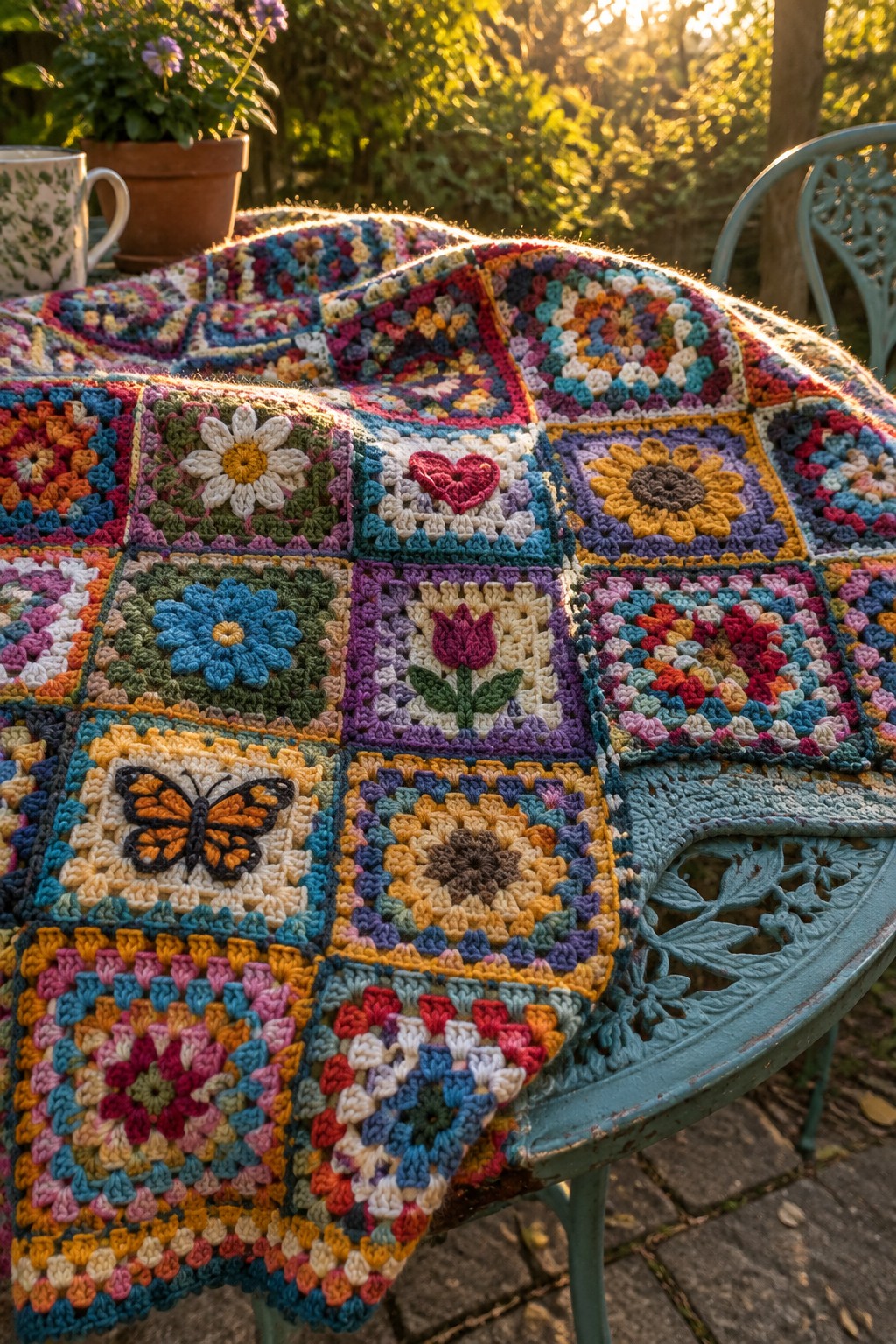
A granny square blanket made from individual motif squares lets you combine different centers like flowers, butterflies, and simple shapes into one project. Each square stays the same size so they join evenly into a rectangular throw. The color changes between squares and the repeated border rounds keep the layout balanced even when the centers vary. This style fits as a sofa blanket or lightweight bed cover where the mix of patterns adds interest without extra shaping.
What makes this idea useful is how simple it is to change the size by adding or removing rows of squares. You can swap in new motifs as you work or repeat favorites to use up different yarn scraps. For gifts, a design like this works especially well because you can match square colors to the recipient without starting over. The square format also makes it easy to test new centers on a small scale before committing to the full blanket.
Pastel Concentric Granny Squares for a Coordinated Blanket

Granny square motifs built with concentric color rounds create a simple way to make a blanket feel planned rather than random. Each square starts with a small flower center and adds rounds in the same soft pastel sequence, shifting only slightly in placement or emphasis across pieces. The result is a set of squares that join into a unified blanket without needing an exact match in every color order. The scalloped border on each square gives the finished layout a clean edge once the pieces are assembled.
What makes this idea useful is how little planning it actually requires beyond picking a repeating color order. These squares work especially well for a baby blanket or lap throw where the gentle palette stays easy on the eyes. You can change the number of rounds per square to use up different yarn amounts without breaking the overall look. For a larger project, keep the same color progression and just make more squares to fill the layout.
Frequently Asked Questions
1. How can I ensure my granny squares match in size for a coordinated layout? Measure each square after completing a few rounds and adjust your tension or hook size as needed to keep them uniform. Blocking the squares lightly with steam or pins on a mat helps them lie flat and align perfectly when arranged in patterns like rows or motifs. This step prevents gaps or puckering in the final blanket.
2. What yarn types work best for creative granny square blankets with coordinated designs? Choose medium weight acrylic or cotton blends for durability and easy care since they hold shape well during assembly. Opt for colors from the same dye lot or family to maintain coordination across squares. Test a small swatch first to see how the yarn behaves with your chosen stitch patterns.
3. How many squares are typically needed for different blanket sizes in these layout ideas? A baby blanket might use 20 to 30 squares depending on the layout while a throw could require 50 to 80. For larger beds aim for 100 or more by planning a grid that fits your dimensions. Always add a border row around the edges to finish the coordinated look neatly.
4. What joining methods keep the seams invisible in coordinated square arrangements? Use the slip stitch join or invisible seam technique with matching yarn to blend connections smoothly. Work from the back side and match the squares in your planned order before sewing. This approach preserves the visual flow of colors and patterns without drawing attention to the joins.
5. How do I adapt these ideas if I want to mix patterns while keeping a cohesive feel? Select a limited color palette of three to five shades and repeat key motifs like borders or centers across different square designs. Arrange them in balanced layouts such as alternating rows or symmetrical blocks to tie everything together. Sketch your plan on paper first to visualize the overall harmony.
