


I like to crochet dresses in my spare time and longer ones with full skirts have become a favorite of mine.
They feel comfortable to wear and you can layer them easily depending on the weather.
Here are 21 designs I came across that show different ways to create that flowing look.
Most use cotton or lightweight yarn so the skirt moves well.
You might find a pattern here that suits your skill level and style.
Long Crochet Dress with Openwork Skirt and Scalloped Hem
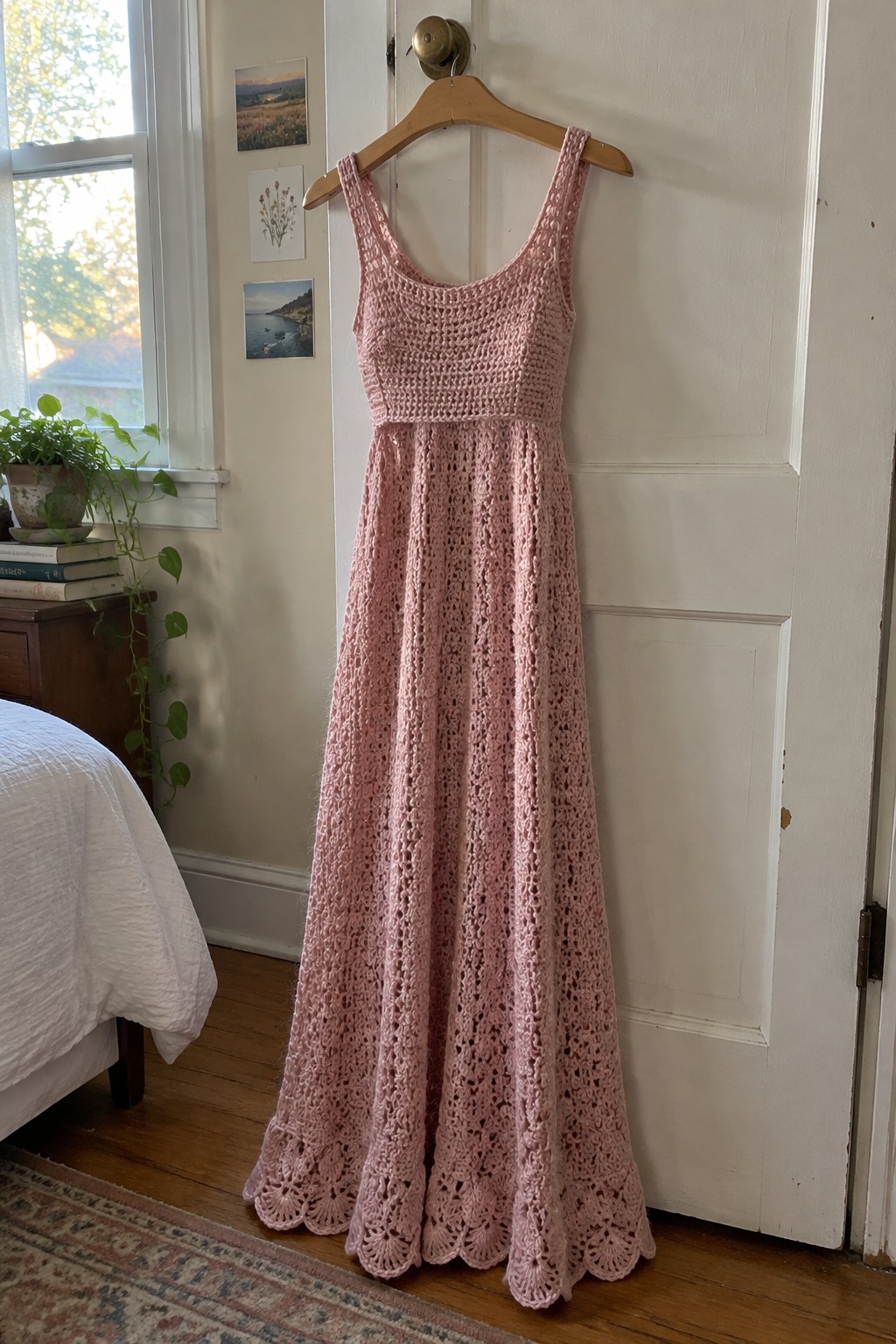
A long crochet dress pairs a fitted bodice worked in tighter stitches with a flared skirt made from open, repeating lace patterns that let the fabric drape and move. The skirt widens gradually from the waist and finishes with a scalloped edge that follows the natural shape of the lace repeats. This construction creates a lightweight wearable that stays cool while still covering the full length from shoulder to floor. The contrast between the denser top and airy skirt keeps the overall piece from feeling heavy.
What makes this idea useful is how the open skirt pattern uses less yarn than a solid stitch while producing good coverage and flow. You can easily adapt the length by stopping the skirt repeats earlier or add more rows for extra volume at the hem. The same shape works well in cotton for summer or a warmer fiber for cooler months, and the bodice can be widened or narrowed during the initial rows to adjust fit. For gifts, a design like this stands out because it functions as both clothing and a statement piece without needing extra finishing details.
Lacy Openwork Maxi Dress
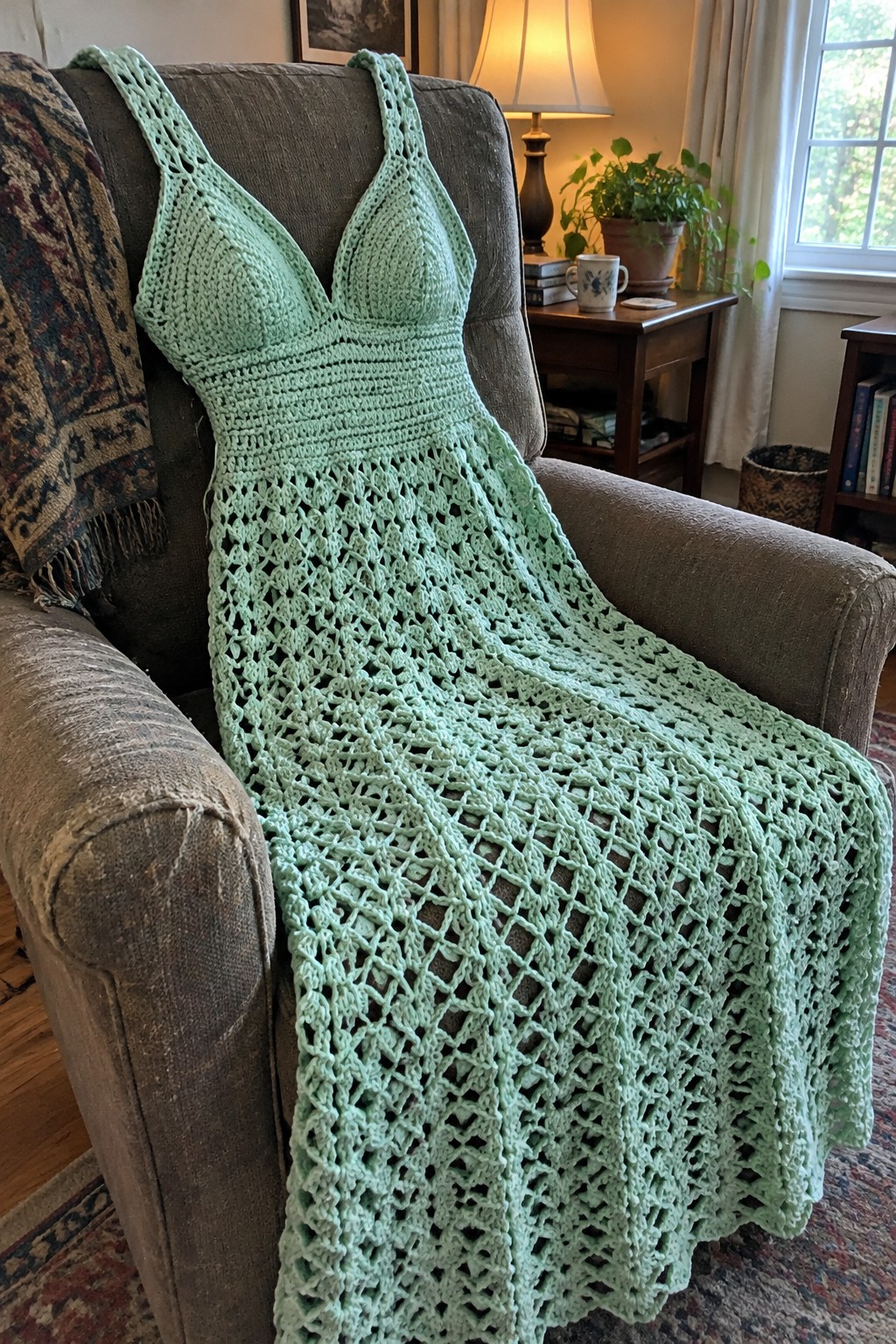
A long crochet dress pairs a fitted bodice with a wide flowing skirt worked in an open mesh pattern. The bodice uses closer stitches to shape the bust and waist while the skirt switches to a repeating lattice that creates an airy, lightweight effect. This contrast in density gives the dress its movement and keeps the overall piece from feeling heavy. It belongs in the wearable category as a full-length garment.
What makes this idea useful is the clear split between the denser top and the open skirt. You can shorten the skirt for a midi length or widen the mesh for more drape without changing the bodice. The open pattern also works well as a beach cover-up or summer layer over a slip. A dress like this photographs clearly for Pinterest because the texture change from top to bottom stands out in a single image.
Square Motif Long Dress with Openwork Skirt
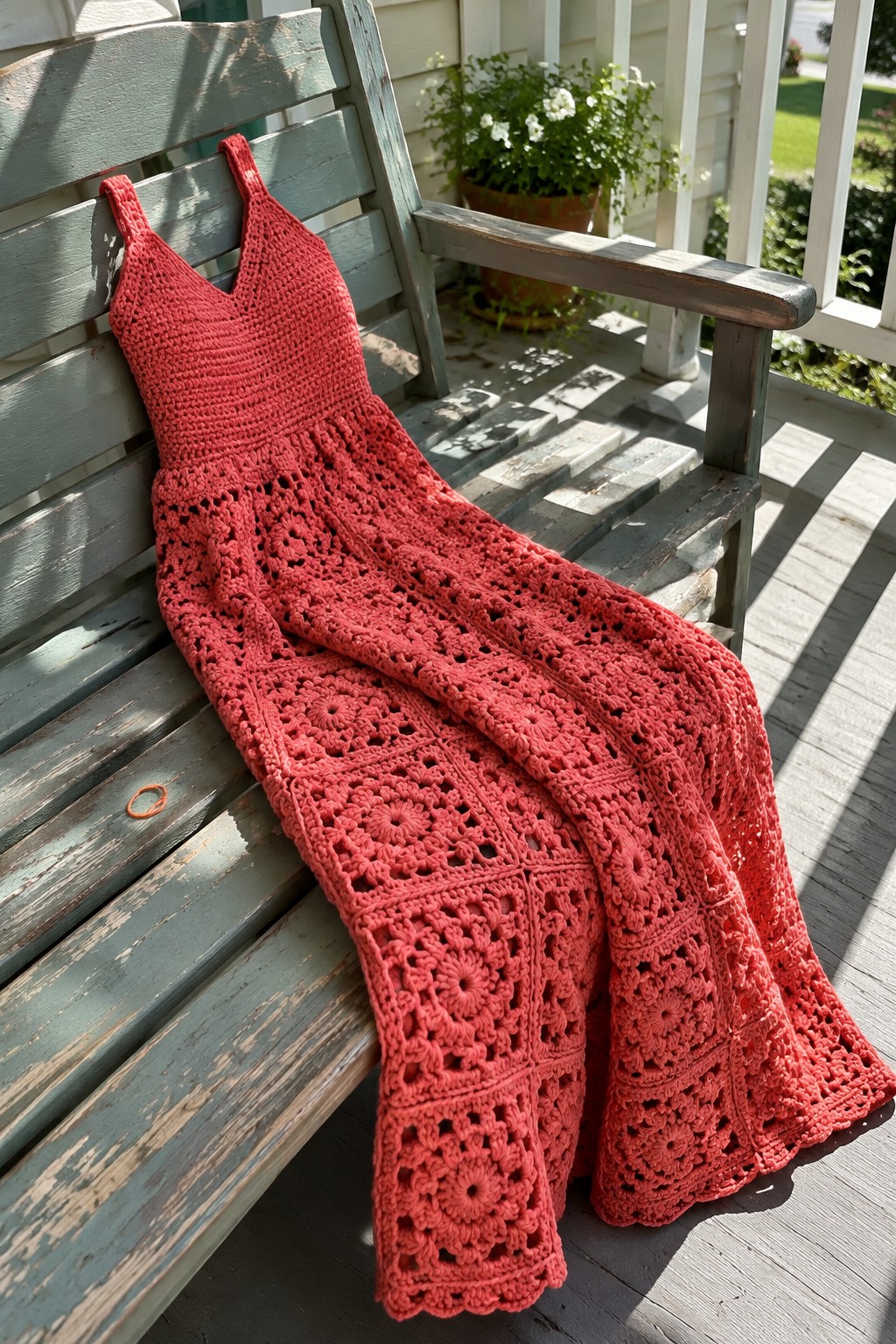
A long dress worked in joined square motifs creates the skirt section while the upper bodice stays denser for coverage. The squares repeat in rows that gradually widen toward the hem, giving the fabric natural flare and movement without extra shaping. Solid red yarn makes the open centers and raised stitches stand out clearly against the bench. This fits the wearable category as a full-length garment that can be worn over a slip or layered.
The structure makes this a smart option for warm weather because the open squares add breathability while the length covers more skin. You can change the skirt length simply by adding or removing motif rows before the final border. Switching the solid color to a gradient or using two tones per square lets you personalize it without altering the motif pattern. A project like this stands out on Pinterest when shown flat or worn because the repeating geometry reads cleanly in photos.
Miniature Dress Appliqués with Openwork Skirts
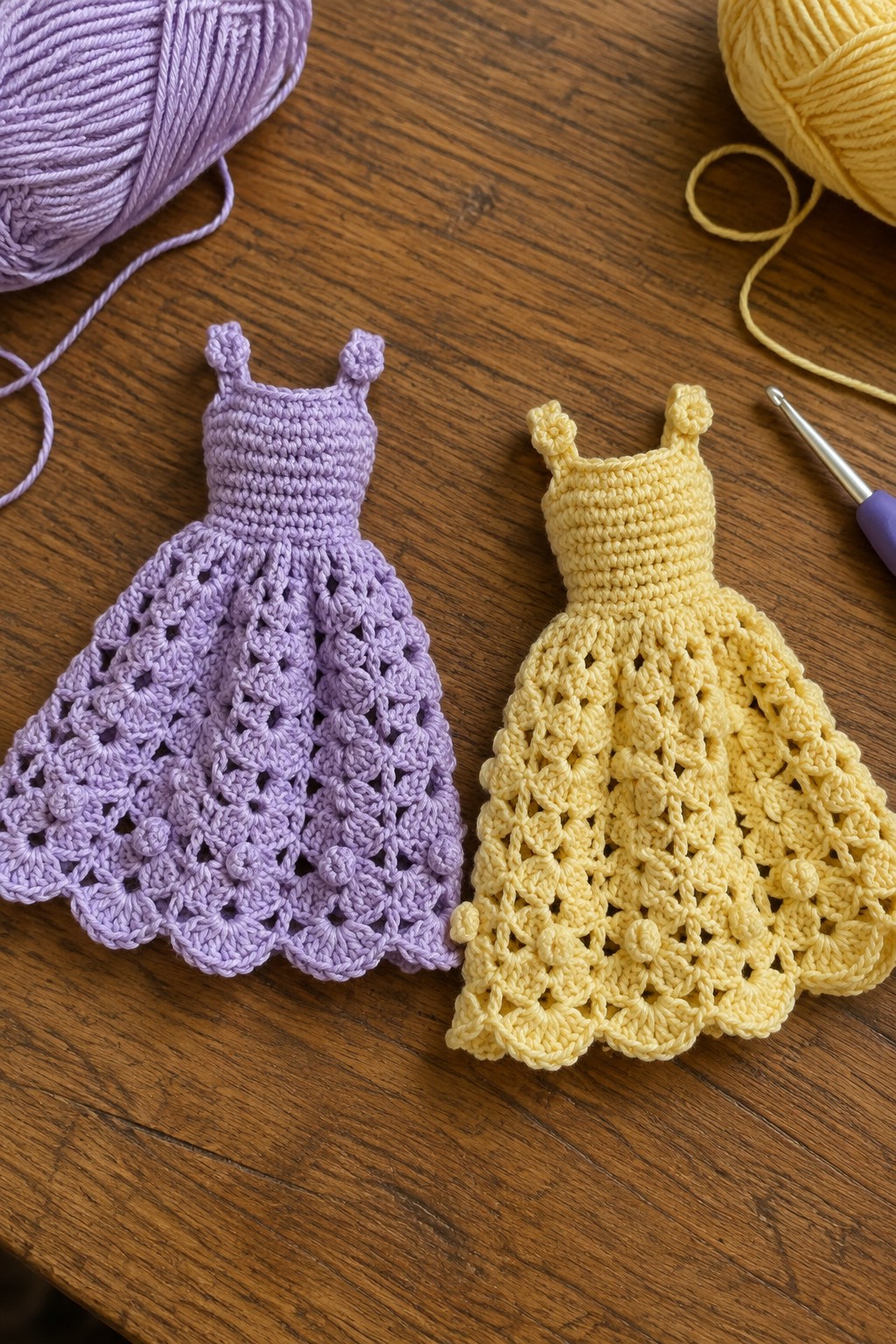
Crochet dress motifs pair a solid bodice with rows of open lace that flare into a scalloped hem. These small pieces suit appliqué work on bags, jackets, or larger garments where a flowing skirt detail is needed. The contrast between the dense top section and the lighter skirt rounds creates visual balance at a compact size.
The small scale makes this easy to adapt by adding or removing skirt rounds to change the length. For gifts, a design like this works especially well when made in batches using different colors. You can also turn the same shape into a bookmark or ornament by adding a hanging loop at the top.
Openwork Maxi Dress With Repeating Lace Motifs

A long dress built from lightweight yarn and rows of openwork motifs gives the skirt real movement while keeping the overall weight low. The bodice stays close to the body and the skirt expands through gradual increases in the pattern, so the fabric drapes without bulk. This style works as a single wearable layer or over a simple slip.
What makes this idea useful is how the same motif sequence can be lengthened or shortened without changing the stitch count. You can swap the pale shade for a deeper color if you want less see-through fabric, or stop the skirt earlier for a midi version. The open structure also means it packs small for travel and still looks intentional when worn.
Long Dress with Bobble-Stitch Skirt Panels
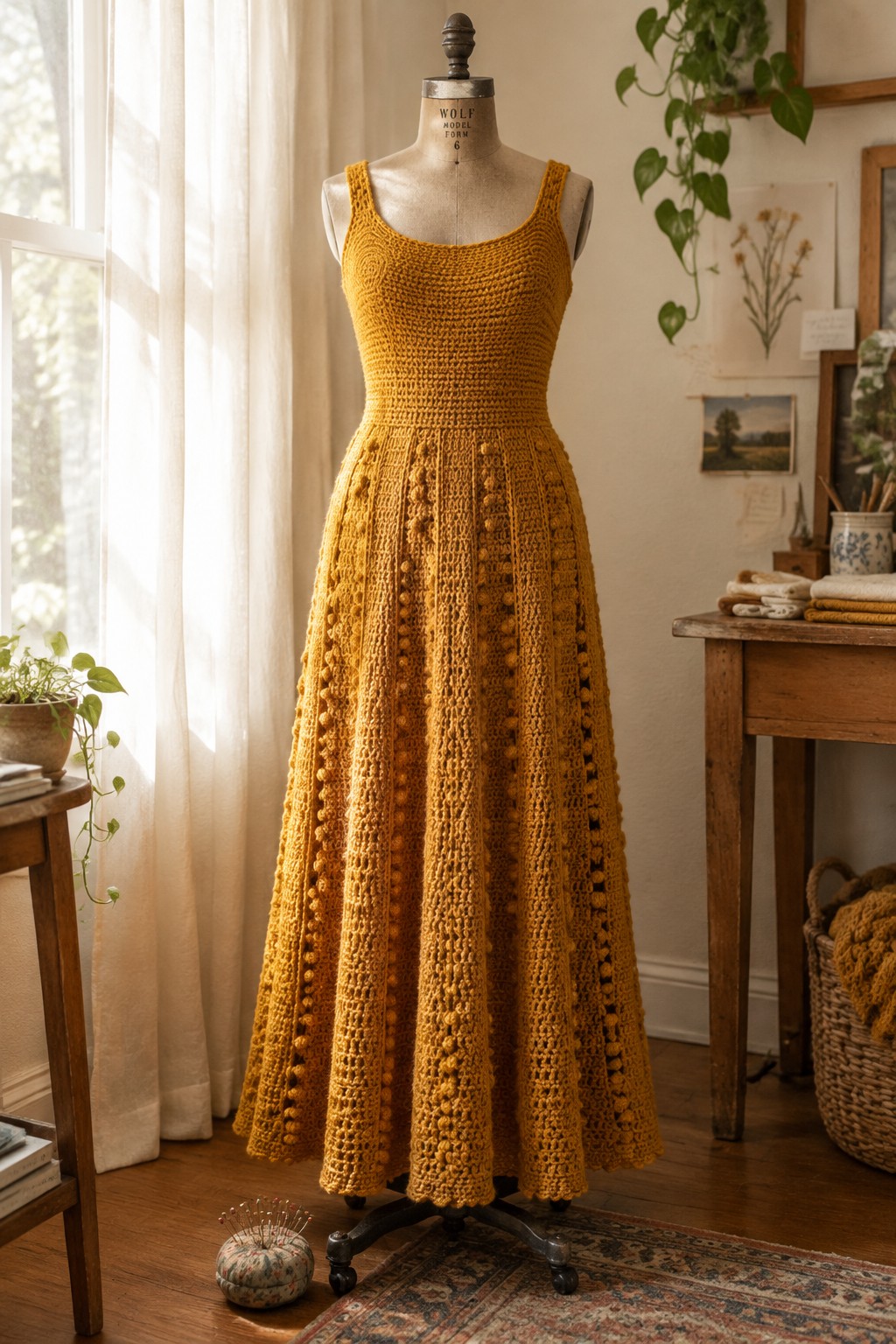
A long crochet dress with a fitted scoop-neck bodice and an A-line skirt uses vertical rows of bobble stitches to create texture across the lower half. The bobbles run in spaced columns that add dimension while keeping the overall shape simple and wearable. This approach suits someone who wants a flowing silhouette without relying on lace or openwork for interest.
What makes this idea useful is the way the bobble columns add structure to the skirt so it holds its shape when worn. You can shorten the dress to midi length or remove some bobble rows if you prefer less texture. The solid color also makes it easy to adjust the fit or swap in a different stitch pattern for the bodice without clashing.
Rainbow Striped Maxi Dress with Bobble Edged Bands
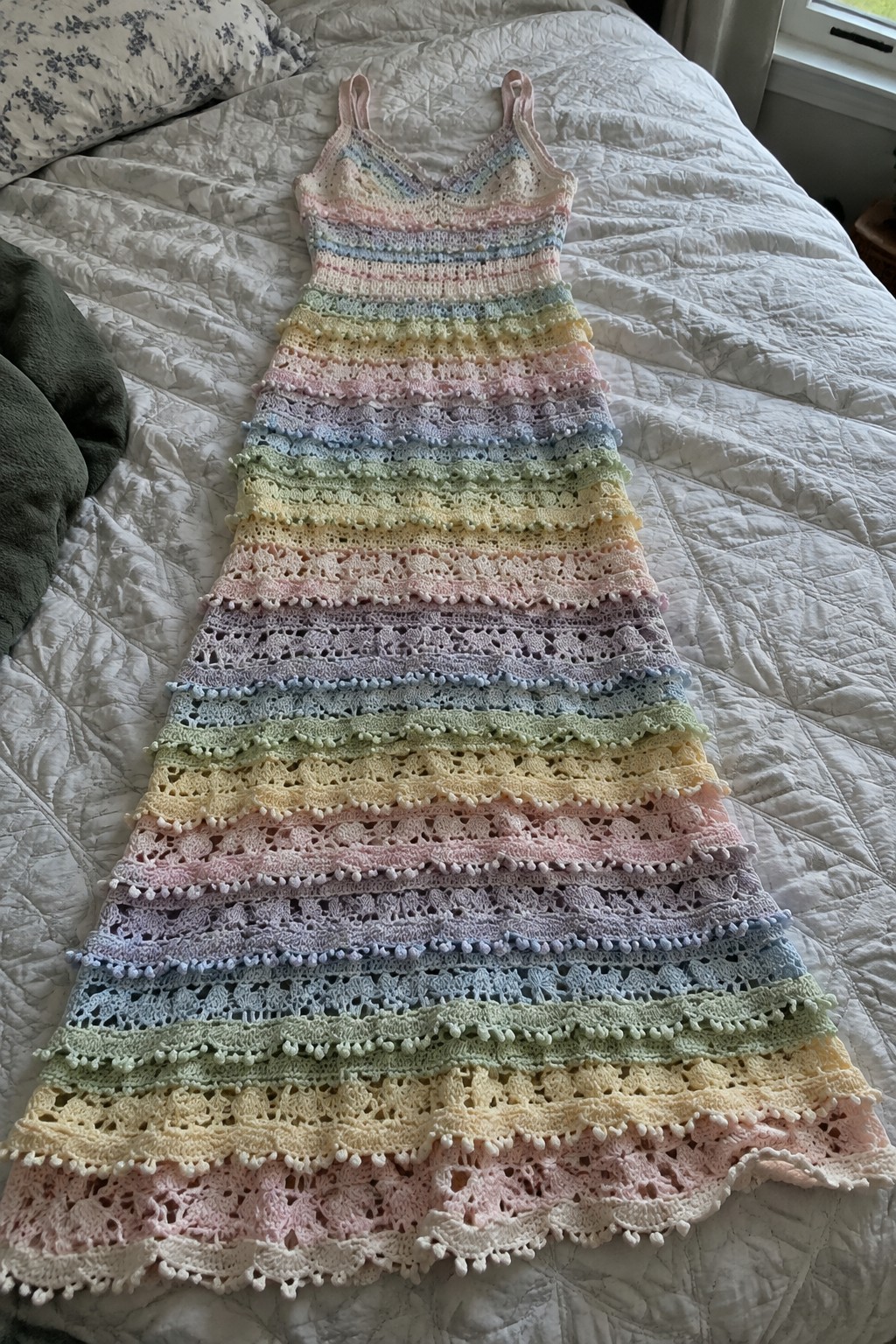
A long crochet dress worked in horizontal bands of soft pastel rainbow colors creates a flowing A-line shape that flares from the bodice to the hem. Each band features its own openwork pattern and ends with a small bobble row that marks the color change. Simple straps hold the fitted top in place while the skirt length gives the piece its maxi proportions. This approach belongs in the wearable category as a lightweight dress built section by section.
What makes this idea useful is the way the striped construction lets you adjust length or color order without starting over. You could swap the full rainbow for a two-color repeat or shorten the skirt to knee length while keeping the same band sequence. The bobble edges between sections help the stripes stay distinct even when the dress moves. A project like this stands out on Pinterest because the clear horizontal lines and color progression photograph cleanly from above.
Lacy Openwork Maxi Dress with Thin Straps
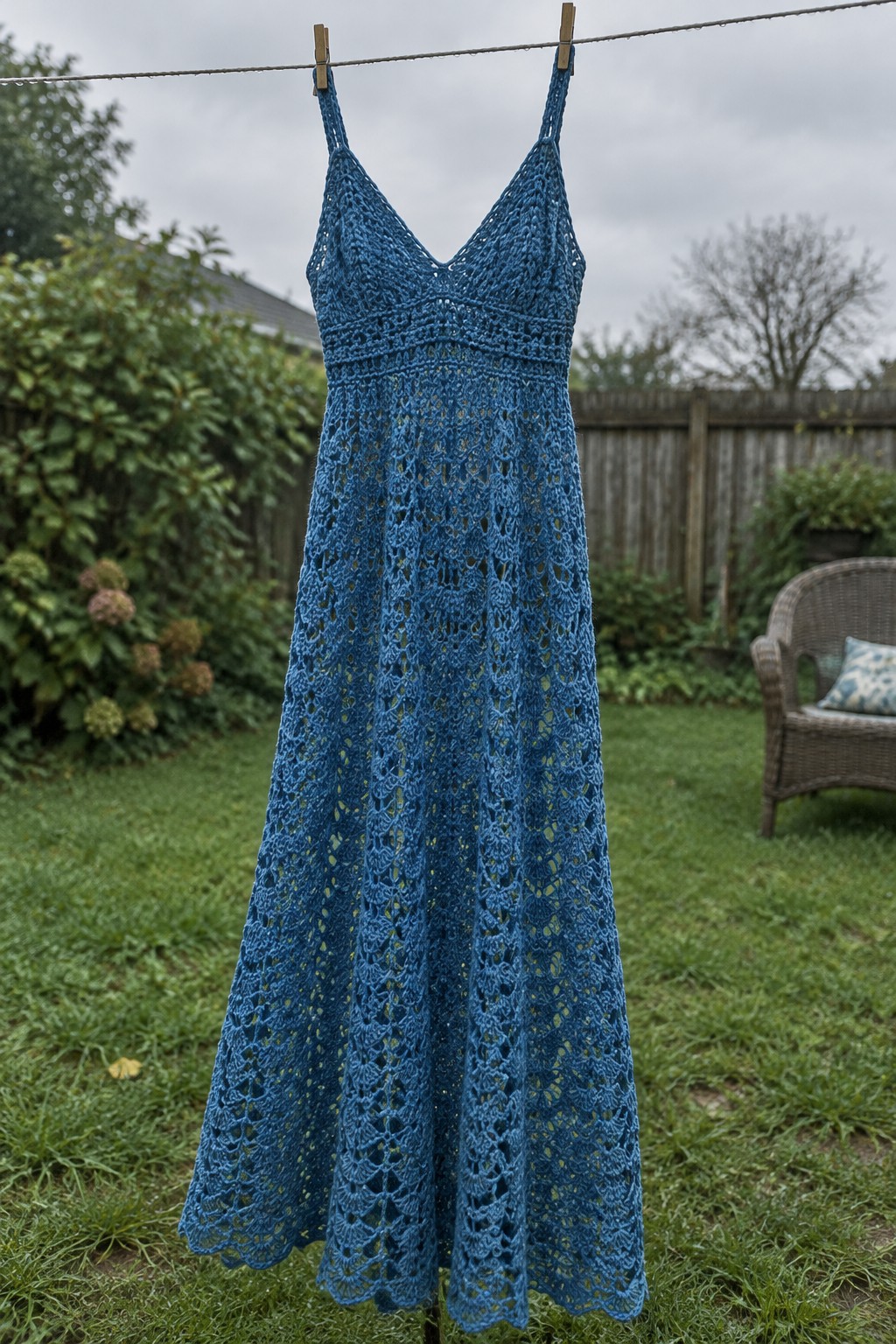
A long dress built from openwork crochet creates a lightweight, breathable layer suited to warm weather. The pattern uses a fitted bodice with narrow straps and a V-neck, then expands through increases into a flared skirt made of repeating open motifs. The scalloped hem finishes the edge cleanly while keeping the overall weight low. This project falls into the wearable category as a full-length summer dress.
What makes this idea useful is how the open stitches let air pass through and allow the skirt to drape without bulk. You can shorten the skirt by dropping pattern repeats or widen the bodice with extra increases to fit different body shapes. The solid color keeps the texture visible, so the dress layers easily over a slip or under a cardigan. Scaling the same stitch pattern down works well for a tunic or top instead.
Lace Sundress with Bobble Accents
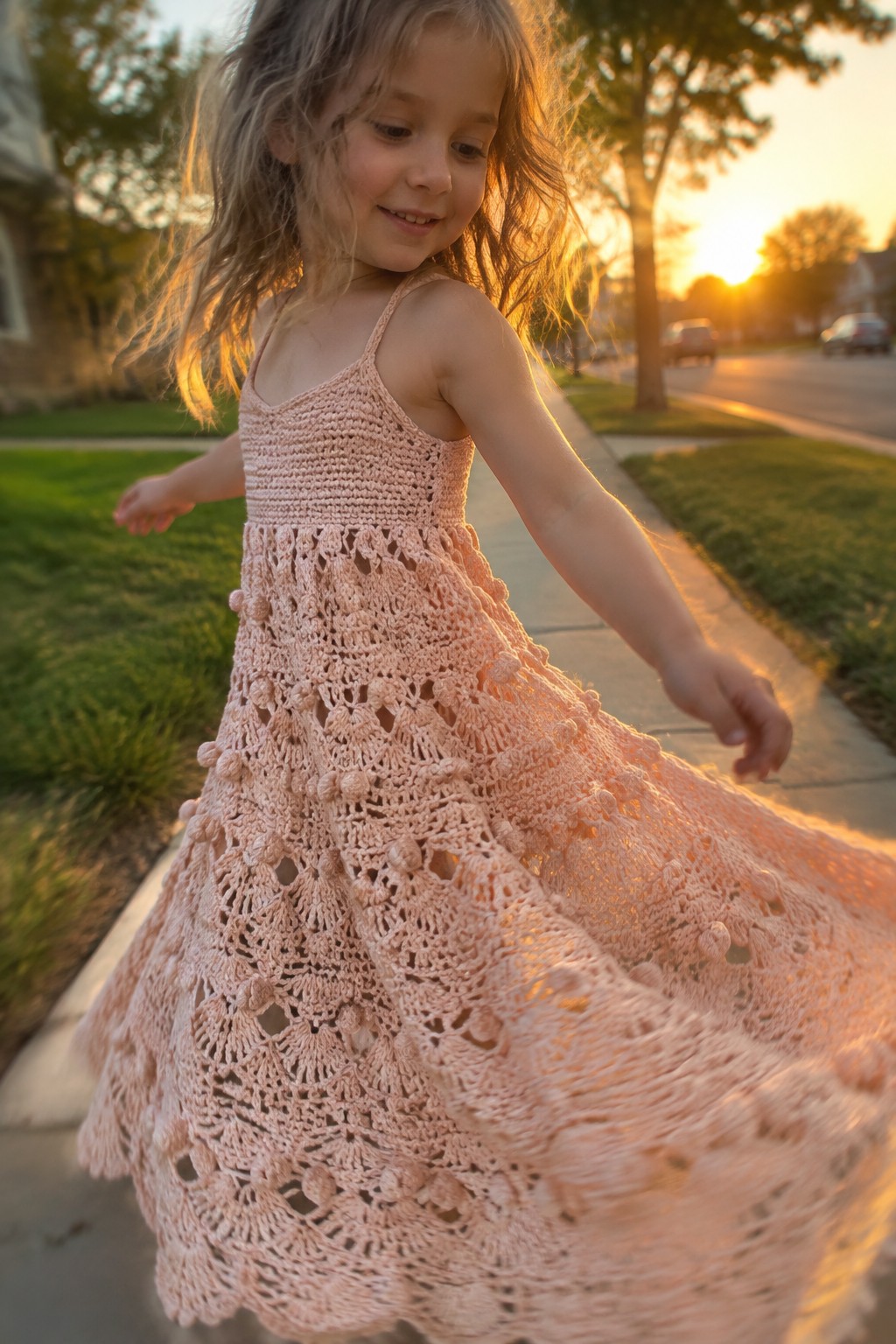
A long crochet dress in this style combines a fitted upper section with straps and a wide lace skirt made from repeating openwork motifs. The peach tone lets the pattern show clearly while the bobbles along the lower tiers add weight and movement to the hem. This approach fits the wearable category because the solid top provides structure and the flared lace skirt creates the flowing shape without extra layers.
What makes this idea useful is the way the skirt can be extended by adding more motif rounds to change the length. The open pattern works in lighter yarn for warmer months or slightly heavier yarn for cooler evenings. For gifts, a design like this can be sized up or down by adjusting the bodice width and skirt repeats. The scattered bobbles also give a simple way to customize the hem without changing the main stitch pattern.
Three Textured Skirts on Basic Dress Shapes

A simple sleeveless bodice can be paired with a long flared skirt worked in one repeated texture. One version uses open diamond lace that creates a light see-through effect. Another adds rows of small bobbles for a raised surface. The third joins granny squares in shifting tones to build the skirt in blocks. These fit the wearable category for dolls or as small display pieces.
The small scale makes these quick to finish and test new skirt ideas. Swap the lace for filet or the bobbles for puff stitches while keeping the same top. Try the granny square version in two colors only or extend the length for a larger doll. This kind of project works especially well as photo props or craft fair stock because each skirt reads clearly from a distance.
Circular Yoke Dress With Bobble Lace Skirt
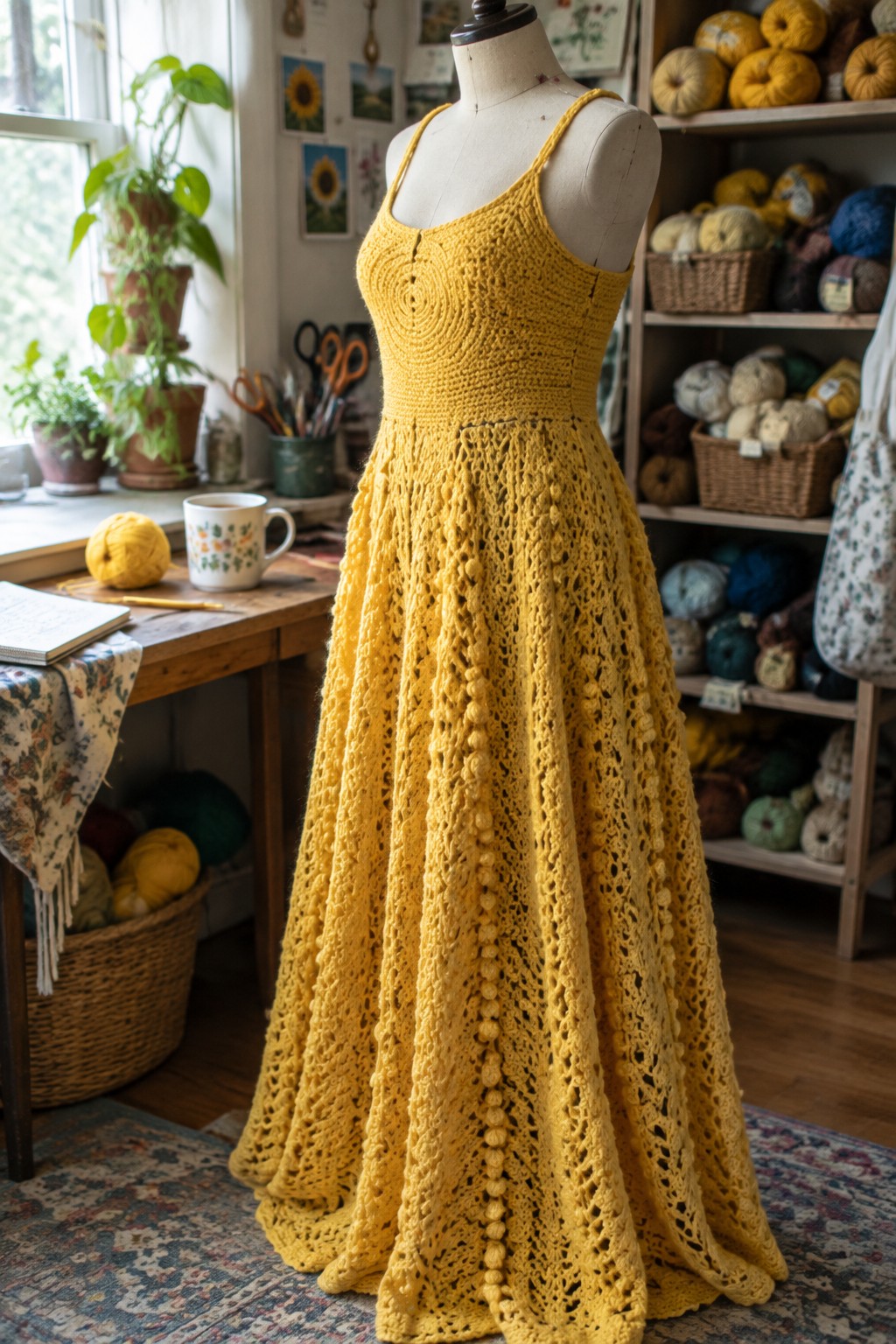
A long dress built from a central circular motif at the bust works well for creating a smooth transition into a flared skirt. The bodice stays relatively solid while the lower half shifts into open lace with vertical bobble columns that add weight and movement without bulk. This structure fits the wearable category and gives the skirt its natural flow through gradual increases and varied stitch density.
What makes this idea useful is the way the circular start controls the fit at the top while letting the skirt expand freely below. You can shorten the overall length or swap the bobble bands for simpler openwork if you want less texture. The bright yellow color also makes the stitch pattern stand out clearly, so the same layout would translate easily to other solid shades for different seasons.
Long Dress with Alternating Open and Motif Bands
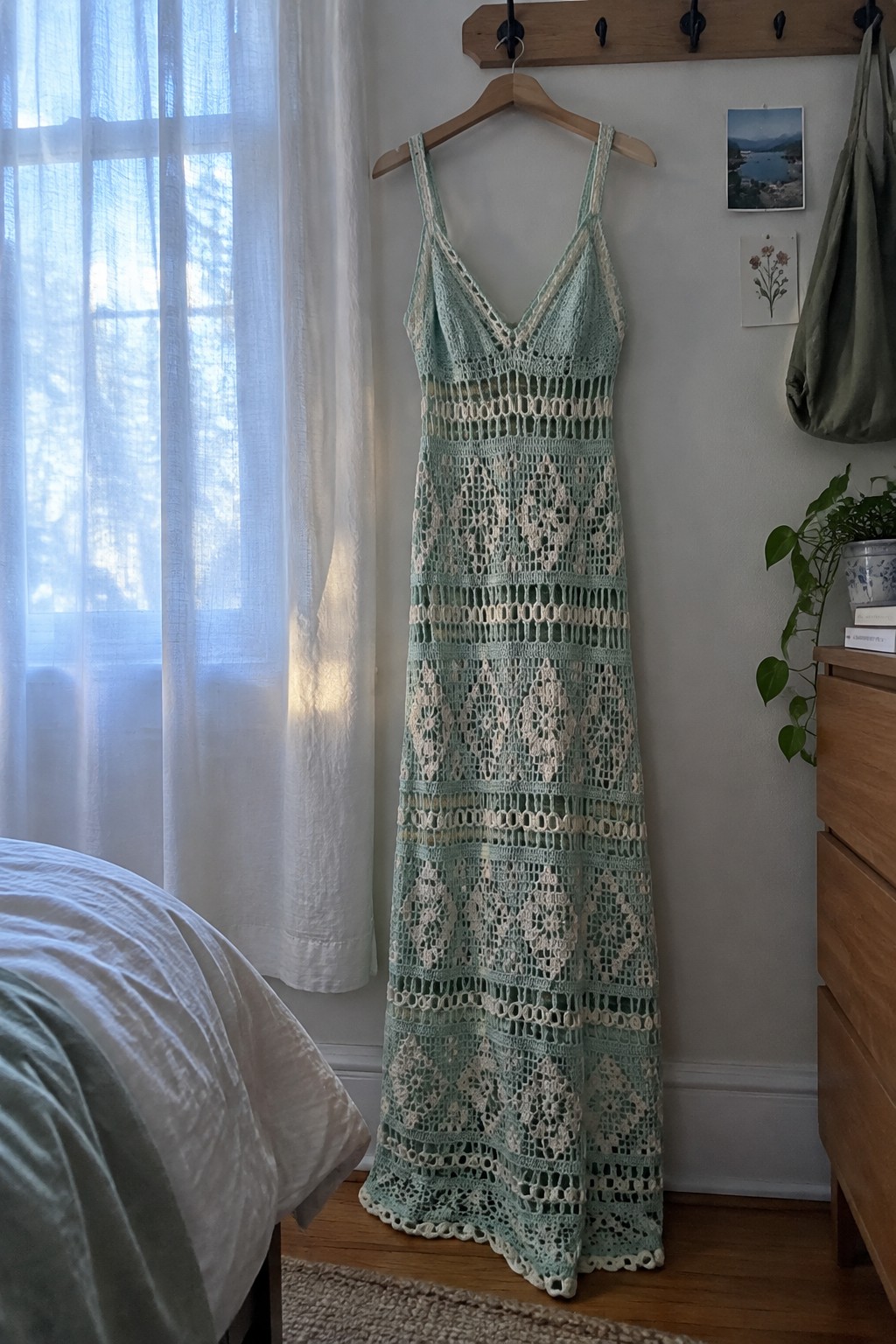
This crochet idea centers on a full-length dress built from horizontal bands that switch between open lace rows and denser motif sections. The light mint base with cream accents creates clear contrast across the skirt while the V-neck bodice stays plain to balance the pattern below. The repeating band layout keeps the skirt light and flowing without heavy fabric. It belongs in the wearable category as a breathable maxi dress.
The band construction makes this dress simple to lengthen or shorten by adding or dropping rows. You can swap the mint and cream for any two colors or work it in one shade to let the motifs stand out more clearly. The open sections help the piece suit warm weather since they reduce bulk and improve drape. A project like this photographs well for sharing because the horizontal pattern reads cleanly even in full-body shots.
Circular Yoke Tiered Ruffle Dress

A crochet dress starts with a circular yoke worked in continuous rounds that form a spiral center, then transitions into a bodice before dropping into stacked tiers of openwork ruffles. Each tier uses a scalloped edge that overlaps the next, building a flowing skirt with visible negative space through the lace. This structure works as a lightweight wearable that can be adjusted for length or fit by changing the number of tiers.
What makes this idea useful is how the tiered skirt lets you customize the finished length without reworking the whole bodice. The open lace pattern pairs well with cotton or linen blends for warmer weather and can be lined or worn over a slip. You could swap the coral for a neutral tone to increase wearability or shorten the tiers into a tunic length for a different silhouette.
Tiered Openwork Maxi Dress

A tiered maxi dress uses successive layers of open crochet to build a long flowing skirt from a fitted V-neck bodice. Thin straps support the upper section while each added tier widens the shape and creates natural ruffles through the stitch pattern. The openwork keeps the fabric light so the layers drape and move instead of weighing the piece down.
What makes this idea useful is the tiered format that lets you control length and volume by changing how many layers you add. The open stitch keeps it wearable in warm weather and works in any solid or gradient color you choose. This structure also makes a strong Pinterest save because the ruffles show up clearly in photos and translate well to different body sizes.
Scalloped Fan Skirt Long Dress

A long crochet dress gains its shape from a fitted upper section worked in solid stitches that shifts into an open skirt built from stacked fan motifs. Each row of fans widens the fabric and creates the scalloped edge that gives the hem its soft wave. The single-color choice keeps the pattern readable and lets the openwork do the visual work, making the dress suitable as a lightweight summer layer or beach cover-up.
What makes this idea useful is how the repeating fan rows let you change the finished length without redesigning the whole piece. The same skirt pattern can be shortened into a midi or lengthened for more coverage, and the bodice can be adjusted with basic increases or a different hook size to fit different body shapes. For gifts, the dress works well because most of the interest comes from the stitch pattern rather than color changes, so it stays simple to customize.
Striped Openwork Halter Maxi Dress
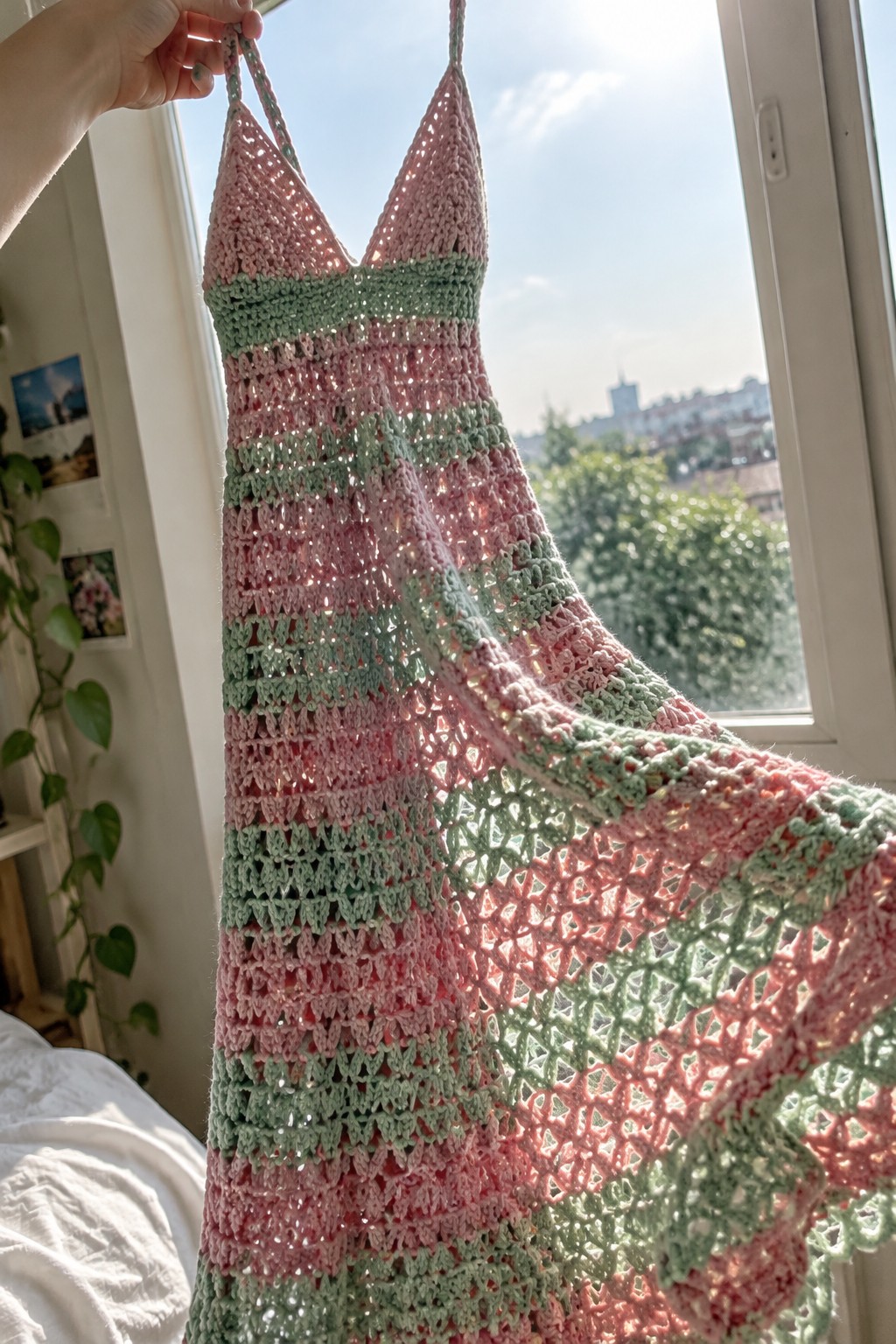
A long dress worked in repeating horizontal bands of pink and mint green uses an open lacy stitch that creates a see-through mesh effect across the full length. The top is shaped into two pointed triangles that join at the neck with narrow straps, while the skirt flares gently from the underbust and ends in a scalloped hem. The color changes fall at regular intervals so each stripe sits on its own row repeat and shows the fan-like stitch pattern clearly.
What makes this idea useful is how the stripe sequence breaks up the long silhouette without extra shaping. You can adjust the number of rows per color to use up partial skeins or shorten the whole piece into a tunic by stopping at mid-thigh. The same open stitch and color-blocking approach also works for a lightweight cover-up or beach skirt since the fabric stays airy and drapes easily.
Long Dresses Mixing Bobble Texture and Open Lace
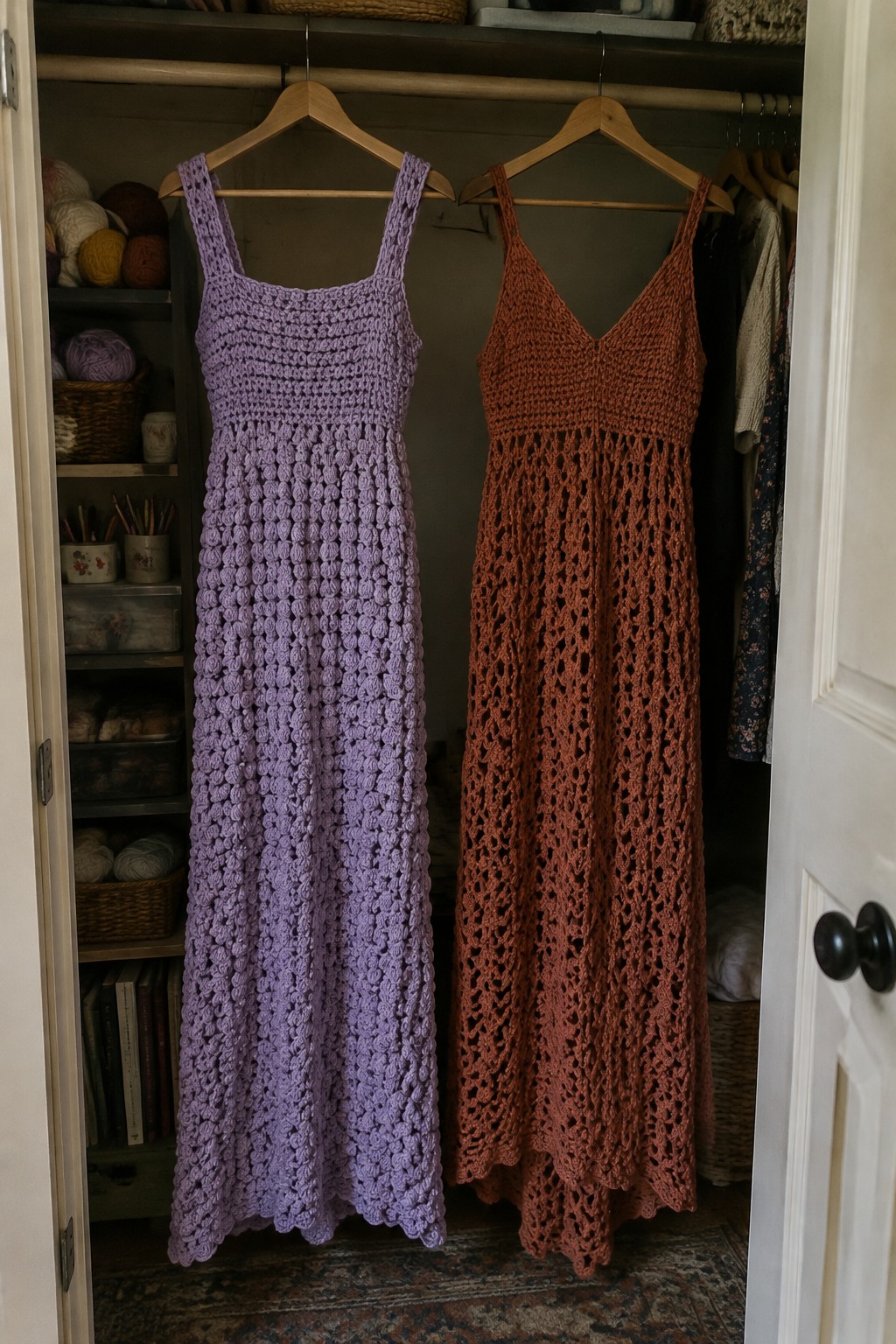
Long crochet dresses often combine dense and open stitch sections to control both shape and drape. The purple dress uses a raised bobble pattern across the bodice and lower skirt while keeping a smoother band through the middle. The rust dress switches to an open lace pattern below the bust, which creates a lighter, more fluid lower half. Both are wearable garments meant to be worn as complete dresses rather than separate pieces.
What makes this idea useful is the chance to adjust coverage and weight by changing where you place the openwork. You could shorten the skirt on either version for a midi length or swap the bobble sections for a simpler stitch if you want faster progress. These designs stand out for everyday wear because the full length gives you options to layer or wear alone depending on the season. A project like this also photographs well for pattern sharing since the stitch contrast shows up clearly in finished shots.
Long Dress with Repeating Lace Panels and Scalloped Hem

A long crochet dress works well when the bodice stays fitted and the skirt shifts into wide horizontal bands of openwork. The pattern uses repeating floral and geometric motifs that create visual texture without adding bulk, while the scalloped edge gives the hem a clean finish. This approach suits wearable projects where the skirt needs both movement and structure so it drapes properly over the legs.
What makes this idea useful is the modular skirt construction, which lets you add or remove bands to change the length or fullness. The same motif sequence can be worked in a different color or fiber to suit cooler weather or a lighter summer version. For gifts, the dress scales easily to different sizes by adjusting the starting chain and panel repeats, and the consistent pattern makes it simple to photograph for pattern notes or sharing.
Floral Motif Maxi Dress with Openwork Construction
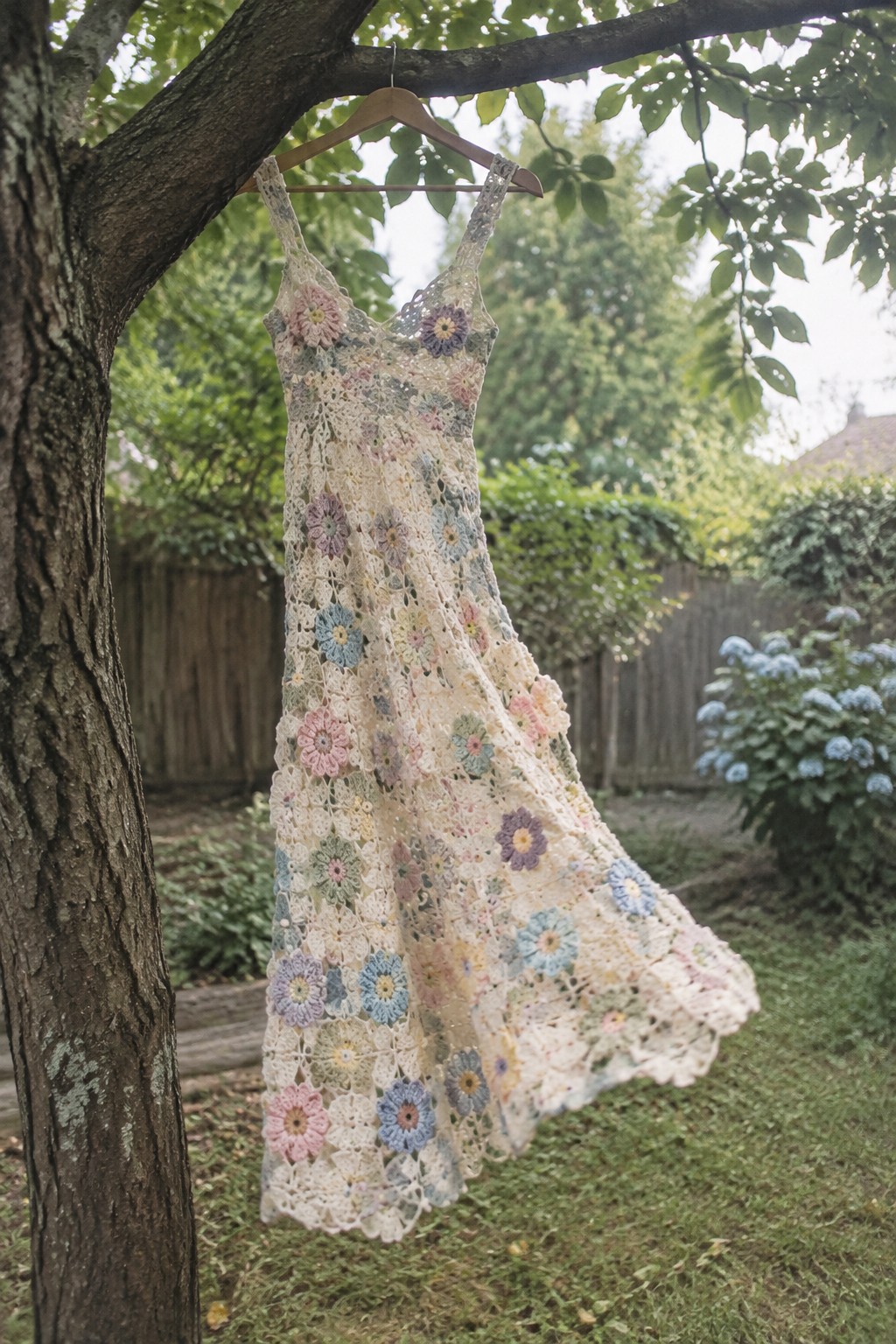
A long dress built from repeated floral crochet motifs gives the skirt its flowing shape and light texture. Each motif connects edge to edge to form the bodice and full skirt, with open spaces between stitches that let the fabric move easily. Thin straps and a simple neckline keep the upper section fitted while the lower motifs create natural flare and movement.
What makes this idea useful is the modular layout that lets you change length by adding or removing motif rows before joining. You can swap motif colors to match different linings or wear it over a slip for coverage. The same motif pattern scales well for different sizes since you simply adjust how many squares go across the bust and hips. For Pinterest, the mix of soft colors and visible lace structure shows up clearly in photos.
Spiral Motif Dress With Openwork Skirt
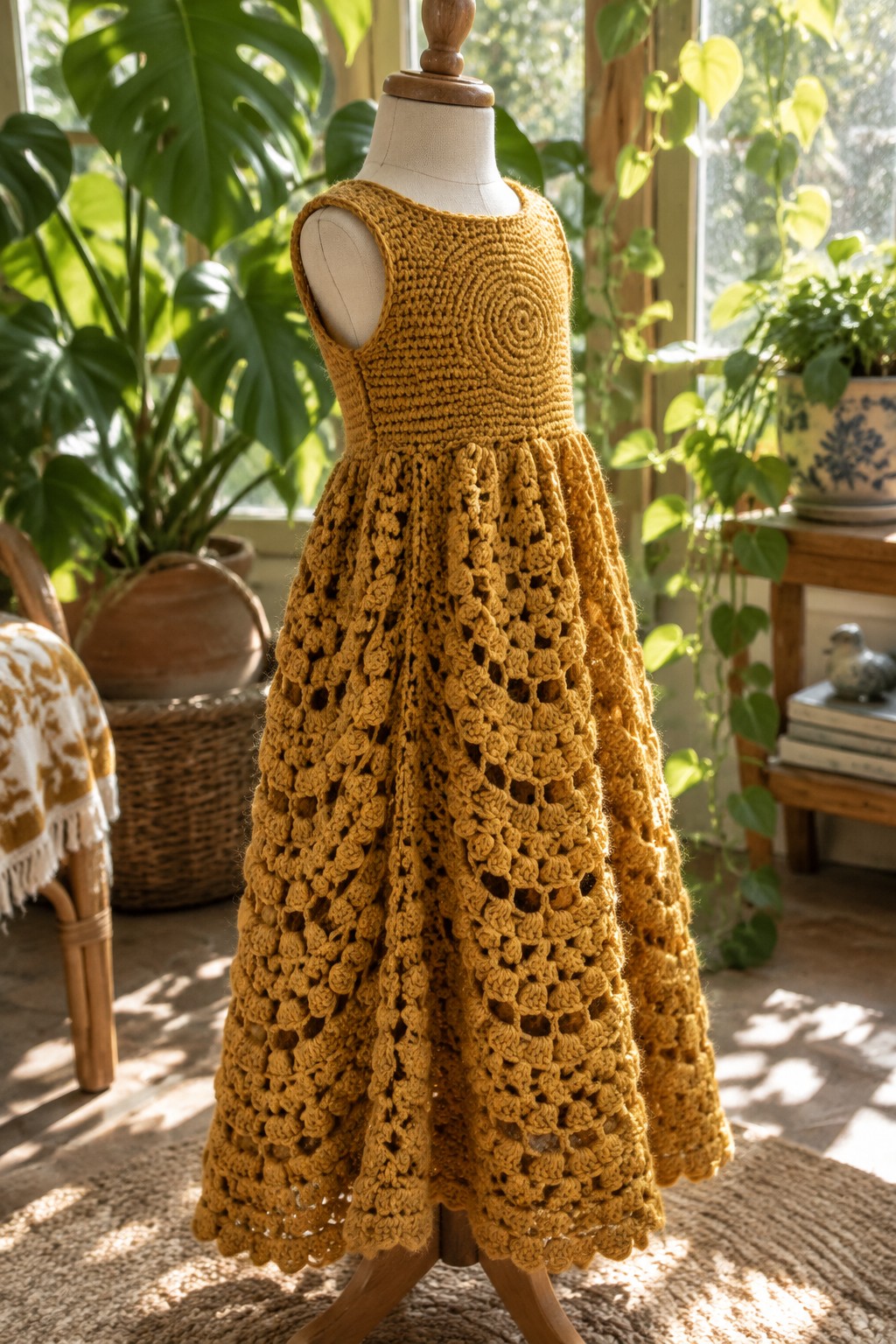
A sleeveless crochet dress built with a solid upper section and a central spiral motif creates a clean focal point before shifting into a flared skirt made of repeating open clusters. The bodice stays fitted through consistent rows while the lower half expands with the lace pattern to give the skirt its shape and drape. This approach fits the wearable category when the goal is a single garment that combines structure on top with breathable texture below.
What makes this idea useful is how easily the skirt length or motif size can be adjusted to fit different ages or body types without changing the overall construction. The color choice helps the openwork show up clearly in photos, which is helpful for pattern sharing or selling finished pieces. A project like this works especially well for warm weather wear or as a starting point for trying out other lace repeats in the skirt section.
Frequently Asked Questions
1. How do I choose the right size for a long crochet dress with a flowing skirt? Measure your bust, waist, and hips accurately before ordering, and check the specific size chart provided by the seller since crochet fabric has natural stretch but varies by pattern. Opt for a slightly loose fit around the hips to maintain the skirt’s flow without clinging, and consider trying on similar styles in person if possible to account for the dress’s length and drape.
2. What is the best way to care for these crochet dresses to avoid damage? Hand wash them gently in cold water using a mild detergent designed for delicate fabrics, then lay them flat to dry away from direct sunlight. Avoid wringing or machine drying as this can distort the crochet stitches and flowing skirt shape. Store the dress on a padded hanger in a cool, dry place to prevent stretching or snags over time.
3. Are these dresses suitable for different weather conditions? Lightweight cotton or linen crochet versions work well in warm weather due to their breathable nature and flowing skirts that allow air circulation. For cooler evenings, layer with a light cardigan or shawl, and choose styles with denser crochet patterns for added coverage. They may not be ideal for very cold climates without heavy layering underneath.
4. How can I style these dresses for casual versus formal occasions? For casual looks, pair with sandals, a denim jacket, and minimal jewelry to keep the focus on the crochet details and flowing skirt. For formal events, add heels, elegant earrings, and a clutch while opting for dresses with more intricate patterns from the list that include subtle embellishments like beads for extra polish.
5. What body types suit long crochet dresses with flowing skirts best? These styles flatter a variety of shapes because the flowing skirt creates movement and balance, especially for pear or hourglass figures by skimming over the hips. Those with athletic builds can enjoy the texture contrast from the crochet top, while plus-size wearers benefit from the forgiving drape that avoids clinging. Always select based on personal comfort and the dress’s specific silhouette.
