


I have been crocheting for years and I like to find patterns that feel current instead of dated.
Lately I have been looking for dress styles that work for women over 50 and still have a clean shape.
I gathered some ideas that skip the loose and shapeless looks many patterns offer.
These options focus on better fits and simpler lines that I think suit daily wear.
I hope one or two of them give you a starting point for your next project.
Square-Neck A-Line Crochet Dress

A sleeveless dress with a square neckline uses openwork across the bodice to create light coverage while keeping the upper body breathable. The skirt switches to a repeating shell pattern that adds texture and slight flare without extra bulk. An A-line cut combined with the scalloped hem gives the dress a balanced shape that moves easily and sits at knee length.
What makes this idea useful is how the two-section construction lets you change skirt length or density without reworking the whole piece. You can swap the open bodice for a solid stitch if you prefer more coverage on top. This shape works well for warm weather because the open sections reduce weight while the flared skirt still provides coverage. For personalization, adjust the waistband width to change where the dress sits on the body.
Wrap Dress with Openwork Skirt Panels

A sleeveless wrap dress uses a solid stitch pattern across the bodice and a series of vertical openwork panels on the skirt. The crossover V-neck creates a fitted shape through the waist while the flared lower section adds movement without extra bulk. A simple braided tie belt finishes the waist and the dress length lands at the mid-calf.
What makes this idea useful is the built-in adjustability of the wrap front, which lets you modify the fit across different body shapes without changing the pattern. The open panels on the skirt work up quickly once the repeat is established and give the piece better drape than a fully solid skirt. You could easily swap the mint shade for navy or charcoal to suit cooler seasons or shorten the skirt by two pattern repeats for a knee-length version.
Bobble Skirt Tank Dress

A sleeveless A-line dress pairs a plain ribbed bodice with a skirt covered in dense bobbles. The upper section uses vertical ribbing across the straps and chest for a clean fit while the lower half builds texture through repeated raised stitches that create a dotted surface. This split approach keeps the bodice light and the skirt structured so the dress holds its shape when worn.
What makes this idea useful is the way the bobble texture adds visual weight to the lower half without extra shaping. You can shorten the skirt for a tunic length or extend it for more coverage depending on the season. The simple bodice lines also make it straightforward to tweak the width at the bust or hips. For Pinterest, the strong texture contrast shows up clearly in photos even in a single color.
Button-Front Shirt Dress with Tie Belt and Openwork Hem

A shirt-style crochet dress builds shape through a front button placket and a simple collar that frames the neckline. Short sleeves keep the top light while the self-tie belt cinches the waist before the skirt flares into an easy A-line. The lower edge finishes with a band of repeating open motifs that create movement and keep the hem from looking heavy.
What makes this idea useful is the belt, which lets you adjust the waist on different body shapes without changing the pattern. You could swap the coral for navy or taupe to match more wardrobes or shorten the skirt for a different proportion. A project like this works especially well as an everyday piece because the buttons make it simple to wear and the flared shape flatters without needing extra shaping details.
Granny Square Dress with Square Neckline

A dress built from joined crochet square motifs creates a grid-like structure across the bodice and skirt. The squares meet at the shoulders and neckline to form a wide square opening, while short sleeves are worked directly from the top row of motifs. This modular layout produces an open, breathable fabric that still holds its shape through the torso and hips.
What makes this idea useful is the ability to adjust motif size or switch yarn colors to shift the dress length or overall tone without changing the pattern. The grid structure makes it simple to add or remove rows for different heights or to create a longer tunic version. A project like this works especially well for everyday wear because the open stitch pattern keeps the garment light while the repeating squares give it a clean, modern finish.
Sleeveless Midi Dress with Solid Bodice and Lace Skirt

A sleeveless crochet dress gains a modern shape when the upper section uses a dense stitch for a clean fitted bodice while the lower half switches to an open lace pattern that flares outward. The transition creates natural waist definition without extra shaping, and the scalloped edge at the hem gives the skirt a light finish that moves easily. This combination keeps the dress wearable as a single layer over warm weather.
What makes this idea useful is that the solid top section can be lengthened or shortened to adjust coverage while the lace skirt stays breathable. The A-line flare works across different body types because it does not cling below the hip. For women over 50, the style pairs well with simple cardigans or jackets, and the single-color approach keeps the focus on the texture instead of competing prints.
Striped Openwork A-Line Dress
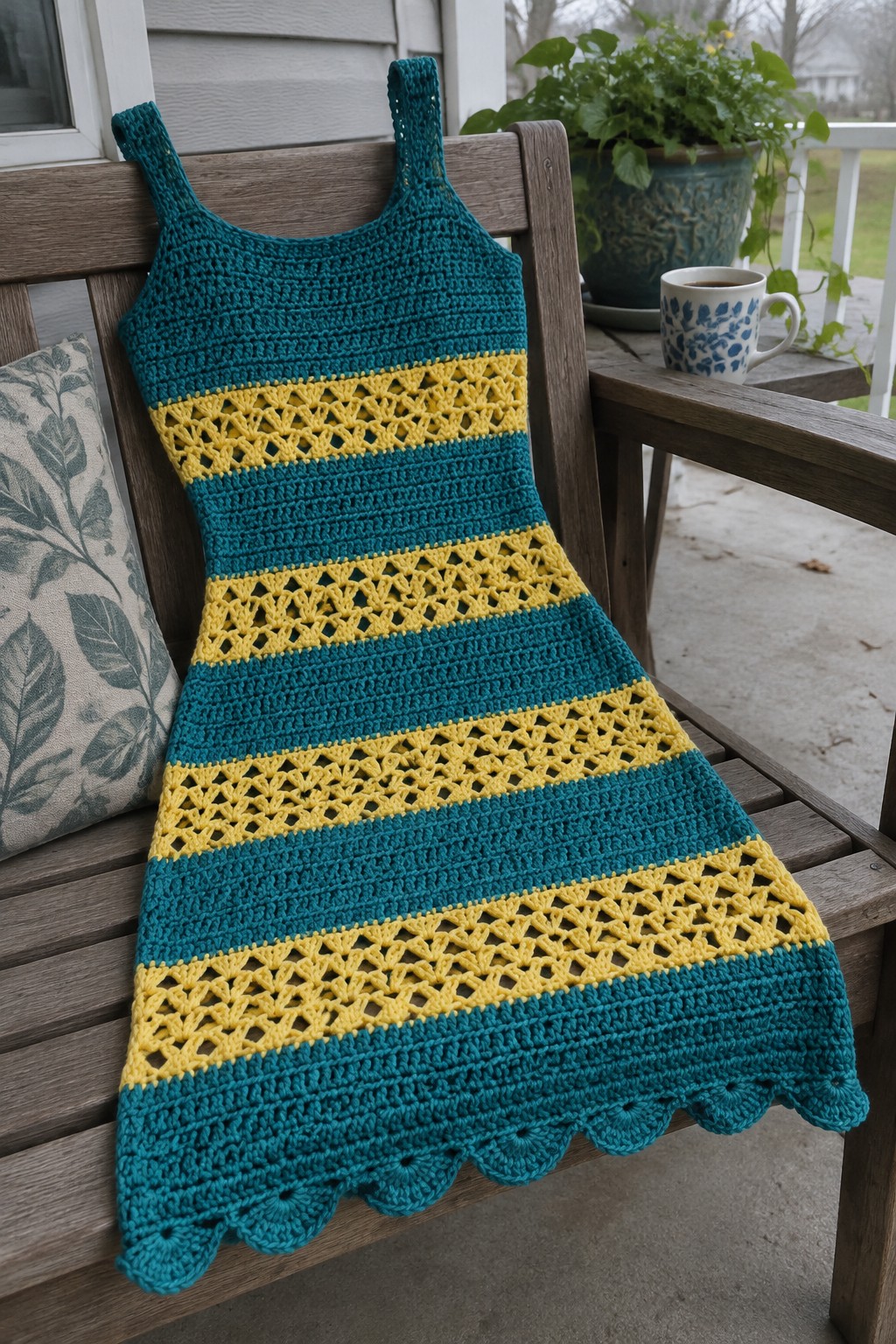
A sleeveless dress built from repeating bands of solid crochet and open lace creates a lightweight garment that balances coverage with breathability. The horizontal color changes in teal and yellow highlight the gradual flare from the bodice to the hem while the scalloped border gives the edge a clean finish. This structure fits into the wearable category because the stripe repeat makes it simple to modify length or fit without redesigning the whole piece.
What makes this idea useful is that the stripe pattern lets you swap colors or adjust the number of bands to change the overall length or mood. You could shorten it into a tunic top or work it in a single color family for a quieter version. The mix of solid and lacy sections also photographs well for pattern sharing since the contrast shows the construction clearly.
Sleeveless Dress with Striped Lace Skirt

A sleeveless crochet dress in this style keeps the bodice solid for coverage and structure while switching to open lace patterns below the waist. Gray bands run horizontally through the cream base, marking the transition from top to skirt and adding definition at the hem. The A-line shape widens gradually, which gives the dress movement without extra layers or gathers.
What makes this idea useful is how the color changes and lace sections can be shifted up or down to change the overall length or proportions. You could work the gray bands in a different shade to match existing wardrobe pieces or shorten the skirt into a top. This type of dress works well over a simple slip for daily wear and adapts easily if you want to try different yarn weights for lighter or warmer versions.
Pastel Granny Square Tank Dress

A sleeveless dress built from granny squares uses a simple block layout that keeps construction straightforward. The squares are arranged in vertical panels that change color at set points, forming distinct mint, lavender, and peach sections across the bodice and skirt. This creates a clear color-blocked pattern while the overall shape stays A-line with a slight flare at the hem.
What makes this idea useful is the modular square method, which lets you adjust the bust or length by changing how many squares you add in each section. The soft color changes break up the surface without complicated stitch work, so the dress stays wearable for daily use or layering. You can shift the palette to cooler tones or repeat one color throughout if you want a calmer version that still keeps the same structure.
Textured A-Line and Shirt Dress Silhouettes

Crochet dresses in this style rely on straightforward A-line and collared shirt shapes that suit many body types over 50. One version uses raised bobble stitches across the front for added surface interest, another works vertical texture into a flared skirt for gentle movement, and the third combines open lace with a button front and tie belt for a more polished finish. These choices keep the pieces light and wearable while avoiding heavy motifs or complicated construction. They belong in the everyday wearable category rather than decorative or accessory projects.
The variety in stitch textures here makes these dresses easy to adapt for different seasons by swapping sleeve length or skirt width. The shirt dress version layers well over a tank or under a light jacket, while the denser textures give more coverage without bulk. Shortening the hem or shifting to a solid color lets you match personal style or closet needs quickly. A project like this photographs cleanly for sharing because the simple lines and soft palettes translate well in natural light.
Openwork A-Line Sundress with Thin Straps

A crochet sundress uses a fitted bodice that narrows at the waist before flaring into a skirt built from repeating openwork blocks. The consistent lace pattern creates breathable sections that let the fabric move and drape without losing structure. Thin straps and a V-neck keep the top simple while the skirt expands gradually through added repeats. This falls into the wearable clothing category and suits warm-weather garments.
The repeating blocks make it easy to add or remove rows to change the finished length. You can work the same shape in a different fiber to shift from soft drape to crisper hold, or keep the single color so the stitch texture shows clearly. For everyday wear the A-line cut gives coverage while the open sections prevent bulk. The design saves well as a project because one motif repeat can be tested and then repeated across the whole skirt.
Vertical Stitch Shift Dress with Scalloped Hem

A sleeveless crochet dress worked in repeating vertical columns creates a slimming line from shoulder to hem. The rounded neckline keeps the top simple while the fabric gradually widens into an A-line shape finished with a small scalloped border. This combination gives the dress enough structure to hold its shape without extra lining or stiffening.
What makes this idea useful is how the vertical texture does the work of shaping without complicated decreases. You can shorten it to knee length for everyday wear or keep it longer for a layered look over leggings. The solid color also makes it easy to adapt in other shades that pair with jackets or cardigans you already own.
Granny Square Striped Shift Dress

A sleeveless dress made from joined granny squares in alternating mustard and cream rows produces clear horizontal stripes across the body. The squares are arranged to create an A-line shape that widens slightly toward the hem while keeping a straight fit through the torso. This motif approach builds the entire garment from one repeatable unit so color changes alone create the pattern.
What makes this idea useful is the modular square construction that lets you adjust the width or length by adding or subtracting rows without rewriting the pattern. The two-color stripe layout works well for everyday wear because it stays simple to make and easy to match with cardigans or tanks. You can swap the colors for softer neutrals or change the stripe width to suit different body proportions while keeping the same basic shape.
Striped Circular Motif Midi Dress

This dress is built from horizontal rows of joined circular motifs that create a lightweight, open fabric with natural drape. The color shifts run in wide bands through soft pastels, giving the piece clear visual structure without extra patterning work. Scalloped borders at the neckline, hem, and straps echo the round motif shape and keep the edges tidy. It works as a simple sleeveless midi in the wearable category.
What makes this idea useful is how the row construction lets you add or remove bands to adjust length or fit without changing the motif. You can swap the pastel sequence for solids, ombré, or seasonal colors while keeping the same layout. The open texture also makes the dress practical for warmer weather and easier to wear layered. For gifts, the motif rows are straightforward to size to different measurements once the gauge is set.
Bobble Skirt A-Line Dress

A crochet dress with an A-line shape uses vertical columns of bobbles on the skirt to create texture while the bodice stays plain for a smoother fit. The straps attach at the top edges and the skirt flares gradually from the waist. This approach works as a wearable project because the bobble texture adds interest without complicating the overall construction.
What makes this idea useful is how the bobble columns can be spaced differently to adjust the skirt’s drape or width. The same structure scales to adult sizes without major changes since the neutral tone keeps the focus on the silhouette. For everyday wear, the design translates well into lightweight cotton or linen blends that hold shape better than bulky yarns.
Collared Shirt Dress with Openwork Skirt

A collared crochet dress uses a solid bodice with short sleeves and a button front, paired with a skirt made from repeating open circular motifs. The dense upper section provides coverage while the lower half creates movement through negative space in the pattern. A separate tie belt cinches the waist and adds a simple way to adjust the fit.
What makes this idea useful is the clear division between the fitted top and the lighter skirt, which keeps the piece from feeling heavy. You can shorten the skirt or swap the motif for a different open stitch if you want less lace. The button placket makes it practical for getting dressed, and the style works as a standalone summer piece or layered over a slip.
Openwork Maxi Dress with Vertical Bands

A sleeveless maxi dress uses vertical columns of openwork crochet through the upper half that gradually close into a denser fabric below the hips. The open sections create airflow and reduce weight while the solid lower portion adds coverage and structure. A scalloped edge along the hem prevents the straight silhouette from looking too blunt.
What makes this idea useful is how the vertical openwork can be adjusted in width or spacing to change the overall drape without rewriting the pattern. Shortening the dress by a few inches turns it into a wearable midi for cooler days or different body proportions. The same layout works in a lighter neutral or deeper tone to match existing wardrobe pieces instead of standing out as a single bright statement.
Openwork Crochet Dresses in A-Line and Wrap Silhouettes

Crochet dresses like these use repeating lace and textured stitches to form lightweight, knee-length garments with natural drape. The A-line versions flare from the waist with scalloped hems, while the wrap style uses a front tie to adjust the fit across the bust and waist. Vertical open panels and varied stitch density add visual movement without adding bulk. These belong in the wearable category as everyday clothing rather than accent pieces.
What makes this idea useful is how the same stitch patterns can be lengthened or shortened to change the overall proportion. A project like this works especially well as a warm-weather dress that needs only a simple lining or slip underneath. The structure makes this a smart option for mature figures because the openwork prevents clinging and the wrap closure allows easy size tweaks. Changing the color or adding a belt gives quick personalization without rewriting the pattern.
Frequently Asked Questions
What fabrics work best in crochet dresses for comfort during warmer months?
Natural fibers like cotton or linen blends offer breathability and softness against the skin. These materials allow air circulation while holding the shape of modern silhouettes without feeling heavy. Look for options with a bit of stretch for ease of movement.
How should I select the right length and fit for a flattering look after 50?
Opt for midi or knee lengths that skim the body without clinging. Measure your bust, waist, and hips against the size chart and consider styles with A-line or empire waists to create balance. Trying on or checking return policies helps confirm the modern drape suits your frame.
What undergarments prevent crochet dresses from feeling sheer or uncomfortable?
Choose seamless slips or shapewear in a matching neutral tone to provide coverage under openwork patterns. Full slips with adjustable straps work well for layered looks while maintaining the clean lines of contemporary designs.
How do I style these dresses for both daytime errands and evening events?
Layer with a lightweight cardigan or blazer for daytime and swap to statement jewelry or heels for evenings. A belt at the waist can define the silhouette, and neutral shoes keep the focus on the dress itself without overwhelming the modern aesthetic.
Where can I find care instructions to keep crochet dresses looking new over time?
Check the label for gentle cycle washing or hand washing in cool water with mild detergent. Lay flat to dry and store folded rather than hung to preserve shape. Avoid bleach or high heat to maintain color and texture across multiple wears.
