

I started crocheting dresses a couple of years ago when I wanted something different from scarves and blankets.
Most of the patterns I tried at first were too complicated so I looked for simpler ones.
I have gathered twenty dress patterns here that use only basic techniques.
They work well for beginners who want to finish a project without getting stuck.
You can adjust them to fit your size as you go along.
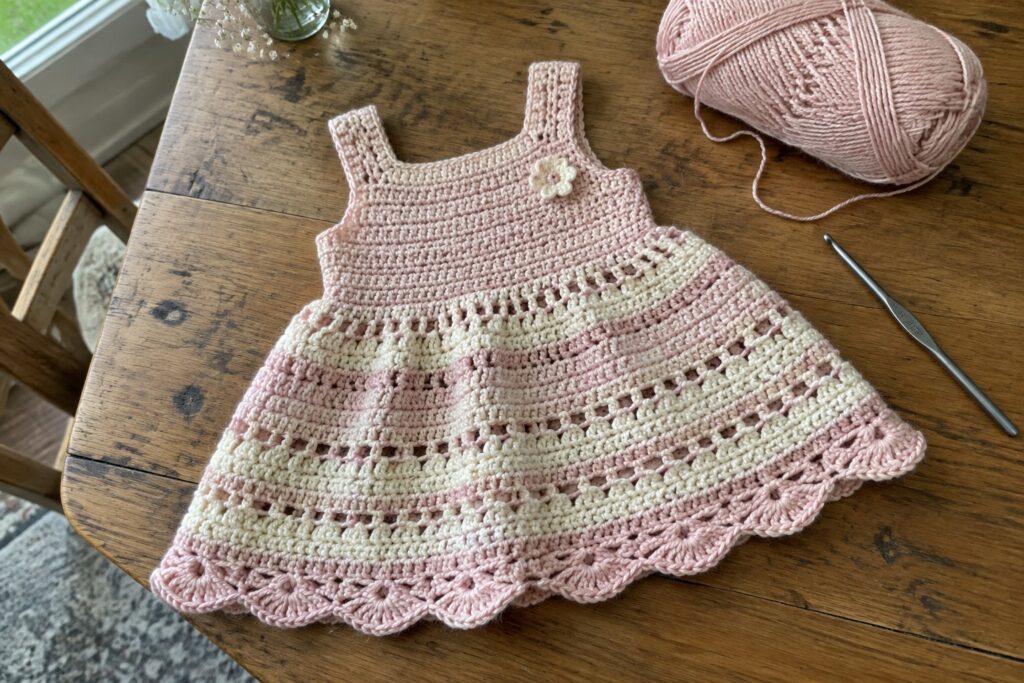
Striped Toddler Dress with Scalloped Edges

A striped crochet dress in alternating pink and cream makes a straightforward wearable project for babies or toddlers. The design builds a simple bodice then adds a flared skirt with a gathered section and horizontal color bands that keep the pattern easy to follow. Scalloped edging finishes the hem and straps while the overall shape stays compact enough to finish in a few sessions. This falls into the wearable category as a garment that practices color changes and basic shaping without needing advanced techniques.
What makes this idea useful is how the stripe sequence and skirt length can be changed to match different sizes or yarn on hand. A project like this works especially well as a quick gift or seasonal outfit since the small scale reduces the time commitment. The color choice does a lot of the work here by creating visual interest through simple row repeats. For beginners this shape offers a chance to practice fitting and edging on a finished item before scaling up to adult sizes.
Granny Square Patchwork Dress

This dress is built from large granny squares joined into front and back panels, with smaller squares forming the sleeves. The square motifs create an open, breathable fabric that works well for a light child’s garment. Color changes across the squares produce a simple block effect that keeps the design interesting while staying beginner friendly. It belongs in the wearable category as a quick-to-assemble summer piece.
What makes this idea useful is how the separate squares let you resize the dress by swapping in extra rows or motifs. A project like this works especially well as a first garment because each section stays flat until the final seams. The color layout can be rearranged to use leftover yarn or match a child’s preferred shades. For gifts, a design like this finishes fast and travels easily since the pieces pack flat before joining.
Sunflower Motif Toddler Dress

A crocheted dress with a fitted bodice and flared skirt uses sunflower motifs worked directly into the fabric as the main decorative element. The design pairs a solid yellow base with brown centers and borders to define each flower and create clear rows of pattern across the skirt. Buttoned straps finish the top and keep the piece practical as a wearable garment rather than just a display item.
What makes this idea useful is how the motifs can be repeated or spaced differently to fit various skirt lengths without changing the overall construction. The color contrast between the yellow body and brown flowers does most of the visual work, so beginners can focus on basic increases and simple color changes. This style works especially well as a gift because the size can be adjusted by adding or removing skirt rows while keeping the same motif layout.
Bear Dress Keychain

This pattern creates a small flared dress with a bear head at the top, complete with ears and a hanging loop. A raised heart sits on the skirt front, and the spiral stitching on the bear face gives it clear definition. The whole piece works as a keychain, bag charm, or gift tag because of its compact size and built-in loop.
The small scale means it uses little yarn and finishes fast, so it suits last-minute gifts or market stock. You can swap the pink for other colors or change the heart to a different motif to match different themes. The structure stays stable even in a single color, which keeps the focus on the shape rather than color changes.
Button Strap Flared Dress
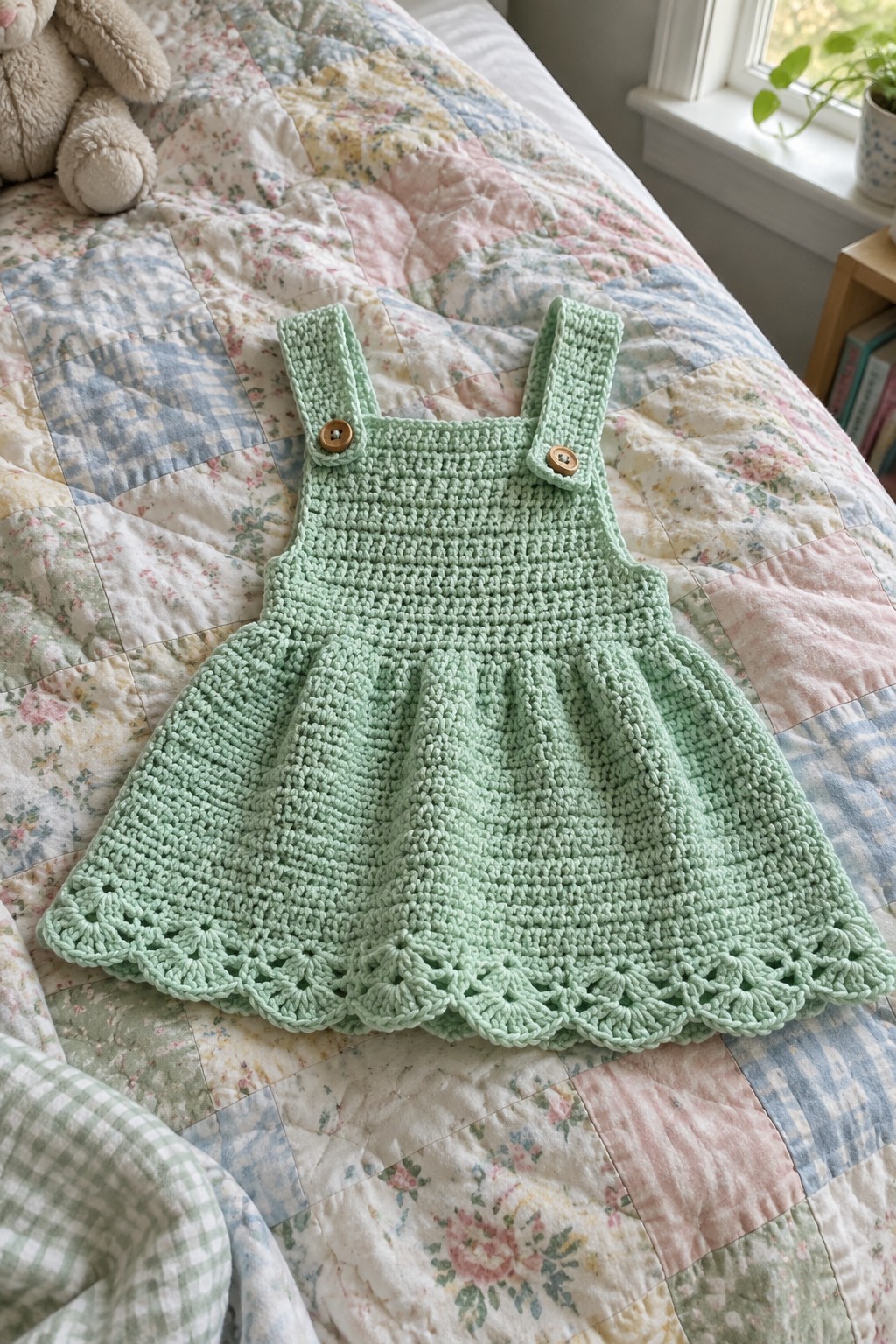
A small child’s dress uses wide shoulder straps that button at the front to create an adjustable fit over a solid bodice. The skirt section flares outward from the waist and ends in a repeating shell border that adds a light decorative finish. This wearable combines a dense stitch texture through the main body with an openwork hem for contrast without extra complexity. It belongs in the clothing category and suits toddlers or small children.
What makes this idea useful is how the buttoned straps remove the need for tricky shaping or sewing while still giving a finished look. You can lengthen or shorten the skirt easily by adding or removing rows before the border. For gifts, a design like this works especially well because it uses a modest amount of yarn and can be sized up or down with basic adjustments. The overall shape also adapts quickly to different colors or a slightly wider hem if you want more flare.
Gradient A-Line Dress with Scalloped Hem

A sleeveless dress built from the top down lets you shape the bodice with steady increases until the fabric flares into an A-line. The project uses simple stitches in the round and shifts colors gradually from coral at the neckline to cream at the hem. The scalloped border at the bottom finishes the edge with a single repeat that requires no extra seaming. This approach lands in the wearable category and works for babies or toddlers.
What makes this idea useful is how easily you can lengthen the skirt or widen the flare by adding more increase rounds before the border. The color transition handles most of the visual interest so the stitch pattern can stay basic. Swap the yarn shades to match different seasons or gift recipients without changing the construction. For quick gifts this shape stands out because it needs almost no finishing beyond the hem.
Tiered Ruffle Dress with Striped Bodice

A child’s dress built from a fitted bodice worked in horizontal stripes and a skirt formed by stacked rows of scalloped ruffles. The bodice uses basic stitch repeats to create a structured top, while the skirt adds volume through overlapping layers that alternate between cream and dusty pink tones. This approach produces a full silhouette without needing complex shaping.
What makes this idea useful is how the separate tiers let you adjust the skirt length or fullness by changing the number of ruffle rows. You can swap the stripe order or use leftover yarn for each layer to create different color effects without buying new skeins. For gifts, this dress works well because the tier method makes it simple to size up or down by altering the starting chain and row count.
Child’s Dress with Bobble Dots and Contrast Trim
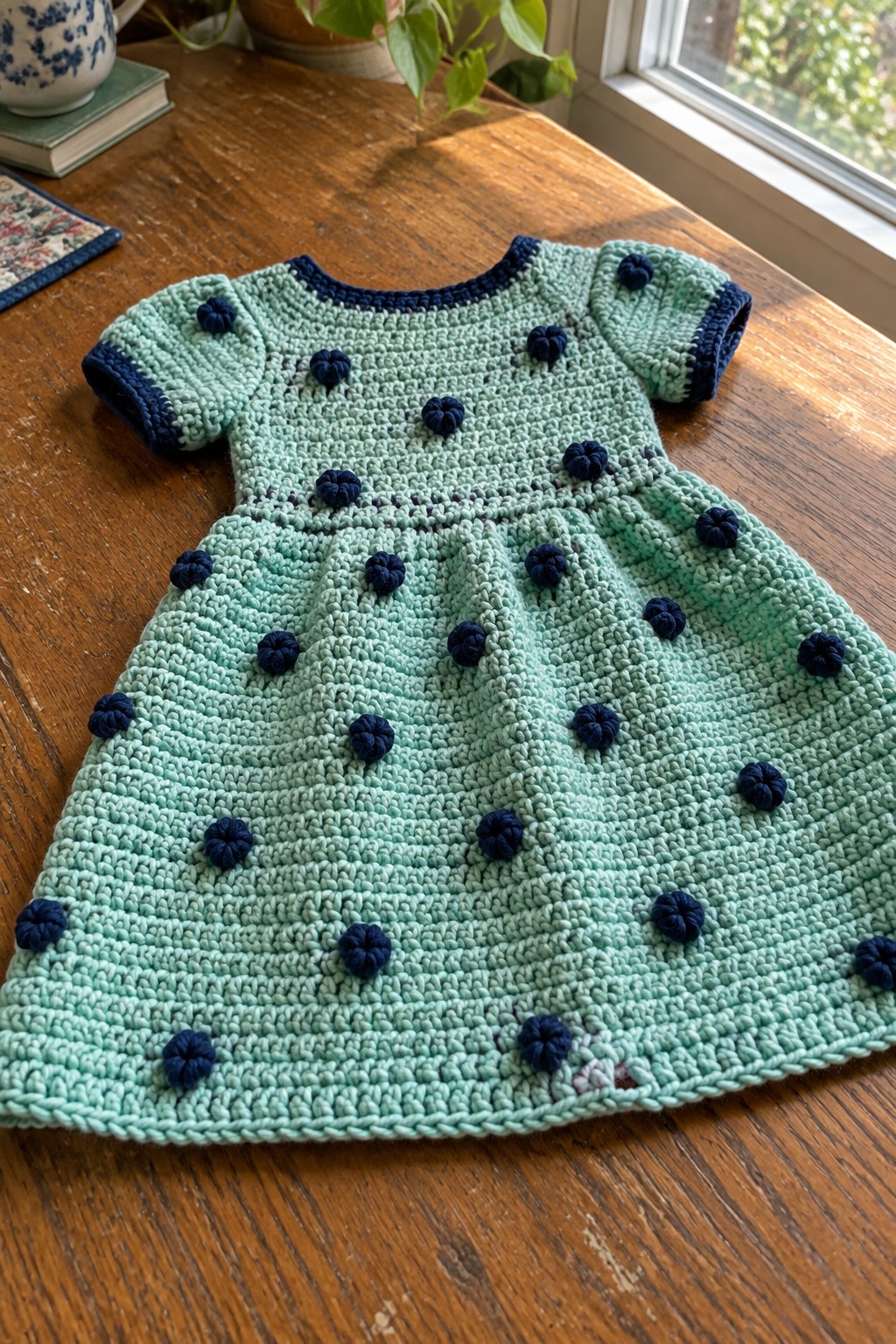
A simple child’s dress is worked in light green yarn with short sleeves and a round neckline edged in navy. Navy bobbles are placed at regular intervals across the bodice and skirt to form a scattered dot pattern, while the same navy yarn finishes the cuffs. The dress uses basic stitches for the body and adds the bobbles as an easy surface detail after the main sections are complete.
This design is practical for beginners because the shape stays straightforward and the bobbles can be added or skipped without changing the fit. You can adjust the length or swap the contrast color to suit different ages or seasons. The small scale also makes it a fast project that uses little yarn, which works well when making gifts or testing a new pattern before committing to adult sizes.
Open Mesh Sundress with Scalloped Hem
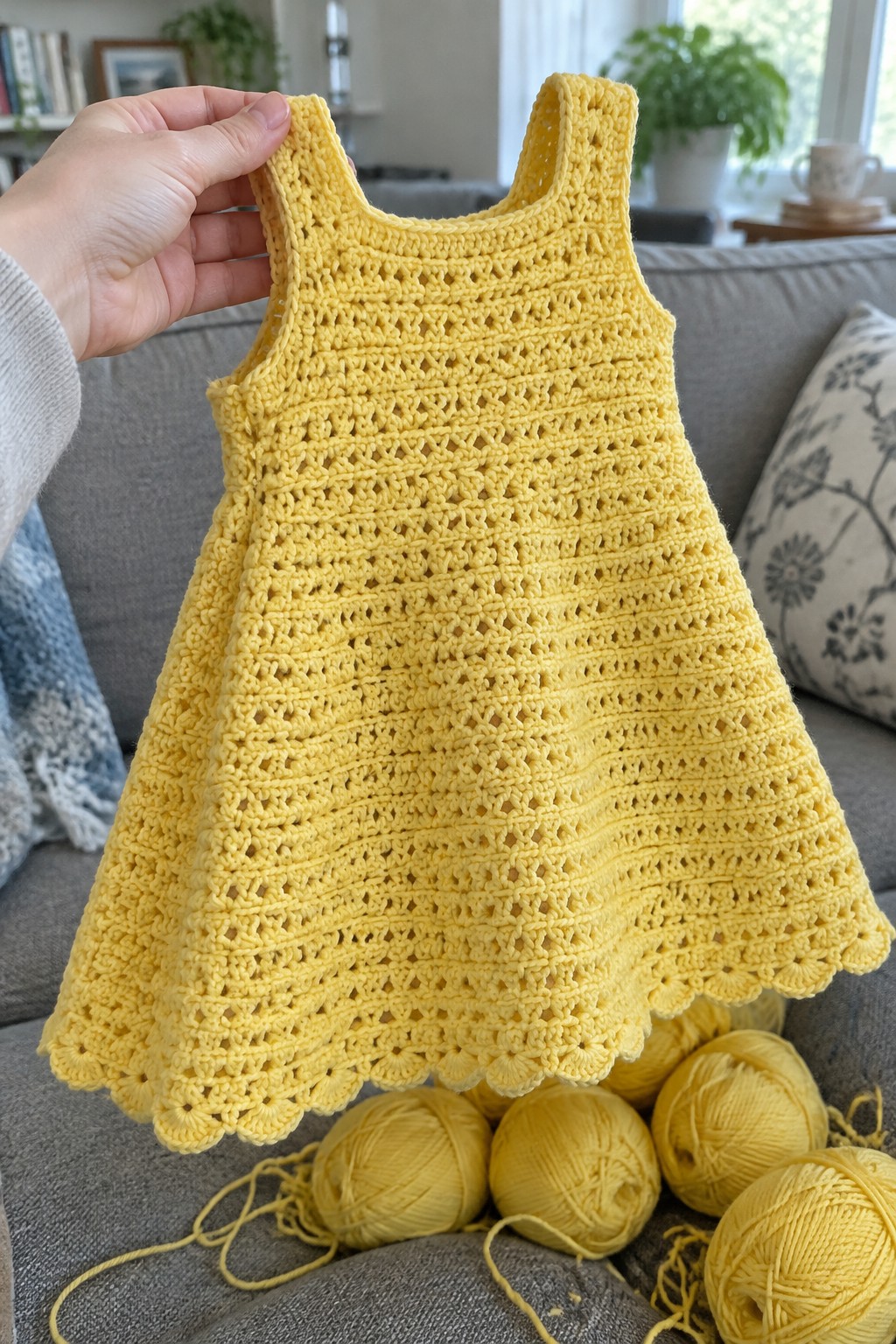
A sleeveless dress worked in a repeating open mesh stitch gives the fabric an airy quality while still holding its shape. The skirt flares through steady increases and finishes with a scalloped border that uses the same stitch pattern for a clean edge. This approach fits the wearable category and suits warm weather or layering over a bodysuit.
What makes this idea useful is how the open stitch works up fast and shows clear progress in each row. You can lengthen the skirt by repeating the mesh section or widen the neck opening by adjusting the starting chain. A project like this works especially well as a quick gift for babies or toddlers and photographs clearly on Pinterest when made in solid bright colors.
Lace Yoke Dress for Toddlers

A yoke dress starts with an openwork top section that forms the neckline and short sleeves before switching to solid rows for the skirt. This structure keeps the upper part light and decorative while the lower section gives the dress its shape and coverage. The design works especially well for small children because the yoke can be made in one piece and the skirt grows outward from there with minimal increases.
What makes this idea useful is how the open yoke pattern stays the same even when you change the starting chain count for different sizes. The solid skirt section makes it simple to adjust length or add stripes without new techniques. A project like this works especially well as a quick gift since the construction is straightforward and the finished piece looks complete with just basic stitches.
Color Striped Motif Toddler Dress

A sleeveless child’s dress with a solid upper section and a flared skirt built from repeating square motifs creates an easy wearable project. The skirt uses two alternating colors worked in horizontal bands to form a scalloped hem without extra edging. This structure separates the simple top construction from the more decorative lower portion.
What makes this idea useful is that the motif rows can be added or removed to change the length for different sizes. The two-color layout works well with small amounts of leftover yarn and makes size adjustments straightforward. A project like this turns into a fast gift since the bodice stays basic and the skirt builds quickly in sections.
Wrap Front Dress with Adjustable Tie
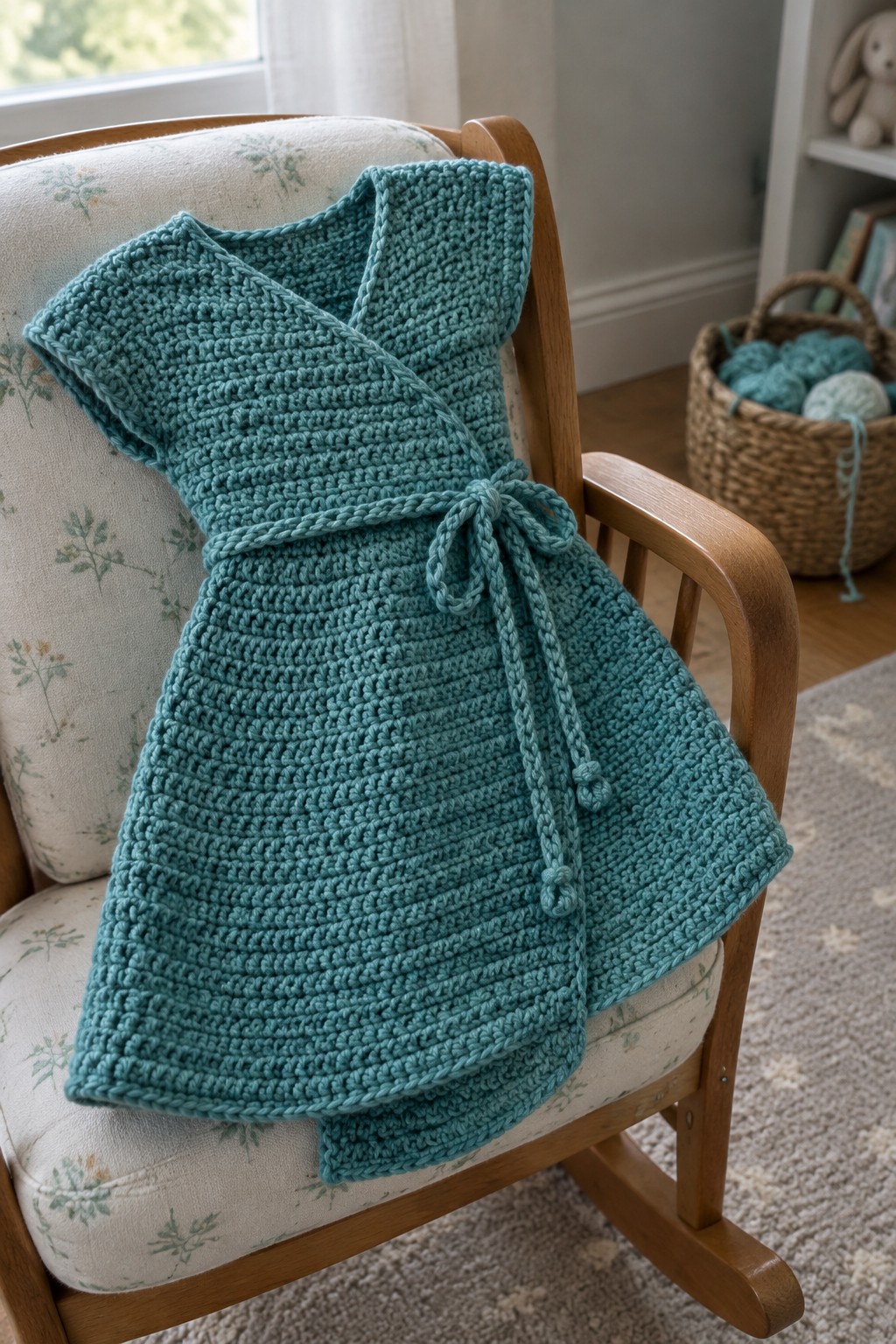
A wrap front crochet dress for children uses a simple crossover bodice and flared skirt that grows wider through steady increases. The tie belt threads through the waist to close the front and adjust the fit, while the textured rows create a solid fabric without complex stitch patterns. This style keeps the construction basic with rectangular and triangular sections that join at the sides.
What makes this idea useful is how the wrap design lets you adapt the fit for different ages by changing the tie length or adding a few rows to the skirt. The open front also makes it easy to try on during making and to layer over shirts in cooler weather. For gifts, a project like this works especially well because the adjustable tie reduces the need for exact measurements.
Ombre Scallop Doll Dress
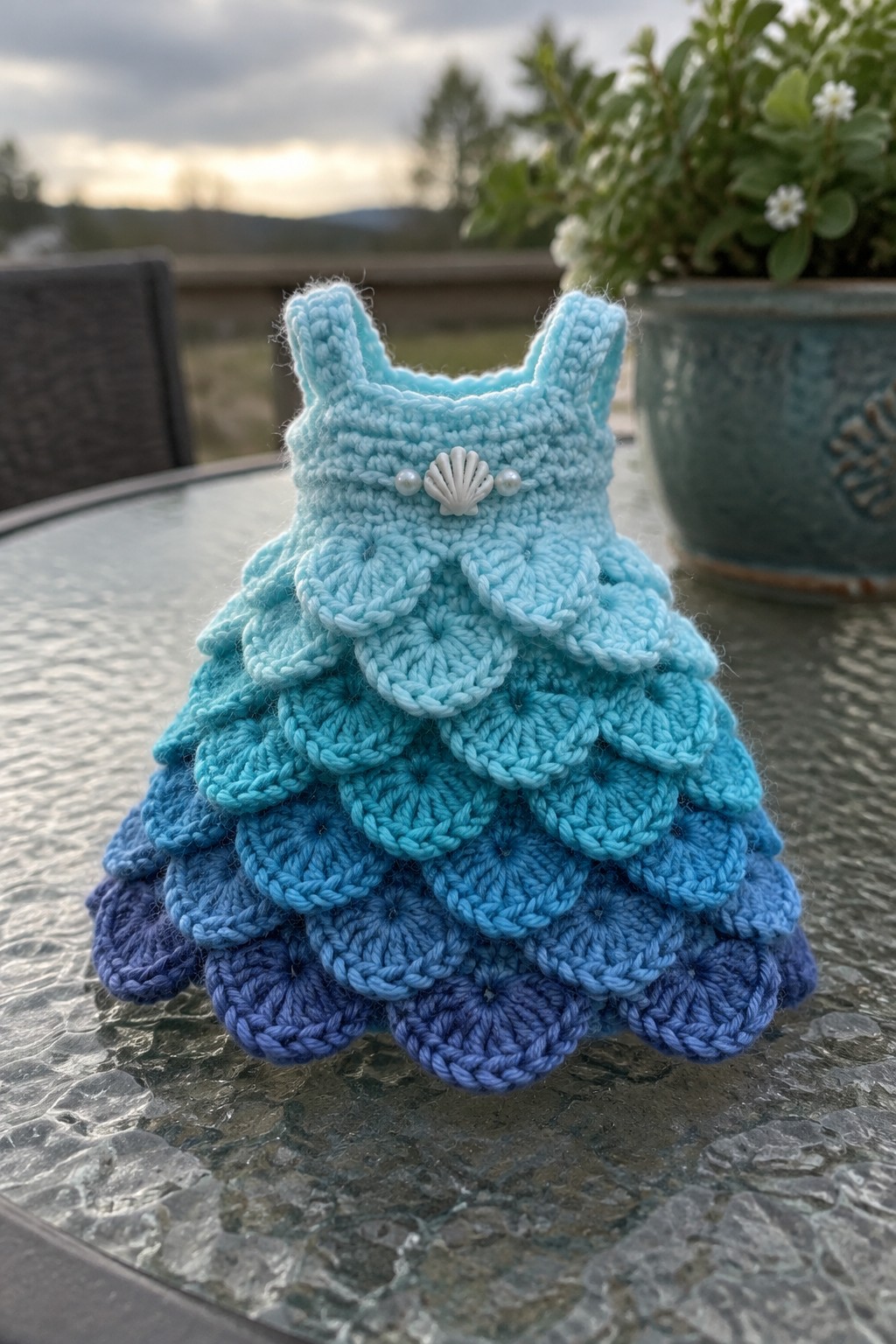
A miniature dress built from stacked rounds of scalloped circles forms a tiered skirt that flares naturally. The bodice stays simple with two straps, and a small shell motif anchors the neckline. Working the skirt in gradual color shifts from pale aqua down to deep blue creates the gradient without extra pattern rows. This approach fits the quick wearable category for dolls or small decorative pieces.
The small scale makes this easy to adapt by changing the starting circle size or adding more tiers for longer skirts. A project like this works especially well as a gift topper when you attach a loop at the back. For decor, this kind of shape stands out on a shelf when you make several in different color families. You can swap the shell for a button or bead to match whatever theme you need.
Pastel Floral Mesh Crochet Dress

This project is a child’s sleeveless dress built from an open grid stitch that forms the main fabric, with small floral motifs worked directly into the mesh across the bodice and skirt. The bodice stays fitted while the lower section flares slightly, and the straps repeat the same flower pattern for a consistent look. The soft pastel mix of lavender base with scattered yellow, pink, blue, and green flowers keeps the design light and readable from a distance. It fits the wearable category, specifically a simple summer dress that can be made in different lengths.
What makes this idea useful is how the grid base lets you easily change the width or add length without rewriting the pattern. You can swap the flower colors to match a favorite outfit or leave some rows plain for a calmer version. A project like this works especially well as a quick gift because the motif placement can be adjusted to fit whatever size you need. The open structure also means it uses less yarn than a solid dress while still looking finished.
Two Tone Toddler Dress with Bobble Dots

A simple color blocked dress for toddlers pairs a fitted bodice in one color with a flared skirt in a second shade. Small contrasting bobbles scattered across the fabric add texture and visual interest without requiring complex stitches. Short sleeves and an A-line shape keep the construction straightforward while making the dress easy to wear over layers.
The color blocking here lets beginners use up partial skeins without needing to match exact yardage. Adjusting the skirt length or bobble spacing changes the look for different ages or seasons. For gifts this style stands out because the dots give it a finished appearance with minimal extra steps.
Textured Child’s Dress with Vertical Panels

A toddler dress in soft yarn uses vertical textured panels across the bodice and skirt to create subtle structure without extra shaping. Long sleeves finish with simple cuffs, and the round neck keeps the top clean and easy to wear. The flared lower section comes from steady increases worked into the same stitch pattern, giving the dress movement while staying straightforward to crochet.
What makes this idea useful is how the vertical lines help the fabric hang straight and highlight the flare at the bottom. The design adapts easily by changing sleeve length or adding more rows to the skirt for different sizes. A project like this works especially well as a gift because the finished piece looks complete with just one color and basic repeats. The scale stays small enough to finish in a few evenings while still producing something wearable.
Mini Dress with Openwork Skirt and Ruffle Hem

A miniature crochet dress makes a practical project for doll clothing or as an appliqué to attach to bags, blankets, or clothing. The fitted bodice flows into a flared skirt worked in repeating open rows that let light through, while the added white scalloped edge at the bottom gives the piece a clear finish. This shape stays simple to work from the top down, with increases creating the flare without complex shaping.
The small scale makes this easy to adapt by switching to a larger hook and thicker yarn for bigger dolls or a full ornament size. You can change the skirt length or skip the ruffle for a cleaner look, and the open pattern repeats quickly once the first few rows are done. For gifts, a design like this works well as a single finished piece or as a set in different colors.
Simple Strap Dresses with Solid Bodices and Open Skirts
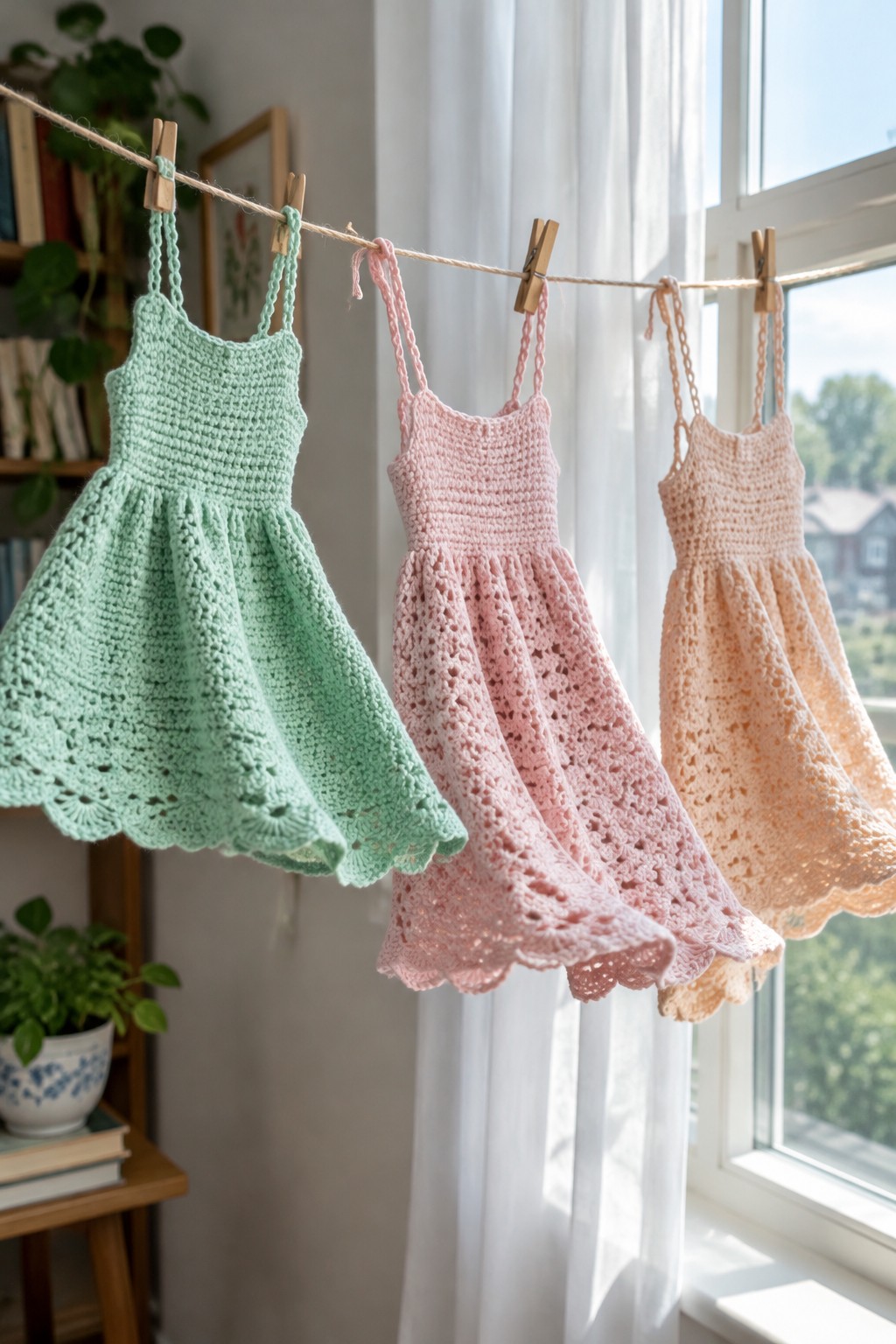
These dresses follow a basic top-down or bodice-first construction where the upper section is worked in a dense stitch to create structure while the lower skirt opens into a lighter lace pattern. The thin straps keep the top simple and adjustable, and the scalloped hem adds a clean finish without extra shaping. This approach suits small-scale wearables such as doll dresses or newborn items where the contrast between solid and openwork sections creates visual interest with minimal pieces.
What makes this idea useful is the ease of changing skirt length or switching colors to match different seasons or recipients. You can adapt the same bodice by adding rounds to the skirt for a longer child size or using a single color for quicker makes. The straightforward shape works especially well for beginners who want to practice gauge and fit on a small project before moving to larger garments.
Ruffled Toddler Dress with Raised Stitch Texture
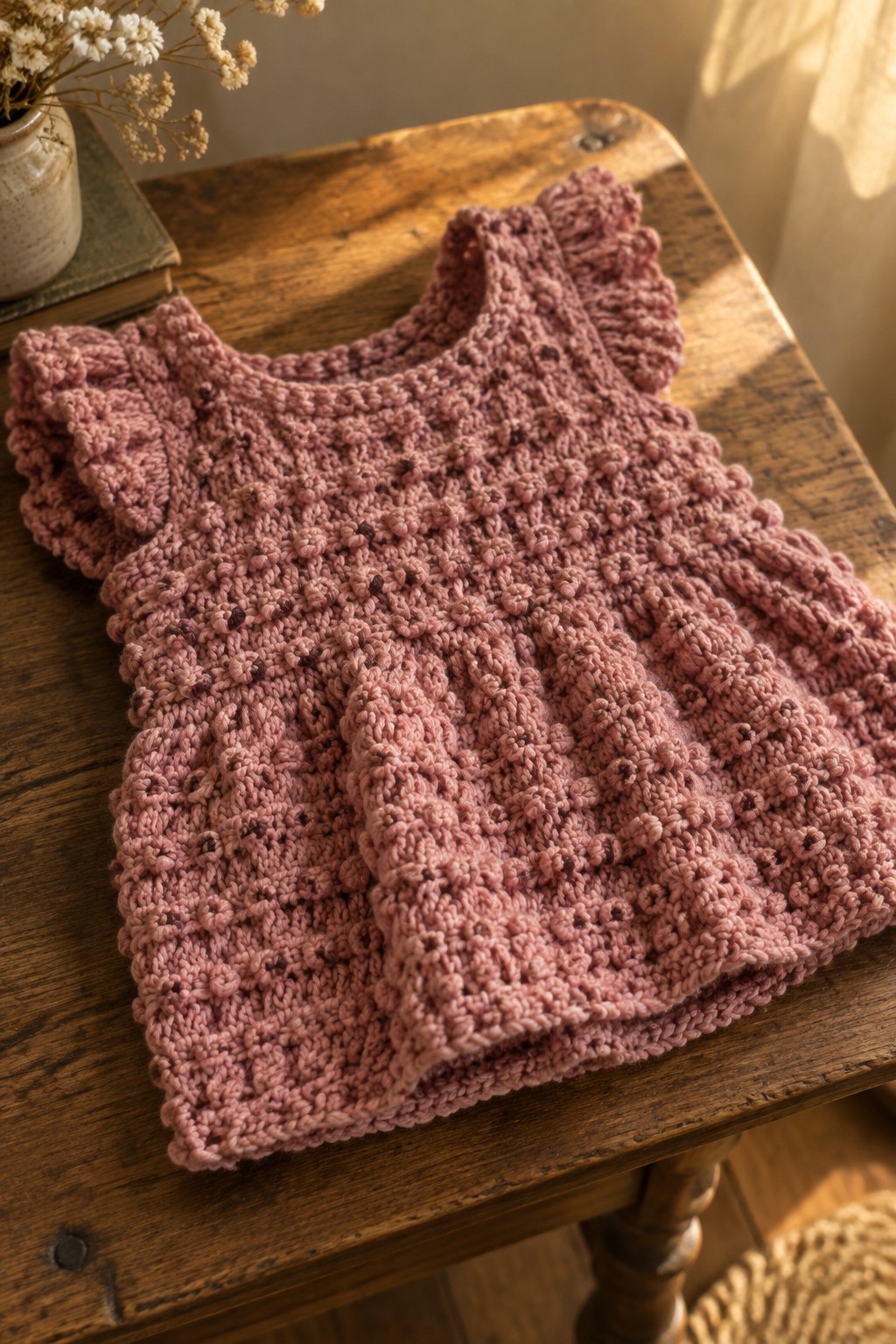
A sleeveless toddler dress uses ruffles along the armholes and neck edge for a finished look without extra pieces. The upper section works in a raised bobble-style stitch that adds visible texture across the fabric. Below the chest, the skirt gathers into soft folds that create a flared shape while keeping the overall piece simple to construct. This falls into the beginner wearable category as a complete garment rather than separate pieces.
What makes this idea useful is how the ruffles sit directly on the armhole edges so they require no sewing. You can lengthen the skirt by repeating the lower stitch pattern or shorten it for a top instead of a dress. Switching to a solid color makes the texture stand out more in photos, which helps when sharing the finished piece online. For gifts, this shape works well because the fit stays forgiving across a range of small sizes.
Frequently Asked Questions
What type of yarn works best for beginner crochet dress patterns?
For most easy crochet dress patterns, start with a medium weight cotton or cotton blend yarn like worsted weight category 4. This type holds its shape well while remaining soft against the skin. It is also forgiving for new crocheters because stitches show up clearly. Choose a smooth texture without too much fuzz so you can easily see and correct mistakes as you work.
How long does it typically take to finish one of these dresses as a beginner?
A simple crochet dress for beginners usually takes between 15 and 30 hours spread over several weeks, depending on your speed and how many hours you crochet each day. Plan to spend extra time on the first project while you learn the stitches and fit adjustments. Breaking the work into sections like the bodice one day and the skirt another helps keep the project manageable and prevents burnout.
Are the patterns easy to adjust for different body sizes?
Yes, most beginner dress patterns include instructions for multiple sizes and often suggest ways to add or subtract stitches for a custom fit. Measure your bust, waist, and hips before starting, then compare them to the pattern gauge. If needed, you can add extra rows or increase the number of repeats in the skirt section. Always make a small swatch first to check your tension matches the pattern.
What basic tools besides yarn and a hook do I need to complete these projects?
You will need a yarn needle for weaving in ends, stitch markers to track rows or increases, and a measuring tape to check your gauge and finished pieces. Scissors are useful for trimming yarn, and a blocking board or clean towels help shape the dress after it is finished. Many patterns also recommend a row counter app on your phone to keep track of your progress without losing count.
How should I wash and store a finished crochet dress to keep it looking good?
Hand wash the dress in cool water with a gentle detergent made for delicates, then squeeze out excess water without twisting the fabric. Lay it flat on a towel to dry and reshape it gently while damp. Store the dress folded in a drawer rather than on a hanger to avoid stretching the shoulders. Avoid bleach and high heat, which can damage the yarn fibers over time.
