

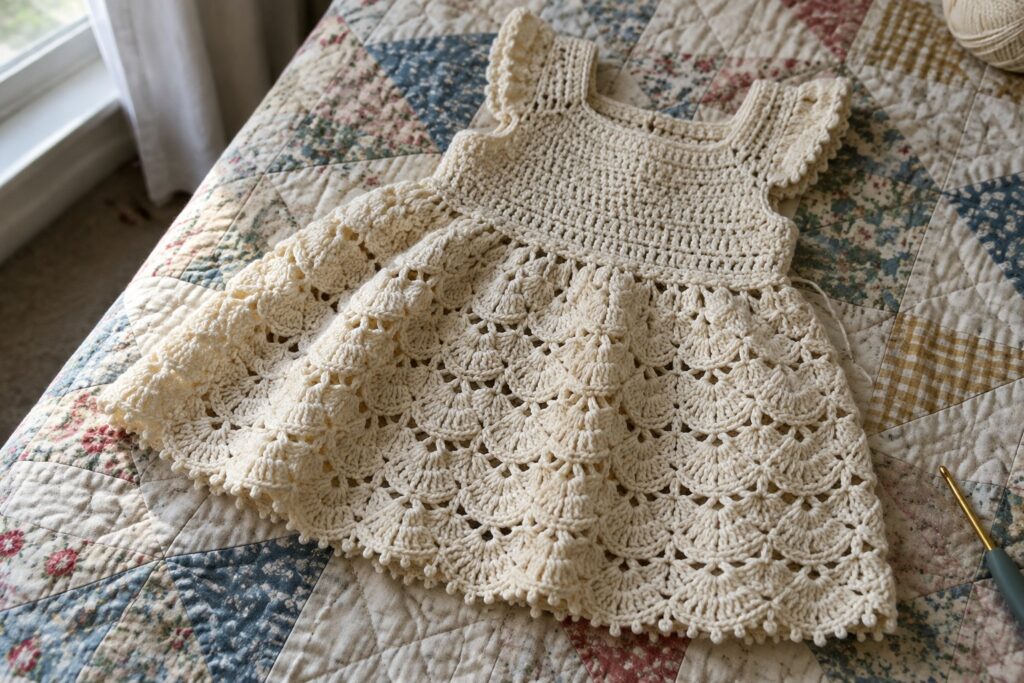
I have been browsing through some old crochet ideas and these vintage inspired dresses stood out to me.
The lace adds a light layer that pairs well with the textured stitches.
I have tried similar details on smaller pieces and they give a nice finished look without much extra work.
A few of these styles seem like they could work for everyday wear if adjusted for fit.
My favorite ones keep the shapes simple so the focus stays on the details.
Lace Fan Skirt Dress with Textured Yoke

This project is a small dress that pairs a fitted bodice with a flared skirt made from repeating openwork motifs. The bodice uses tighter stitches to create shape and structure while the skirt switches to connected fan patterns that build outward in rounds. A bobble border finishes the hem and sleeves, giving the piece a clean edge without extra pieces to sew on. The design works well for baby or doll sizes where the contrast between the dense top and airy skirt keeps the shape from collapsing.
What makes this idea useful is how the skirt motifs can be added or removed to adjust length without rewriting the whole pattern. The same yoke can be paired with different lace weights or even swapped for a solid skirt if you want less openwork. For gifts, a dress like this works especially well because it uses one color and stays flat for easy wrapping and shipping. You can change the final size simply by switching hook size or yarn thickness while keeping the motif sequence the same.
Pastel Child’s Dress with Openwork Bodice and Scalloped Skirt
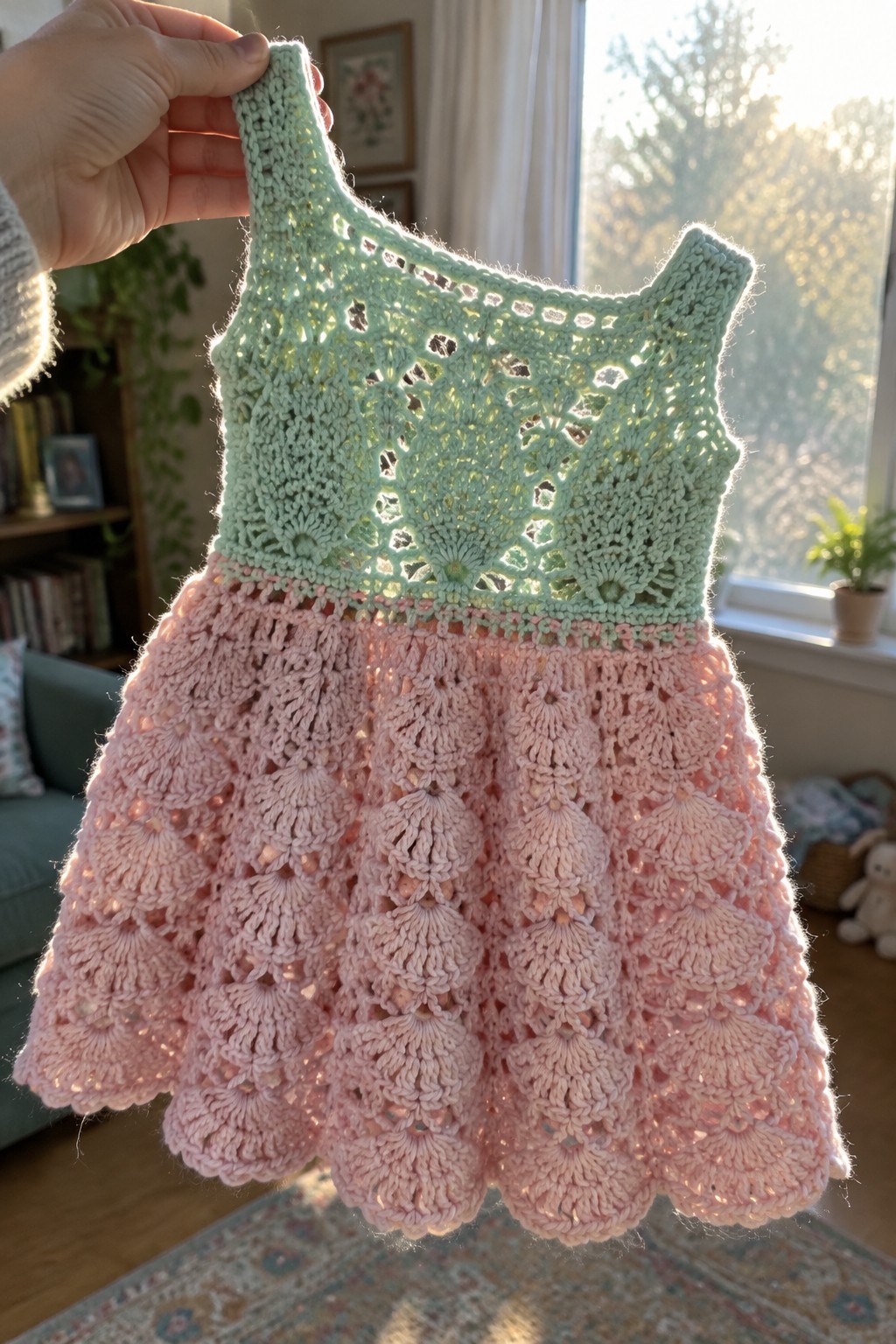
A child’s dress pairs a light mint bodice worked in repeating circular lace motifs with a flared skirt built from stacked fan stitches in soft pink. The bodice uses openwork to create a see-through pattern across the upper section, while the skirt adds density through overlapping shells that form a scalloped edge at the hem. The two sections join at a narrow color-change row that keeps the top light and the bottom fuller without extra shaping.
What makes this idea useful is the clear split between the delicate top and the textured skirt, which lets you change colors or extend the length by adding more fan rows. The small scale makes it a quick project for gifts or seasonal wear, and you can adjust the fit for different ages simply by changing hook size or repeating the skirt pattern. A project like this works especially well for summer because the open stitches in the bodice prevent overheating while the skirt still provides coverage.
Granny Square Yoke Dress with Flared Lace Skirt

A granny square yoke forms the bodice and short sleeves of this dress while the lower section switches to an open lace pattern that flares outward. The squares create a stable, slightly structured top that sits neatly on the shoulders, and the skirt uses repeating openwork rounds to add volume without extra fabric. This combination fits the wearable category well, especially for small sizes where the yoke keeps the fit simple and the skirt provides the main visual interest.
What makes this idea useful is how the yoke can be sized up or down just by changing the number of squares before starting the skirt. The single-color skirt keeps the focus on the stitch texture and lets the multicolored yoke stand out as the accent. A project like this works especially well for children’s clothing or photo outfits because it stays lightweight and can be made in any soft yarn. The shape also adapts easily if you want to lengthen the skirt or swap the sleeve style.
Lace and Bobble Baby Dress

A crocheted dress built from the top down begins with a solid bodice worked in rows or rounds and then opens into a flared skirt of repeating lace motifs. Small bobble clusters sit across the upper half to create texture while the lower section uses openwork fans that end in a scalloped edge. The sleeveless round-neck shape keeps the focus on the stitch pattern and gives the piece a clean vintage silhouette. This falls into the wearable category and works especially well for infants or small dolls.
What makes this idea useful is how the same stitch sequence can be repeated to change length or width without rewriting the pattern. The light yellow yarn keeps the openwork visible so the dress layers cleanly over a onesie or slip. For gifts the design shrinks to a doll size or expands to a six-month fit by adjusting the starting chain and repeat count. The mix of solid and lacy sections adds enough structure that the finished piece holds its shape without extra lining.
Mini Doll Dress with Two-Tone Scalloped Borders

A small crocheted dress combines a fitted pink bodice with a flared cream skirt, joined by a narrow contrasting band at the waist. Scalloped edges run along the neckline and hem to create a simple lace detail without extra layers. The project works as doll clothing or a hanging ornament, where the color change and border stitching give the piece clear structure and visual balance.
What makes this idea useful is how the small scale lets you test new color combinations or stitch patterns quickly. You can adjust the bodice length or skirt flare to fit different doll sizes without changing the overall layout. For gifts, a design like this finishes fast and stores flat, which makes it practical for craft fairs or seasonal decorations. The two-tone format also helps the scalloped trim stand out even if you switch to bolder colors.
Grid Yoke Dress with Scalloped Skirt

A child’s dress combines an open square yoke in a simple grid stitch with a flared skirt made from repeating shell motifs that create soft scallops along the hem. Short ruffled sleeves sit at the shoulders and the neckline follows the same grid pattern to keep the top light and breathable. The clear division between the structured yoke and the fuller lower section lets the skirt expand without adding bulk at the waist.
What makes this idea useful is the two-part yoke and skirt construction, which makes it simple to adjust the length or swap in a different shell pattern for various sizes. The compact scale works well for baby or toddler gifts and photo outfits, and the neutral tone means the same layout can be repeated in soft pastels or deeper colors. For practical wear, the open yoke layers cleanly over a plain shirt or onesie.
Yoke Variations for Lace Crochet Dresses
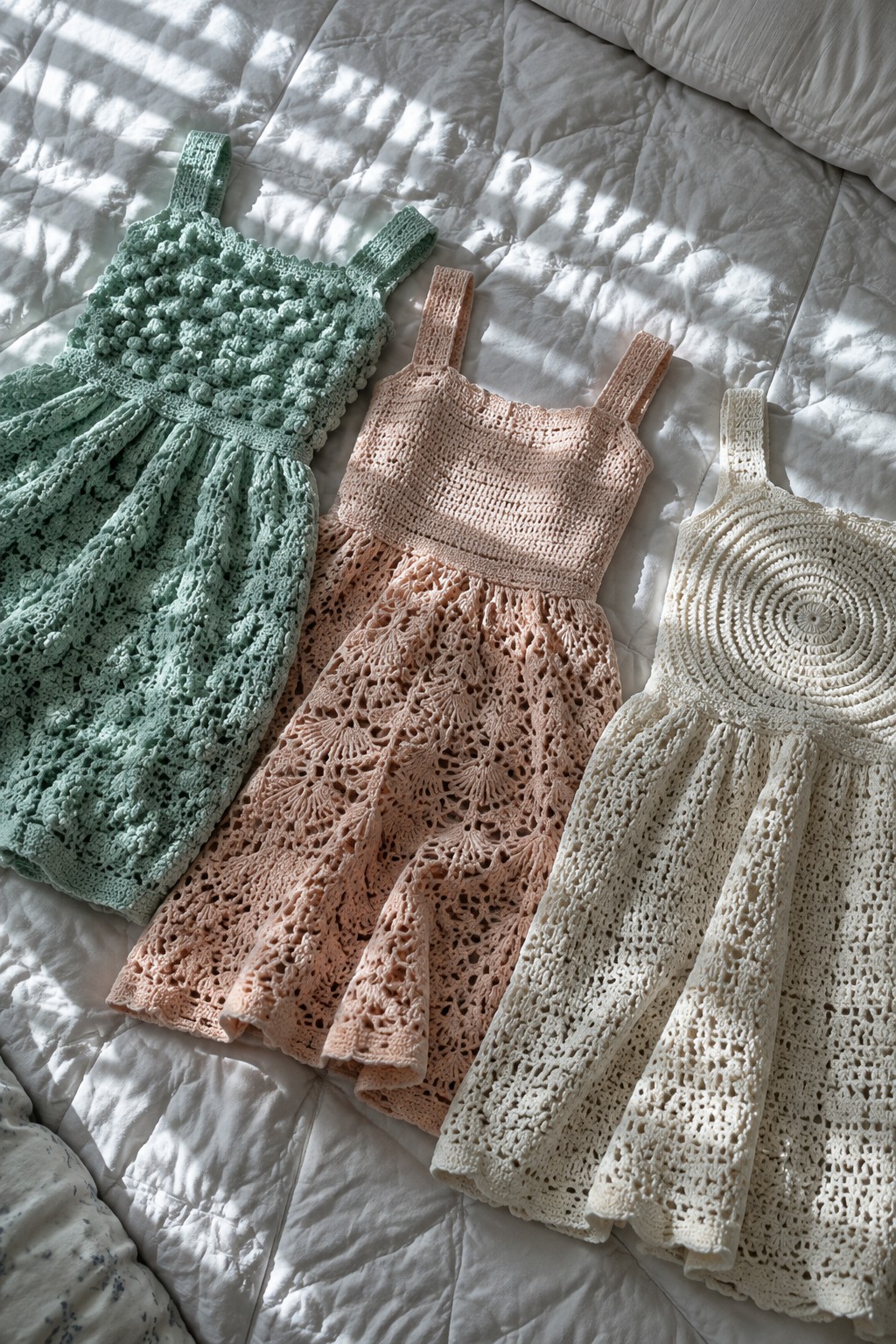
Crochet dresses with this structure use a denser yoke or bodice worked in textured stitches, then switch to an open lace pattern for the flared skirt. The three versions demonstrate how a bobble yoke, a striped panel yoke, and a large circular motif yoke can each pair with the same style of skirt to change the overall look. The shift from solid texture at the top to airy lace below creates contrast in density and lets the skirt pattern stand out. This approach fits the wearable category, particularly for light summer garments or small decorative dresses.
What makes this idea useful is how the yoke can be changed without rewriting the entire skirt pattern. You can scale the dress up or down by adjusting hook size and yarn weight to suit different ages. For gifts, swapping just the yoke color or motif lets you produce several versions from one skirt base. The structure makes this a smart option for projects that need to look detailed but stay straightforward to repeat.
Lace-Bordered Child’s Dress with Openwork Skirt
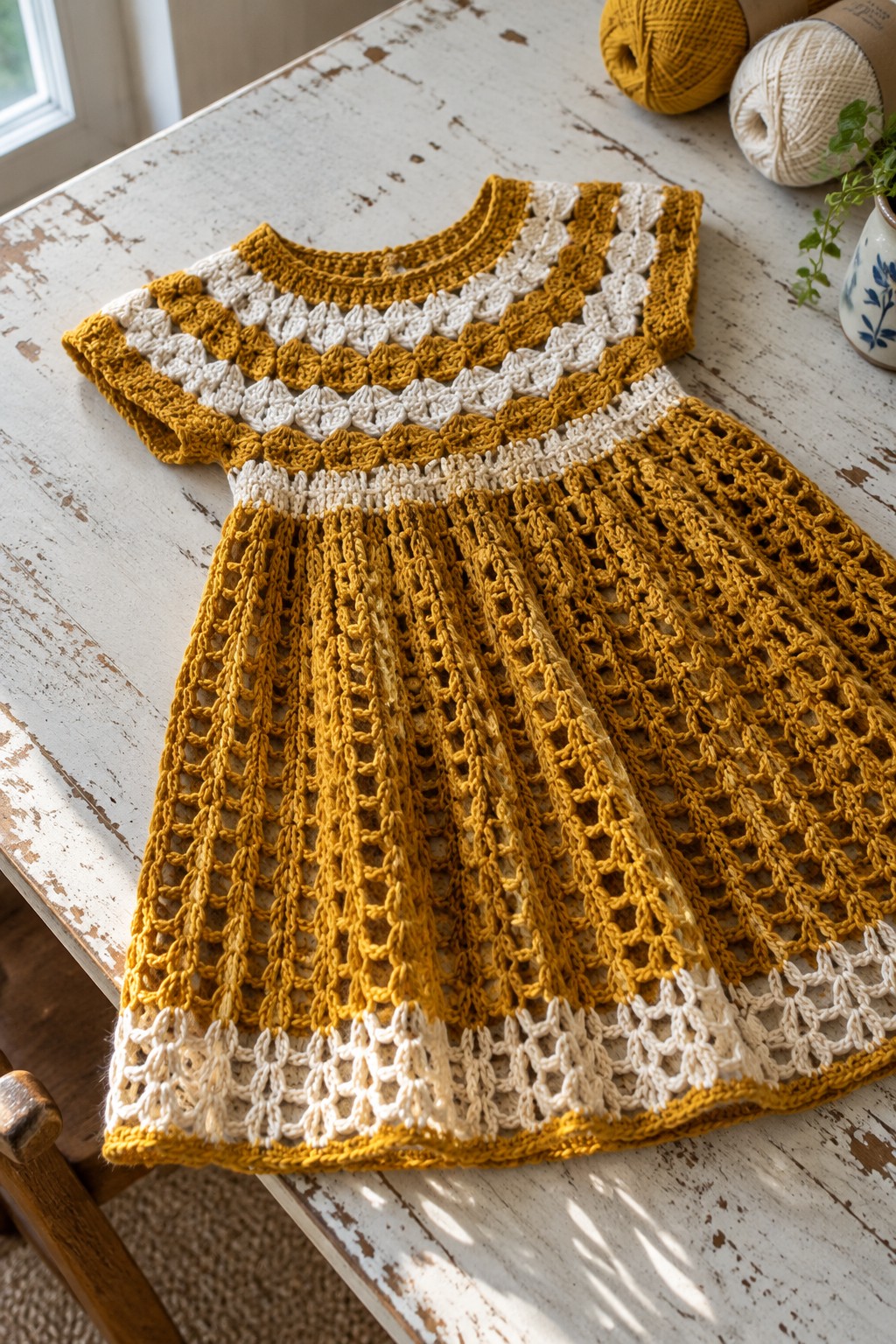
A child’s dress built from a solid yoke and flared skirt uses repeating bands of openwork to create visual contrast without extra shaping. White scalloped edges mark the yoke, waist, and hem while the mustard body shifts from tighter stitches near the top to looser mesh below. Short sleeves and a simple round neck keep construction straightforward and the two-color layout makes the stitch patterns stand out clearly.
What makes this idea useful is how the yoke can be worked first to test fit before committing to the full skirt length. The open lower section drapes well in lighter yarn and can be extended or shortened for different ages without changing the overall shape. For gifts, a design like this adapts quickly by changing just the main color while keeping the white trim the same.
Mini Dress Pouch with Lace Collar
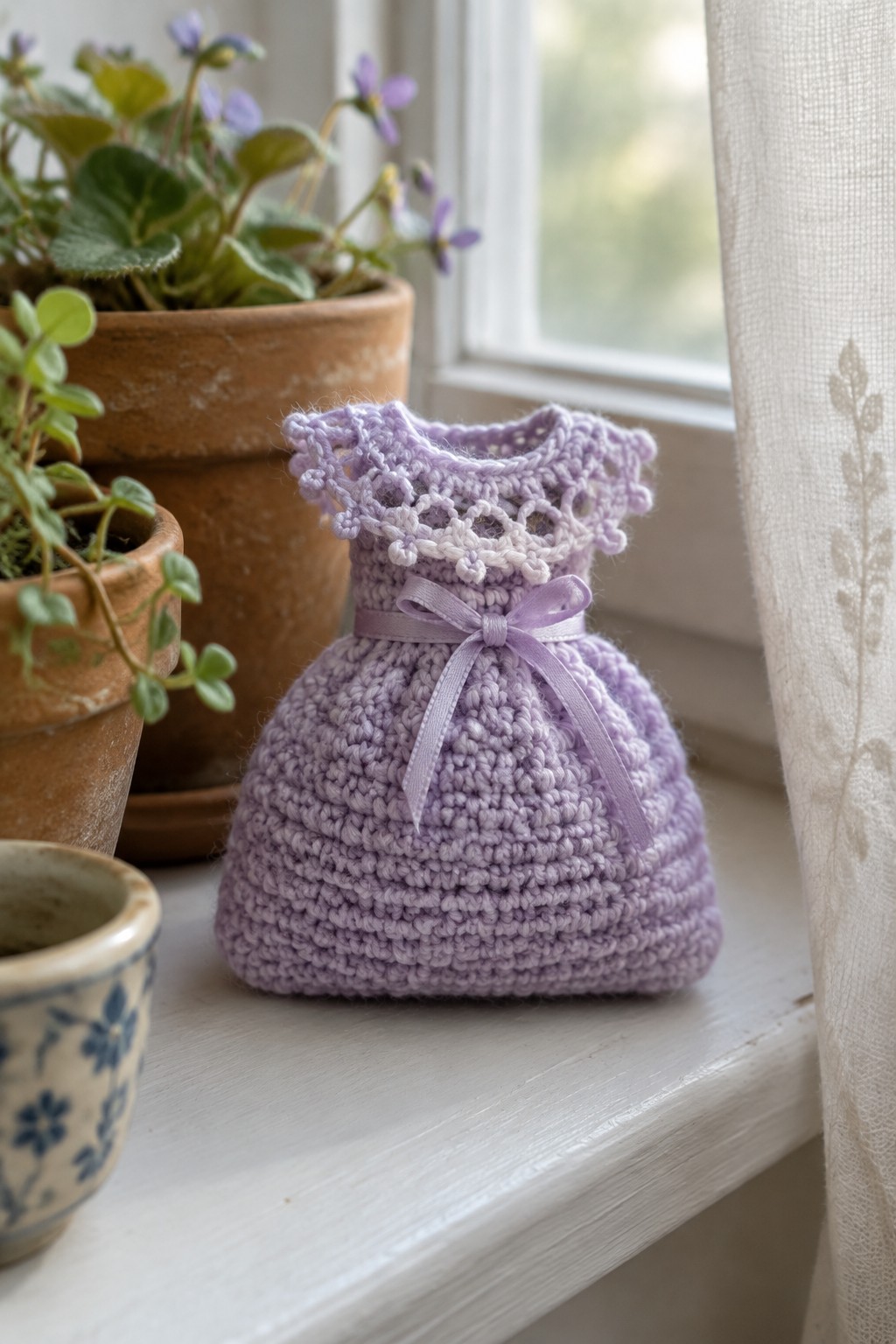
This crochet idea forms a small pouch shaped like a dress, built from a dense textured stitch for the body and an openwork lace section at the top to create a collar and neckline. The ribbon tied at the waist cinches the shape and adds a simple finishing detail. The flared lower section gives the pouch its dress silhouette while keeping the overall size compact enough to sit on a shelf or windowsill. It works as a decorative storage piece or small gift bag rather than a wearable item.
What makes this idea useful is how the dress shape turns basic increases and a simple tie into something recognizable without extra pieces. The small scale makes this easy to adapt by swapping the main color or changing the lace thread to match different decor styles. A project like this works especially well as a favor bag or a place to tuck small items like hair clips or notes. The structure makes this a smart option for using scraps since the body takes very little yarn and the lace uses even less.
Sleeveless Dress with Tiered Lace Skirt
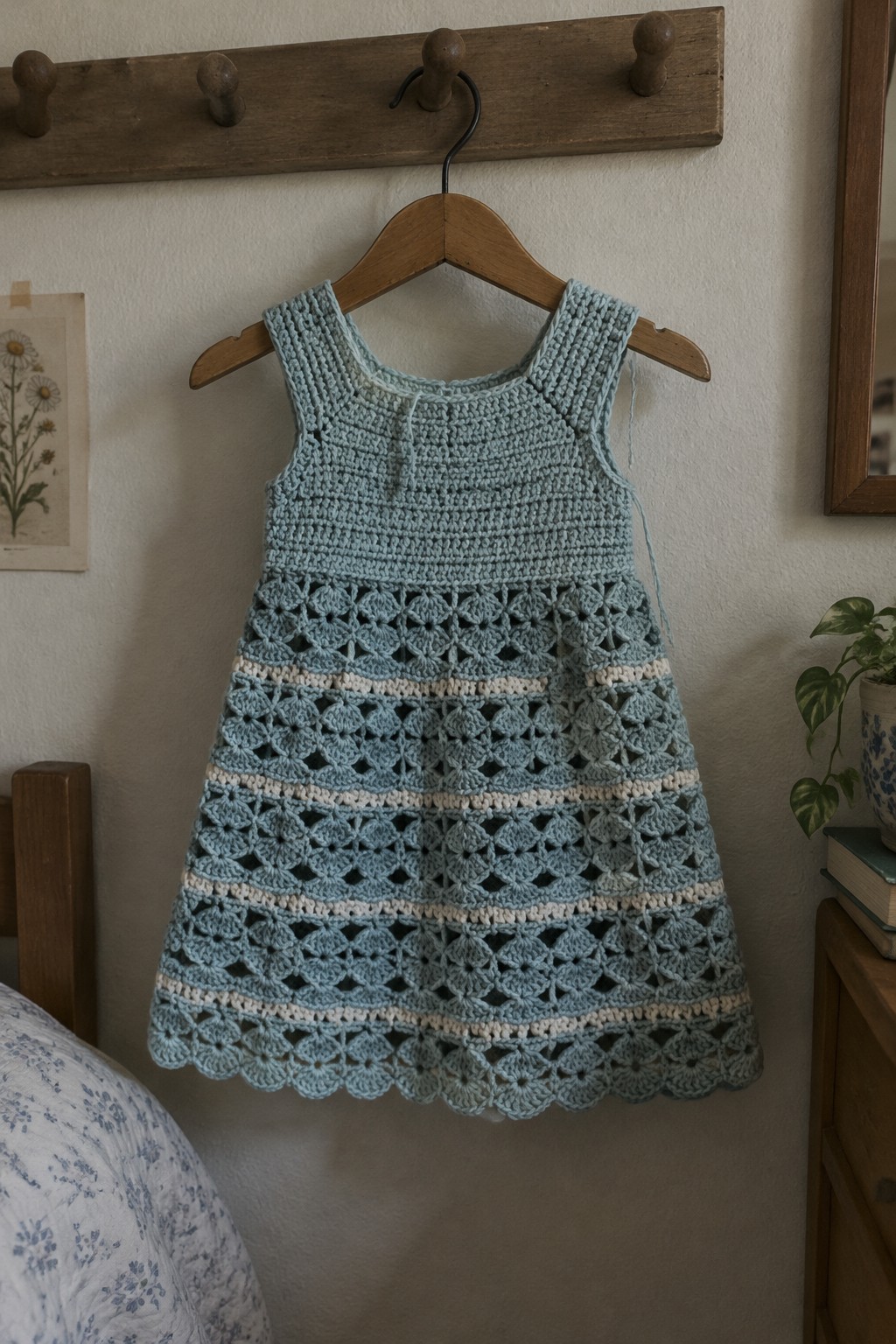
A sleeveless dress built with a solid yoke and an openwork skirt gives clear visual separation between the fitted top and the flared lower section. The repeating lace motifs create texture across the skirt while the narrow cream stripes define each tier and keep the pattern readable. The scalloped hem adds a finished edge that follows the natural shape of the lace without extra trimming.
What makes this idea useful is the modular skirt construction, which lets you add or remove motif rows to change the length. You can swap the main color or stripe width to match different yarn stashes or seasonal palettes. For gifts, a design like this works especially well because the yoke fits a range of sizes with minimal shaping changes.
Lace Pinafore Dress
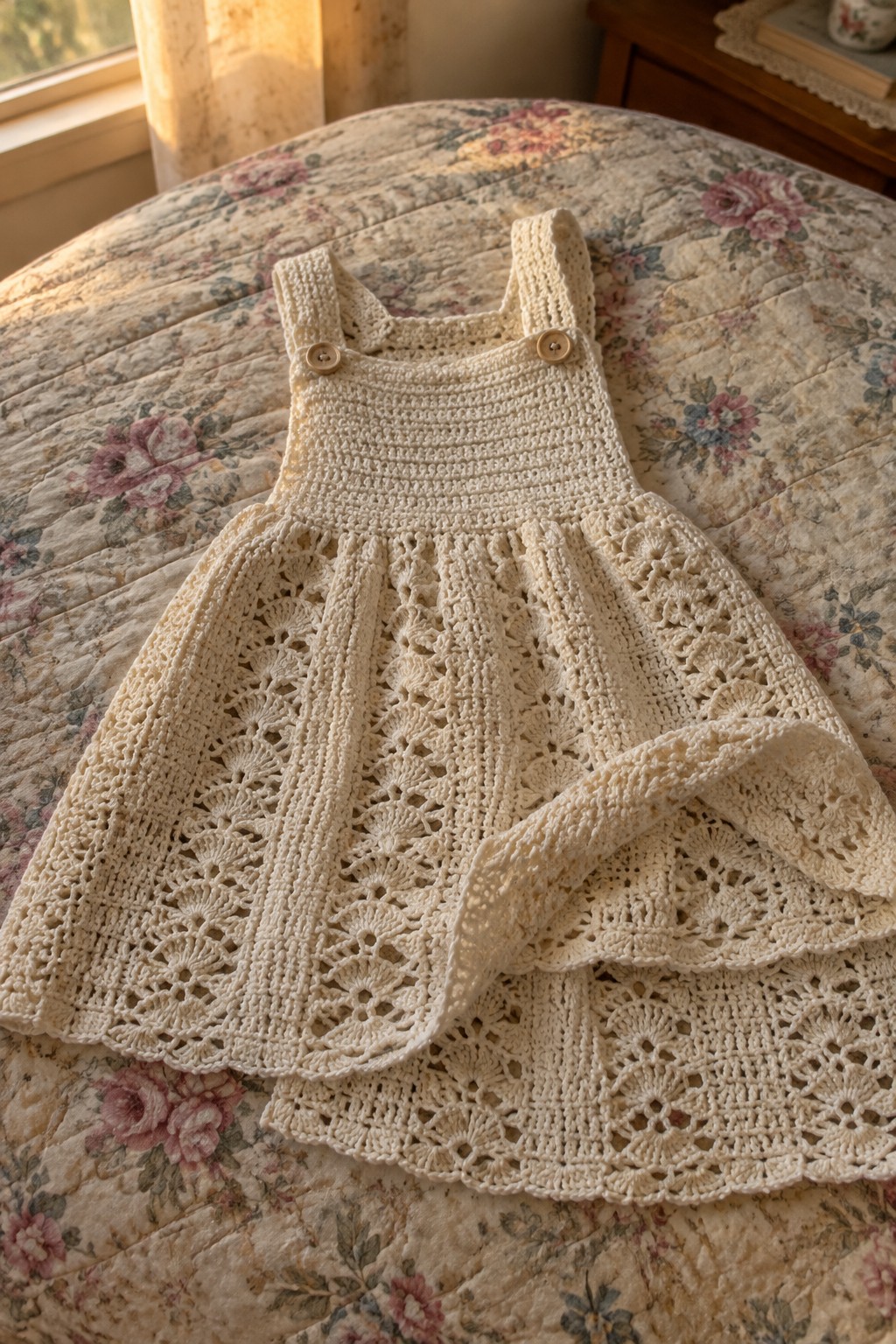
A child’s pinafore dress uses a solid crocheted yoke and straps paired with a flared skirt of open lace panels. The skirt mixes denser vertical bands with floral openwork motifs to add visual weight at the hem without adding bulk. Small wooden buttons close the straps, allowing simple adjustments as the child grows. This project sits in the wearable category as a lightweight summer layer over a shirt or onesie.
The structure makes this a smart option for warm weather because the open lace lets air move through the skirt. Changing the yoke depth or adding another lace tier lets the same idea scale from toddler to older child sizes. For gifts, the neutral yarn keeps it easy to pair with other clothes while still showing the stitch detail. The pattern also works well in cotton or linen blends that hold shape after washing.
Mini Dress Keychain with Lace Hem
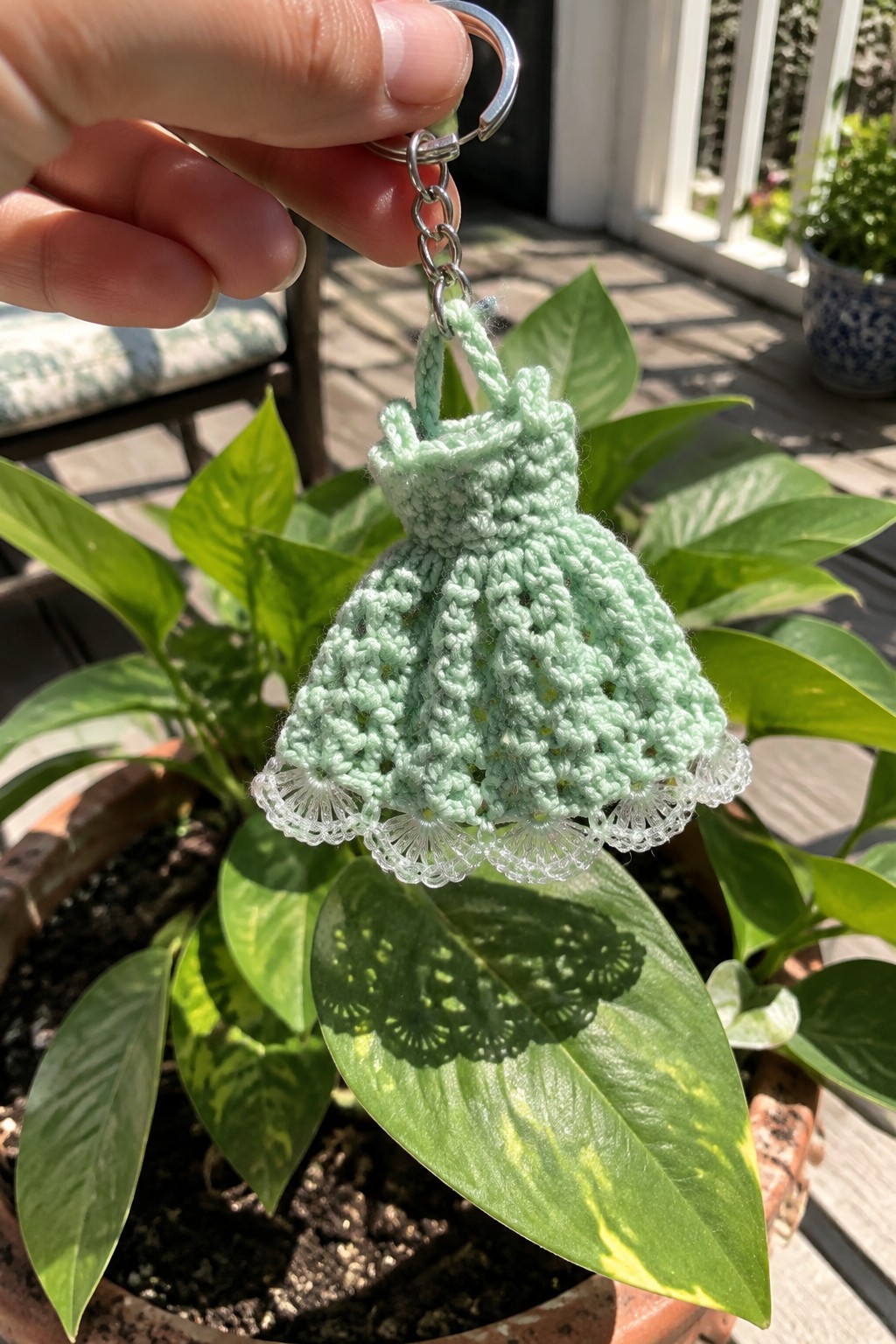
A miniature dress keychain starts with a narrow top section worked in the round, then adds steady increases to shape the skirt. The lower half uses an open stitch pattern that lets light through, while a separate strip of white lace gets sewn along the bottom edge for the trim. This approach keeps the project small enough to finish in one sitting and turns it into a bag charm or keyring. It fits the accessory category since the shape stays recognizable even at a reduced scale.
The small scale makes this easy to adapt by changing the skirt length or trying different yarn colors for the main body. It works especially well as a quick gift since the finished piece takes up little space and uses scraps. For decor, the same dress shape could be scaled up slightly and hung from a rearview mirror or a plant hook. The contrast between the mint green body and the white lace helps the details show up clearly in photos.
Miniature Dresses With Mixed Lace Patterns
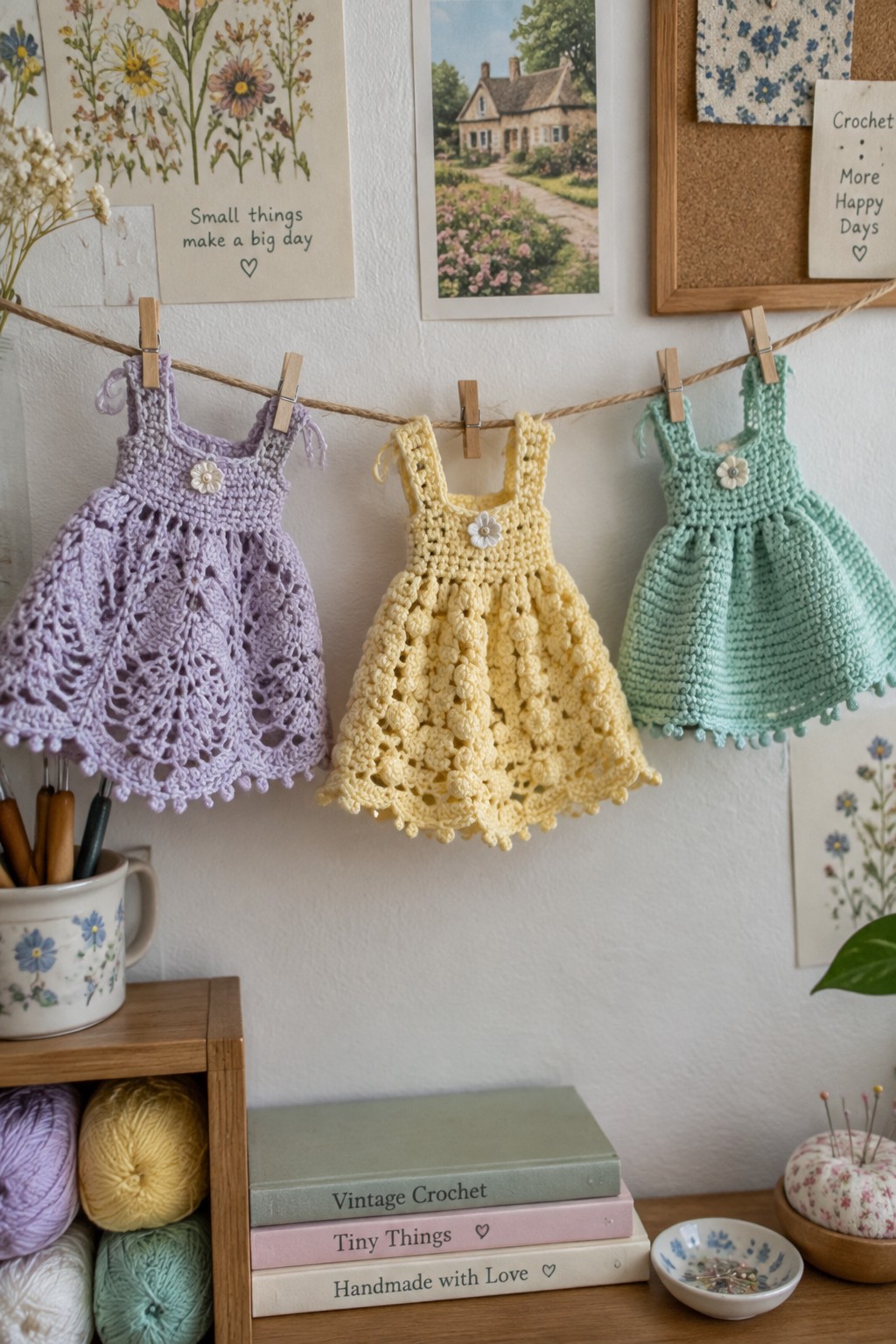
Crochet a set of small dresses using different stitch patterns for the skirts to highlight how lace and texture can vary within the same shape. The lavender version uses an openwork design that creates a light, airy skirt while the yellow one relies on clustered stitches for more depth. The mint green dress keeps the skirt simpler with a single stitch and adds a pom-pom edge for contrast. These pieces fit the wearable category but at a reduced scale that works for dolls or small decorative displays.
What makes this idea useful is how quickly you can finish one dress and move to the next with a new pattern. Change the yarn color or swap the skirt stitch to create a whole row of variations without starting from scratch each time. The small size also makes them practical for testing lace ideas before committing to a full-size project. They display well on a string or in a shadow box, which helps them stand out when shared online.
Lace Yoke Dress with Textured Skirt

A crocheted dress for a young child uses an open lace pattern for the bodice and short sleeves while switching to a denser, ridged stitch for the gathered skirt. Buttons placed along the back neckline create a functional closure that avoids bulk at the front. The clear shift between the airy upper section and the fuller lower portion gives the dress its shape without extra pieces or linings. This approach fits the wearable category and works well for vintage-style children’s clothing.
What makes this idea useful is how the two-stitch contrast lets you highlight the lace without complicating the skirt construction. The small scale makes this easy to adapt by lengthening the skirt or widening the yoke for different sizes. A project like this works especially well as a gift because the button back keeps it practical for daily wear while the openwork adds detail that photographs clearly. Switching the yarn color changes the overall look without altering the pattern.
Miniature Doll Dress with Lace Skirt and Puff Sleeves
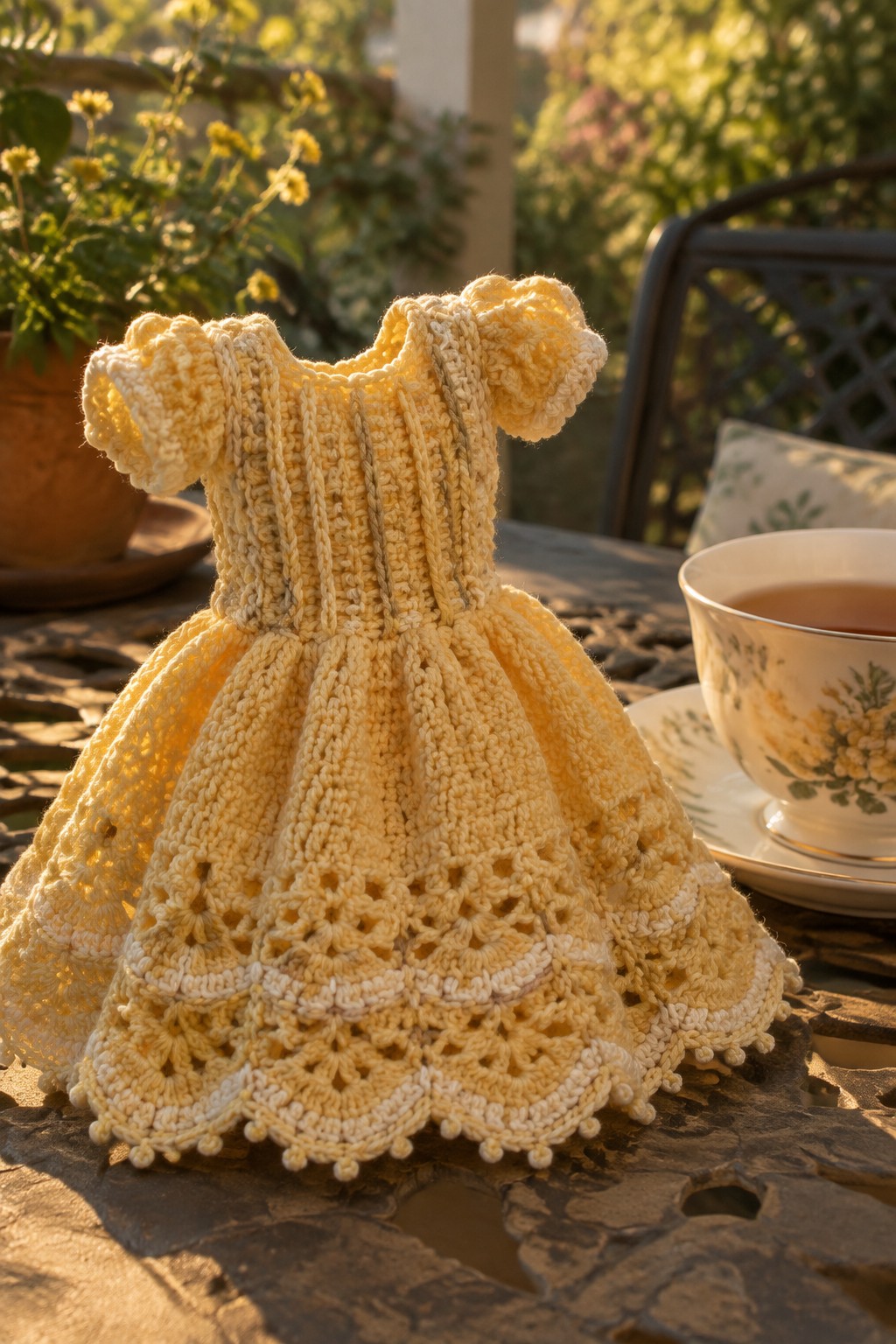
This project is a small crocheted dress built with a fitted ribbed bodice that transitions into a flared skirt of openwork lace. The puff sleeves and white edging create clear contrast against the solid yellow sections, giving the piece a structured vintage shape. It works as doll clothing or a display item that can sit on a shelf or table without taking up much space.
The small scale makes this easy to adapt by adjusting the stitch count to fit different doll sizes or by swapping the skirt length. You can change the main color to match a room or collection while keeping the white trim for definition. A project like this works especially well as a gift because the lace detail shows up clearly in photos and finishes quickly once the bodice is complete.
Granny Square Sundress Built from Alternating Motifs
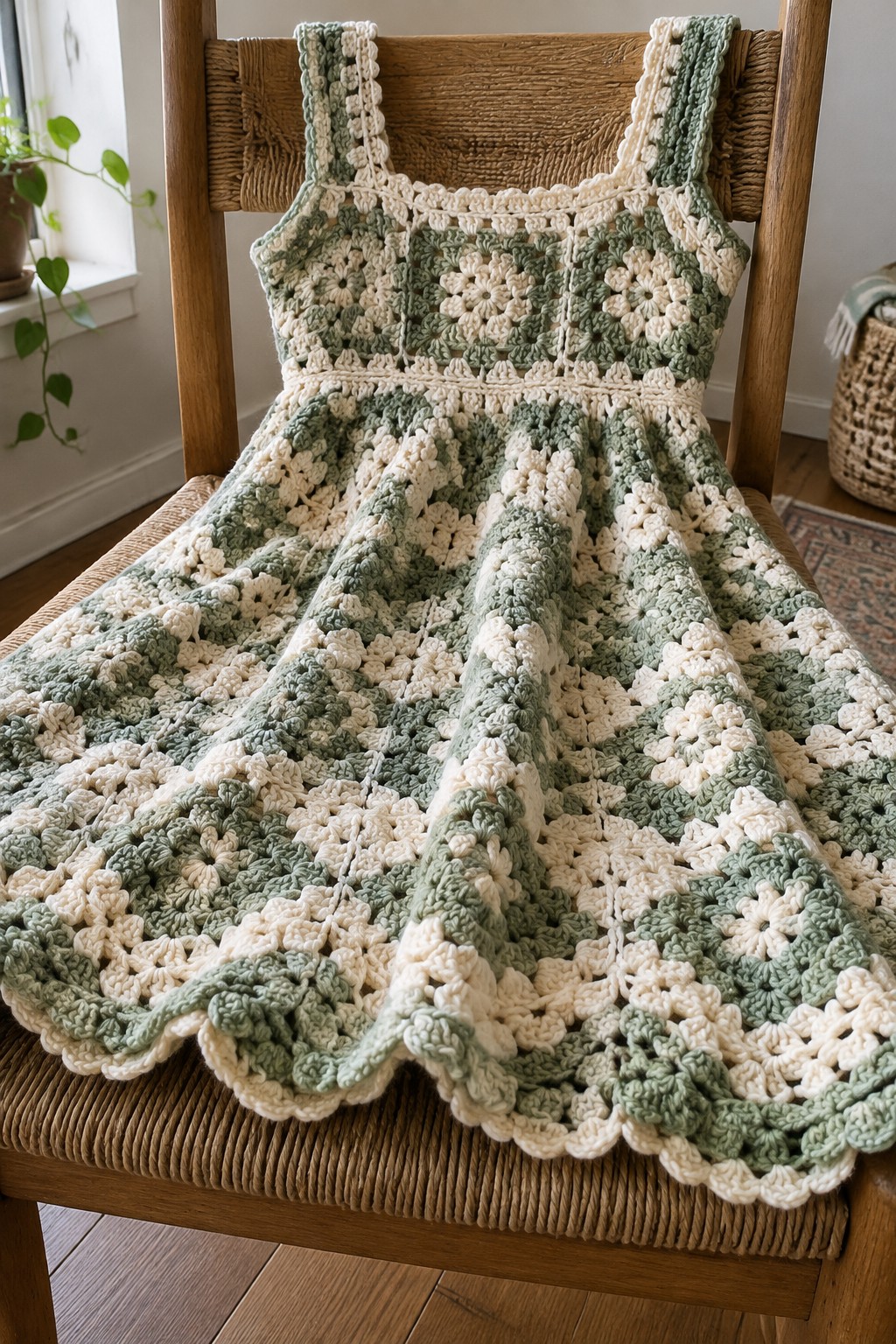
A dress made entirely from granny squares uses a simple two-color repeat to form both the fitted bodice and the flared skirt. Squares are joined into vertical panels for the top and arranged in widening rows below the waist to create shape without extra shaping stitches. The scalloped border at the hem and the square straps keep the construction consistent from top to bottom. This method turns a basic motif into a full wearable garment that works for warm weather or as a layer.
What makes this idea useful is how quickly you can change the size by adding or removing rows of squares. Swap the sage and cream for any two colors or keep the palette soft and tonal. The same layout works as a child’s dress or can be lengthened into an adult version by extending the skirt section. You can also adjust the neckline or strap width without changing the overall square construction.
Miniature Vintage Dress with Lace Skirt and Ruffled Shoulders
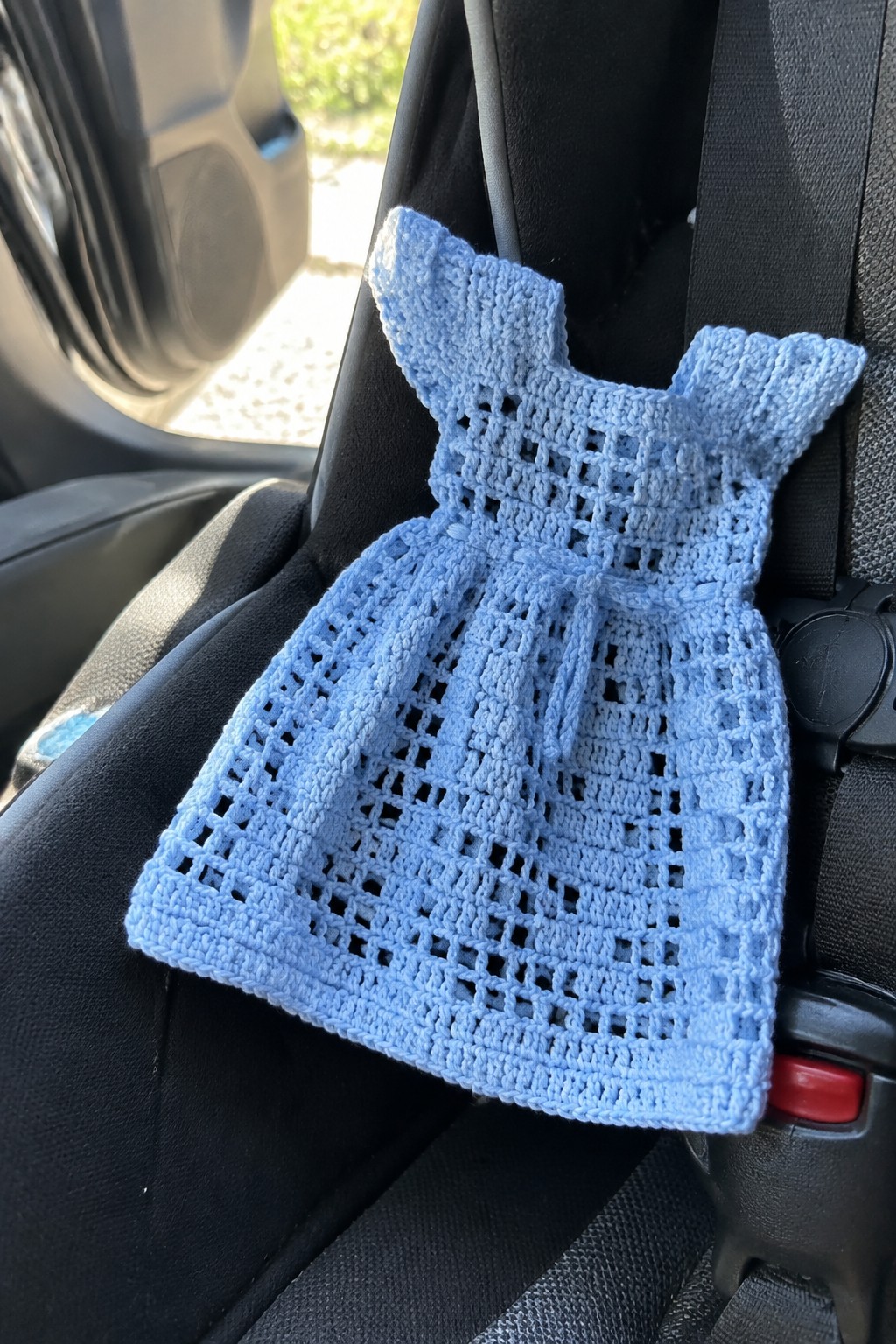
A crocheted miniature dress makes a practical project when you want to create doll clothes or small display pieces. The design uses an open lace pattern across the skirt to add texture without bulk, while the bodice stays simple and the ruffled shoulders give the top a finished shape. A tie at the waist keeps the silhouette fitted and lets you adjust the fit on the doll. This style fits the wearable category for toys or as a quick decorative accent.
The small scale makes this easy to adapt by switching to finer yarn for smaller dolls or thicker yarn for larger ones. A project like this works especially well as a gift for doll collectors or as a seasonal ornament. You can change the color or add a small button closure to match different themes. The lace detail photographs clearly, which helps it perform well in searches for vintage doll patterns.
Miniature Lace Dress for Dolls
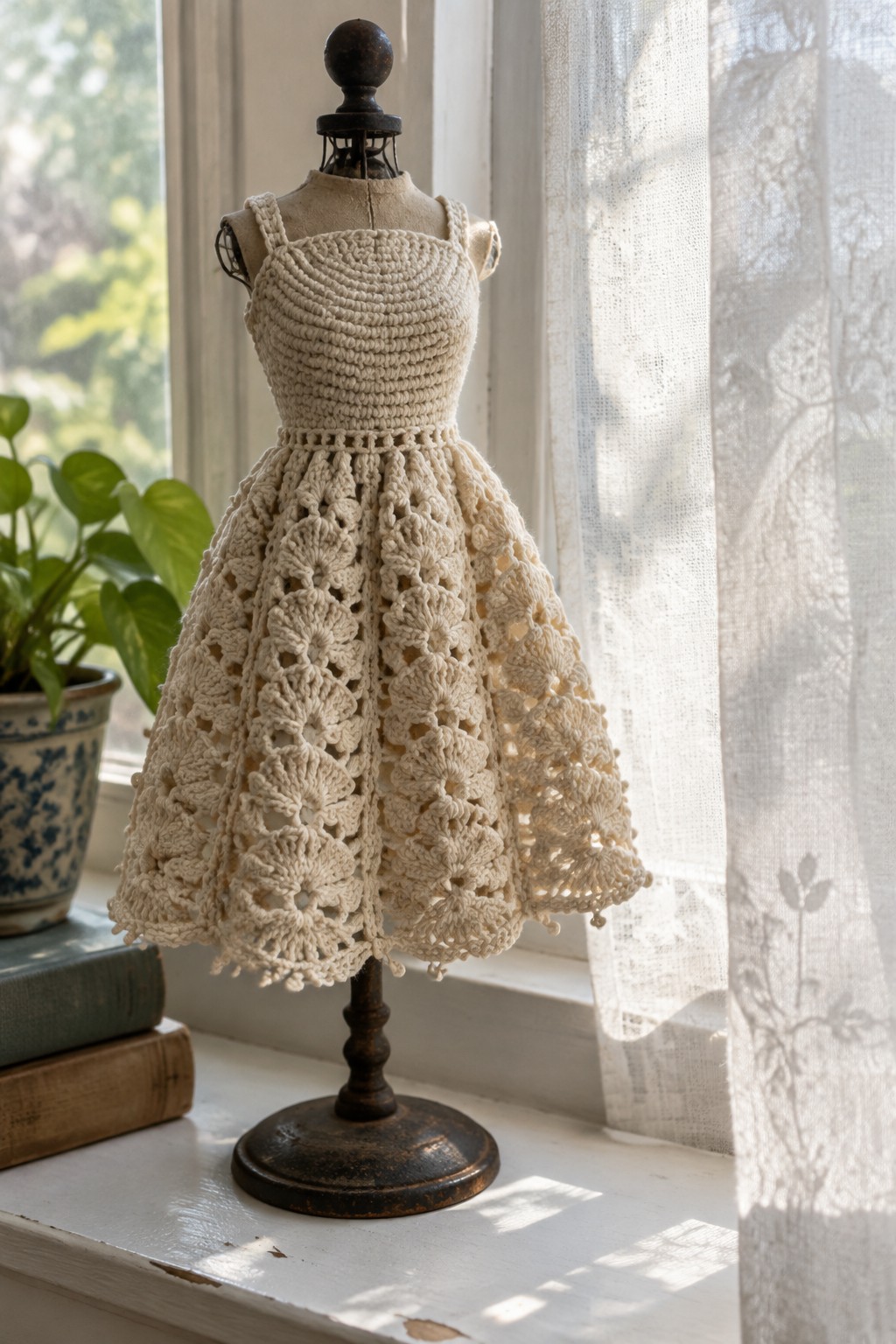
This project is a small-scale dress that pairs a fitted bodice worked in rows with a flared skirt made from joined floral motifs. The skirt flares out through repeating openwork sections that create natural scalloped edges at the hem. It fits the wearable category when made for a doll or the decor category when used as a display piece on a stand.
What makes this idea useful is the way the motif skirt can be lengthened or shortened to change the silhouette without rewriting the whole pattern. The small size works well as a gift topper, a nursery shelf accent, or a test swatch for lace techniques before starting a larger garment. You can change the yarn color or add a ribbon at the waist to match different room styles or doll wardrobes.
Two-Tone Striped Lace Dress
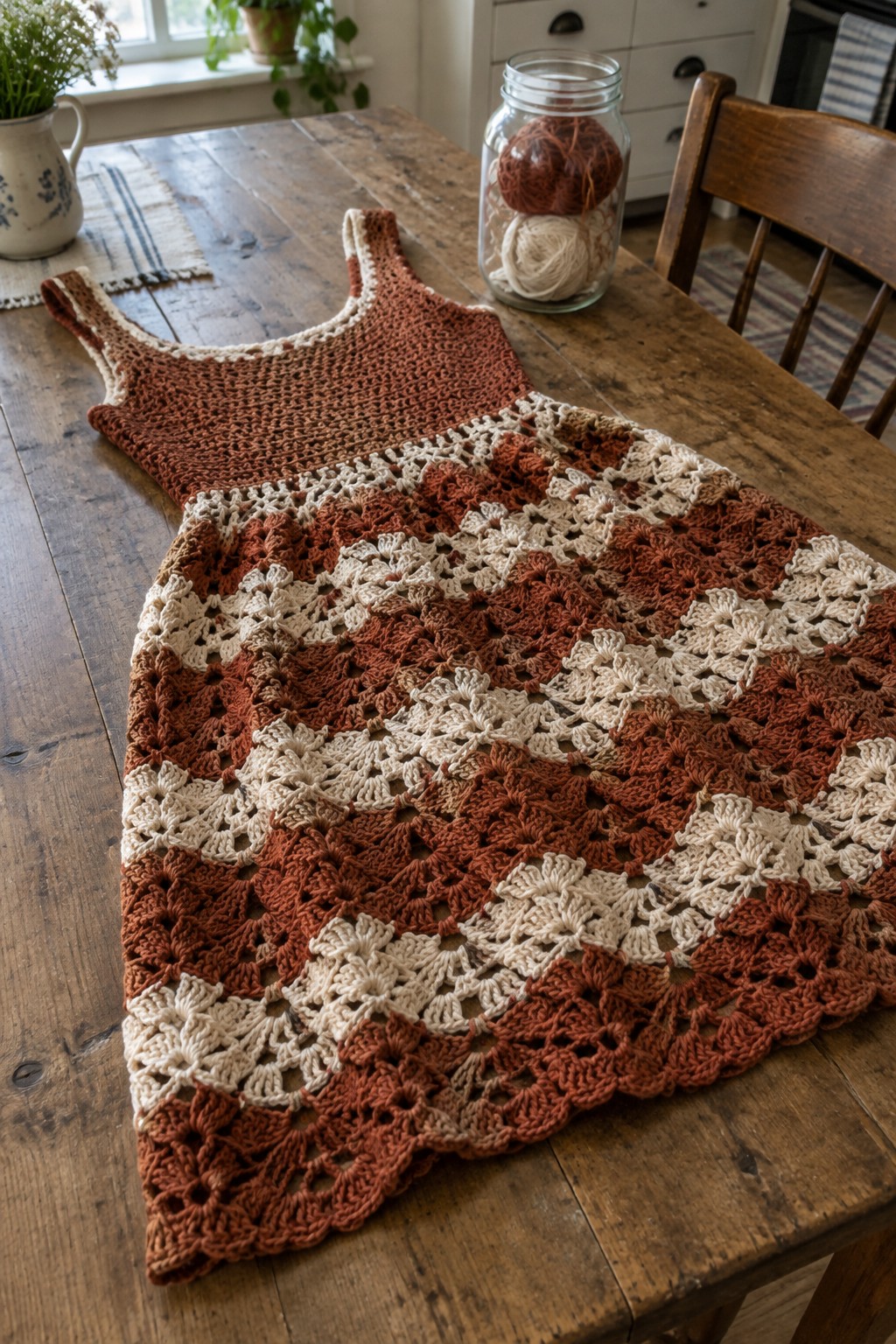
A sleeveless dress pairs a solid rust bodice with a flared skirt built from wide horizontal stripes that alternate between the same rust and a cream shade. The skirt is worked in an open lace pattern of repeating floral motifs that create visual contrast against the denser upper section. This simple structure keeps the dress easy to wear while the stripe sequence adds interest through color and texture changes.
What makes this idea useful is how the stripe width and motif repeat can be adjusted to hit different lengths or shift focus between solid and lace areas. The same approach works for a tunic or skirt if you keep the two-color alternation but drop the fitted bodice. For gifts, the straightforward shape and neutral palette make it simple to customize colors without changing the overall pattern.
Square-Neck Lace Dress for Kids

A sleeveless flared dress uses a square neckline with wide straps and a skirt that widens through repeated openwork sections. The bodice features a horizontal band of mesh stitches that breaks up the solid rows and lets light through, while the lower skirt continues the same motif before switching to tighter stitches near the hem. This style fits into wearable crochet projects aimed at children’s summer clothing.
The small scale makes this easy to adapt by adding or removing pattern repeats to fit different ages. A project like this works especially well as a gift because the open sections require less yarn and time than a fully solid dress. You can lengthen the bodice or change the strap width to adjust coverage without rewriting the whole pattern. The simple shape and repeating lace band also make it a strong candidate for pattern sharing since the details show clearly in photos.
Lace-Patterned Doll Dress with Flared Skirt
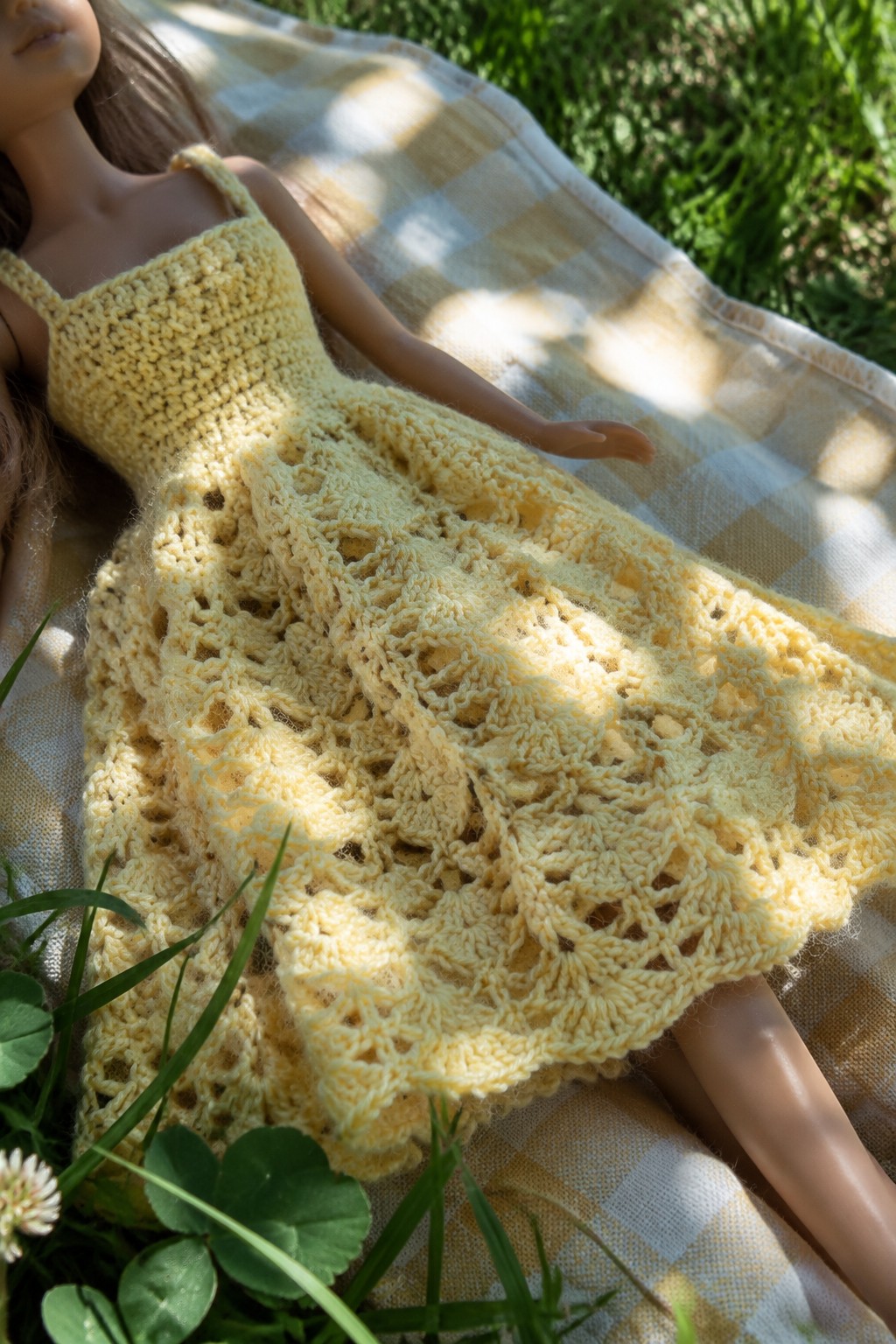
A doll dress pairs a fitted tank bodice with a flared skirt built from repeating openwork motifs that form connected circular shapes. The skirt expands through staggered motif placement, which creates an airy texture and natural flare without extra shaping rows. This approach fits the wearable category for doll clothing because the open pattern keeps the piece lightweight and the small scale lets the lace details stay visible.
The modular skirt construction makes length easy to adjust by adding or dropping motif rows to fit different dolls. The same motif layout works in cotton for everyday play or in a finer thread for display pieces. For gifts, a project like this uses a small amount of yarn and finishes in a few hours, so you can make several versions in different colors from one skein.
Frequently Asked Questions
1. How do I choose the right vintage-inspired crochet dress for my body type from a list of 22 options? Focus on the silhouette and lace placement that flatters your shape. Empire waist styles elongate the torso while A-line cuts suit most figures by skimming over the hips. Check the article photos for models with similar proportions and note the dress length to ensure it hits at a comfortable spot on your legs. Measure your bust and hips against the sizing chart provided by the seller since crochet has limited stretch.
2. What fabrics work best for comfortable wear in these delicate lace crochet dresses? Cotton and linen blends offer breathability and a soft drape ideal for vintage looks while avoiding itchiness from synthetic yarns. Look for dresses with a lightweight lining underneath the lace to prevent transparency without adding bulk. Avoid heavy wool blends unless the design is for cooler evenings as they can feel stiff against the skin.
3. How should I wash and store my crochet lace dress to keep it looking new? Hand wash in cool water with a gentle detergent made for delicates and lay the dress flat to dry away from direct sunlight to prevent fading or shrinking. Store it folded in a breathable cotton bag rather than on a hanger to avoid stretching the lace. Spot clean minor marks immediately with a damp cloth to maintain the intricate details.
4. Can I find affordable alternatives or patterns to create similar dresses at home? Search for free or low-cost vintage crochet patterns on sites like Ravelry using keywords such as retro lace dress or bohemian filet crochet. Many patterns allow customization with different yarn weights to match the delicate look in the article. Thrift stores and online marketplaces often carry similar pre-owned pieces at lower prices if you prefer ready-made options.
5. Are these dresses suitable for everyday wear or only special events? Pair a shorter crochet lace dress with sandals and a denim jacket for casual daytime outings or layer a slip underneath for office-appropriate modesty. The vintage style adds elegance to weddings or garden parties when accessorized with simple jewelry and low heels. Choose neutral colors like white or beige for versatility across multiple occasions.
