


I have been crocheting dresses for some time and I often find that the open stitches can leave things a little sheer in places.
Lining them adds just enough coverage while keeping the pattern visible.
I started looking for designs that already include a lining or that work well with one added later.
Here are 21 options that seem practical for everyday wear.
Some use simple fabrics underneath while others build the lining right into the pattern.
Lined Pinafore Dress with Bobble Pockets
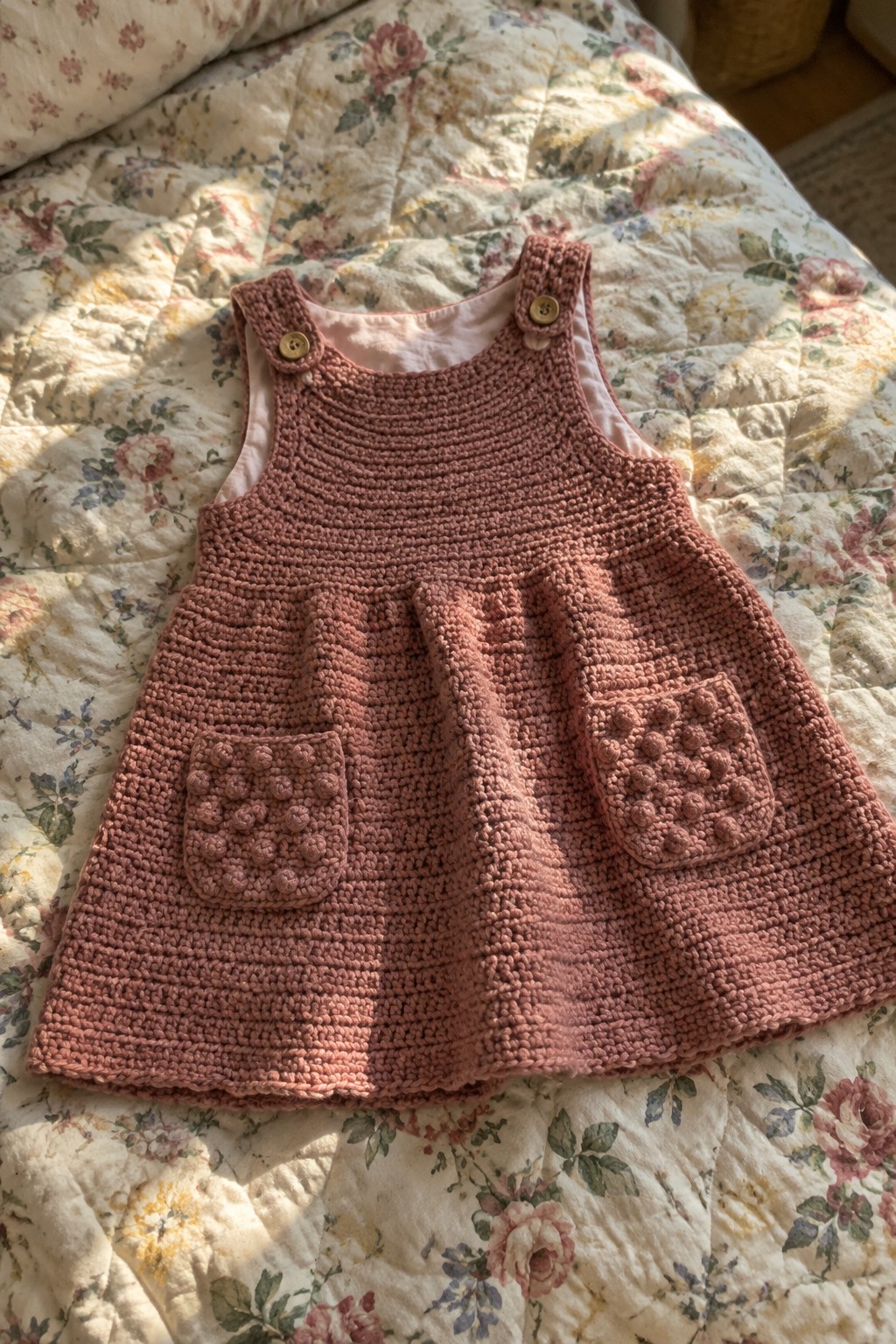
A simple pinafore dress made in one solid crochet texture works well as a wearable for children. The bodice sits close to the body while the skirt flares into an A-line shape, and two square pockets sit low on the front with a raised bobble pattern that adds texture without extra pieces. Buttoned straps at the shoulders make the fit adjustable, and the pale pink lining inside prevents the openwork from showing skin. This approach turns a basic crochet rectangle construction into a complete garment that needs no extra layers.
What makes this idea useful is how the lining solves the coverage problem that often stops people from wearing crochet clothing. The same shape can be lengthened or widened by adding rows or changing hook size to fit different ages. The bobble pockets are quick to add after the main piece is done, so the project stays beginner friendly while still looking finished. For gifts, this kind of dress stands out because it functions as a full outfit on its own rather than just a top layer.
Lined Yellow Dress with Sunflower Appliqué
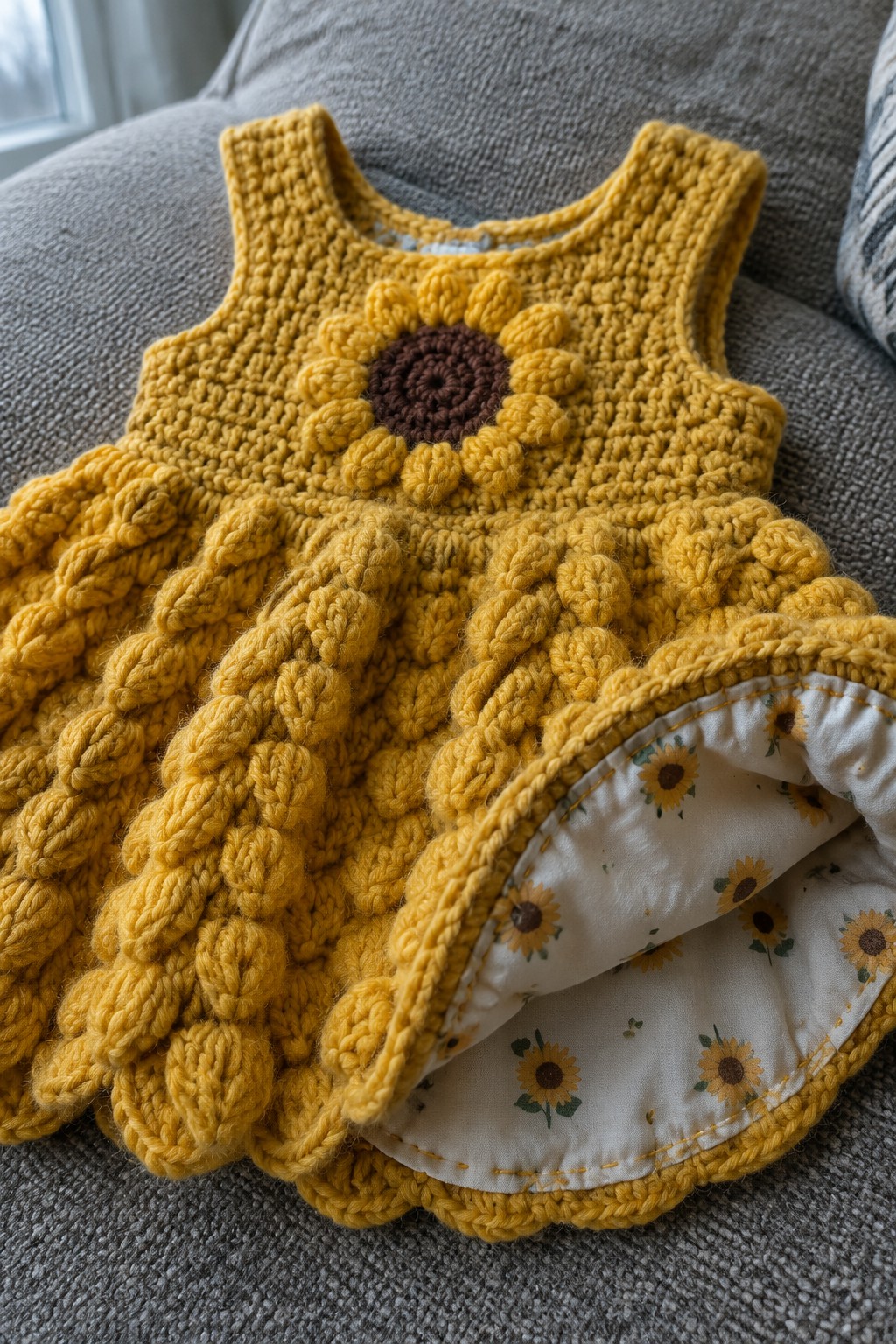
A crocheted child’s dress in solid yellow yarn centers on a sunflower appliqué placed at the neckline. The skirt section uses a dense repeating texture of raised stitches that add depth without openwork. A printed fabric lining is attached along the inside hem, turning the piece into a fully lined garment that still shows the crochet on the outside.
What makes this idea useful is the way the lining solves coverage issues common in crochet clothing while preserving the textured surface. You could scale the same construction down for a top or up for a longer dress and swap the sunflower for any simple appliqué shape. A project like this works especially well for kids’ wear where both comfort and modesty matter. The color and motif make it easy to match the lining fabric to the yarn for a coordinated look.
Openwork A-Line Dress with Fan Motifs

A lightweight crochet dress built from repeating fan and shell patterns creates an A-line shape with short sleeves and a rounded neckline. The top section uses tighter openwork rows for structure while the skirt expands with larger lace repeats that end in a scalloped hem. This layout keeps the fabric breathable yet stable enough to hold its flare without extra shaping.
What makes this idea useful is the way the graduated lace allows easy length changes by adding or removing motif rows. The same pattern works for different sizes simply by adjusting the starting chain and row count at the bodice. Pairing the dress with a simple lining underneath gives coverage while the open stitches stay visible, which makes the design practical for regular wear or as a gift item. The solid yellow color highlights the texture without competing with the stitch details.
Mini Crochet Dresses with Fabric Lining

Crochet a fitted bodice and flared skirt in a fine yarn, then insert a strip of lightweight fabric behind the openwork hem so the print shows through the gaps. The lining adds coverage while letting the crochet pattern remain visible, which keeps the piece looking light but finished. This approach suits doll clothes, ornaments, gift tags, or small appliqués where a plain crochet edge would feel too sheer.
The small scale makes these quick to finish and easy to resize by changing hook size or yarn weight. Swap the fabric print to match different seasons or recipients, or work the same dress shape in multiple colors for a set. For gifts, a design like this works especially well because the lining takes little extra time but gives the piece a more complete look that photographs clearly for sharing.
Textured Sleeveless Shift Dress
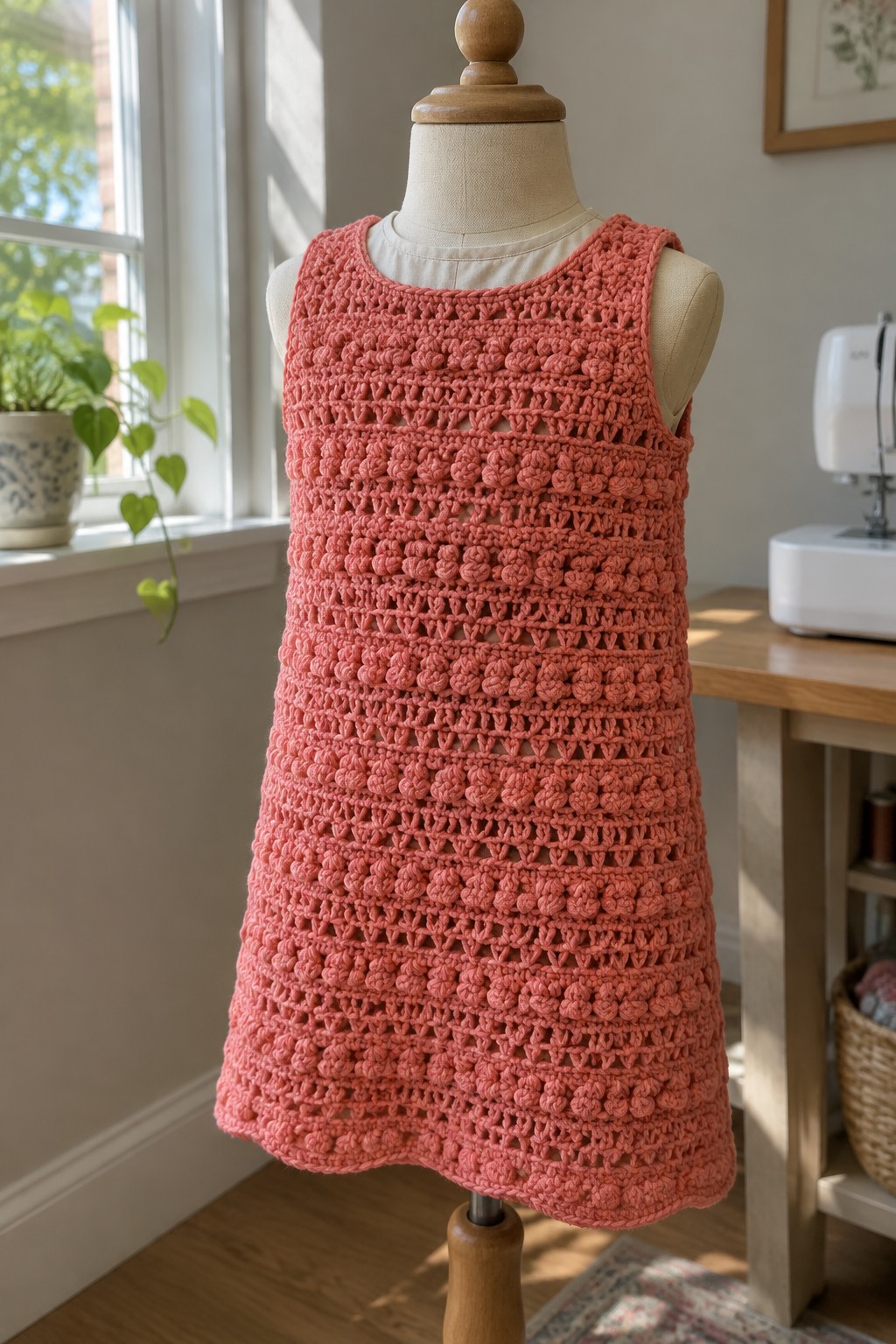
A sleeveless shift dress built from repeating rows of clustered stitches creates a fabric that balances coverage with breathability. The pattern alternates denser sections with small open spaces, giving the garment enough body to drape without clinging. This style works as a wearable layer that can be worn alone or over other pieces depending on the season.
What makes this idea useful is how the consistent texture accepts a lining without flattening the stitch definition. You can shorten it into a top, lengthen it into a midi, or change the neckline depth to adjust coverage. The solid color choice keeps the focus on the pattern, which helps the design photograph clearly for pattern sharing or selling finished pieces.
Lined Wrap Dress with Openwork Lace and Pom-Pom Edges

A wrap dress crocheted in an open lace pattern gains better coverage when placed over a solid fabric lining that matches the main color. Short sleeves, a deep V-neck, and a waist tie keep the shape simple while the pom-pom trim finishes the hem and sleeve edges. The design sits in the wearable category and works as a light layer for warmer months. The open stitches create visual texture that stays readable once the lining is added underneath.
What makes this idea useful is how the lining turns an otherwise sheer piece into something practical for daily wear. You could shorten the sleeves, adjust the wrap overlap, or swap the lining color to change the look without starting over. For gifts, a design like this works especially well because the tie closure fits a range of sizes and the short length keeps the project manageable. The structure also photographs clearly for pattern sharing since the lining makes the lace pattern stand out against a solid background.
Lined Motif Dress with Alternating Color Rows

A crochet dress built from square motifs arranged in horizontal stripes creates both structure and visual rhythm without needing complex shaping. The mint and white rows repeat the same motif across the bodice and skirt, letting the pattern do the work of building width as the dress flares outward. Adding a fabric lining underneath turns the open stitchwork into a practical garment that can be worn without extra layers. Simple straps and a square neckline keep the top section clean while the skirt gains movement from the motif repeats.
What makes this idea useful is how the lining solves coverage while keeping the crochet visible. You can adjust the number of rows in each color to change the stripe balance or scale the whole piece up by repeating the skirt section. The motif layout works just as well for an adult version if you add extra width at the hem. This approach stands out for wearable projects because it delivers a finished dress rather than a layer that still needs something underneath.
Gradient Pink Child’s Dress with Lacy Yoke

A sleeveless child’s dress combines an open lace yoke with a solid lower section to balance detail and coverage. The color shifts gradually from light peach at the top through deeper coral at the hem, which helps the skirt stand out while the yoke stays lighter and more open. This shape works as a wearable project that can be sized up or down by changing the starting chain and adding or removing rows in the skirt.
What makes this idea useful is the built-in contrast between the airy top and denser bottom, which lets the dress hold its shape without extra stiffening. You can add a fabric lining behind the lace section to improve coverage while keeping the open stitch visible. The small scale makes this easy to adapt for different ages or to work in solid colors if a gradient feels like too much variation.
Ribbed Midi Dress with Built-In Lining
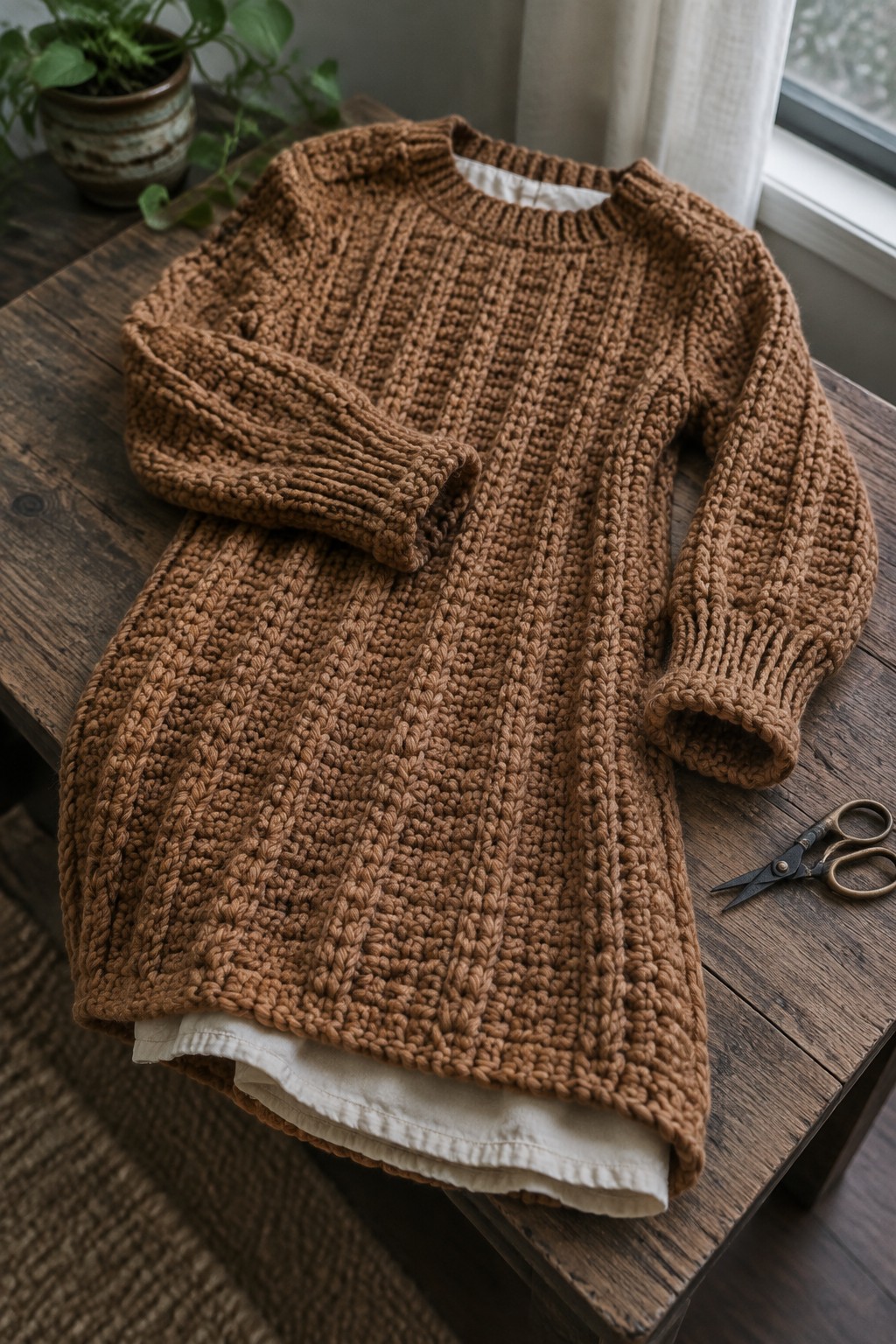
A long-sleeve midi dress worked in a dense vertical rib pattern gives the garment structure and shape while keeping the fabric thick enough for layering. The straight silhouette and round neck make it easy to wear over a slip or lightweight dress underneath, turning the crochet into an outer layer rather than a standalone piece. This style falls squarely into the wearable category where the finished item is meant for daily use.
What makes this idea useful is the lining that lets you use a heavier stitch without worrying about coverage. You can shorten the hem to tunic length or swap the brown for a brighter color if you want it to stand out more in a wardrobe. The simple shape also makes it a good base for adding pockets or changing the neckline on a future version.
Openwork Halter Dress with Square Grid Pattern

A halter crochet dress built around a repeating open square motif creates a consistent grid that runs from the fitted bodice down through the skirt. The V-neck and neck ties keep the top section simple while the open pattern adds breathing room and visual texture across the whole piece. This approach works as a wearable because the motif repeats evenly, so the dress holds its shape without extra darts or complex decreases.
What makes this idea useful is how the open squares make lining straightforward, turning a sheer dress into one with better coverage for everyday wear. The length and flare are easy to adjust by adding or removing rows, and the same grid can be worked in different colors or yarn weights to change the season. For gifts or personal use, the basic shape pairs well with a simple cotton lining that shows through the holes without competing with the stitch pattern.
Lined Circle Motif Dress with Tiered Hem

A dress built from circular motifs joined edge to edge creates an open, scalloped surface that still needs a lining for everyday wear. The circles are arranged in horizontal tiers that gradually widen toward the hem, giving the skirt its flared shape without extra shaping rows. The lining sits directly under the crochet layer so the dress can be worn without an added slip while keeping the motif pattern visible.
What makes this idea useful is the way the lining solves the coverage problem common with large openwork pieces. You can swap the motif size or yarn color to change the look without rewriting the whole pattern. A project like this works especially well as a summer dress because the tiered construction adds length and movement while the lining keeps it practical. For gifts, a design like this stands out on Pinterest when shown flat so the motif layout is easy to see.
Striped A-Line Dress with Fabric Lining
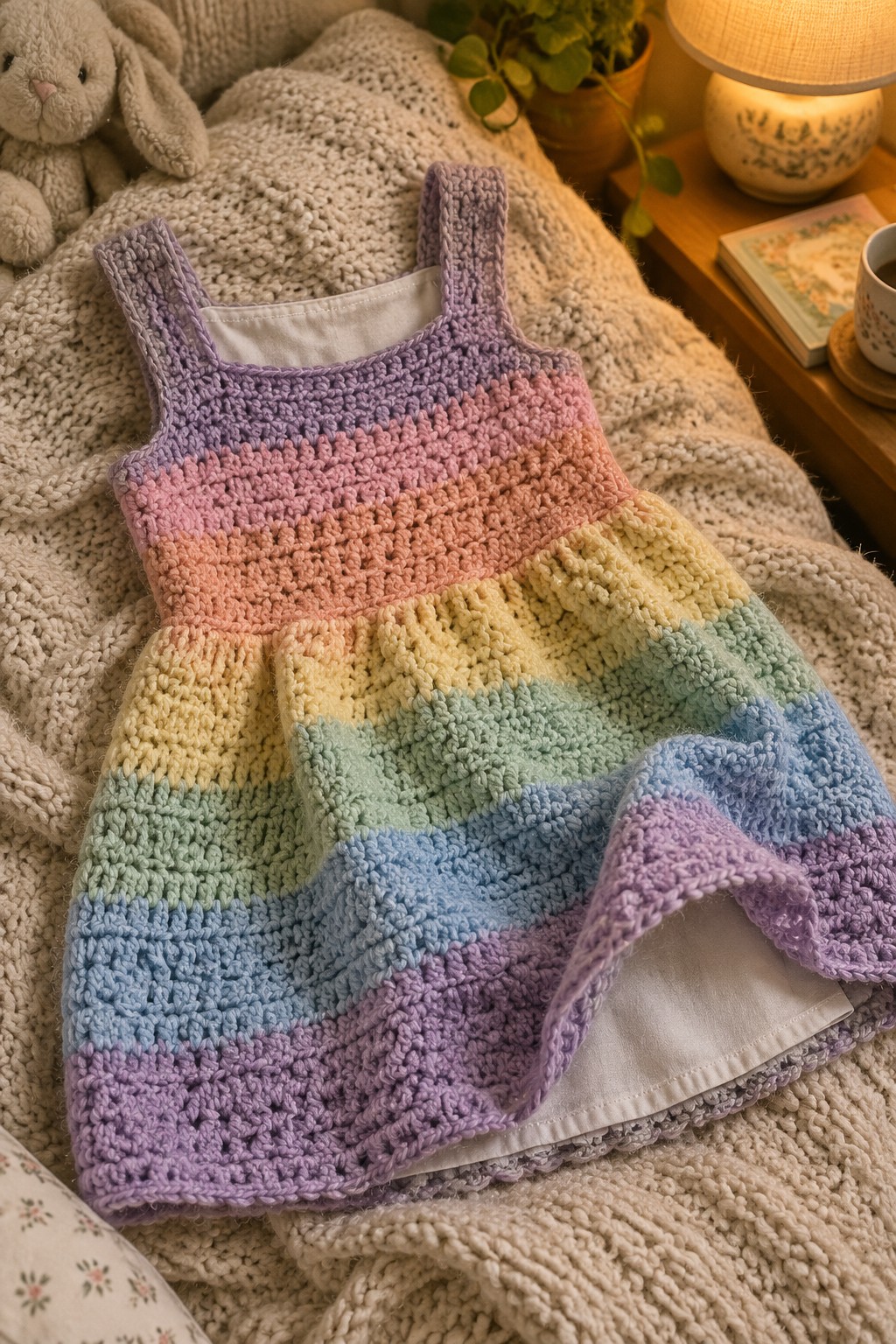
A child’s A-line crochet dress worked in wide horizontal stripes of soft pastels creates an easy wearable with built-in coverage. The bodice stays fitted while the skirt flares through simple increases, and the white lining shows at the hem and neckline to prevent gaps. Wide straps keep the top in place without extra shaping. This style fits the lined dress category because the fabric layer sits inside the crochet shell rather than replacing it.
The lining makes the dress practical for daily wear since it adds modesty while keeping the open stitch texture visible. You can change stripe order or width to use up leftover yarn without affecting the shape. Shortening the skirt turns the same pattern into a tunic top, and lengthening the straps adapts it for older kids. The strong color blocks also make finished pieces easy to spot in pattern roundups.
Bobble Stitch Pinafore with Buttoned Straps
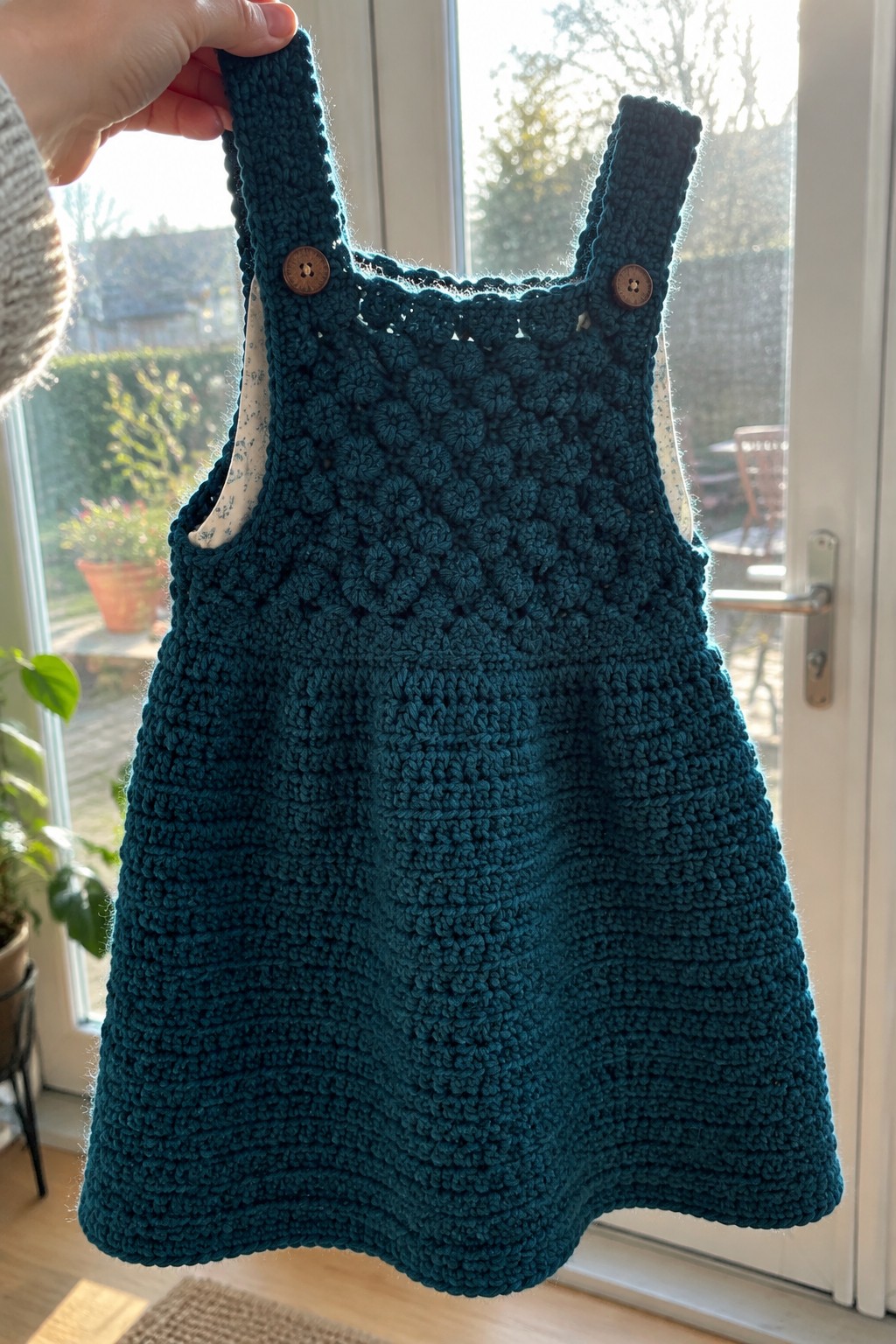
A pinafore dress worked in a dense bobble stitch gives the fabric extra body so the skirt flares slightly without extra shaping. Buttoned straps connect the front and back panels and allow the fit to be adjusted as the wearer grows. Adding a simple cotton lining underneath turns the dress into something that can be worn without an extra layer on top.
What makes this idea useful is how the lining directly addresses coverage while the bobble texture stays visible on the outside. The small size works well for toddlers, but the same strap construction and skirt shaping can be repeated in larger sizes by adding width and length in the lower section. A solid color keeps the focus on the stitch pattern and makes it simple to pair with different tops underneath.
Mesh Grid Overlay Dress

A grid-style openwork crochet forms a sleeveless, straight dress shape meant to sit over a separate slip or lining. The even square mesh creates consistent negative space that shows the fabric underneath without needing extra coverage stitches. This keeps the project in the wearable category, where the crochet supplies the pattern and the lining supplies the modesty. The simple repeat structure makes the dress easy to lengthen or shorten by adding or removing rows.
What makes this idea useful is how the open mesh works over any neutral slip you already own. This would be easy to turn into a tunic by stopping the pattern at hip length instead of continuing to the knee. The color choice does a lot of the work here by staying light enough to pair with multiple linings without clashing. For warmer weather, the same grid pattern adapts quickly to different yarn weights if you want a finer or chunkier version.
Lined Mini Dress with Textured Sleeves

A fitted crochet dress in a dense stitch creates smooth shaping through the torso while keeping the fabric opaque enough to wear without extra layers underneath. The square neckline stays clean and simple, and the lining at the top edge adds structure so the neck holds its shape. Large sleeves worked in a clustered bobble pattern give the design its main focal point and balance out the narrow body.
What makes this idea useful is how the lining solves the coverage issue common with lightweight crochet dresses. You could swap the bobble sleeves for a simpler stitch if you want a quicker project or change the length to hit mid-thigh instead. The color works as a neutral base, so the same pattern could be made in black or cream for more wear options. For Pinterest, the strong sleeve texture stands out in photos even when the rest of the dress stays plain.
Lined Pinafore Dress with Heart Appliqués
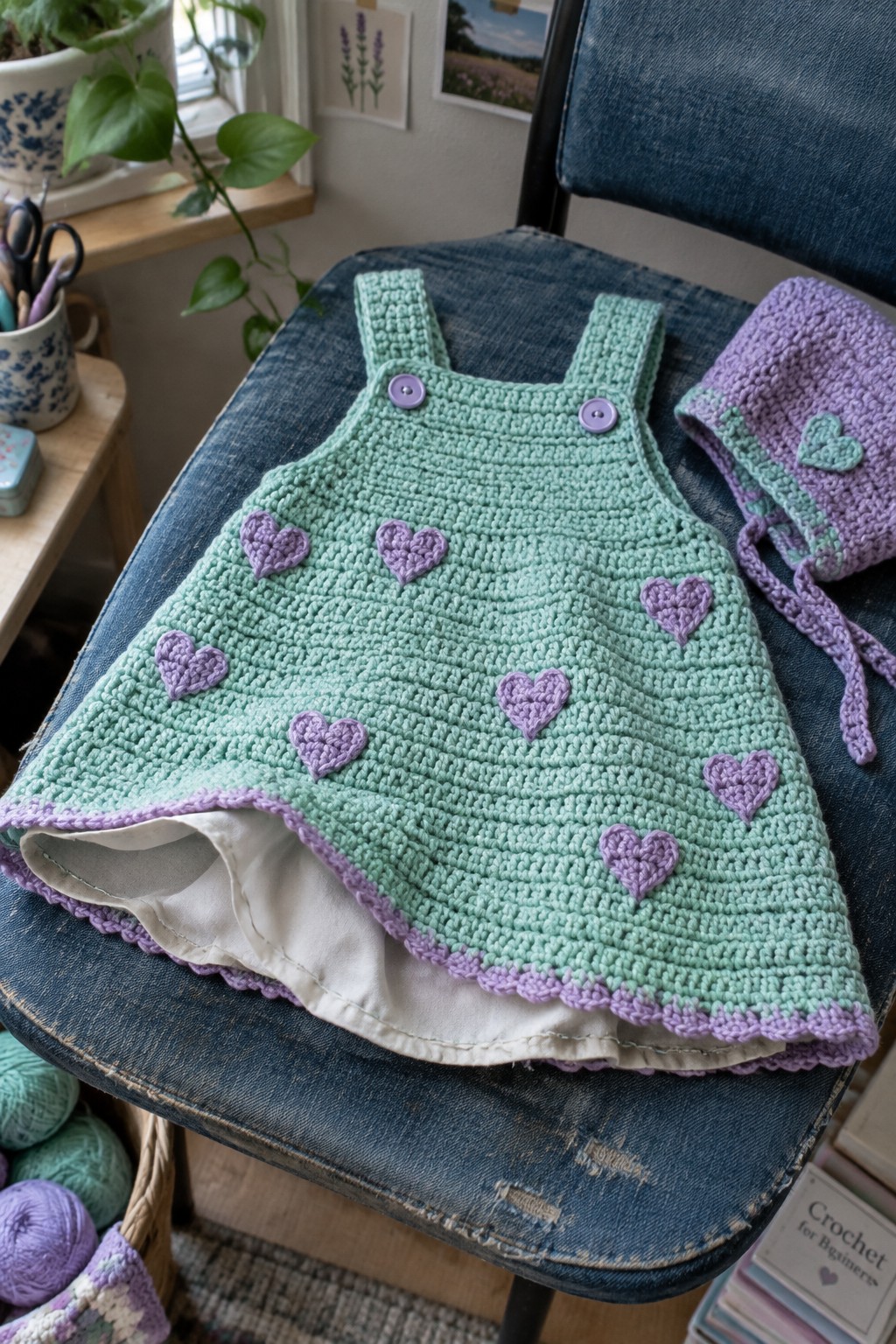
A simple textured crochet pinafore makes a practical wearable when paired with a fabric lining that adds coverage underneath the open stitches. Small heart appliqués in a contrasting color break up the solid field and give the front visual interest without requiring complex shaping. The purple trim along the hem and straps ties the appliqués to the rest of the piece while the white lining keeps the dress functional for everyday wear. This style works especially well for children’s garments where both structure and decoration matter.
What makes this idea useful is the way the lining solves the coverage problem that often comes with crochet dresses. The heart motifs can be made in any number or size and moved around to suit different garment lengths. For gifts, a design like this stands out because the finished piece looks complete and ready to wear rather than purely decorative. The color contrast between the main fabric, trim, and appliqués is simple to change if you want to match yarn you already have on hand.
Alternating Mesh and Solid Bands for a Lightweight Dress

A sleeveless crochet dress uses wide sections of open grid stitches at the top and hem with solid rows through the middle to create a balanced shape. The openwork allows airflow while the denser bands give the garment enough structure to hold its form. This mix produces a dress that feels light but still follows the body without extra shaping techniques.
What makes this idea useful is how the solid bands naturally limit how much skin shows through the mesh, which pairs well with a lining for everyday wear. You can lengthen or shorten those solid sections to change the coverage level or swap the yarn color for a different season. The straight A-line silhouette also makes it simple to adjust the width at the hips without rewriting the whole pattern.
Child’s A-Line Dress with Scalloped Motif Hem
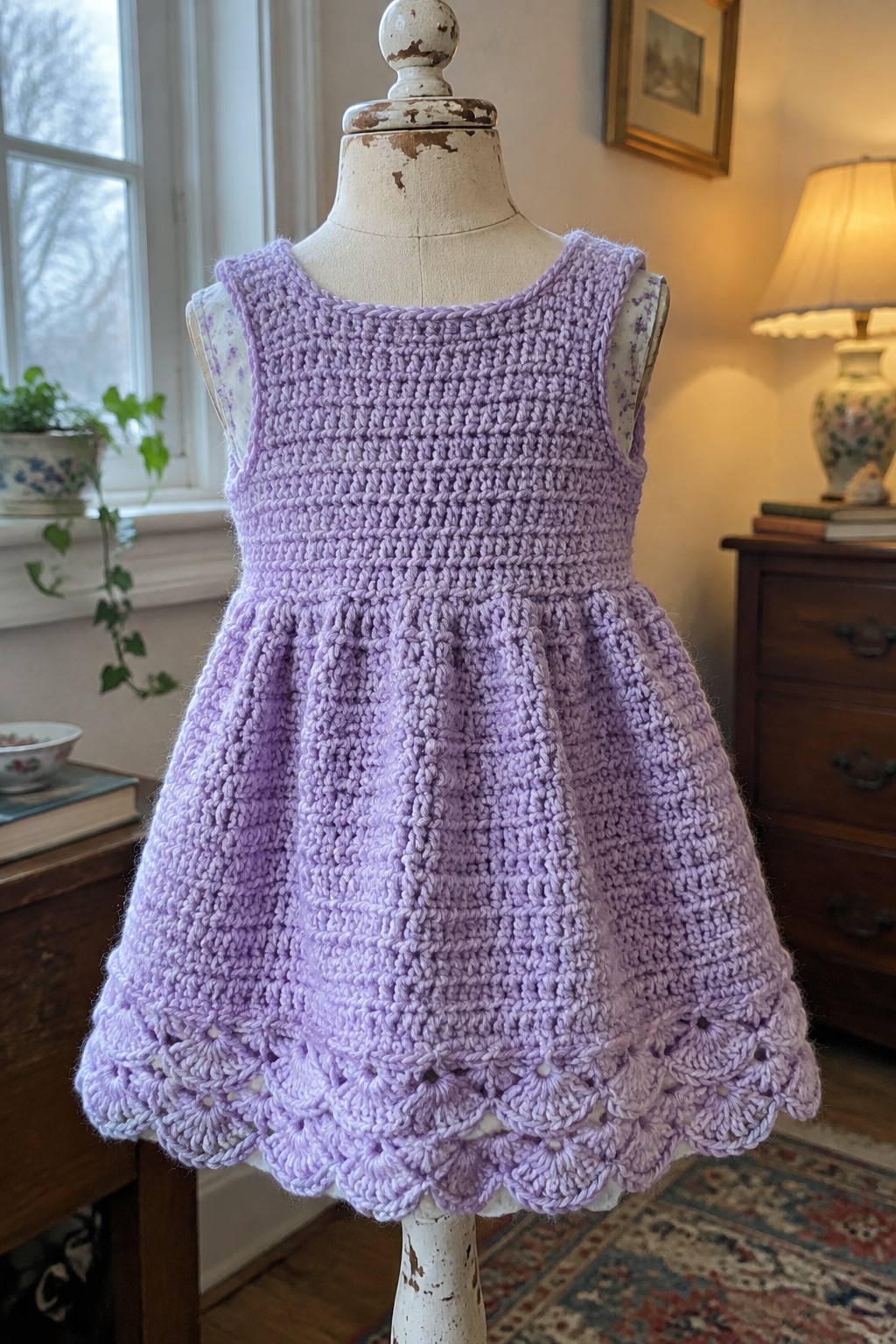
A sleeveless A-line dress works well as a wearable when the bodice stays fitted through simple rows and the skirt is worked outward from a defined waist. The flared shape comes from regular increases that create soft gathers, while the hem switches to a series of small circular motifs joined into scallops. This combination keeps the upper half smooth and the lower half light, making the dress suitable for lining to add coverage without changing the stitch pattern.
What makes this idea useful is the clear waistline that lets you lengthen or shorten the skirt independently of the bodice. The scalloped edge can be swapped for a plain border or scaled up by repeating the motif row. Adding a lining works especially well here because the openwork hem would otherwise show through, and the same construction scales to different sizes by adjusting the starting chain and increase spacing.
Lined Openwork Crochet Tank Dresses
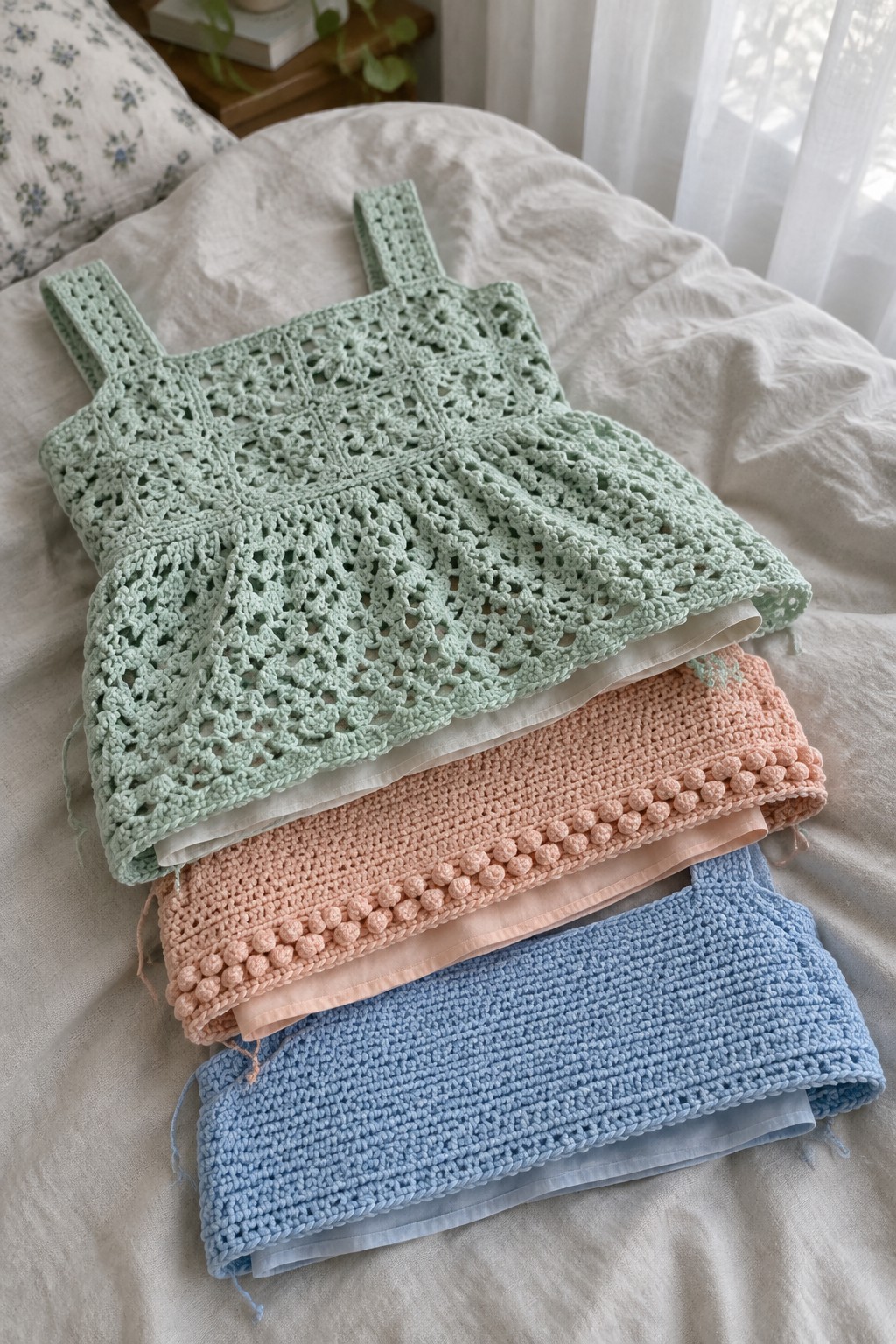
Crochet dresses built from open lace or motif patterns gain practical coverage when a fabric lining is added underneath the bodice and skirt. The top piece uses a square motif layout that forms an airy grid across the front, while the middle and bottom versions rely on simpler textured stitches with a bobble edge for contrast. The lining sits directly against the body so the crochet remains visible but the garment stays opaque. This combination works for sleeveless styles where the open stitches would otherwise require an extra layer.
The structure makes this a smart option for warm-weather wear or children’s clothing where modesty matters. You can swap the lining color or fabric weight to change the look without altering the crochet. Shortening the lining to end above the hem keeps the lower edge light, while extending it gives more coverage. A project like this also photographs clearly for pattern sharing since the lining prevents the stitches from collapsing.
Frequently Asked Questions
What is the main benefit of choosing lined crochet dresses for coverage?
Lined crochet dresses add an extra layer of fabric underneath the openwork pattern. This prevents skin from showing through the stitches while keeping the lightweight and breathable feel of crochet. The lining improves modesty without sacrificing style so the dress works well for daytime events family gatherings or casual outings.
How do I care for a lined crochet dress to keep it looking new?
Wash these dresses by hand in cold water with a mild detergent and avoid wringing or twisting the fabric. Lay the dress flat to dry away from direct sunlight. If the label allows machine washing use a gentle cycle inside a mesh bag. Store the dress folded rather than on a hanger to prevent stretching of the crochet stitches over time.
Which body types work best with these 19 lined crochet dresses?
The collection includes options with adjustable waist ties A-line shapes and empire waists that flatter many figures. Look for styles with built-in shaping or stretch in the lining to accommodate curves. Try on or check size charts carefully since crochet can have some give while the lining may fit more closely to the body.
Where can I purchase the specific dresses mentioned in the article?
Many of the featured styles come from online retailers such as Etsy Amazon and specialty clothing sites that carry boho or modest fashion lines. Search by the dress name or designer listed in the article and filter for lined options to match the coverage details provided.
Can I layer these dresses for cooler weather or added coverage?
Yes pair the dresses with a lightweight slip underneath for extra warmth or add a denim jacket cardigan or cropped sweater on top. Tights or leggings work well with shorter lengths while ankle boots complete the look for fall or spring. Choose neutral colors in the outer layers so they blend smoothly with the crochet pattern.
