


I have been crocheting dresses for a while now and I notice that the shape makes a big difference in how they turn out.
Some silhouettes give more movement while others hold their form better.
I gathered 18 ideas that stood out to me for those reasons.
A few of them are ones I have tried myself and others are just patterns I liked the look of.
They might be useful if you are looking for something a little different to make.
Mini Doll Dress with Spiral Yoke

A spiral pattern forms the bodice of this miniature dress and transitions into a flared skirt made with openwork clusters. The shape creates a bell silhouette that hangs from two narrow straps, while the scalloped edge finishes the hem. This style fits doll clothing or small decorative pieces where a light, structured form is needed.
The small scale makes this easy to adapt by changing the starting spiral size or adding length to the skirt. You can swap the soft pink for brighter yarn to match a child’s toy collection or use the same yoke shape for a quick baby hat. For gifts, a design like this works well as a package topper or shelf accent without requiring much yarn.
Child’s Striped Dress with Motif Bodice

A child’s dress built from joined circular motifs across the bodice and a flared skirt in alternating stripes makes a practical summer wearable. The bodice uses small rounds in two colors that sit side by side, then connects to a skirt worked in repeating bands of openwork and solid rows with scattered bobbles for texture. Buttoned straps attach at the front and allow the dress to adjust slightly as the child grows. This approach fits the wearable category and works best for toddlers or young children who need lightweight layers.
What makes this idea useful is how the motif section can be made wider or narrower by adding or removing rounds before starting the skirt. The stripe pattern is easy to change mid-project if you want to use up smaller amounts of yarn in the same color family. A project like this works especially well as a gift because the buttons keep it functional while the overall shape stays simple to wear over a shirt or alone. You could also stop the skirt earlier to turn the same bodice into a top.
Ribbed Bodice with Openwork Flare Skirt

A crocheted dress that pairs a fitted bodice of vertical ribs with a flared skirt of open lace motifs. The thin straps and simple neckline keep the upper section light while the repeating flower-like patterns in the skirt create natural flare and movement. This mix of dense and airy sections produces a wearable silhouette that stays comfortable in warmer weather.
What makes this idea useful is how easily the rib count can be adjusted to change the fit across the bust and waist. The skirt pattern can be worked longer or shorter by adding or removing motif rows, and the same approach works for both adult and child sizes. Using one solid color helps the stitch contrast stand out without competing patterns.
Mini Rainbow Dress Garland for Seasonal Displays

Crocheting a set of miniature dresses creates a lightweight garland when you join them along a single strand of yarn. Each dress starts with a fitted bodice and straps, then flares into a skirt through simple increases that let the rainbow stripes show clearly. A narrow ruffle at the hem and a small flower accent keep the silhouette distinct while staying quick to finish. This approach works well as window decor or a short banner over a shelf.
What makes this idea useful is the small scale, which lets you use scraps and finish several pieces in one sitting. You can shorten the skirt or swap the color sequence to match holidays or room colors without changing the basic pattern. For gifts, a design like this packs flat and adds a handmade touch to a wrapped present or gift bag. The structure makes this a smart option for testing new stitch patterns on a tiny canvas before committing to a larger wearable.
Miniature A-Line Dress with Openwork Skirt

A miniature crocheted dress combines a solid bodice with a flared skirt worked in repeating openwork motifs. This creates a clear A-line silhouette that stands out even at small scale. The project suits doll clothing or a decorative accent piece rather than a full-size wearable.
What makes this idea useful is how quickly the same pattern can be resized with different yarn and hook sizes. A project like this works especially well as a gift topper, photo prop, or keepsake for a child. The scalloped hem finishes the edge cleanly so no extra border is needed. Changing the skirt length or motif spacing lets you adapt the shape for different doll proportions without starting over.
Mini Floral Dress with Mesh Panels

This crochet project is a miniature dress built from repeating bands of coral flower motifs separated by mint green mesh sections. The flowers sit in horizontal rows that gradually widen toward the hem, while the open mesh between them creates the flared shape without extra shaping stitches. Straps at the top finish it as a hanging piece or doll garment.
What makes this idea useful is the modular row structure, which lets you add or subtract flower bands to change the length or fullness. The two-color layout keeps the pattern simple to follow while still giving strong visual contrast. For gifts, a design like this works well as a package topper or tree ornament, and you can swap the colors to match different seasons or rooms without changing the stitch pattern.
Tiered Color Block Dress
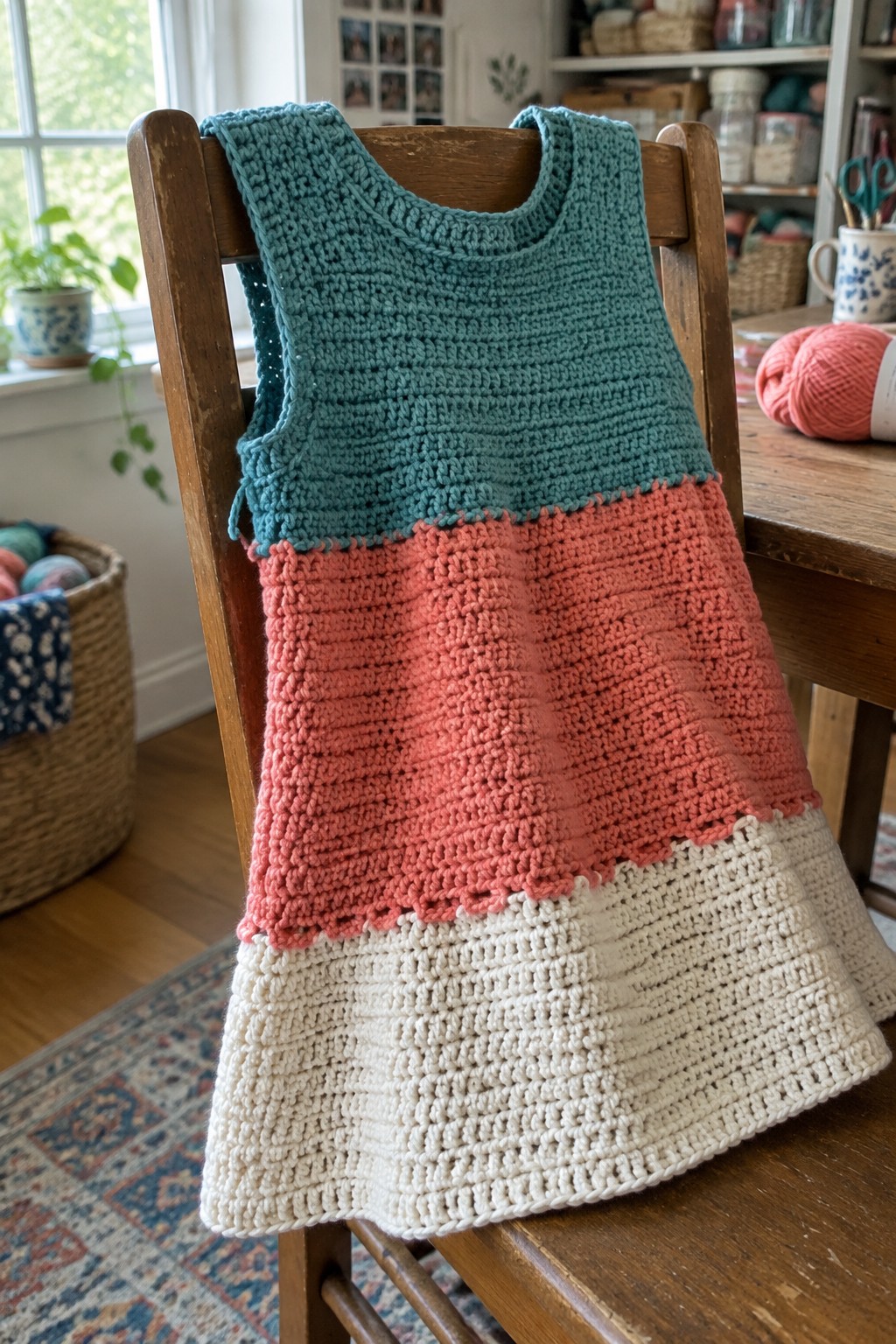
A sleeveless dress built from three stacked color sections uses simple horizontal blocks to shape the silhouette without extra darts or seams. The top band forms the bodice, the middle section widens into the skirt, and the bottom band adds length and slight flare, with a scalloped row marking each transition. This layout suits a child’s garment or a light layering piece because the color changes do the visual work of defining fit and proportion.
What makes this idea useful is how quickly you can adjust the finished length by moving the color changes up or down. You could drop the bottom section to make a tunic, swap in different weights of yarn for seasonal versions, or repeat the same block pattern in two colors for a simpler look. The scalloped edges between sections hide the joins and keep the skirt from looking blocky, so the dress stays wearable even when made in bold shades. For gifts, this shape works especially well because the color blocking lets you customize it to match school colors or a favorite palette without changing the stitch pattern.
Open Lace Crochet Dress with Fan Motifs and Pom Pom Edges

This dress uses an all-over open lace pattern made from repeating fan and shell motifs that create a light grid across the bodice and skirt. Short sleeves and a rounded neckline keep the upper section simple while the flared shape adds volume below the waist without added layers. Small pom poms trim the hem and sleeve edges to give the openwork a finished border that holds its shape.
The structure makes this a smart option for warm weather because the open stitches reduce weight and improve airflow. Shorten the skirt or switch to a tighter stitch for the lower half if you want more coverage. Try the same fan motif in a different yarn weight to scale it down for a top or up for a longer dress.
Mermaid Tail Dress for Dolls

A crocheted mermaid dress uses a fitted bodice with shoulder straps and a long tapered tail that ends in two separate fins. The top section works in a lighter shade with a narrow waist stripe, while the main body stays in a single teal tone and the dense stitch rows create visible horizontal ridges along the tail. This shape suits doll clothing or small hanging decor because the silhouette stays balanced even at a compact size.
The small scale makes this easy to adapt by lengthening the tail or widening the fins for different doll sizes. You can change the bodice color or add extra stripes without altering the overall construction. For gifts, a design like this works well paired with a simple doll or as part of a set since the tail shape reads clearly from a distance. The structure also lets you turn it into a bookmark by skipping the bodice and starting the tail from a flat base.
Ombre Halter Dress with Open Lace Skirt

A halter dress worked in sections uses a steady color shift from red through orange and yellow down to cream, paired with an open stitch pattern that runs from the fitted V-neck bodice all the way to the hem. The top ties at the neck and sits above a horizontal band of eyelets before the fabric widens into a full skirt. This combination of gradient coloring and consistent openwork gives the dress its light drape and summer-ready silhouette while keeping the construction straightforward.
What makes this idea useful is that the same open stitch can be adjusted for length or width without changing the overall look, so you can shorten it to knee length or widen the skirt for more swing. The color progression does most of the visual work, letting you use up leftover yarn or create a custom ombre effect with just a few skeins. A dress like this works especially well as a beach cover-up or warm-weather layer because the open fabric breathes and packs small.
Tiered Ruffle Dress in Alternating Colors

This crochet dress builds a full silhouette through stacked ruffle tiers worked in alternating lavender and cream. The design suits young children as a wearable piece, with the graduated layers creating movement and shape through simple repetition rather than complex construction. The small flower accent near one strap adds a minimal detail that breaks up the stripes without overpowering the overall look.
What makes this idea useful is how the tier count and color sequence can be changed to match different sizes or available yarn. A project like this works especially well as a gift because the ruffle structure photographs clearly and fits multiple occasions. The small scale also makes it easy to adjust the length or swap in three colors instead of two while keeping the same pattern repeat.
Child’s Textured Dress with Beaded Side Accent
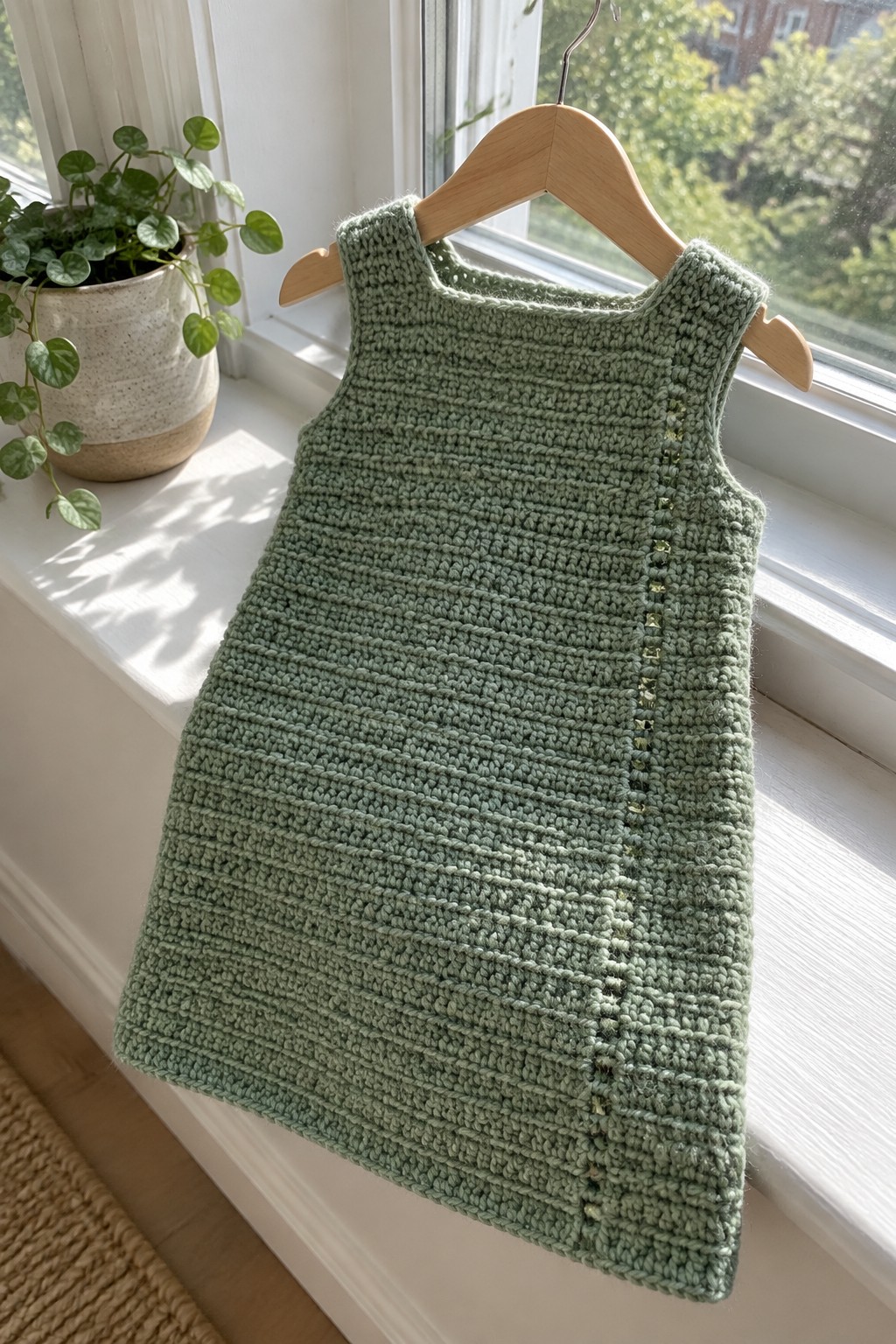
A child’s sleeveless dress worked in light green yarn uses repeating horizontal rows of textured stitches to create subtle visual lines across the fabric. The straight silhouette includes a single vertical row of small gold beads placed along one side, which breaks up the solid color without adding bulk. This wearable project suits toddlers and works as a standalone piece or layered item.
What makes this idea useful is how the bead placement can be swapped for a simple stitch contrast or embroidery if preferred. The compact size keeps yarn use low, so it serves as a fast way to test new textures before committing to larger garments. Length and width adjust easily by adding or removing rows, and the neutral tone makes it simple to match with other clothes or repeat in different colors for multiple sizes.
Mini Black Dress Ornament with Gold Trim

A miniature crocheted dress works as a decor piece by using a fitted bodice and flared skirt to create a clear silhouette. Black yarn forms the main body while gold trim runs along the neckline, thin straps, and hem to define the edges. This project falls into the decor or giftable item category and stays effective at a small scale for shelf or mantel display.
What makes this idea useful is how the compact size lets you finish it quickly with scrap yarn. You can adjust the skirt width or swap the trim color to match different seasons or room colors without changing the overall pattern. For gifts, a design like this works well as an ornament or package topper because the dress shape reads clearly even from a distance.
Pastel Rainbow A-Line Crochet Dress

A rainbow-striped crochet dress builds an A-line shape by working horizontal color bands from the bodice downward with steady increases in the skirt rounds. Thin straps and a fitted upper section keep the top fitted while the lower half widens into a full circle hem. This style fits the wearable category and works best as a light summer garment where the open stitch pattern provides breathability. The repeating color sequence creates clear visual bands that highlight the flare without needing extra stitch details.
What makes this idea useful is how simple it is to change the skirt length or adjust the flare by altering the increase spacing. The same striped layout can be reworked in solid colors or a shorter gradient for a different effect. Scaling the starting chain and bodice width turns the design into a child version or a longer maxi dress. The strong color bands make the finished piece easy to photograph for pattern shares or social posts.
Dress with Solid Bodice and Lace Hem
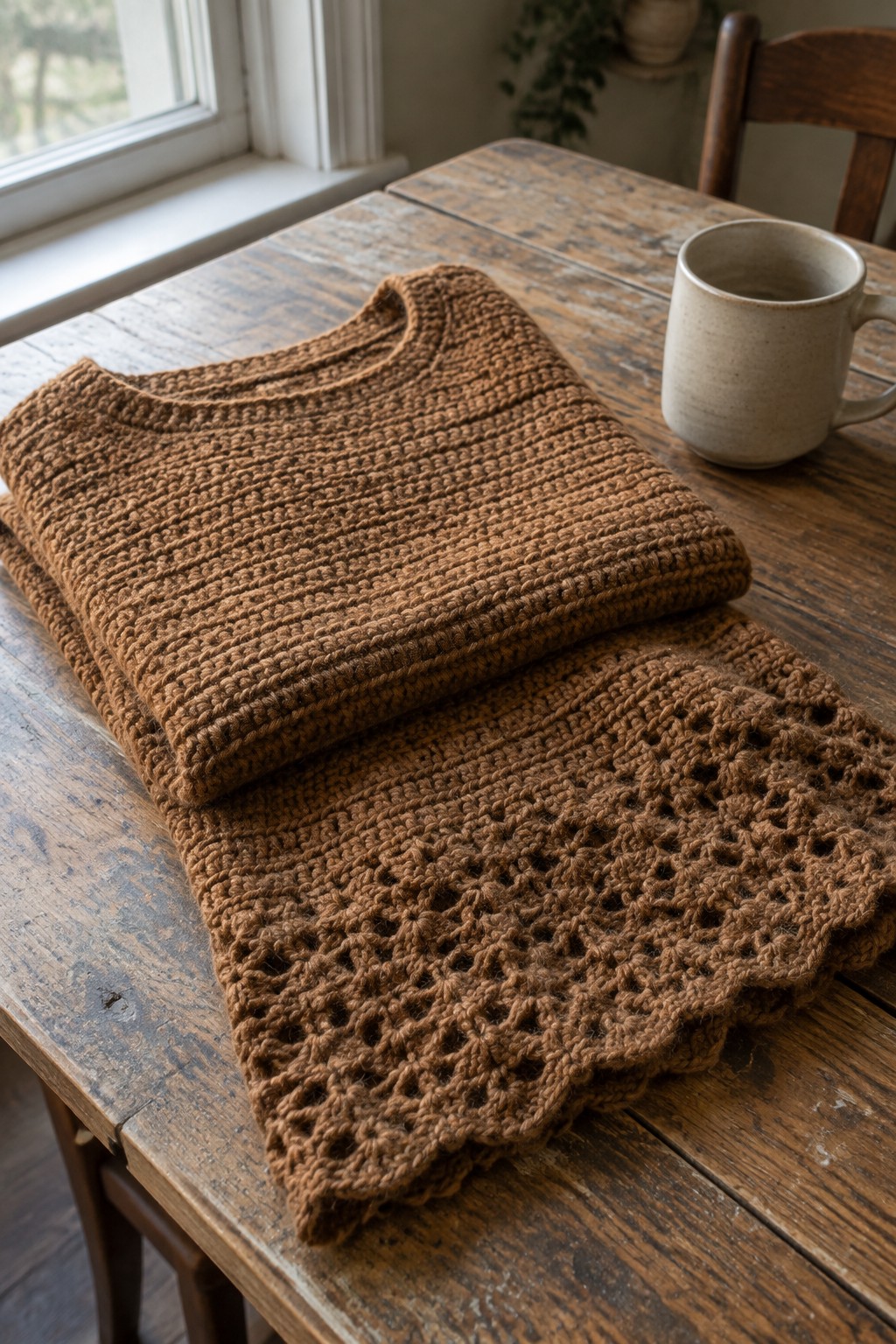
This crochet dress uses a dense, textured stitch pattern across the upper body and neckline to create a structured fit, then switches to an open lace motif for the lower section. The contrast between the solid top and the airy, patterned hem produces a clear A-line silhouette that adds shape without extra shaping techniques. It fits the wearable category and works especially well for tunic-length or midi dresses where breathability matters.
What makes this idea useful is the built-in division between sections, so you can easily shorten the lace portion or swap in a different openwork pattern without reworking the whole piece. The solid upper area gives good coverage while the lace keeps the lower half lightweight, making it practical for warmer weather or layering. You could adapt the width of the lace band to change the overall drape or work the top in a neutral and the hem in a brighter shade for a quick visual update.
Openwork Yoke Dress with Picot Trim

A lace crochet dress built from openwork patterns creates a lightweight A-line silhouette that suits toddlers and young children. The rounded yoke sits above a flared skirt worked in repeating mesh sections, with short cap sleeves and a picot edge worked in a contrasting pink that runs along the neckline, sleeves, and hem. A narrow satin ribbon threaded through the upper skirt and tied at the center gives the dress a defined waist without extra construction.
What makes this idea useful is that the yoke and skirt can each be lengthened or widened independently to fit a range of sizes. The openwork keeps the finished piece breathable for warm weather while the simple color contrast on the trim makes it easy to match different outfits or occasions. For gifts, the same yoke shape works well scaled down for a doll or up for a slightly older child by adding more skirt repeats.
Pineapple Bobble Doll Dress

A pineapple doll dress builds the upper section with rows of bobble stitches in yellow yarn to create a raised, scaled texture that suggests the fruit. The lower half uses an open lace pattern in green to form a wide, flared skirt, while small leaf shapes sit at the top edges. This approach keeps the overall shape compact and recognizable even at doll scale, making it a clear wearable project for small figures or amigurumi.
What makes this idea useful is how the bobble texture handles most of the visual interest so the skirt pattern can stay simple. You can swap the yellow for other fruit colors or shorten the skirt to fit different doll proportions without changing the stitch counts much. A project like this works especially well as a quick add-on when making multiple doll outfits and shows up clearly in photos because of the strong color blocks and rounded shape.
Lacy Wrap Dress with Openwork Skirt

A wrap dress crocheted in light blue yarn uses repeating openwork diamond and fan patterns across the bodice and skirt to create a lightweight, breathable garment. Short sleeves and a V-neck shape the top while the skirt flares from the waist with the same lace sections. The separate tie belt lets the front panels overlap and stay in place.
What makes this idea useful is the adjustable wrap style that fits different sizes without major pattern changes. You can shorten the skirt for a tunic length or fill in some openwork areas with solid stitches for more coverage. The all-over lace works especially well in cotton or linen blends for warm weather, and the clear pattern repeats show up cleanly in photos for summer clothing boards.
Frequently Asked Questions
What yarn is best for crochet dresses with standout silhouettes?
Lightweight cotton or linen blends work well for flowy A-line or empire waist designs because they provide good drape without added bulk. For more structured looks like hourglass or flared hems, consider a medium-weight acrylic blend that holds its shape while remaining breathable. Always check the pattern for gauge and test a swatch to match the intended silhouette.
How do I adjust these patterns to fit different body types?
Start by taking accurate measurements of your bust, waist, and hips, then compare them to the pattern’s sizing chart. Add or subtract stitches in the body sections for width adjustments, and lengthen or shorten the skirt by adding rows. For distinctive silhouettes, focus modifications on the waistline or hem to preserve the overall shape rather than altering the entire garment.
What skill level do most of these crochet dress ideas require?
Many patterns suit intermediate crocheters who know basic stitches like single crochet, double crochet, and increases or decreases. Beginners can tackle simpler silhouettes such as straight shifts by following step-by-step tutorials, while advanced makers might enjoy lacework or modular construction for complex shapes. Look for patterns that include video guides or charts to build confidence.
How should I care for a finished crochet dress to maintain its silhouette?
Hand wash in cool water with a gentle detergent and lay flat to dry, reshaping the garment while damp to keep the intended lines. Avoid wringing or hanging, as this can stretch the fabric. Store folded in a cool, dry place and use garment bags to prevent snags that might distort unique features like flared hems or fitted bodices.
Where can I source patterns or inspiration for similar crochet dresses?
Search free sites like Ravelry or LoveCrafts for user-shared patterns, or check craft blogs and YouTube for video tutorials on silhouette techniques. Paid options on Etsy often include detailed sizing and customization tips. Join online crochet communities to ask about adaptations and see finished projects for real-world styling ideas.
