

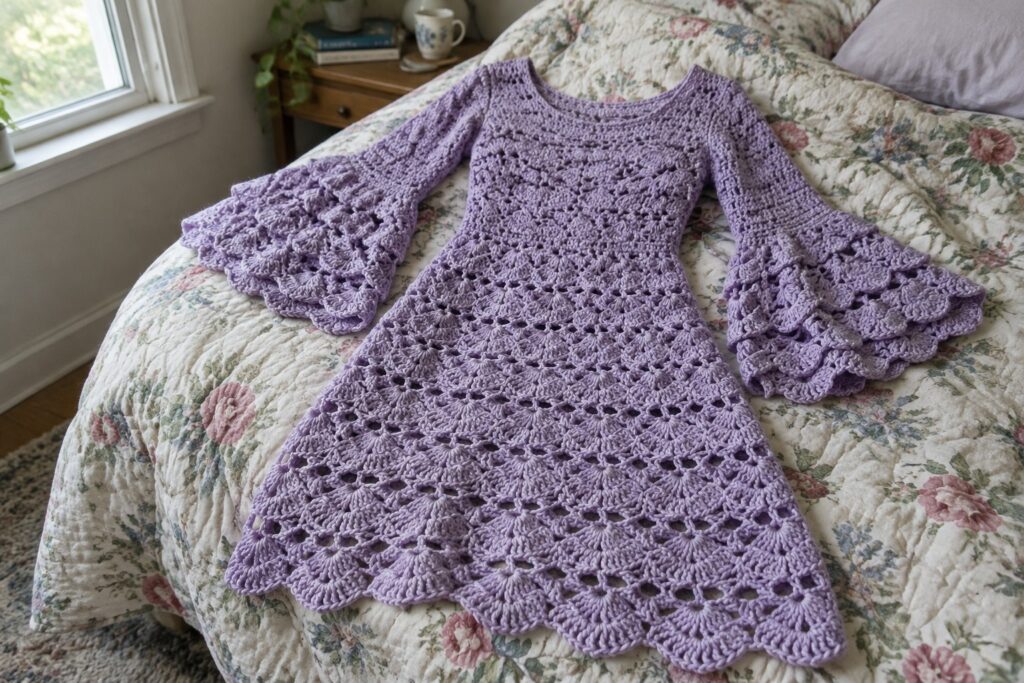
I have been crocheting dresses for a while now and I keep coming back to ones with sleeves that stand out a bit.
For women over 60 it helps when the fit is comfortable and the details do not get in the way.
I gathered some patterns that focus on different sleeve shapes and textures.
They feel like solid choices if you want something you can wear often.
I have tried a few similar ideas myself and they turned out useful.
Tiered Scalloped Sleeves on a Lacy A-Line Dress
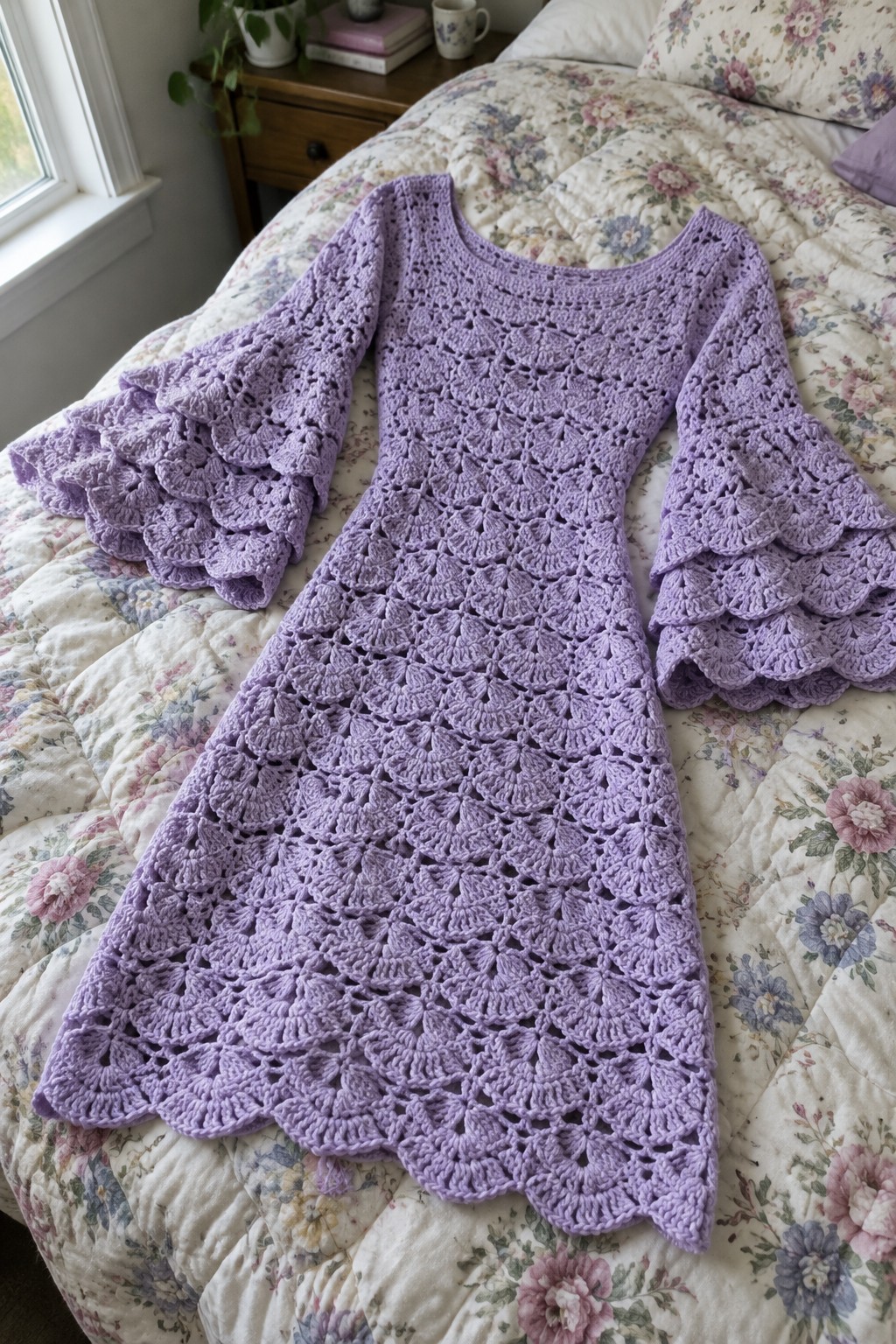
A crochet dress built around long sleeves that expand into stacked tiers of scalloped ruffles pairs a fitted bodice with a gently flared skirt. The entire piece uses an open fan-style stitch that creates consistent texture from neckline to hem. This approach keeps the dress light while the sleeve tiers supply the main visual interest and movement.
What makes this idea useful is how the tier count and flare width can be changed without altering the body pattern. A project like this works especially well in a medium-weight cotton blend for everyday wear because the open stitches reduce bulk. The sleeve construction also makes it simple to shorten the tiers or swap the color for a different effect while keeping the same overall shape.
Granny Square Dress with Balloon Sleeves

A dress made from joined granny square motifs creates an even fabric that holds its shape while remaining lightweight. The squares run in straight rows down the bodice and skirt, with the same motif used for the sleeves but worked into a rounded puff that gathers at the shoulder before tapering to a fitted cuff. Using just two colors in an alternating pattern keeps the design simple yet gives enough contrast to show the square structure clearly. This construction suits the wearable category and works well for a midi length that can be worn on its own or layered.
What makes this idea useful is how the square grid lets you change the overall length or width by adding or removing rows without rewriting the pattern. The balloon sleeve adds volume at the top while the open stitch keeps it comfortable for daily wear. You could shift the color pairing to match existing pieces in a wardrobe or shorten the sleeves to a three-quarter length if the full puff feels too much. The sleeve shape combined with the familiar square motif also photographs clearly for sharing, which helps it stand out in pattern collections.
Mixed Lace Patterns on Flared Sleeves

A tunic-style dress stays simple with vertical texture across the body while the sleeves carry the design focus through openwork lace. One sleeve flares wide with a scalloped edge and the other uses a grid-style lace that creates a lighter bell shape. Both versions add movement and airiness without requiring complex shaping on the main garment. This keeps the project approachable while giving the sleeves clear visual weight.
What makes this idea useful is the option to test two sleeve styles on one piece before committing to a full pair. The dress length works for layering over leggings or wearing on its own, and the solid body makes the lace stand out even in a single color. You could adapt the sleeve width or switch the lace pattern on both sides for a more balanced look. Clear shots of the sleeve details against a plain background help this type of design perform well in pattern searches.
Shift Dress with Bobble-Detail Sleeves
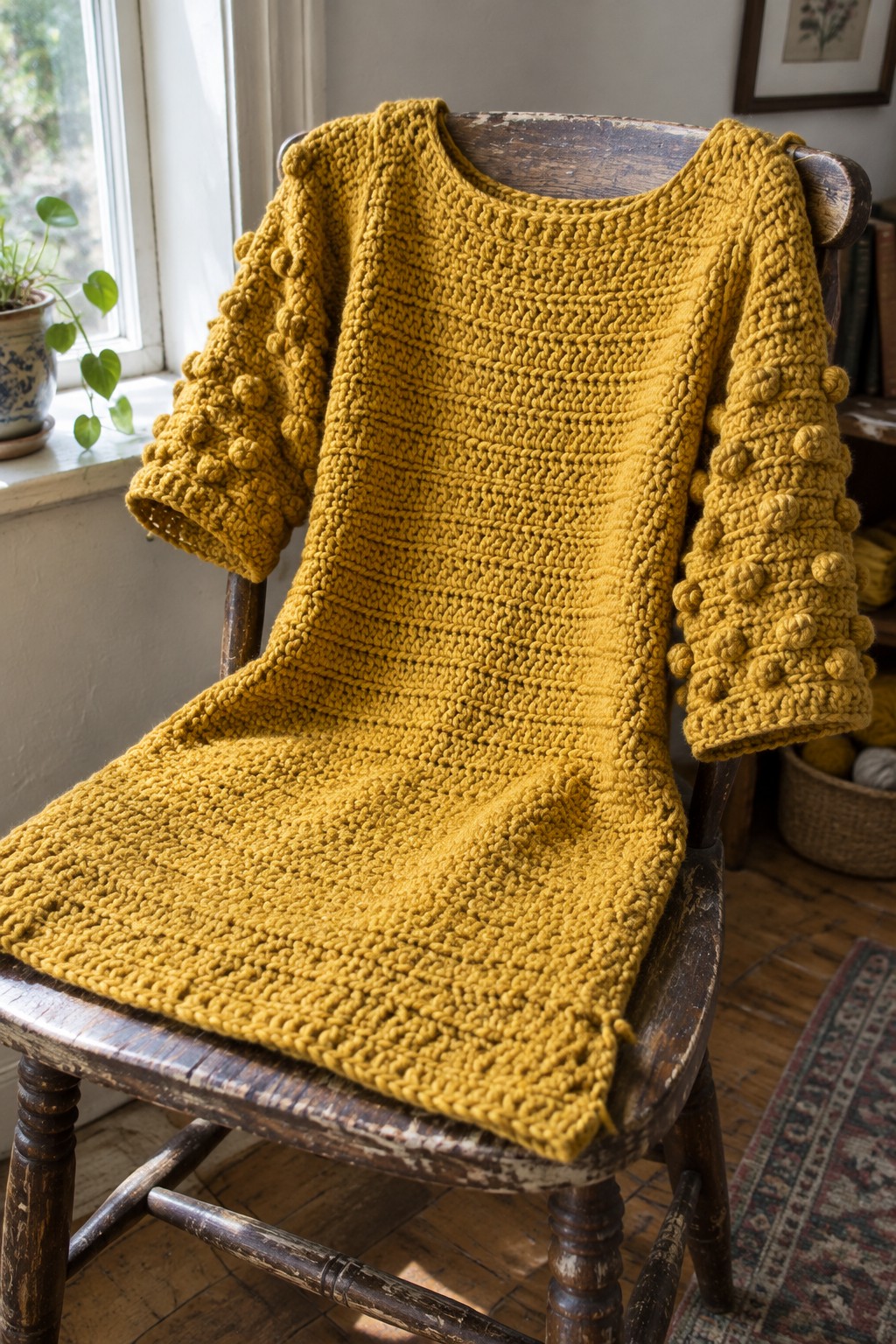
A basic shift dress uses horizontal rows of simple stitches across the body for an easy fit, while the short sleeves stand out through repeated rounds of bobble clusters. The bobbles create raised texture that draws attention to the sleeves without adding bulk to the overall shape. This keeps the dress straightforward to wear but gives the sleeves a clear visual role in the design.
What makes this idea useful is how the bobble pattern can be scaled up or down by changing the number of clusters or their spacing to fit different sleeve lengths. The loose shift cut layers easily over tops or with light jackets, which suits everyday wear. You could work the same sleeve treatment on a tunic or cardigan instead, or adjust the color to match an existing wardrobe. The sleeve focus also helps the finished piece photograph clearly for pattern sharing.
Flutter Sleeve Dress with Lace Skirt
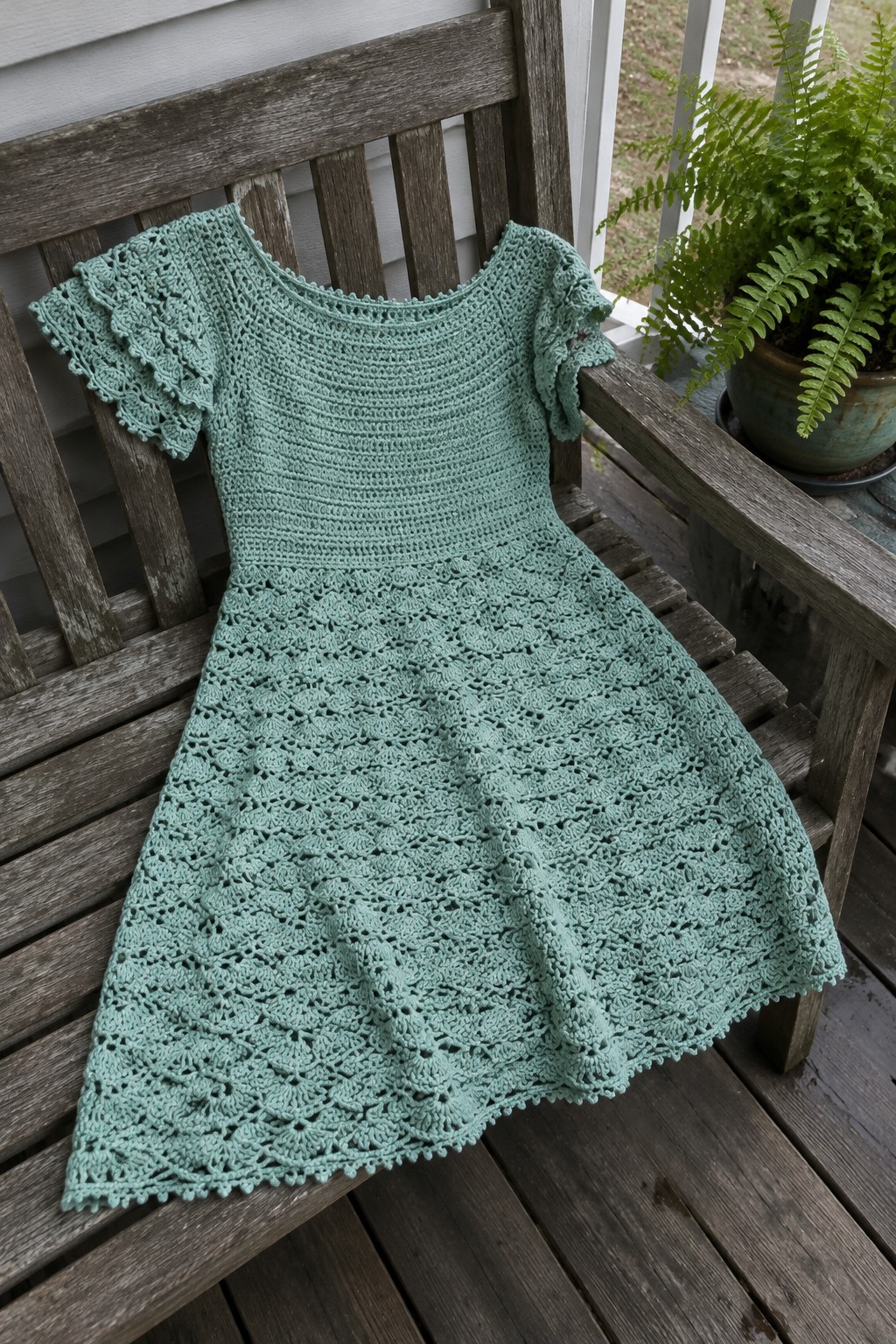
A crochet dress built this way pairs a solid top section worked in even rows with a skirt of open fan motifs that widen gradually toward the hem. Short sleeves sit at the shoulder and end with a small ruffle that adds shape without adding weight or length. The contrast between the denser upper fabric and the lighter skirt creates movement and keeps the overall piece from feeling heavy.
What makes this idea useful is that the ruffle sleeve can be worked separately and attached to other bodice styles when you want a quick change. The skirt pattern repeats in clear sections, so you can stop at any tier to adjust the finished length for different heights. A soft sage color like this one photographs well for pattern sharing and still reads as wearable rather than costume.
Bell Sleeve Dress in Gentle Pastel Stripes

A striped crochet dress uses horizontal rows of soft pastel colors to create a simple flared shape from the neckline down. The long sleeves stand out because they widen into wide bells at the cuffs, adding movement and shape without extra pieces. The even spacing of the stripes keeps the focus on the sleeve flare and the gradual widening of the skirt.
What makes this idea useful is how easily the bell sleeve shape can be scaled up for an adult fit while keeping the same stripe pattern. You can change the stripe widths or swap in favorite colors to match an existing wardrobe. The flared sleeve works well on a looser body style that many women over 60 prefer for comfort. This kind of sleeve detail photographs clearly on Pinterest and gives the dress a finished look with very little extra shaping.
Lace Dress with Balloon Sleeves

A full-length lace dress uses an openwork crochet pattern across the bodice, skirt, and sleeves to create an airy fabric with visible texture. The sleeves stand out with their gathered volume at the upper arm that narrows into ruffled cuffs, while the scoop neck and slight flare at the hem keep the overall shape simple. This type of wearable project suits someone looking for a single-piece garment rather than separate motifs or accessories.
What makes this idea useful is the way the all-over lace pattern handles both structure and drape in one go, so you can adjust the skirt length or neckline without changing the sleeve style. The balloon sleeve shape works especially well if you want to vary cuff details or swap colors while keeping the same body construction. For everyday wear, the open stitch keeps the piece light enough for layering over a slip or tank.
Granny Square Dress with Integrated Cap Sleeves

A dress built from multicolored granny squares forms the main structure here, with squares arranged to create a scoop neckline, a defined waist, and a gently flared skirt. Short cap sleeves are worked directly into the top row of squares rather than added separately, keeping the construction simple. The square layout gives the garment clear lines while still allowing some stretch and movement through the body.
What makes this idea useful is the modular square method, which lets you change the overall length or adjust the fit by adding or removing rows without rewriting the pattern. The cap sleeves provide a finished edge that sits comfortably on the upper arm and works for both warmer days and light layering. You can shift the color order to place brighter squares near the neck or hem, or swap in a single color family for a calmer look while keeping the same square count and sleeve shape. This approach also makes it straightforward to size up or down by changing the number of squares across the bust and hips.
Shift Dress with Openwork Cuff Borders
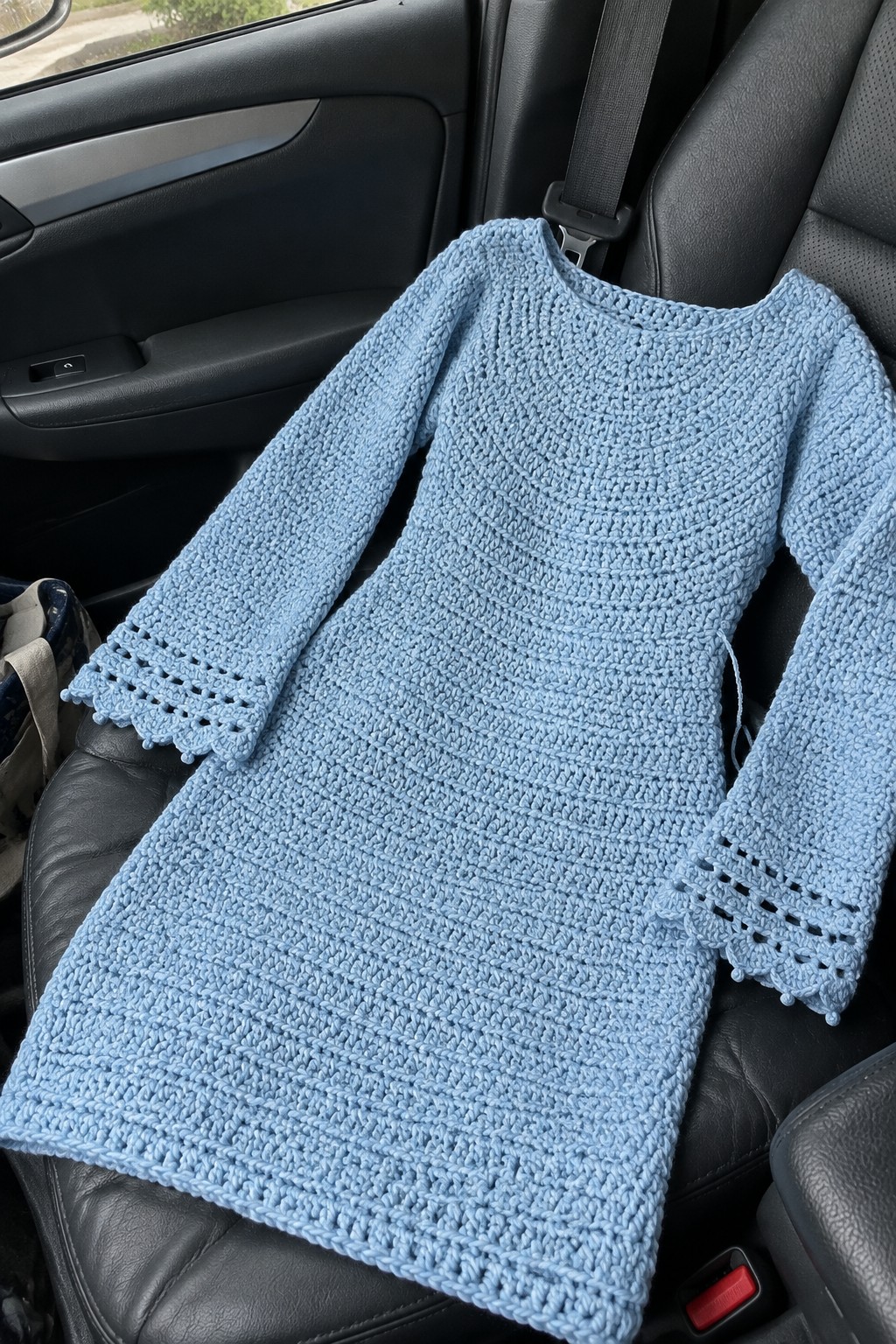
A crocheted shift dress gains interest when the long sleeves end with a band of openwork stitches along each cuff. The simple body uses basic stitches to keep the fabric light and drapey, while the cuff borders create contrast through spacing and small loops. This combination suits everyday wear and works as a wearable project that can be adjusted for length or neckline shape.
What makes this idea useful is how the cuff pattern can be swapped for other border styles without changing the rest of the dress. The straight shape adapts easily to different body measurements by adding or removing rows at the sides. For women over 60, this style provides sleeve coverage while staying breathable and simple to wear over layers.
Lace Bell Sleeve Dress in Openwork Motifs

A dress built from repeating circular motifs in an open lace pattern creates a lightweight, breathable garment with dramatic bell sleeves. The sleeves start fitted at the shoulder and widen into full cuffs while the bodice stays close to the body before flaring into an A-line skirt. This structure uses negative space in the stitching to add visual texture without adding weight.
What makes this idea useful is the sleeve flare, which gives arm coverage while keeping air flow. You can shorten the sleeves or change the skirt length by dropping or adding motif rows. A project like this works especially well for warmer weather when you want something modest but not heavy. The simple color also makes it easy to pair with different slips or tanks underneath.
Voluminous Bobble Sleeves on a Simple A-Line Dress

A midi-length dress uses a basic stitch for the square-neck bodice and gathered skirt while the sleeves are worked separately in a dense bobble pattern to create rounded volume. The sleeves attach at the shoulder and narrow at the wrist with a ribbed cuff that holds the shape. This approach keeps the main body quick to work while shifting the detail and texture to the sleeves only.
The sleeve construction makes this easy to modify for different sizes or yarn weights since the body stays straightforward. You could swap the bobble pattern for a different textured stitch or shorten the sleeve length without changing the overall dress fit. A solid color helps the sleeve texture read clearly, and the midi length works over a slip or with leggings. The design stands out in a collection because the sleeves add presence without requiring complex shaping across the whole garment.
Sleeve Variations on Basic Crochet Dress Shapes

Crochet a simple fitted bodice and skirt in one piece then attach separate sleeve sections to test different shapes on the same base. Short sleeves sit close to the arm with a scalloped border while wide bell sleeves add volume through increases that start at the elbow. Ruffled cap sleeves layer extra fabric at the shoulder before meeting the same scalloped hem treatment used on the skirt. Working at this reduced size lets you compare how each sleeve affects the overall balance without committing large amounts of yarn.
The small scale makes this easy to adapt by doubling or tripling the starting chain and row counts for a full-size version. You can keep the bell sleeve for a three-quarter length on a tunic or shorten the ruffle into a softer shoulder detail on a V-neck style. Trying three sleeve options on identical bases also helps when planning color changes or deciding where to place a border stitch. For gifts, a design like this gives clear visual options without needing multiple finished garments.
Open Lace Bell Sleeves on a Flowing Dress

A crochet dress with wide bell sleeves worked in an open lace pattern creates a light layer that moves easily with the body. The sleeves flare out from the upper arm into a broad shape, letting the openwork show through without adding weight. This pairs a fitted V-neck bodice and tie waist with a longer skirt for a balanced silhouette. The design falls into the wearable category as a full garment that highlights sleeve detail through negative space.
What makes this idea useful is the way the open sleeve pattern keeps airflow high while still reading as a statement detail. You could shorten the flare or adjust the lace density to suit different arm lengths or climates. A project like this works especially well for warmer months since the sleeves stay light and the body can be worked in a denser stitch for coverage. The scale of the bell makes it simple to swap colors or try a different open motif without changing the whole dress.
Ruffled Sleeve Striped Midi Dress
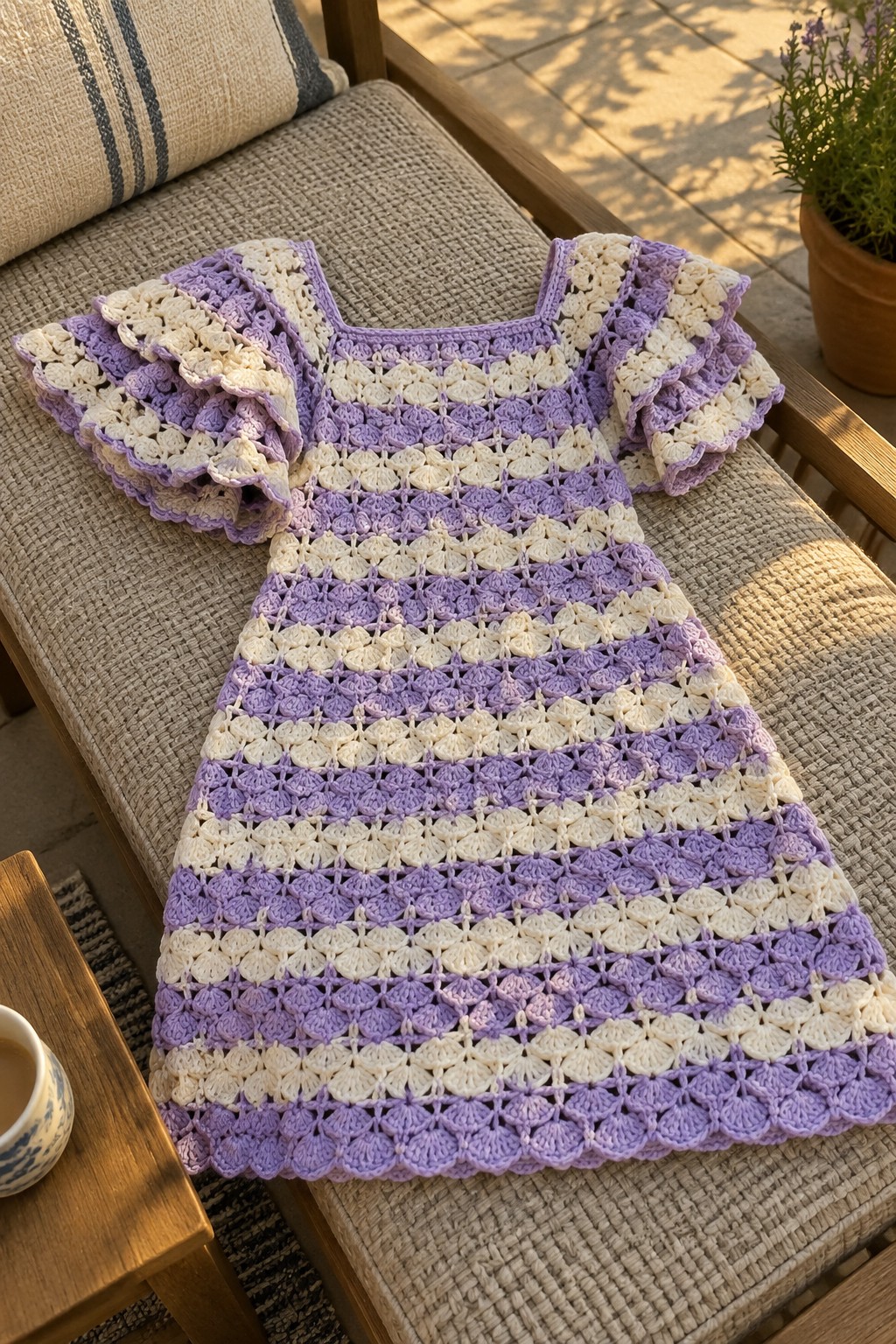
A crochet dress worked in repeating horizontal stripes of lavender and cream uses shell stitches to form the fabric. The square neckline sits cleanly at the top while short sleeves end in wide ruffles that add volume around the upper arms. The striped pattern runs the full length of the dress and finishes with a scalloped edge at the hem.
What makes this idea useful is how the ruffles give the sleeves a clear focal point without changing the overall construction. The stripe repeat is easy to adjust if you want wider or narrower bands of color. A dress like this works especially well for warm weather because the open shell pattern stays light and the ruffle detail stands out in photos for pattern sharing.
Puff Sleeve Square Neck Dress
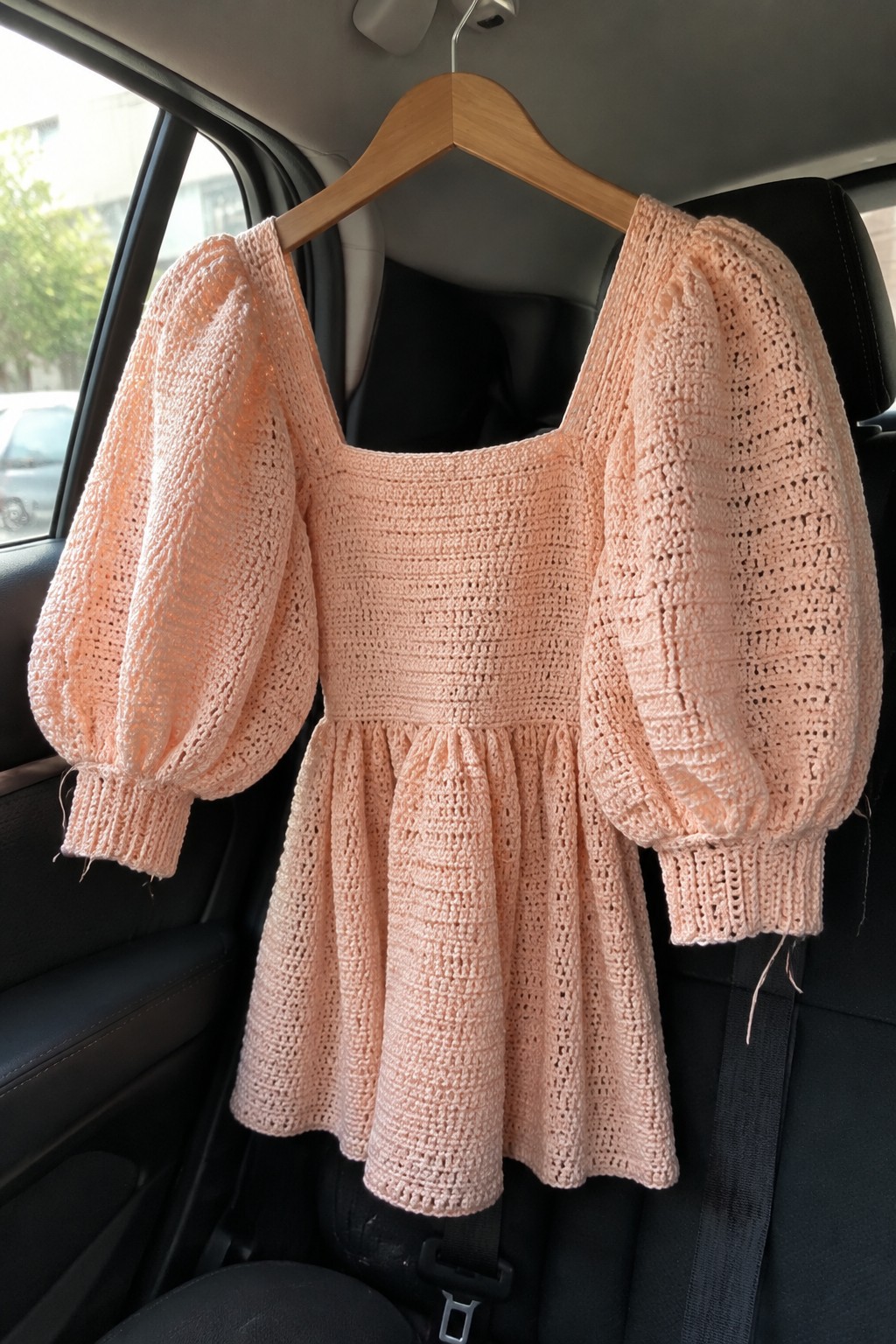
A square-neck bodice with fitted ribbed cuffs anchors oversized puff sleeves that create volume through simple increases worked in rounds. The bodice stays relatively structured while the skirt gathers at the waist and flares gently, balancing the sleeve width so the overall shape stays wearable rather than bulky. This approach suits lightweight cotton or cotton-blend yarns that hold the puff without collapsing.
What makes this idea useful is how the sleeve volume can be scaled down simply by reducing the number of increase rounds or shortening the puff section before the cuff. The square neckline keeps the upper body modest while the gathered waist allows easy movement and fit adjustments. A project like this works especially well for everyday wear because the sleeve shape can be adapted for different arm lengths or personal preferences without changing the whole pattern. You could also shorten the skirt or change the hem treatment to turn it into a tunic-length top.
Short Sleeves with Multicolor Bobble Rows

A crochet dress in a simple A-line shape uses rows of small bobbles in shifting colors to mark the yoke, waist, and hem. The short sleeves repeat the same bobble sequence at the cuffs, keeping the color work contained to narrow bands. This approach lets the cream base fabric stay light while the sleeve details supply the main visual break.
The sleeve cuffs are easy to copy on other patterns because the bobble rows sit in a straight line rather than shaping around curves. You can swap the color order or drop one row to match different yarn leftovers. For wearables aimed at older women, the short length and flat placement keep the sleeves comfortable without adding bulk at the upper arm.
Bell-Shaped Lace Sleeves with Openwork Motifs

Crochet lace built from repeating open circular motifs forms the upper sleeve sections in cream and the flared lower cuffs in light blue. These lace panels attach directly to the dress body at the color changes, creating a gradual shift from the solid sage green yoke through the pink midsection. The bell flare comes from the natural widening of the lace pattern toward the hem, which adds shape while keeping the fabric lightweight and breathable.
What makes this idea useful is the way the lace replaces only the sleeve fabric rather than the whole garment, so you can add it to an existing dress pattern or ready-made piece. Scale the motif repeat up or down to adjust sleeve length or fullness, and change the two lace colors to coordinate with any color-block layout. This keeps the focus on the sleeves as the main detail while the rest of the dress stays simple to sew.
Tiered Crochet Lace Ruffles for Dress Sleeves
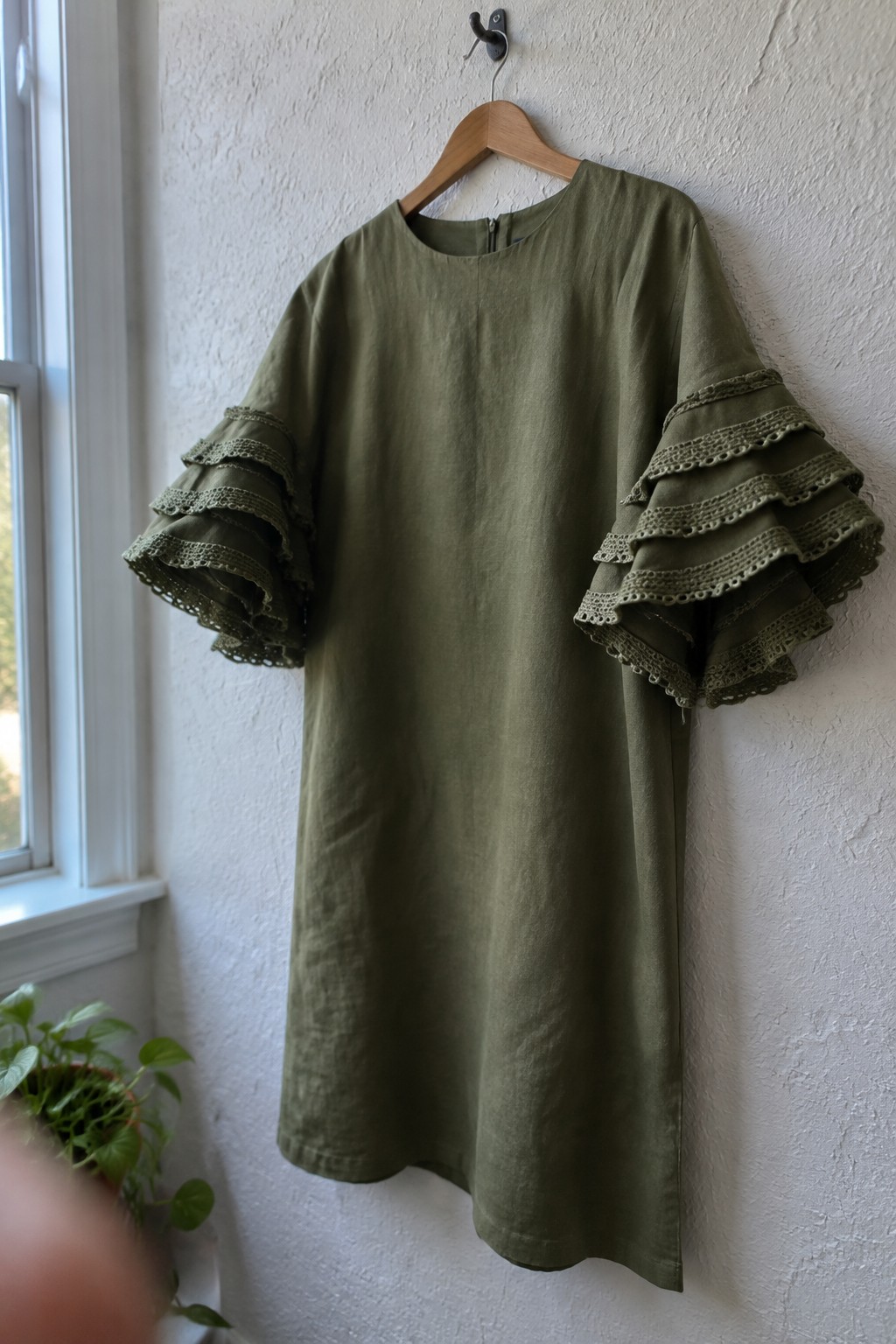
A basic shift dress can be updated by attaching several narrow ruffle layers to the sleeve edge. Each layer is finished with a strip of open crochet lace that forms a scalloped border and keeps the tiers from looking flat. The ruffles sit close together so they add soft volume around the upper arm without changing the overall shape of the dress. This method keeps the crochet work small and focused on the sleeves rather than the full garment.
What makes this idea useful is that the ruffles can be made in different widths or numbers to suit arm size and fabric weight. You can add the lace trim to a ready-made dress or sew a simple pattern first, then crochet only the edges. The same tier layout also works on other garments like blouses or nightgowns if you want to repeat the detail. Changing the lace pattern or spacing between tiers gives quick options for different looks.
Square Neck Dress with Balloon Sleeves

A crochet dress with a square neckline and full balloon sleeves creates a balanced shape that narrows at the waist before flaring slightly at the hem. The dense, textured stitch gives the bodice structure while the sleeves add volume through their rounded shape and length. Wooden buttons along the front panels allow the neckline to open for easier wear and create a clean finishing detail.
This style suits women over 60 who want sleeve interest without added weight around the midsection. The sleeve volume can be scaled down by using a smaller hook or fewer increase rounds, and the hem length works equally well at tunic or midi proportions. A project like this stands out on Pinterest when shown in a single deep color that highlights the sleeve shape against simple backgrounds.
Frequently Asked Questions
What sizes are typically available for these crochet dresses designed for women over 60? Many patterns and ready made options come in sizes from extra small to 3X or larger to accommodate a range of body shapes common after 60. Look for styles with adjustable waist ties or loose fits through the bust and hips so the dress moves comfortably during daily activities like walking or sitting for extended periods. Checking the measurement charts on pattern sites or retailer pages helps ensure a good match without needing major alterations.
How should I care for crochet dresses that feature detailed sleeve work? Hand washing in cool water with a mild detergent preserves the shape and texture of intricate sleeves better than machine cycles. Lay the garment flat to dry away from direct sunlight to prevent stretching or fading in the sleeve details. Storing on padded hangers rather than folding keeps the distinctive elements like bell or lace cuffs from creasing over time.
Which sleeve designs work best for adding coverage while remaining stylish? Sleeves that extend to the elbow or wrist with gentle gathers or openwork patterns provide sun protection and arm coverage without feeling heavy. These options add visual interest through texture or subtle movement yet pair easily with cardigans or shawls for cooler evenings. Choosing neutral tones in the sleeves helps the overall look remain versatile for both casual outings and special occasions.
Where can I locate patterns or purchase these dresses if I want to customize the fit? Online marketplaces such as Etsy and Ravelry offer individual patterns with clear instructions for resizing sleeves and body sections. Many independent designers also sell finished garments through their shops with options to request length or color changes. Local yarn stores sometimes host classes that teach how to adapt sleeve motifs for personal comfort preferences.
Are these dresses appropriate for different occasions when paired with the right accessories? Yes they transition well from daytime events to evening gatherings when layered with a lightweight jacket and simple jewelry. Opt for closed toe shoes and a structured handbag to balance the soft drape of the crochet fabric. The distinctive sleeves themselves often serve as the focal point so keep other accessories minimal to maintain an elegant and age appropriate appearance.
