
Close Menu
    Fruit Tree Hub
    • Home
    • Apple Trees
    • Lemon Trees
    • Mango Trees
    • Orange Trees
    • More Trees
      • Best Fruit Trees
      • Apricot Trees
      • Cherry Trees
      • Fig Trees
      • Lime Trees
      • Mulberry Trees
      • Peach Trees
      • Pear Trees
      • Plum Trees
      • Pomegranate Trees
    • Tips and Advice
      • Tools
    • About Us
      • Contact
      • Privacy Policy
    Fruit Tree Hub
    Home»Fruit Trees»Persimmon Trees»Can Persimmon Trees Grow in Cold Climates
    Persimmon Trees

    Can Persimmon Trees Grow in Cold Climates

    Lucy SmithBy Lucy SmithFebruary 5, 20244 Mins Read
    Share Facebook Twitter Pinterest WhatsApp Email
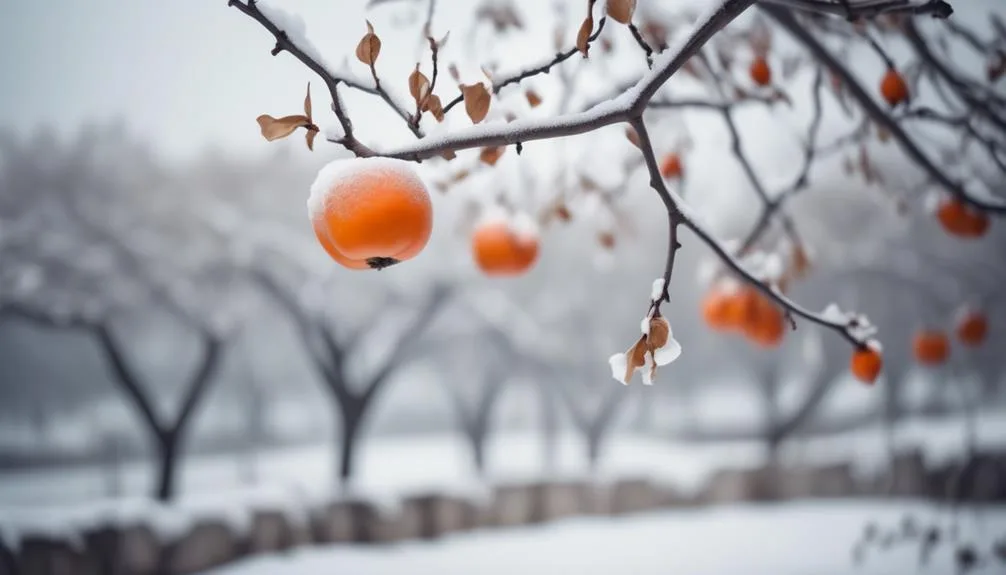
    persimmon trees and cold
    Share
    Facebook Twitter LinkedIn Pinterest Telegram Email

    If you've always wanted to grow persimmon trees but live in a cold climate, you might be in luck. It's possible to make persimmons thrive in chilly weather, and we'll show you how.

    Contents show
    1 Key Takeaways
    2 Suitable Persimmon Tree Varieties for Cold Climates
    3 Cold Hardiness of Persimmon Trees
    4 Winter Protection for Persimmon Trees
    5 Planting and Care Tips for Cold Climate Persimmon Trees
    6 Harvesting Persimmons in Cold Climates
    7 Conclusion

    But before you start planning your orchard, there are some important things to think about.

    Key Takeaways

    • American persimmon is a suitable variety for cold climates, as it is hardy and reliable.
    • Persimmon trees are generally hardy to USDA zones 4-9, with American persimmons being more cold-hardy than Asian persimmons.
    • Winter protection measures such as mulching, wrapping the trunk, building shelters, and pruning dead branches are important for safeguarding persimmon trees during harsh weather conditions.
    • Frost-resistant varieties should be chosen for successful harvesting in cold climates, and persimmons should be harvested before the first hard frost to avoid fruit damage.

    Suitable Persimmon Tree Varieties for Cold Climates

    When looking for persimmon tree varieties that thrive in cold climates, consider the American persimmon as a hardy and reliable option. This variety is well-suited for colder regions and offers fruit that's typically smaller in size compared to Asian persimmons.

    When planting, ensure adequate spacing between trees, as American persimmons can spread up to 25 feet wide. Regarding pollination, this variety may require a separate male tree for fruit production.

    Additionally, it's important to be mindful of common fruit pests such as aphids and Japanese beetles. By maintaining proper care and addressing pollination needs and potential pests, you can successfully grow American persimmon trees in cold climates, yielding delicious fruit and adding natural beauty to your landscape.

    MUST READ
    How to Identify Different Persimmon Tree Varieties

    Recommended Products

    American Persimmon Trees for Planting | Bare Root Dormant Fruit Tree Saplings | Cold Hardy Native Persimmon Plants for Orchards, Wildlife & Homesteads (2 Trees)
    American Persimmon Trees for Planting | Bare Root Dormant Fruit Tree Saplings | Cold Hardy Native Persimmon Plants for Orchards, Wildlife & Homesteads (2 Trees)

    LIVE AMERICAN PERSIMMON TREE SAPLINGS Receive healthy dormant bare root American Persimmon trees ready for planting and establishment. Carefully prepared for shipping and ideal for orchard, homestead, and wildlife planting projects.

    VIEW LATEST PRICE

    As an affiliate, we earn on qualifying purchases.

    American Persimmon Seeds (30 Count) - Diospyros Virginiana, Non-GMO Heirloom, Edible Perennial Fruit Seeds for Outdoor Planting
    American Persimmon Seeds (30 Count) - Diospyros Virginiana, Non-GMO Heirloom, Edible Perennial Fruit Seeds for Outdoor Planting

    Yields sweet Diospyros Virginiana persimmons, ideal for fall uses like roasted servings or fresh meal pairings

    VIEW LATEST PRICE

    As an affiliate, we earn on qualifying purchases.

    Persimmon Tree Live Plant, Bare Root Fruit Seedling, 6-12 Inch Tall
    Persimmon Tree Live Plant, Bare Root Fruit Seedling, 6-12 Inch Tall

    Very Hardy Persimmon Tree Live Plant, Cold Hardy and Sweet American Persimmon, 1 Year Old 6-12" Plant

    VIEW LATEST PRICE

    As an affiliate, we earn on qualifying purchases.

    Cold Hardiness of Persimmon Trees

    To ensure successful growth of persimmon trees in cold climates, it's crucial to understand their cold hardiness and how to protect them from harsh winter conditions.

    Persimmon trees are generally hardy to USDA zones 4-9, but their specific cold tolerance can vary depending on the variety. American persimmons (Diospyros virginiana) are more cold-hardy than Asian persimmons (Diospyros kaki), with the ability to withstand temperatures as low as -25°F once established.

    When cultivating persimmon trees in cold climates, it's important to select a site with well-draining soil to prevent waterlogging, which can lead to root rot. Additionally, a sunny location and protection from strong winds can help mitigate cold damage.

    MUST READ
    Why Do Persimmon Trees Lose Leaves in Autumn

    Mulching the soil around the base of the tree can also provide insulation and protect the roots during winter.

    Winter Protection for Persimmon Trees

    For effective winter protection of your persimmon trees in cold climates, consider implementing mulching and wrapping techniques to safeguard them from harsh weather conditions.

    Here are some tips to help protect your persimmon trees during winter:

    • Mulching: Apply a thick layer of mulch around the base of the tree to insulate the roots and retain moisture.
    • Wrapping: Wrap the trunk of the tree with burlap or tree wrap to shield it from freezing temperatures and harsh winds.
    • Shelter building: Construct a simple shelter around the tree using stakes and burlap to provide additional protection from snow and ice.
    • Pruning: Trim any dead or damaged branches before winter to promote healthy growth and reduce the risk of breakage from heavy snow or ice.

    Recommended Products

    2 Roll Burlap Tree Protector Wraps 7.8" × 9.8' Winter Garden Plants Wraps
    2 Roll Burlap Tree Protector Wraps 7.8" × 9.8' Winter Garden Plants Wraps

    Sturdy Material, Porous and Breathable: our tree wrap is made of jute burlap material. It was light weight so it didn't hurt the plants and keeping them warm saved them from freezing, and dries faster than most wraps after it gets wet so the danger of rotting is broken

    VIEW LATEST PRICE

    As an affiliate, we earn on qualifying purchases.

    GUPORT 2/4/8 Rolls 19.6ft Burlap Tree Protector Wraps Natural Jute ,7.8" × 9.8' Winter Outdoor Tree Wraps Tree Trunk Protector Guard Antifreeze Bandage bark Protector Wrap for Keeping Plant Warm
    GUPORT 2/4/8 Rolls 19.6ft Burlap Tree Protector Wraps Natural Jute ,7.8" × 9.8' Winter Outdoor Tree Wraps Tree Trunk Protector Guard Antifreeze Bandage bark Protector Wrap for Keeping Plant Warm

    【Premium Natural Jute】: Our tree wrap for damaged bark is made of premium natural jute fiber material, jute fiber.It was light weight, each roll is about 118 inches/3 m long and 7.8 inches wide, total 6 m/20 ft. It is sufficient for daily use and can be freely cut to the appropriate length for your needs

    MUST READ
    Why Do Persimmon Trees Lose Leaves in Autumn
    VIEW LATEST PRICE

    As an affiliate, we earn on qualifying purchases.

    Waydress Natural Burlap Tree Wrap Burlap Rolls for Gardening Tree Trunk Wrap Fabric Tree Protector Burlap Wrap Plants Bandage for Keeping Warm and Moisturizing (4 Rolls,4.7 Inches Width)
    Waydress Natural Burlap Tree Wrap Burlap Rolls for Gardening Tree Trunk Wrap Fabric Tree Protector Burlap Wrap Plants Bandage for Keeping Warm and Moisturizing (4 Rolls,4.7 Inches Width)

    Package includes: 2 rolls of burlap garden fabrics are contained in your package, each roll measures approx. 7.9 inches x 16.4 feet, 394 inch in total; The length and width are enough for you to protect your trees, you can also send the extra roll to your friends who like gardening

    VIEW LATEST PRICE

    As an affiliate, we earn on qualifying purchases.

    Planting and Care Tips for Cold Climate Persimmon Trees

    After safeguarding your persimmon trees from harsh winter conditions, it's essential to focus on proper planting and care tips to ensure their thriving in cold climates. Below are some essential planting and care tips for cold climate persimmon trees:

    Pruning TechniquesSoil Preparation
    Prune persimmon trees in late winter to early spring to remove dead or diseased branches and to shape the tree for better sunlight exposure.Ensure the soil is well-draining and slightly acidic with a pH of 6.0-6.5. Incorporate organic matter such as compost or well-rotted manure into the soil before planting to improve soil structure and fertility.

    Recommended Products

    Soil Sunrise Citrus Tree Potting Soil Mix (8 Quarts) Special Blend for Indoor Oranges, Lemons, Limes and More
    Soil Sunrise Citrus Tree Potting Soil Mix (8 Quarts) Special Blend for Indoor Oranges, Lemons, Limes and More

    100% Natural: Expertly hand-blended with premium ingredients for potted citrus trees, ensuring your trees receive the purest, chemical-free nutrients. Contains no artificial additives.

    MUST READ
    How to Identify Different Persimmon Tree Varieties
    VIEW LATEST PRICE

    As an affiliate, we earn on qualifying purchases.

    Money Tree Soil (4 Quarts), Potting Mix for Planting/Repotting Pachira Aquatica, All-Natural Custom Soil Blend
    Money Tree Soil (4 Quarts), Potting Mix for Planting/Repotting Pachira Aquatica, All-Natural Custom Soil Blend

    Hand Blended Money Tree Soil- Hand blended soil perfect for growing money tree plants, Great for repotting or planting money trees.

    VIEW LATEST PRICE

    As an affiliate, we earn on qualifying purchases.

    Doter Organic Money Tree Soil Mix 4qt, Indoor Plants Potting Mix for All Potted Money Tree, Grow Healthy houseplants Indoors
    Doter Organic Money Tree Soil Mix 4qt, Indoor Plants Potting Mix for All Potted Money Tree, Grow Healthy houseplants Indoors

    【Balanced pH Level】Our Money Tree Soil Mix is formulated to maintain a pH level that is neutral to slightly acidic, which is perfect for Money Trees to flourish

    VIEW LATEST PRICE

    As an affiliate, we earn on qualifying purchases.

    Harvesting Persimmons in Cold Climates

    When harvesting persimmons in cold climates, timing is crucial to ensure you gather ripe and flavorful fruits. Here are some tips for cold weather harvesting:

    • Choose frost-resistant varieties to withstand colder temperatures and ensure a successful harvest.
    • Monitor the weather closely and harvest your persimmons before the first hard frost, as this can damage the fruit.
    • To determine ripeness, look for a deep color and slightly soft texture. Persimmons are ready to harvest when they easily come off the tree with a gentle twist.
    • Consider using protective coverings or blankets to shield the fruits from early frosts, extending the harvesting period.
    • Once harvested, store persimmons in a cool, dark place to allow them to continue ripening and develop their sweet flavor.

    Harvesting persimmons in cold climates requires careful attention to weather conditions and fruit ripeness to ensure a successful harvest.

    MUST READ
    How to Identify Different Persimmon Tree Varieties

    Conclusion

    In cold climates, persimmon trees can thrive with the right care and suitable varieties. By choosing cold-hardy options like the American or Asian persimmon and following our planting and care tips, you can enjoy a successful harvest of delicious fruits.

    Consider the possibilities of growing your own persimmon tree in a cold climate and savor the rewards of your efforts. Happy growing!

    Share. Facebook Twitter Pinterest LinkedIn Tumblr Email
    lucy smith
    Lucy Smith
    • Website

    Lucy Smith is a highly experienced horticulturist with a passion for fruit tree cultivation. She holds a degree in Horticulture from the University of California, Davis, and has worked in various roles in the industry. With over 10 years of experience, Lucy is dedicated to using eco-friendly methods for sustainable gardening practices.

    Related Posts

    Why Do Persimmon Trees Have Distinctive Bark

    February 12, 2024

    Can Persimmon Trees Adapt to Climate Change

    February 12, 2024

    Creating a Wildlife Habitat With Persimmon Trees

    February 12, 2024

    Where Are Persimmon Trees Considered Invasive

    February 12, 2024

    Is Persimmon Tree Pollen Allergenic

    February 11, 2024

    Can Persimmon Trees Be Used in Herbal Teas

    February 11, 2024
    Leave A Reply Cancel Reply

    Affiliate Disclosure

    As an Amazon Associate I earn from qualifying purchases.

    Recommended Reading

    Mulberry Trees in Kentucky: Bluegrass Region Climate Analysis

    Should Fruit Trees Be Fertilized in the Fall to Enhance Next Season’s Harvest?

    When to Fertilize New Fruit Trees for Healthy Growth and Abundant Harvests

    Choosing the Right Root Pruning Equipment: Tips for Healthy Plant Growth

    When to Plant New Fruit Trees: Tips for Successful Growth and Timing Strategies

    How Far Apart Should Espalier Fruit Trees Be Planted for Optimal Health and Growth

    Papaya Trees in New York City, NY: Urban Backyard Tips

    Companion Planting Blueberries and Raspberries: Tips for a Thriving Berry Garden

    Apple Trees in Vermont: New England Cold-Hardiness Tips

    What Fruit Trees Grow in Texas Hill Country: Best Varieties for Thriving Gardens

    Fruit Tree Hub

    Fruit Tree Hub is a website dedicated to providing you everything you need to grow fruit trees successfully at in your own yard.

    Contact us at: [email protected]

    - AFFILIATE DISCLOSURE: As an Amazon Associate I earn from qualifying purchases.

    Latest Posts

    Can Olive Trees Grow in New Jersey? Garden State Growth Tips

    Can Star Fruit Trees Grow in Missouri? Expert Variety Guide

    How to Grow Jujube Trees in Las Vegas, NV: Desert Growth

    Mango Trees in Illinois: Indoor and Greenhouse Growth Secrets

    Growing Papaya Trees in Oklahoma: High Heat Resilience

    Tamarind Trees in a Pot in Ohio (Complete Maintenance Manual)

    Can Fig Trees Grow in Long Beach, CA? Coastal Salt Tips

    Plum Trees in District of Columbia (Urban Microclimate Tips)

    Categories
    • Almond Trees
    • Apple Trees
    • Apricot Trees
    • Best Fruit Trees
    • Blackberry
    • Cantaloupe
    • Cherry Trees
    • Crochet Ideas
    • Crochet Ideas for Beginners
    • Cucamelon
    • Easy Crochet Ideas
    • Easy Knitting Projects
    • Fig Trees
    • Grapefruit Trees
    • Grapes
    • Guava Trees
    • Honeydew
    • Jujube Trees
    • Kiwi
    • Knitting For Beginners
    • Knitting Ideas
    • Knitting Inspiration
    • Lemon Trees
    • Lime Trees
    • Loquat Trees
    • Mango Trees
    • Mulberry Trees
    • Nectarine Trees
    • Olive Trees
    • Orange Trees
    • Papaya Trees
    • Peach Trees
    • Pear Trees
    • Persimmon Trees
    • Planting
    • Plum Trees
    • Pomegranate Trees
    • Quince Trees
    • Raspberry
    • Reviews
    • Small Crochet Ideas
    • Star Fruit Trees
    • Summer Crochet Ideas
    • Tamarind Trees
    • Tangerine Trees
    • Tips and Advice
    • Tools
    • Uncategorized
    • Walnut Trees
    © 2026 Fruit Tree Hub
    • Home
    • About Us
    • Contact
    • Privacy Policy
    • Terms and Conditions
    • Disclaimer
    • Editorial Policy
    • Affiliate Disclosure

    Type above and press Enter to search. Press Esc to cancel.