

Curious about growing papaya trees alongside other fruit trees? Many wonder if it's beneficial to mix different fruit trees, including papayas. This topic has caught the attention of horticulturists and home gardeners.
There are factors to consider, and the relationship between papayas and their neighboring fruit trees might surprise you.
Key Takeaways
- Papaya trees thrive in well-draining, fertile soil with slightly acidic to neutral pH, similar to other fruit trees like citrus and avocado.
- Planting papaya trees at a distance from other fruit trees minimizes root competition, as papayas have shallow roots compared to trees like mangoes or bananas with deeper root systems.
- Papaya trees require full sunlight for at least 6 hours a day, so planting them at least 10-15 feet apart from other fruit trees ensures adequate space and sunlight for optimal growth and fruit production.
- Strategic placement of fruit trees can encourage cross-pollination, which can affect the taste, size, and texture of papayas, while also attracting pollinators beneficial for papaya trees and enhancing successful pollination.
Compatibility With Other Fruit Trees
When planting papaya trees next to other fruit trees, it's important to consider their compatibility for optimal growth and fruit production. Soil fertility plays a crucial role in determining which fruit trees can be planted together.
Papaya trees thrive in well-draining, fertile soil with a slightly acidic to neutral pH. Similarly, fruit trees like citrus and avocado also prefer well-draining soil with good fertility.
However, it's essential to consider the root competition between papaya trees and other fruit trees. Papaya trees have shallow roots that extend far from the trunk, while trees like mangoes or bananas have deeper, more extensive root systems.
To minimize root competition, it's advisable to plant papaya trees at a distance from other fruit trees, allowing each to access the necessary nutrients without competing excessively.
Recommended Products

Imagine stepping into your garden and seeing a fast-growing tropical plant that transforms your outdoor space into something vibrant, productive, and full of life. This Papaya Tree Seedling gives you exactly that opportunity.

1. Requires Full Tropical Sun for Sweetest Fruit - A true sun-lover. Dwarf papaya trees need a minimum of 6-8 hours of direct, full sun daily to grow compactly, flower profusely, and produce fruits with the highest sugar content. Less sun results in poor fruiting.
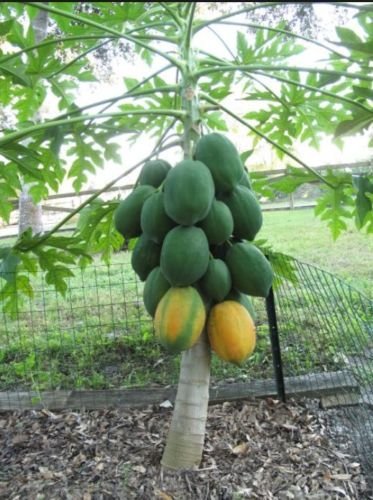
Here are 10 Dwarf Waimanalo papaya seeds (And we always throw in a few extra!). These seeds are very fresh and were just harvested. The Dwarf Waimanalo papaya is an uncommon variety of dwarf papaya that tastes extremely sweet and delicious.
Space and Sunlight Requirements
Considering the root competition between papaya trees and other fruit trees, it's crucial to ensure adequate space and sunlight for optimal growth and fruit production. Papaya trees require full sunlight for at least 6 hours a day to thrive and bear fruits. When planting papaya trees next to other fruit trees, ensure they are spaced at least 10-15 feet apart to minimize competition for nutrients and sunlight. Below is a table summarizing the sunlight needs and spacing requirements for papaya trees when planted alongside other fruit trees:
| Sunlight Needs | Spacing Requirements |
|---|---|
| Full sunlight for 6 hours a day | 10-15 feet apart |
Recommended Products


Compact growth habit makes it suitable for small gardens, balconies, or large containers, allowing for efficient space utilization.

Potential for Cross-Pollination
To maximize fruit production and ensure successful pollination, it's essential to consider the potential for cross-pollination when growing papaya trees alongside other fruit trees. When deciding which fruit trees to plant near papayas, keep in mind that cross-pollination can lead to genetic hybridization, affecting the fruit quality. Additionally, certain fruit trees attract specific pollinators, potentially increasing fruit yield. Here are some considerations:
- Genetic Hybridization: Cross-pollination between papayas and other fruit trees may lead to genetic hybridization, impacting the characteristics of the fruits.
- Fruit Quality: Different fruit trees can affect the taste, size, and texture of papayas through cross-pollination, influencing the overall fruit quality.
- Pollinator Attraction: Some fruit trees attract pollinators beneficial for papaya trees, enhancing the likelihood of successful pollination.
- Fruit Yield: Strategic placement of fruit trees can potentially increase the overall fruit yield by encouraging cross-pollination and efficient pollination by attracting more pollinators.
Careful consideration of cross-pollination potential is crucial for maximizing the benefits of growing papaya trees alongside other fruit trees.
Disease and Pest Interactions
The interaction between papaya trees and other fruit trees can also influence their susceptibility to diseases and pests, impacting the overall health and productivity of the orchard. When planted alongside other fruit trees, papaya trees may benefit from increased disease resistance through natural pest management.
For example, certain fruit tree species can attract beneficial insects that help control pests and reduce the spread of diseases to the papaya trees. On the other hand, the close proximity of different fruit trees can also create conditions for the rapid spread of diseases and pests.
Therefore, it's important to consider the compatibility of different fruit tree species in terms of disease resistance and pest management when planning the layout of an orchard. Proper management and monitoring are crucial to ensure the overall health and productivity of the mixed orchard.
Recommended Products

INSECT KILLER - This pest control is great for use on beetles, fruit flies, caterpillars, mealybugs, spider mites, thrips, scale, leafhoppers, and other pests. Our pesticide delivers fast results.

3-IN-1 PLANT CARE: 3-In-1 Insect, Disease & Mite Control is insect control, disease control, and plant mite control all in on; Delivers protection for up to 14 days
Benefits of Companion Planting
When cultivating a mixed orchard, the benefits of companion planting become evident as different fruit trees can support each other by enhancing soil fertility and pest management.
- Intercropping Benefits: Growing different fruit trees together can help maximize the use of space, sunlight, and nutrients in the orchard.
- Natural Pest Control: Certain plant relationships can help repel pests or attract beneficial insects, reducing the need for chemical interventions.
- Improved Soil Health: Some fruit trees have deep roots that can break up compacted soil, while others add nitrogen to the soil, benefiting neighboring trees.
- Enhanced Pollination: Companion planting can attract pollinators, increasing the overall fruit yield in the orchard.
- Disease Resistance: Certain plant combinations can help reduce the spread of diseases by creating a more diverse and balanced ecosystem.
Companion planting offers a range of intercropping benefits, promoting healthier plant relationships and optimizing the overall productivity of a mixed orchard.
Conclusion
Incorporating papaya trees alongside other fruit trees requires careful consideration of compatibility, space, sunlight, cross-pollination, and disease interactions.
By strategically planning your garden layout and considering companion planting, you can enhance pollination and pest control.
With thoughtful attention and proper care, you can cultivate a thriving fruit tree ecosystem in your garden.
Happy planting and may your garden flourish with abundance!
