

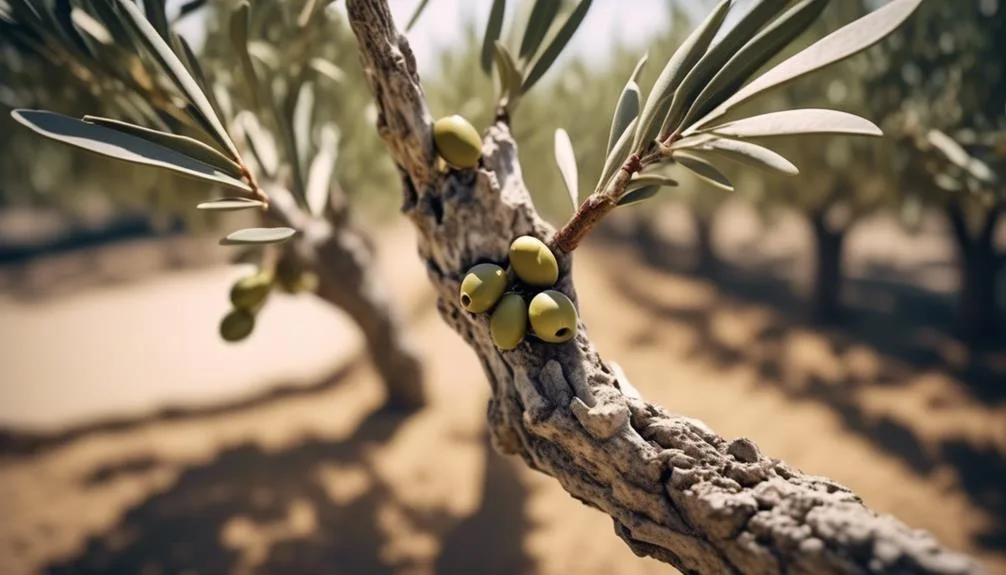
For over 2,000 years, people have been grafting olive trees to create new varieties or revive older ones.
But can olive trees really be grafted? It's not as simple as it seems.
Grafting olive trees involves various factors and understanding the process can shed light on this ancient practice.
Whether you're a professional grower or just curious, there's a lot to learn about the compatibility and complexities of grafting olive trees.
Key Takeaways
- Compatibility between rootstock and scion is crucial for successful grafting of olive trees.
- Grafting techniques such as T-budding and side grafting are commonly used for olive tree grafting.
- The timing of the grafting process, specifically late winter and early spring, can affect the success of the graft.
- Proper care during the healing process, including alignment of cambium layers and attention to graft union fusion, is necessary for successful olive tree propagation.
Compatibility of Olive Tree Grafting
When grafting olive trees, it's crucial to ensure compatibility between the rootstock and the scion for successful growth and fruit production. Grafting success hinges on the harmonious union of these two components.
There are various grafting techniques used to achieve this compatibility. One common method is T-budding, where a single bud is grafted onto rootstock. Another technique, side grafting, involves attaching a scion to the side of the rootstock.
Additionally, grafting success can also be influenced by the timing of the process, with late winter and early spring being optimal.
Grafting Process for Olive Trees
To successfully graft olive trees, it's essential to understand the specific process and techniques involved in the grafting procedure. Olive tree propagation through grafting involves carefully selecting a healthy rootstock and a compatible scion, which is a young shoot or bud from a desirable olive variety.
The most common grafting techniques for olive trees include T-budding and side grafting. In T-budding, a single bud is inserted under the bark of the rootstock, while side grafting involves attaching a scion to a slit in the rootstock. It's crucial to ensure that the cambium layers of the rootstock and scion are aligned to promote successful grafting.
Additionally, proper care and attention during the healing process are necessary to facilitate the fusion of the graft union. Mastering these grafting techniques is fundamental to achieving successful olive tree propagation.
Recommended Products

【complete grafting kit】 one 7-ounce tin of professional grafting wax, two 3.15-inch stirring rods, and 2 rolls of grafting tape with a total length of 394 feet. The grafting wax is stored in a premium aluminum can, which provides excellent seal performance and long-lasting preservation. This all-in-one grafting set is perfectly suitable for all kinds of horticultural grafting and plant pruning wound sealing work.

Complete Grafting Kit:You will receive 1 grafting wax kit containing 7-ounce can of grafting wax, 4 pieces of 3.8 inches stirring rods, and 1 roll of 656 feet grafting tape. The wax is sealed in an aluminum can for moisture resistance and durability, making the kit ideal for all types of horticultural grafting.

【Surgical-Precision Grafting Tools】 Crafted with Japanese SK5 High-Carbon Steel blades (HRC 58-60 hardness) and ergonomic ABS handles, our 2-in-1 pruner delivers clean cuts up to 1/2" diameter branches. Dual-edge Ω/U/V blades prevent stem crushing, boosting grafting success rates by 40%* (*lab test data).
Types of Olive Tree Grafting
Understanding the specific grafting techniques for olive trees is essential for successfully propagating them, building on the grafting process discussed earlier.
There are several types of olive tree grafting techniques commonly used: budding, cleft grafting, and side grafting.
Budding involves inserting a single bud from the desired cultivar into the rootstock, while cleft grafting requires a diagonal cut in the rootstock where a scion with a V-shape is inserted.
Side grafting, also known as whip grafting, involves attaching a scion to the side of the rootstock.
When considering grafting materials, it's crucial to use sterile, sharp tools to make clean cuts, and secure the graft with grafting tape or rubber bands to promote successful healing.
Each technique has its advantages, so choosing the right one depends on factors like the time of year and the desired outcome.
Benefits of Grafting Olive Trees
Grafting olive trees offers numerous benefits, enhancing the overall health, yield, and adaptability of the trees. Through grafting, olive trees can exhibit improved yield and disease resistance, making them more resilient and productive. Here are some key benefits of grafting olive trees:
| Benefits | Description |
|---|---|
| Improved Yield | Grafted olive trees produce higher quality and quantity of olives, leading to increased productivity. |
| Disease Resistance | Grafting can impart disease resistance to the olive trees, protecting them from various pathogens and ensuring a healthier crop. |
Considerations for Grafting Olive Trees
When considering grafting olive trees, several factors need to be taken into account to ensure successful integration and growth.
- Grafting Techniques: Selecting the appropriate grafting technique based on the size and age of the trees is crucial. Techniques such as cleft grafting or side veneer grafting can be used depending on the specific requirements.
- Rootstock Selection: Choosing the right rootstock is important for successful grafting. Factors such as environmental conditions and desired traits like disease resistance or tolerance to certain soil types should be considered when selecting a rootstock.
- Environmental Factors: It is essential to consider environmental factors like temperature, humidity, and soil composition during the grafting process. These factors should be optimized to create the ideal conditions for healing and growth.
- Maintenance and Care: Proper post-grafting care is necessary to ensure healthy development. This includes regular watering, protection from pests, and pruning to encourage optimal growth.
Conclusion
Incorporating grafting into olive tree cultivation can bring about numerous advantages. This includes enhanced disease resistance and increased fruit production. By carefully selecting compatible rootstocks and employing proper grafting techniques, growers can experience the benefits of this practice.
Ultimately, grafting olive trees opens up possibilities for improved agricultural outcomes and sustainability.
