

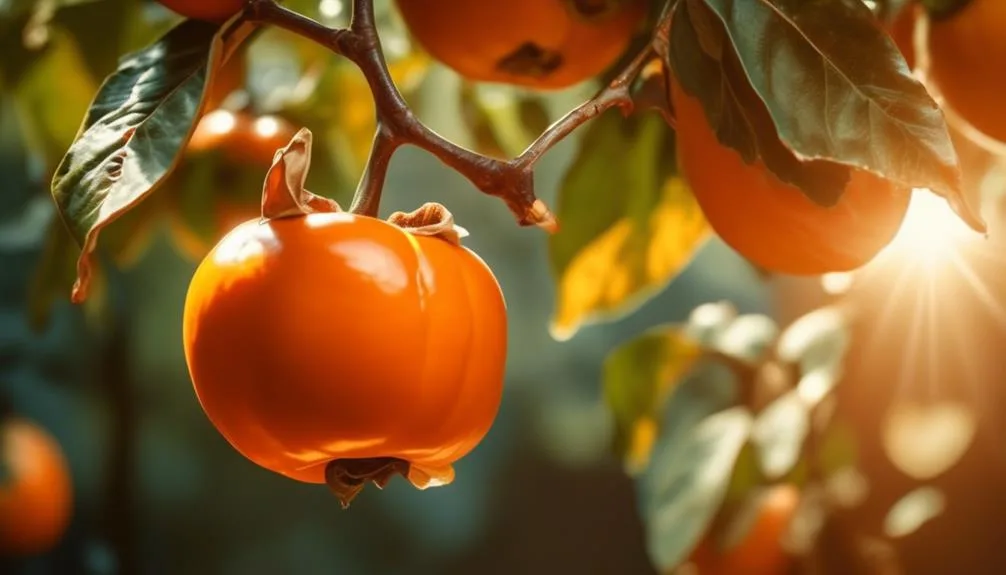
Have you ever wondered why persimmon trees produce seeds?
It's a fascinating part of their life cycle that sheds light on nature's mechanisms. Let's explore the reasons behind this phenomenon in a straightforward way.
Key Takeaways
- Persimmon trees reproduce through pollination and seed production.
- Seeds play a crucial role in the life cycle of persimmon trees, as they are dispersed by animals and germinate to create new trees.
- Environmental factors such as temperature, rainfall, and soil quality influence seed production in persimmon trees.
- Human intervention, such as proper pruning techniques and fertilization, can enhance seed production in persimmon trees.
Reproduction Process of Persimmon Trees
Persimmon trees reproduce through the process of pollination, where the male flowers release pollen that's carried by insects or wind to the female flowers, leading to the development of the fruit. This pollination process is essential for the formation of the delicious persimmon fruits.
Once the female flowers are fertilized, they start developing into the fruit that we enjoy. The fruit development process involves the transformation of the fertilized flowers into small green persimmons, which gradually grow and change color as they ripen. As the fruit matures, it becomes plump and acquires its characteristic orange hue.
Understanding the intricate process of pollination and fruit development not only deepens your appreciation for persimmon trees but also provides insight into the natural mechanisms that sustain our ecosystem.
Role of Seeds in Persimmon Tree Life Cycle
After the fertilization of the female flowers, the transformation of the fertilized flowers into small green persimmons marks the beginning of the crucial role that seeds play in the life cycle of persimmon trees.
Once the persimmons ripen, the seeds within them are ready for dispersal. Persimmon seeds are primarily dispersed by animals that eat the fruit, such as birds and mammals. As the seeds pass through the digestive systems of these animals, they're deposited in different locations, aiding in the dispersal and colonization of new areas.
The germination process of persimmon seeds is influenced by factors such as moisture, temperature, and soil conditions. Once the seeds find a suitable spot, they germinate and begin the process of developing into new persimmon trees, perpetuating the life cycle of the species.
Environmental Factors Affecting Seed Production
Environmental factors such as temperature, rainfall, and soil quality play a crucial role in influencing the production and quality of persimmon tree seeds. Climate directly impacts seed production, with persimmon trees thriving in temperate regions with distinct seasons. The optimal temperature for persimmon tree seed production ranges from 68°F to 86°F, and a lack of chilling hours can affect flowering and subsequently seed development.
Adequate rainfall is essential during the flowering and fruit development stages, as it ensures proper pollination and seed set. Additionally, soil composition affects the overall health of persimmon trees, directly impacting seed production. Well-drained, slightly acidic soils rich in organic matter are optimal for persimmon tree growth and seed development.
Understanding and managing these environmental factors are vital for ensuring successful persimmon tree seed production.
Significance of Seed Production for Persimmon Trees
Understanding the environmental factors that influence seed production is crucial because it directly impacts the overall health and vitality of persimmon trees, highlighting the significance of seed production for their long-term sustainability and reproductive success.
Fruit development in persimmon trees is closely tied to seed production. The seeds play a vital role in the development of the fruit, as they contain genetic material that determines the quality and characteristics of the fruit.
Furthermore, seed production is essential for maintaining genetic diversity within persimmon tree populations. This genetic diversity is crucial for the trees to adapt to changing environmental conditions, resist diseases, and ensure the survival of the species.
In essence, the significance of seed production for persimmon trees lies in its role in fruit development and the preservation of genetic diversity, which are fundamental for the long-term health and sustainability of the species.
Human Intervention and Seed Production in Persimmon Trees
You can enhance persimmon tree seed production through careful pruning and fertilization, promoting optimal conditions for healthy fruit development. Human intervention plays a crucial role in increasing seed production in persimmon trees. By practicing proper pruning techniques and providing the right nutrients, you can ensure the trees produce an abundance of seeds. Additionally, human intervention can aid in seed dispersal, allowing for the propagation of persimmon trees. Here's a table outlining some key methods for enhancing seed production:
| Method | Description | Benefits |
|---|---|---|
| Pruning | Trimming excess branches to promote airflow | Enhances fruit and seed development |
| Fertilization | Providing essential nutrients for growth | Supports healthy seed production |
| Seed Dispersal | Assisting in spreading seeds | Increases chances of germination |
Conclusion
In essence, the seeds within a persimmon are essential for the tree's reproduction, influenced by environmental factors and human intervention. Without them, the persimmon tree's life cycle would be incomplete.
This highlights the significance of seed production in ensuring the tree's existence and continuation. Consider the intricate balance of natural and human influences on this process, and ponder the broader implications of supporting seed production for the future of persimmon trees.
