

Have you ever wondered why some fruit trees thrive together while others struggle? If you’ve tried grafting, you know that choosing the right tree combinations can make all the difference in your garden’s success.
Imagine planting a single tree that produces multiple types of fruit, all thanks to grafting. It’s not just a dream; it’s possible with the right knowledge. This article will guide you through the best fruit tree pairings for grafting, helping you maximize your garden’s potential.
Key Takeaways
- Understand Grafting Basics: Grafting is the process of fusing plant tissues to combine desirable traits and enhance fruit yield.
- Successful Combinations: Choose compatible fruit trees for grafting, such as Apples with other Apples or Peaches with Plums, to ensure better growth and flavor.
- Key Grafting Techniques: Familiarize yourself with methods like Whip-and-Tongue and Cleft Grafting, which facilitate strong connections and quick healing.
- Timing and Environment Matter: Perform grafting during the dormant season and provide a shaded, wind-protected environment for successful healing.
- Benefits of Grafting: Expect improved fruit quality, higher yields, and increased resistance to pests and diseases through effective grafting practices.
Understanding Grafting
Grafting involves joining two different plants to create a single tree that thrives. By selecting compatible fruit trees, you ensure successful grafting and can produce various fruits on one tree.
Recommended Products

Package Includes: Contents 1 Manual gardening grafting cutter and 2 rolls of 2 sizes of grafting tape, meeting your needs.

Stainless Steel Blade
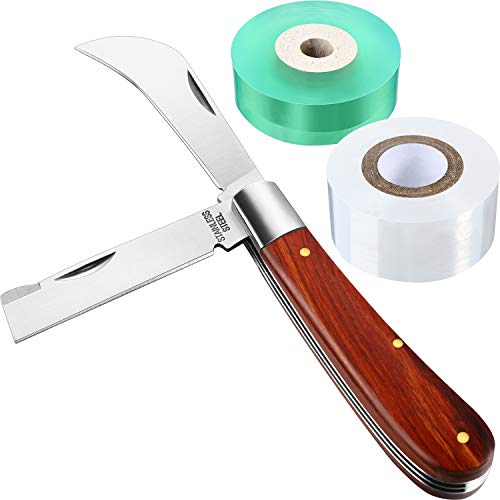
Package includes: you will get 1 double blades garden grafting knife and 2 rolls of grafting tapes in 2 sizes, ideal set for grafting budding, cutting, digging, sprouting, plants, weeding, cutting, sawing, etc.
What is Grafting?
Grafting is a horticultural technique that fuses the tissues of one plant (the scion) with another (the rootstock). This process enhances growth and fruit yield. It allows you to combine desirable traits, such as disease resistance or improved flavor.
Types of Grafting
- Cleft Grafting: Best for larger rootstocks, this method combines a single scion with a cleaved rootstock.
- Whip and Tongue Grafting: Ideal for similar-sized scions and rootstocks, this technique ensures strong connections.
- Bark Grafting: Used on established trees, this method allows the scion to be inserted beneath the bark of the rootstock.
Factors for Successful Grafting
- Compatibility: Choose tree varieties that share similar growth habits and disease resistance.
- Timing: Perform grafting during the dormant season for increased success, typically late winter to early spring.
- Environment: Ensure the graft site is shaded and protected from wind to encourage healing.
Common Grafting Combinations
- Apple Trees: Generally compatible with other apples and some crabapples.
- Peach Trees: Work well with other peaches and plum trees (European).
- Citrus Trees: Many varieties can graft onto a common rootstock, such as sour orange.
- Sharp Knife: Precision cuts are essential for both scion and rootstock.
- Grafting Tape: Use this to secure grafts and hold cambium layers together.
- Pruning Wound Dressing: Protects graft sites from pests and diseases.
Successfully grafting fruit trees requires attention to detail, preparation, and proper technique. By understanding grafting, you can create a fruitful tree landscape in your garden.
Reasons for Grafting
Grafting offers numerous benefits that enhance the overall quality and yield of fruit trees. Understanding these reasons can aid your decision to graft effectively.
Improve Fruit Quality
Grafting can significantly improve the flavor, size, and quality of the fruit. By merging a high-quality scion with a robust rootstock, you combine desirable traits. For instance, grafting a sweet apple variety onto a hearty rootstock can produce larger, tastier apples. You see higher yields and better-tasting fruit from compatible varieties, such as heirloom apples merged with modern rootstocks.
Enhance Resistance to Pests and Diseases
Grafting helps increase a tree’s resistance to pests and diseases. Certain rootstocks possess traits that fend off specific diseases. For example, combining a peach scion with a disease-resistant rootstock can ensure stronger growth and longevity. This approach minimizes the need for pesticide applications, promoting a healthier garden ecosystem. Using resistant varieties often reduces maintenance efforts while maximizing fruit production.
Compatible Fruit Trees
Grafting successful fruit trees requires compatibility between varieties. Certain combinations yield better results, enhancing growth and fruit quality. Below are compatible pairings for popular fruit tree types.
Apple Tree Compatibility
You can graft different apple varieties together easily. Common combinations include:
- Honeycrisp and Fuji: These varieties share similar growth patterns.
- Granny Smith and Gala: Both offer compatibility for flavor and disease resistance.
- Red Delicious and Braeburn: These apples can thrive on common rootstocks.
Additionally, using compatible rootstocks like M9 or M26 encourages dwarfing, ideal for small spaces.
Pear Tree Compatibility
Pear trees also feature compatible grafting options. Notable pairings consist of:
- Bartlett and Bosc: Both varieties integrate well for improved flavor.
- Anjou and Asian Pears: Asian pears can graft onto European rootstocks.
- Comice and Forelle: These maintain good health and yield.
For better results, use Quince as a rootstock to create smaller, more manageable trees.
Stone Fruit Compatibility
Stone fruits like peaches, plums, and cherries offer a diverse range of grafting opportunities. Key combinations include:
- Peach and Nectarine: These two varieties can interchange easily due to genetic similarity.
- Plum and Cherry: These trees often work together, especially with hybrids.
- Apricot with Plum: Apricots can graft onto certain plum rootstocks, enhancing hardiness.
Using rootstocks like Myrobalan or Citation supports vigorous growth and boosts disease resistance.
Grafting Techniques
Grafting involves joining two different plant parts to create a single, productive tree. Understanding various grafting techniques helps you achieve successful results in your fruit tree garden.
Recommended Products

TREE GRAFTING TOOL - Efficiently prepare scion shoots and understock for grafting with our handy garden tool. This standard manual grafting tool can be used to cut stock up to 1/2” in diameter and comes with an excellent illustrated instruction manual.

PROFESSIONAL GARDENING GRAFTING TOOLS: Including 2 in 1 grafting pruning tools, 3 replaceable blades, a grafting knife, a screwdriver, a wrench, 2 grafting films, 160 rubber bands, 40 wide rubber bands, and 50 colorful tag cards

UPGRAFE PROFESSIONAL GARDENING GRAFTING TOOLS: Professional grafting set, including 2 in 1 grafting pruning tools, 3 replaceable blades, a grafting knife, a pruning shears, a screwdriver, a wrench, 3 grafting films, and 45 colorful tag cards
Whip-and-Tongue Grafting
Whip-and-tongue grafting suits young, slender scions and rootstocks. The process starts with making matching angled cuts on both the scion and the rootstock. This creates long surfaces for tissue contact, which promotes successful healing.
- Select a healthy scion and rootstock.
- Cut both at a 45-degree angle, ensuring they fit together tightly.
- Make a tongue cut on each piece, a small vertical slice that interlocks the two.
- Align the scion and rootstock, interlocking the tongues.
- Wrap the joint with grafting tape to secure it.
- Seal the edges with pruning wound dressing to prevent moisture loss.
This technique encourages strong growth as the interlocked cuts allow for maximum cambial contact.
Cleft Grafting
Cleft grafting works well for larger rootstocks and requires a strong, healthy scion. This method excels when you want to replace the top part of an established tree.
- Choose a rootstock and cut the top off, creating a flat surface.
- Make a vertical split in the rootstock, about 2–3 inches deep.
- Prepare the scion by cutting it into a wedge shape.
- Insert the scion into the cleft, ensuring cambial layers align.
- Secure the graft with tape or twine, holding it in place.
- Apply pruning sealant to protect the graft from drying out.
Cleft grafting promotes quick healing and enables you to introduce new varieties to your trees.
Conclusion
Grafting opens up a world of possibilities for your garden. By choosing compatible fruit trees you can create a diverse and fruitful landscape that thrives together. Whether you’re aiming for a multi-fruit tree or enhancing the quality of your harvests the right pairings make all the difference.
Remember to consider factors like timing and the specific grafting techniques that suit your trees. With the right tools and knowledge you’re well on your way to successful grafts that not only boost your yield but also contribute to a healthier garden. Enjoy the journey of grafting and watch your garden flourish with delicious fruits.
Frequently Asked Questions
What is grafting in fruit trees?
Grafting is a horticultural technique where tissues from two different plants are joined to grow as one. It combines a scion (the upper part) with a rootstock (the lower part), enhancing growth and fruit yield through beneficial traits like disease resistance and improved flavor.
Why is compatibility important in grafting?
Compatibility is crucial in grafting as it determines the success of the union between the scion and rootstock. Selecting compatible varieties ensures better healing, nutrient transfer, and overall plant health, maximizing fruit production and quality.
What are some common grafting methods?
Common grafting methods include cleft grafting, whip-and-tongue grafting, and bark grafting. Each method suits different tree sizes and conditions, facilitating successful connections between scions and rootstocks to promote robust growth.
When is the best time to graft fruit trees?
The best time to graft fruit trees is during the dormant season, typically late winter to early spring. This timing optimizes the healing process and ensures the plants are prepared for active growth once the weather warms up.
What tools are necessary for grafting?
Essential tools for grafting include a sharp knife or grafting tool, grafting tape, pruning wound dressing, and sterilization supplies. Using the right tools is vital for making clean cuts and securing grafts effectively to promote healing.
Can grafting improve fruit quality?
Yes, grafting can significantly enhance fruit quality. By merging a high-quality scion with a vigorous rootstock, grafting improves flavor, size, and disease resistance, resulting in healthier, more productive fruit trees.
What are some recommended fruit tree pairings?
Popular grafting combinations include Honeycrisp and Fuji apples, Bartlett pears with Bosc, and peach with nectarine. Selecting appropriate rootstocks, like M9 for apples or Quince for pears, ensures better growth and yield.
How does grafting affect pest resistance?
Grafting can enhance a tree’s resistance to pests and diseases by choosing rootstocks with specific resistant traits. This reduces the need for pesticides and promotes stronger, healthier trees while contributing to a more balanced garden ecosystem.
What are the advantages of creating multi-fruit trees?
Multi-fruit trees maximize garden space by allowing one tree to produce various fruits, providing diversity, and potentially increasing overall yield. This method also offers a unique aesthetic and can simplify care and maintenance.
