

Have you ever wondered what cantaloupe plants actually look like? Picture this: You’re at the grocery store, selecting a perfectly ripe melon, but have you ever stopped to think about the plant that produces these sweet fruits? Understanding the appearance of cantaloupe plants can deepen your appreciation for this delicious fruit and even inspire you to grow your own.
Key Takeaways
- Cantaloupe plants have large, lobed leaves with rough texture, sprawling vines, and vibrant yellow flowers before producing fruit.
- Understanding the growth stages of cantaloupe plants—from seed germination to ripening—can deepen appreciation for the fruit.
- Recognizing the key features of cantaloupe leaves (shape, texture) and vine development patterns is crucial for successful cultivation.
- Cantaloupe flowers are bright yellow trumpets that attract pollinators, leading to delicious fruit formation.
- To grow healthy cantaloupe plants, provide well-draining soil rich in organic matter, consistent moisture levels without waterlogging, full sun exposure (6-8 hours daily), and temperatures between 70°F and 85°F.
Understanding Cantaloupe Plants
Cantaloupe plants have distinct visual characteristics that can help you identify them in your garden. Let’s delve into the key features of these plants and explore their growth stages.
Recommended Products

USDA CERTIFIED ORGANIC VEGETABLES: Enjoy 100% clean, non-GMO heirloom crops grown from seed. Certified organic by Oregon Tilth, this open-pollinated variety pack ensures your home garden yields healthy, chemical-free organic vegetables directly to your table.

USDA CERTIFIED ORGANIC VEGETABLES: Enjoy 100% clean, non-GMO heirloom crops grown from seed. Certified organic by Oregon Tilth, this open-pollinated variety pack ensures your home garden yields healthy, chemical-free organic vegetables directly to your table.

Packing list: Avocado growing kit is made of borosilicate glass and durable stainless steel holder, will not rust due to long-term immersion, clear glass allows you to observe seeds germination and growth.
Visual Characteristics of Cantaloupe Plants
Cantaloupe plants typically have large, lobed leaves with a rough texture. The vines of these plants sprawl along the ground or climb if provided with support. You’ll notice tendrils extending from the plant that aid in anchoring it as it grows. Additionally, cantaloupe plants produce vibrant yellow flowers before developing the delicious fruit we know.
Stages of Growth in Cantaloupe Plants
Understanding the different growth stages of cantaloupe plants can be exciting and rewarding. These plants progress from seed germination to vine development, flowering, fruit setting, and finally, ripening. As you observe your cantaloupe plant throughout these stages, you’ll witness its transformation from a tiny seed to a lush vine bearing sweet melons ready for harvest.
By familiarizing yourself with the visual characteristics and growth stages of cantaloupe plants, you’ll gain a deeper appreciation for the process behind producing this delectable fruit. Whether you’re already growing cantaloupes or considering starting your own garden, recognizing these aspects will enhance your connection to nature and food cultivation.
Key Features of Cantaloupe Leaves and Vines
When it comes to cantaloupe plants, recognizing the key features of their leaves and vines can deepen your understanding and appreciation of these delicious fruits. Let’s explore the distinct characteristics that make cantaloupe plants unique.
Leaf Shape and Texture
Cantaloupe plants are known for their large, lobed leaves that provide essential functions in the growth process. The leaves have a rough texture on the top surface, while the underside is softer to touch. These leaves play a crucial role in photosynthesis, helping the plant convert sunlight into energy for fruit development.
The shape of cantaloupe leaves is typically rounded with serrated edges, resembling a shallow heart or kidney shape. This distinctive leaf structure aids in maximizing surface area for optimal sunlight absorption. By observing the shape and texture of cantaloupe leaves, you can identify them easily among other plant varieties.
Vine Development and Growth Patterns
Cantaloupe plants exhibit vigorous vine development as they grow, spreading outwards to cover considerable ground space. The vines have a tendency to sprawl along the soil, requiring ample room for expansion. Additionally, cantaloupe vines produce tendrils that help support the plant’s weight and anchor it securely as it grows.
As cantaloupe vines mature, they display intricate growth patterns characterized by rapid elongation and branching to support fruit production. Understanding these growth patterns is essential for providing appropriate support structures like trellises or fences to ensure healthy vine development throughout the growing season.
By familiarizing yourself with the leaf characteristics and vine behaviors of cantaloupe plants, you’ll gain valuable insights into their growth cycle and be better equipped to cultivate these flavorful fruits successfully in your own garden.
Cantaloupe Flowers and Fruits
Cantaloupe plants produce beautiful flowers before developing delicious fruits. Understanding the characteristics of these flowers and fruits can enhance your gardening experience.
Recommended Products
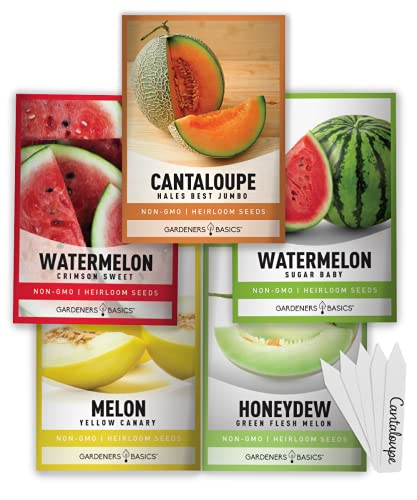
Five melon varieties: Grow cantaloupe, honeydew, canary melon and two kinds of watermelon. This assortment offers different colors and flavors for fresh summer fruit from your garden.

HEIRLOOM MELON SEED VARIETY PACK – Honey Rock and Hales Best cantaloupe (Cucumis melo var. cantalupensis), honeydew (C. melo var. inodorus), plus Yellow Petite, Tendersweet Orange, and Georgia Rattlesnake watermelon (Citrullus lanatus)

8 HEIRLOOM FRUIT SEED VARIETIES – Our curated fruit seed collection includes Alpine ‘Regina’ Strawberry (Fragaria vesca), Ground Cherry (Physalis pruinosa), Hale’s Best Cantaloupe (Cucumis melo var. cantalupensis), Honeydew (Cucumis melo var. inodorus), Honey Rock Muskmelon (Cucumis melo var. cantalupensis), and three Watermelon varieties: Crimson Sweet (Citrullus lanatus), Sugar Baby (Citrullus lanatus), and Orangeglo (Citrullus lanatus)
Appearance of Cantaloupe Flowers
Cantaloupe flowers are bright yellow in color and have a distinct shape that resembles a trumpet. These vibrant blooms attract pollinators like bees, which play a crucial role in the fruiting process. Observing these flowers can give you insights into the upcoming fruit formation on your cantaloupe vines.
Characteristics of Developing Cantaloupe Fruits
As cantaloupe fruits mature, they undergo noticeable changes in color, texture, and size. Initially green and firm, the fruits gradually transition to a softer texture with a beige or yellow undertone when ripe. The characteristic netted pattern on the skin becomes more prominent as the fruit reaches maturity. Monitoring these changes can help you harvest your cantaloupes at their peak flavor for a delectable treat.
Ideal Conditions for Growing Healthy Cantaloupe Plants
To ensure your cantaloupe plants thrive and produce delicious fruits, it’s essential to provide them with the right growing conditions. Here’s what you need to know:
Recommended Products

SEEDLING HEATING MAT DESIGN: Adopting the latest certified heating wire for more even heating and durability, PVC material is waterproof and easy to clean, power failure...
Soil and Water Requirements
For healthy cantaloupe plants, plant them in well-draining soil that is rich in organic matter. Aim for a pH level between 6.0 and 7.0 for optimal growth. Ensure the soil is consistently moist but not waterlogged to prevent root rot.
When watering your cantaloupe plants, aim to keep the soil evenly moist throughout the growing season, especially during flowering and fruit development. Mulching around the base of the plants can help retain moisture and suppress weed growth.
Sunlight and Temperature Needs
Cantaloupe plants thrive in full sun, so choose a planting location that receives at least 6-8 hours of sunlight daily. Adequate sunlight exposure promotes healthy vine growth and fruit development.
Maintain temperatures between 70°F and 85°F (21°C – 29°C) during the day for optimal cantaloupe plant growth. Protect young seedlings from any late frosts by covering them or waiting until after the last frost date in your area before planting outdoors.
By providing your cantaloupe plants with these ideal conditions, you’ll set them up for success and increase your chances of enjoying a bountiful harvest of sweet, juicy melons.
Conclusion
Now that you’re familiar with the visual aspects and growth requirements of cantaloupe plants, you can confidently nurture your own thriving melon patch. By recognizing the distinct features of cantaloupe plants at various stages, from seedling to fruit-bearing vine, you’ll be better equipped to provide the optimal conditions for their development. Remember to prioritize well-draining soil, proper pH levels, consistent watering, ample sunlight exposure, and suitable temperatures. With these key factors in mind, you’ll be on your way to a successful harvest of deliciously sweet cantaloupes. Cultivating these fruits not only enhances your gardening experience but also offers the satisfaction of enjoying homegrown produce bursting with flavor. Happy growing!
Frequently Asked Questions
What are the key characteristics of cantaloupe plants discussed in the article?
The article highlights the visual features, growth stages, leaves, vines, flowers, and fruit development of cantaloupe plants to help readers identify and appreciate them better.
Why is it important to recognize these features of cantaloupe plants?
Recognizing these characteristics can enhance fruit enjoyment and inspire readers to consider growing their own cantaloupes.
What ideal conditions are recommended for growing healthy cantaloupe plants?
Ensure well-draining soil, optimal pH levels, consistent moisture, full sun exposure, and appropriate temperatures to set up your cantaloupe plants for success.
How can understanding these aspects benefit gardeners cultivating cantaloupes?
Understanding these factors can improve the gardening experience and increase the chances of a successful harvest of sweet and juicy melons.
