

Ever found yourself struggling to reach those high branches that desperately need trimming in your yard? Imagine effortlessly pruning those out-of-reach limbs without the need for a ladder. How about saving time and energy while achieving a perfectly manicured garden?
With a pole pruner saw in hand, you can say goodbye to precarious climbing and tedious manual labor. In this article, you’ll discover the essential tips and techniques to master the art of using a pole pruner saw effectively.
Selecting the Right Pole Pruner Saw
When choosing a pole pruner saw, there are several key factors to consider to ensure you pick the best tool for your needs:
- Reach: Select a pole pruner saw that offers enough extension to reach the highest branches in your garden without the need for a ladder.
- Weight: Opt for a lightweight model to reduce fatigue during extended use.
- Cutting Capacity: Consider the thickness of the branches you’ll be cutting to choose a saw with an appropriate cutting capacity.
- Bar Length: The length of the saw’s bar determines the size of branches it can efficiently cut through.
- Power Source: Decide between gas-powered, corded electric, or battery-operated pole pruner saws based on your preference for convenience and mobility.
By keeping these factors in mind, you can select a pole pruner saw that makes trimming high branches a breeze.
Recommended Products

IDEAL BRANCH TRIMMER: Tree pruner that extends from 7.9 to 12 feet; Lightweight aluminum pole weighing less than five pounds to help minimize fatigue; Ideal for cutting high branches, or making low cuts without bending or kneeling
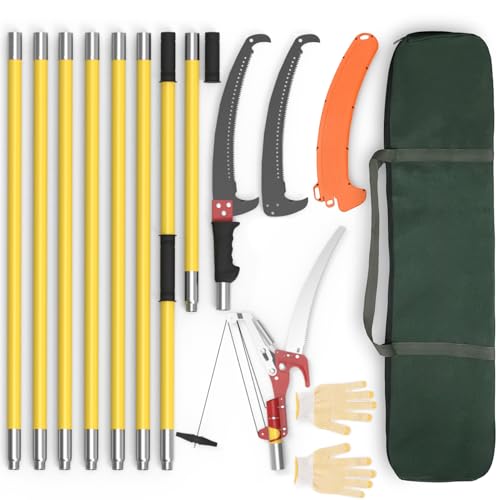
Package Includes: Our pole saw and pruner set contains 7 long poles, 1 head with saw, 1 pruner head, 1 spare saw with sheath, and a carry bag. Its extandabe range is about 7.3 to 27 ft (2.24 m to 8.24 m).

Sharp Mn Steel Blade for Fast & Clean Cuts: This pole saw uses a sharp three-sided edge with a double-sided barb design to grip branches securely and cut smoothly from multiple angles. The Mn steel blade is durable, rust-resistant, and lightweight, delivering fast, clean cuts. This is a manual pole saw with detachable pole sections for adjustable reach, not pruner, not a telescoping pole; it is neither electric nor battery-powered.
Understanding the Parts of a Pole Pruner Saw
When you’re ready to tackle those high branches with your pole pruner saw, knowing the parts of the tool is essential for a successful and safe pruning session. Here’s a breakdown to help you get acquainted with your pruning companion:
- Pole: This is the long, extendable part of the tool that allows you to reach high branches without the need for a ladder.
- Pruner Head: Located at the end of the pole, it consists of the cutting components that do the trimming.
- Cutting Blade: Part of the pruner head that actually cuts the branches, comes in different lengths and styles for various cutting needs.
- Trigger: Found on the handle, it controls the cutting action of the blade.
- Grip Handle: Where you hold the pole pruner saw while operating it, ensuring a firm and comfortable grip.
- Extension Lock: Allows you to adjust the length of the pole to reach different heights securely.
Familiarizing yourself with these parts will make using your pole pruner saw a breeze. Now, let’s delve into the next steps to effectively operate your tool in the upcoming section.
Safety Precautions Before Using a Pole Pruner Saw
Before diving into using your pole pruner saw, it’s essential to prioritize safety. Here are a few key precautions to keep in mind:
- Check the Condition: Before each use, inspect the pole pruner saw for any damage or loose parts.
- Wear Protective Gear: It’s crucial to wear appropriate personal protective equipment, including gloves, eye protection, and a helmet.
- Clear the Area: Ensure there are no people or pets nearby when operating the pole pruner saw.
- Stable Position: Maintain a firm and balanced stance while using the tool for better control.
- Stay Alert: Avoid distractions and stay focused on the task at hand.
- Avoid Overreaching: Extend the pole pruner saw only as far as necessary, and never overreach beyond your comfortable range.
- Secure Grip: Always maintain a secure grip on the tool, especially during cutting.
- Use Both Hands: For better control and stability, use both hands to operate the pole pruner saw.
- Power Off: Remember to switch off the tool and wait for the blade to stop completely before setting it down.
By adhering to these safety precautions, you’ll create a secure environment for using your pole pruner saw effectively and responsibly.
Proper Technique for Using a Pole Pruner Saw
Using a pole pruner saw effectively requires proper technique to ensure safety and efficiency. Here’s how to use it correctly:
- Positioning:
- Stand with your feet shoulder-width apart for stability.
- Keep a firm grip on the pole with both hands.
- Cutting Technique:
- Start cutting from the base of the branch, then work your way out.
- Use a steady, controlled motion to avoid jerky movements.
- Angle of Cut:
- Position the pruner head at a slight angle when cutting to prevent splintering.
- Aim to cut just outside the branch collar without damaging it.
- Extension:
- Extend the pole pruner saw to the appropriate length for the task.
- Avoid overextending to maintain control and balance.
- Clear Work Area:
- Remove any obstacles or debris below the cutting area.
- Ensure there are no bystanders nearby while operating the tool.
- Maintenance:
- Regularly clean the cutting blade to ensure smooth cuts.
- Lubricate moving parts and check for any signs of wear or damage.
Proper technique not only enhances the performance of your pole pruner saw but also minimizes the risk of accidents. Remember to always prioritize safety and follow the manufacturer’s guidelines for optimal use.
Maintenance and Care of Your Pole Pruner Saw
Taking proper care of your pole pruner saw is crucial for ensuring longevity and optimal performance. Here are some essential tips for maintaining and keeping your tool in top condition:
- Cleaning: After each use, wipe down the pruner head and blade with a clean cloth to remove any sap or debris.
- Sharpening the Blade: Regularly check the blade for dullness and sharpen it when needed to maintain a sharp cutting edge.
- Lubrication: Apply lubricating oil to the cutting blade and moving parts to prevent rust and ensure smooth operation.
- Tighten Screws: Periodically check and tighten any loose screws or bolts to keep the pruner head securely in place.
- Inspect the Pole: Before each use, examine the pole for cracks or damage that could compromise its stability.
By following these simple maintenance tips, you’ll keep your pole pruner saw in prime condition for all your pruning needs.
Conclusion
You’ve learned the key aspects of using a pole pruner saw, from selecting the right one to mastering the proper technique. Remember to prioritize safety, maintain your tool regularly, and follow manufacturer guidelines for optimal performance. By implementing these practices, you’ll not only enhance your efficiency but also ensure a safer pruning experience. Happy pruning!
Frequently Asked Questions
What are the essential components of a pole pruner saw?
A pole pruner saw consists of a pole, pruner head, cutting blade, trigger, grip handle, and extension lock.
What are some safety precautions to consider before using a pole pruner saw?
Before using a pole pruner saw, ensure proper safety gear, inspect the saw for damage, secure the work area, and avoid power lines.
What technique should be followed for using a pole pruner saw?
Position yourself correctly, use proper cutting technique, adjust the angle of cut, extend the pole cautiously, clear the work area, and follow maintenance guidelines.
How should the pole pruner saw be maintained for optimal performance?
Regularly clean the pruner head and blade, sharpen the blade when needed, lubricate moving parts, tighten screws, and inspect for any pole damage.
