

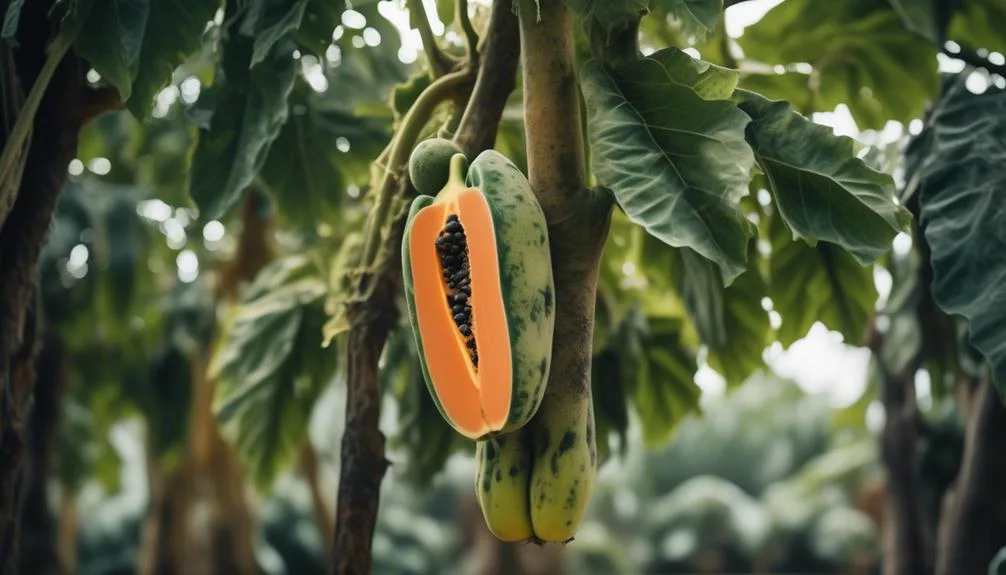
Caring for a papaya tree can be tricky. Just as everything seems to be going well, diseases can sneak in and cause problems. But don't worry, there are simple ways to deal with these common papaya tree diseases.
This guide will help you identify the signs, prevent the diseases, and treat them effectively. Let's explore the world of papaya tree diseases and how to keep your tree healthy.
Key Takeaways
- Regularly inspect and monitor papaya trees for signs of disease, including discoloration, spots, unusual growths, yellowing or browning of leaves, black spots or lesions on fruits, stunted growth, and wilting.
- Implement preventive measures to reduce the risk of disease, such as choosing disease-resistant papaya varieties, practicing integrated pest management, maintaining good sanitation, providing proper nutrition and watering, and regularly monitoring and taking preventive measures.
- Consider organic treatments for papaya tree diseases, such as using neem oil, applying compost tea, spritzing garlic spray, and embracing natural remedies for overall tree well-being.
- If necessary, consider chemical treatments for specific pests and diseases, but ensure target application, proper management of chemical residues, integration with other pest control methods, and assessment of potential impact on beneficial insects, wildlife, and ecosystems.
- After treatment, provide post-treatment care by pruning dead or diseased branches, ensuring well-draining and nutrient-rich soil, adding organic matter or compost to improve soil quality, and regularly monitoring moisture levels.
Identifying Common Papaya Tree Diseases
To identify common papaya tree diseases, carefully inspect the leaves, fruits, and stems for any signs of discoloration, spots, or unusual growths. Symptoms identification is crucial in preventing the spread of diseases. Look for yellowing or browning of the leaves, which could indicate a fungal infection or nutrient deficiency.
Additionally, check for black spots or lesions on the fruits, as this may signal the presence of anthracnose or other fungal diseases. Stunted growth and wilting can be signs of root rot, a common issue in papaya trees.
Disease prevention is essential to maintain the health of your papaya tree. Ensure proper drainage, avoid overwatering, and practice good sanitation by removing any diseased plant parts promptly.
Regularly monitoring your papaya tree for symptoms and taking preventive measures can help maintain its health and productivity.
Preventive Measures for Papaya Tree Diseases
Regular monitoring and proper maintenance are essential for preventing diseases in your papaya tree. To keep your papaya tree healthy, consider the following preventive measures:
- Choose Disease Resistant Papaya Varieties: Select papaya varieties that are known to have natural resistance to common diseases, such as the 'Sunset' or 'Red Lady' varieties.
- Implement Integrated Pest Management: Use a combination of biological, cultural, and chemical control methods to manage pests and minimize the risk of diseases.
- Practice Good Sanitation: Remove and destroy any infected plant material, and keep the area around the papaya tree free from weeds and debris to reduce disease pressure.
- Provide Proper Nutrition and Watering: Ensure that your papaya tree receives adequate nutrients and water to maintain its overall health and vigor, making it more resilient to diseases.
Organic Treatments for Papaya Tree Diseases
If you've already taken steps to prevent diseases in your papaya tree, you may be interested in exploring organic treatments to address any potential issues. Embracing natural remedies and a holistic approach can be beneficial for both your papaya tree's health and the environment. Here are some organic treatments you can consider:
| Natural Remedies | How to Apply |
|---|---|
| Neem Oil | Mix with water and apply to the leaves to control pests. |
| Compost Tea | Use as a soil drench to improve the overall health of the tree. |
| Garlic Spray | Spritz on the leaves to deter insects and fungi. |
These natural remedies not only combat diseases but also promote the overall well-being of your papaya tree. Embracing a holistic approach can lead to a healthier, more vibrant tree.
Chemical Treatments for Papaya Tree Diseases
When addressing papaya tree diseases, considering chemical treatments can provide effective solutions for combating specific pests and diseases. Chemical treatments can be a valuable tool in managing papaya tree diseases, especially when environmental factors and disease resistance are taken into account.
Here are some important points to consider when using chemical treatments:
- Targeted Application: Chemical treatments can be specifically targeted to address particular pests or diseases, minimizing overall environmental impact.
- Residue Management: Properly managing chemical residues is crucial in ensuring the safety of papaya fruits and the surrounding environment.
- Integrated Pest Management: Chemical treatments should be integrated with other pest control methods to minimize resistance development.
- Environmental Impact: Consider the potential impact of chemical treatments on beneficial insects, wildlife, and surrounding ecosystems.
When used judiciously and in conjunction with other management strategies, chemical treatments can play a vital role in maintaining papaya tree health.
Post-Treatment Care for Papaya Trees
After applying chemical treatments to address papaya tree diseases, ensuring proper post-treatment care is essential for maintaining the health and vigor of your papaya trees. Pruning techniques play a crucial role in post-treatment care. Trim any dead or diseased branches to promote healthy growth and prevent the spread of diseases.
Additionally, proper soil management is vital. Ensure that the soil around your papaya trees is well-draining and rich in nutrients. Consider adding organic matter or compost to improve soil quality. Regularly monitor the moisture levels in the soil to avoid overwatering or underwatering.
Conclusion
By staying vigilant and applying the right treatments, you can ensure the health and productivity of your papaya trees.
With proper care, your trees will continue to bear delicious fruit for years to come.
Happy gardening, and may your papaya trees flourish for generations to come.
