

Ever looked at your fruit trees and wondered why they’re not producing as much as you’d hoped? Pruning might be the answer. It’s a simple yet effective way to boost your tree’s health and fruit yield. But if you’ve never done it before, the thought can be a bit daunting.
Don’t worry! This guide will walk you through the essential steps of pruning fruit trees, complete with pictures to make it easy. You’ll learn how to shape your trees, remove dead branches, and encourage new growth. By the end, you’ll feel confident and ready to give your trees the care they need to thrive.
Key Takeaways
- Importance of Pruning: Pruning enhances the health and productivity of fruit trees by promoting sunlight exposure, airflow, and removing dead or diseased branches.
- Essential Tools: Key tools for effective pruning include bypass pruners, loppers, pruning saws, and protective gear to ensure safety and efficient work.
- Seasonal Pruning: The best time to prune varies by season, with late winter/early spring ideal for most trees, while summer is for light pruning, and heavy pruning should be avoided in fall to prevent disease.
- Pruning Techniques: Different types of fruit trees require specific pruning methods, such as the central leader method for apple trees and open center pruning for cherry trees, to promote optimal growth.
- Common Mistakes: Avoid over-pruning (removing more than 20-30% of branches) and incorrect timing, as these can lead to stress and decline in fruit yield.
- Visual Guidance: Utilizing pictures in the pruning process helps visualize steps and techniques, making the experience more straightforward for beginners.
Understanding Fruit Tree Pruning
Pruning fruit trees plays a crucial role in their overall health and productivity. This section outlines the significance and benefits of proper pruning techniques.
Importance of Pruning
Pruning maintains the structure and shape of fruit trees. It allows sunlight to reach all parts of the tree, encouraging even growth. Regular pruning removes dead or diseased branches, which helps prevent the spread of pests and diseases. By shaping the tree, you create an open center that improves airflow, reducing humidity levels that could lead to fungal problems.
Benefits for Tree Health
Healthy trees produce more fruit. Pruning helps promote new growth, leading to increased fruit yields. Removing overcrowded branches allows remaining ones to thrive. Additionally, pruning stimulates fruit production by redirecting the tree’s resources toward remaining branches. This method also supports stronger root systems, as balanced growth in branches stabilizes tree structure.
Tools You Will Need
Pruning fruit trees requires specific tools to ensure a clean and effective job. Let’s look at the essential and optional tools you’ll find helpful.
Recommended Products

PROFESSIONAL GARDENING GRAFTING TOOLS: Including 2 in 1 grafting pruning tools, 3 replaceable blades, a grafting knife, a screwdriver, a wrench, 2 grafting films, 160 rubber bands, 40 wide rubber bands, and 50 colorful tag cards

UPGRAFE PROFESSIONAL GARDENING GRAFTING TOOLS: Professional grafting set, including 2 in 1 grafting pruning tools, 3 replaceable blades, a grafting knife, a pruning shears, a screwdriver, a wrench, 3 grafting films, and 45 colorful tag cards

【Surgical-Precision Grafting Tools】 Crafted with Japanese SK5 High-Carbon Steel blades (HRC 58-60 hardness) and ergonomic ABS handles, our 2-in-1 pruner delivers clean cuts up to 1/2" diameter branches. Dual-edge Ω/U/V blades prevent stem crushing, boosting grafting success rates by 40%* (*lab test data).
Essential Pruning Tools
- Bypass Pruners
Bypass pruners are ideal for cutting small branches up to ¾ inch thick. Their sharp, curved blades provide smooth cuts that minimize damage to living branches. - Loppers
Loppers are suitable for branches that are too thick for pruners. With long handles, they give you leverage to cut through branches up to 2 inches in diameter. - Pruning Saw
A pruning saw handles larger branches. Its special teeth allow for efficient, clean cutting. Use it for branches that exceed the capacity of loppers. - Hand Saw
A hand saw is great for thicker branches that don’t fit pruners or loppers. Its longer blade makes it easier to reach higher or tougher-to-access spots. - Protective Gear
Safety goggles and gloves protect against cuts and debris. Wear long sleeves and pants for added protection while working among branches.
- Pole Saw
A pole saw extends your reach for high branches. It combines a pruning saw with a long pole, allowing you to cut without using a ladder. - Garden Shears
While not necessary, garden shears work well for shaping and trimming smaller branches or leaves. They help maintain a neat appearance. - A Sharp Knife
A sharp knife is useful for snipping small stems and cleanly removing dead wood. Ensure it’s sharp for effective use. - Measuring Tape
Measuring tape aids in ensuring symmetrical pruning. It helps you gauge height and balance, especially when shaping the tree. - Tarp or Drop Cloth
A tarp catches fallen branches and leaves. It simplifies cleanup and keeps your yard tidy.
Equipping yourself with the right tools streamlines the pruning process and helps maintain the health of your fruit trees.
Step-by-Step Guide on How to Prune Fruit Trees with Pictures
Follow these practical steps to effectively prune your fruit trees and ensure they thrive.
Recommended Products

【Multi-purpose Tree Pruner】The telescopic pole pruner has a shearing function and can be used for picking fruit and trimming high branches. The sharp blade of the fruit picking rod can easily cut branches up to 1/2 inch in diameter, and the included serrated saw blade uses double-sided cutting technology, making it easy to cut through thicker tree trunks. Its versatile design makes it an indispensable tool for gardening.
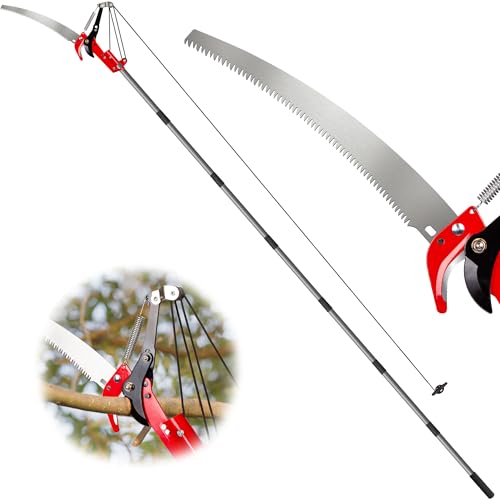
14FT POLE TREE PRUNER WITH SAW FUNCTION: Designed primarily for high branch trimming with pull-rope pruning shears, while the integrated saw provides an additional cutting option when needed. This manual tree pruner combines pruning and sawing functions in one long-reach tool for routine tree care in yards, gardens, and orchards.

10FT POLE TREE PRUNER WITH SAW FUNCTION: Designed primarily for high branch trimming with pull-rope pruning shears, while the integrated saw provides an additional cutting option when needed. This manual tree pruner combines pruning and sawing functions in one long-reach tool for routine tree care in yards, gardens, and orchards.
Pruning in Different Seasons
Pruning fruit trees varies with the seasons. Here’s a quick rundown:
- Late Winter/Early Spring: Ideal time for most fruit trees. You’ll see leafless branches, making it easier to spot dead or diseased wood. Focus on removing any damaged limbs and shaping the tree for better sunlight exposure.
- Summer: Best for light pruning. Remove new shoots that detract from the tree’s shape. This keeps energy focused on existing fruit.
- Fall: Avoid heavy pruning. Instead, clear away fallen leaves and branches to prevent disease over winter.
Techniques for Different Types of Fruit Trees
Each type of fruit tree benefits from specific pruning techniques. Here’s how to approach some common varieties:
- Apple Trees: Use the central leader method. Maintain a dominant trunk and remove competing branches. Thin out dense areas to improve air circulation.
- Cherry Trees: Favor open center pruning. Remove the central stem to create a vase-like shape, promoting light penetration and airflow.
- Peach Trees: Encourage outward growth with open vase pruning. Cut back vigorous vertical shoots and focus on maintaining an airy structure.
Implement these techniques with pictures as guides to ensure accuracy. You’ll be able to visualize each step, making the process straightforward.
Common Mistakes to Avoid
Pruning fruit trees requires precision and timing. Avoiding common mistakes ensures healthy growth and maximizes fruit production.
Recommended Products

The product can make you cut the fruit tree easily

You Will Receive: 15 Pcs 3.94in fruit tree branch puller suitible for 0.4in branch, 5 tree limb spreaders about 10 inches long, and a protable carrying Bag.

Adjustable and Durable Handle - Extendable Loppers: The lopping shears are adjustable from 16 inches to 24 inches, allowing you to handle tall branches easily. The iron arm is more sturdy and durable, and will not bend even when cutting large and thick branches.
Over-Pruning
Over-pruning can harm your fruit trees. Cutting too much can lead to excessive stress, ultimately reducing fruit yield. Aim to remove only about 20-30% of the tree’s branches during a single session. Focus on dead, damaged, or crossing branches. Keep in mind that younger trees need more time to establish. They might not benefit from major pruning until they’re a few years old. Use the three-cut method for thicker branches to prevent tearing. Take a moment to assess the tree’s structure before making cuts.
Timing Errors
Timing plays a crucial role in pruning. Cutting at the wrong season can affect tree health and fruit quality. Late winter or early spring is optimal for most trees, as it encourages new growth. Avoid heavy pruning in fall; cuts made then can invite disease as the trees prepare for dormancy. Summer light pruning can help maintain shape if necessary. Focus on getting the timing right for each type of fruit tree you have. Consider your local climate and growth patterns for the best results.
Conclusion
Pruning your fruit trees doesn’t have to be a daunting task. With the right tools and techniques you can boost your trees’ health and fruit production while enjoying the process. Remember to take your time and focus on what your trees need.
By following the steps outlined in this guide and using the accompanying pictures you’ll feel more confident tackling your pruning tasks. Regular maintenance will keep your trees thriving and help you reap the rewards of a bountiful harvest. So grab your pruners and get started on this rewarding journey of caring for your fruit trees. Happy pruning!
Frequently Asked Questions
Why is pruning important for fruit trees?
Pruning is essential for maintaining fruit tree health and enhancing fruit production. It helps shape the tree, remove dead or diseased branches, and promotes new growth. Proper pruning allows sunlight to reach all parts of the tree, supports airflow, and minimizes pest and disease spread.
When is the best time to prune fruit trees?
Late winter and early spring are the ideal times for pruning most fruit trees, as trees are dormant. Light pruning can be done in summer to maintain shape, while fall should be reserved for clearing debris to prevent disease.
What tools do I need for pruning fruit trees?
Essential tools include bypass pruners for small branches, loppers for thicker ones, and pruning saws for larger branches. Protective gear like safety goggles and gloves is also recommended to ensure safety while working.
What are common mistakes to avoid when pruning?
Common mistakes include over-pruning, which can harm trees. It’s important to remove only 20-30% of branches in one session and focus mainly on dead or damaged branches. Timing is crucial; avoid heavy pruning in the fall.
How do I prune different types of fruit trees?
Specific techniques vary by type: use the central leader method for apple trees, open center for cherry trees, and open vase for peach trees. Reference visual aids for precise guidance on each method for the best results.
