

Have you ever wondered how long it takes for a banana tree to produce those delicious fruits? If you’ve planted one in your garden or are thinking about it, you’re not alone. Many people are excited to grow their own bananas but often find themselves asking when they can expect to see the first bunch.
Key Takeaways
- Timeframe for Fruiting: Banana trees typically take between 12 to 18 months to produce fruit, with variations based on the specific variety.
- Growth Stages: Key stages include planting, reaching maturity (9 to 12 months), flowering (2 to 6 months post-maturity), and finally fruiting.
- Ideal Conditions: Banana trees thrive in warm, humid climates with 6 to 8 hours of sunlight daily, consistent watering, and well-draining loamy soil with a pH of 5.5 to 7.0.
- Common Varieties: Notable banana varieties include Cavendish (12-18 months), Red Banana (15-20 months), and Blue Java (18-24 months), each with distinct fruiting timelines.
- Care and Maintenance: Regular watering, balanced fertilization, and monitoring for pests are essential to promote healthy growth and fruit production.
- Environmental Factors: Temperature, soil quality, and weather conditions significantly influence fruit production, requiring careful management to ensure optimal growth.
Overview of Banana Trees
Banana trees are tropical plants known for their large leaves and sweet fruit. They thrive in warm, humid climates and require specific conditions to grow. Understanding their growth process helps set expectations for fruit production.
Recommended Products

Made for Banana Trees – Specially formulated banana fertilizer designed to support the nutrient needs of banana plants.

Beautiful and exotic banana: Ethiopian banana, Abyssinian banana, pseudo-banana, fake banana and wild banana, is a herbaceous flowering plant species of the Musaceae banana family
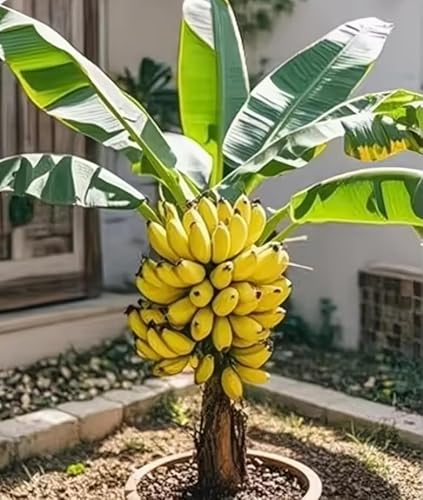
GROWING FACTS: Banana seeds sprout in 2–8 weeks under warm, moist conditions. Rapid germination allows gardeners to enjoy early tropical foliage growth.
Growth Stages of Banana Trees
- Planting: Banana trees start from rhizomes or suckers. You can plant them directly in well-drained soil, enriched with compost for nutrients.
- Development: After planting, the tree’s pseudostems grow rapidly. This growth phase lasts 9 to 15 months, depending on varieties and environmental conditions.
- Flowering: Once mature, the tree produces a flower stalk, which develops into a bunch of bananas. This phase typically occurs 2 to 3 months after the initial flowering.
- Fruiting: The fruit ripens about 3 to 6 months after flowering. You’ll see bananas ready for harvest approximately 12 to 18 months after planting.
Ideal Growing Conditions
To ensure healthy growth and fruitful harvest, consider these conditions:
- Sunlight: Exposure to full sunlight, 6 to 8 hours daily, promotes optimal growth.
- Watering: Consistent moisture is essential. Water deeply and regularly, especially during dry spells.
- Soil: Use rich, loamy soil with good drainage. A pH of 5.5 to 7.0 works best.
Common Varieties
Different varieties of banana trees may have varied fruiting timelines. Notable examples include:
- Cavendish: Most commonly grown, produces fruit within 12 to 18 months.
- Red Banana: Takes about 15 to 20 months to fruit, yielding sweet, reddish bananas.
- Blue Java: Also known as ice cream banana, takes about 15 months before fruiting.
Challenges in Fruiting
Several factors affect banana trees’ ability to produce fruit:
- Temperature: Temperatures below 50°F can hinder growth. Protect the trees from cold snaps.
- Pests: Watch for aphids and spider mites, which can stress the plant and delay fruiting.
- Nutrition: Fertilizing with balanced nutrients helps maintain growth and encourages fruiting.
By understanding these aspects, you can better manage your banana trees and enjoy a fruitful harvest in time.
Growth Stages of Banana Trees
Banana trees go through several key stages before they produce fruit. Understanding these stages helps you manage your plants for optimal growth and better yields.
Recommended Products

2X MORE VALUE: The 16 oz bottle of Banana Plant Fertilizer makes 16 gallons of banana fertilizer for fruit trees, while the bigger size 32 oz bottle makes 32 gallons for lasting care of your banana trees.

Made for Banana Trees – Specially formulated banana fertilizer designed to support the nutrient needs of banana plants.

PREMIUM FUEL LIQUID FERTILIZER: Wellspring Gardens Banana Fuel Liquid Fertilizer Concentrate provides a quality nutrient blend with minor elements that could grow your plants. Its 3-1-6 formula ratio is the ideal fertilizer ration according to University of Florida which is what our product is made of.
Planting
Plant banana trees in warm, well-draining soil. Dig holes about 12 inches deep and 3 feet apart. Place the rhizome in the hole, covering it lightly with soil. Water thoroughly after planting. Keep the soil consistently moist but avoid waterlogging, as excessive moisture can hinder growth. Ideal temperatures range between 75°F and 95°F.
Maturity
Banana trees reach maturity around 9 to 12 months after planting. During this time, they develop strong roots and lush foliage. When the tree starts to flower, you’ll notice a large, pink or purple bud emerging from the center. This bud signifies that the fruiting process has begun. After flowering, expect fruit to develop within 2 to 6 months, depending on the variety. Factors like sunlight, watering, and soil nutrition significantly influence the growth rate.
Factors Influencing Fruit Production
Banana trees thrive under specific conditions, and several factors affect their ability to produce fruit.
Recommended Products

Let our professionally formulated plant food help your fruit tree grow healthy, strong AND abundantly producing

Let our professionally formulated plant food help your fruit tree grow healthy, strong AND abundantly producing

🍋 EXPLOSIVE HARVEST: GardenWise ignites a remarkable yield boost. Its scientific blend, featuring 6% nitrogen for growth, 4% phosphorus for flowering, and 6% potassium for fruit quality, culminates in an abundance of flavorful, aromatic fruits. This is more than growth; it's a nutrient-powered revolution in your citrus yield.
Climate and Weather Conditions
Banana trees prefer a tropical or subtropical climate. Average temperatures between 75°F and 95°F (24°C to 35°C) facilitate robust growth. Consistent rainfall of 40 to 100 inches (100 to 250 cm) per year supports healthy development. Frost can damage trees, delaying fruit production or killing the plants. Ideally, grow banana trees in regions with minimal temperature fluctuations and protection from harsh winds.
Soil Quality
Soil plays a vital role in banana tree growth. Well-draining, loamy soil enriched with organic matter ensures good drainage and nutrient availability. Aim for a pH level between 5.5 and 7.0 for optimal nutrient absorption. Soil amendments like compost or well-rotted manure enhance fertility, while too much clay can hinder root development, stunting growth and delaying fruiting.
Care and Maintenance
Proper care boosts banana trees’ fruit production. Water regularly, maintaining consistent moisture without waterlogging. Applying mulch around the base conserves soil moisture and suppresses weeds. Fertilize with a balanced fertilizer containing nitrogen, phosphorus, and potassium every 6 to 8 weeks. Additionally, prune dead leaves and remove any diseased parts to promote airflow and overall health. Regular monitoring for pests or diseases helps mitigate issues that could hinder fruit development.
Average Timeframe for Fruit Production
Banana trees typically take 12 to 18 months from planting to produce fruit. Here’s a breakdown of the timeline involved at various stages:
- Maturity Stage (9 to 12 Months)
- Banana trees grow quickly and reach maturity in about 9 to 12 months post-planting.
- Strong roots and broad foliage develop during this period, preparing the tree for fruiting.
- Flowering Stage (2 to 6 Months Post-Maturity)
- After reaching maturity, a large bud appears. This indicates the onset of the flowering stage.
- Fruit development follows flowering and can take 2 to 6 months depending on the banana variety.
- Variety Differences
- The time it takes for banana trees to fruit varies among different types:
- Cavendish: 12 to 18 months
- Red Banana: 15 to 20 months
- Blue Java: 18 to 24 months
- Growing Conditions Impact
- Optimal growing conditions boost the fruiting timeline.
- Sunlight: Aim for at least 6 to 8 hours of direct sunlight daily.
- Water: Ensure consistent moisture without waterlogging.
- Soil Quality: Use well-draining, loamy soil enriched with organic matter.
Maintaining ideal care during these stages encourages healthy growth and quicker fruit production. Adapt the timeline based on your local climate and specific banana variety for best results.
Conclusion
Growing banana trees can be a rewarding experience as you watch them flourish and eventually produce fruit. With the right care and optimal conditions you can expect to see those delicious bananas in about 12 to 18 months.
Remember to keep an eye on your tree’s needs for sunlight water and nutrients. Each variety has its own timeline so be patient and enjoy the journey. Soon enough you’ll be savoring the fruits of your labor right from your garden. Happy growing!
Frequently Asked Questions
How long does it take for banana trees to produce fruit?
Banana trees typically take about 12 to 18 months from planting to produce fruit. The exact time can vary based on the variety, with Cavendish taking 12 to 18 months, Red Banana around 15 to 20 months, and Blue Java between 18 to 24 months.
What are the growth stages of banana trees?
Banana trees go through several growth stages: planting, maturity (9 to 12 months), flowering (2 to 6 months), and fruiting. They first develop strong roots and foliage before producing a large bud that signals fruit development.
What are the ideal growing conditions for banana trees?
Banana trees thrive in warm climates with temperatures of 75°F to 95°F. They prefer well-draining, loamy soil enriched with organic matter and require 6 to 8 hours of direct sunlight daily, along with consistent moisture without waterlogging.
How does soil quality affect banana tree growth?
Well-draining, loamy soil enriched with organic matter is crucial for nutrient absorption and overall growth. Poor soil quality can hinder development, leading to lower yields and poor fruit quality.
Why is consistent watering important for banana trees?
Consistent watering is vital for banana trees to maintain moisture levels, support growth, and ensure healthy fruit production. However, be careful not to overwater, as this can cause root rot and other issues.
What common banana varieties are mentioned in the article?
The article discusses several banana varieties, including Cavendish, Red Banana, and Blue Java. Each has a different timeframe for fruit production and varying growth characteristics.
How can I speed up banana tree fruit production?
To enhance and potentially speed up fruit production, ensure optimal growing conditions: provide ample sunlight (6 to 8 hours), maintain consistent moisture, enrich the soil with organic matter, and regularly monitor for pests and diseases.
