

Have you ever looked at your fruit trees and wondered why they’re not producing as much fruit as you’d hoped? You’re not alone. Many gardeners struggle with the art of pruning, unsure of when and how to make those cuts that can lead to a bountiful harvest.
Key Takeaways
- Pruning Importance: Pruning is crucial for enhancing fruit production, improving air circulation, and ensuring healthy growth in fruit trees.
- Optimal Timing: The best time to prune fruit trees is during their dormant season, typically late winter to early spring, to minimize stress and promote recovery.
- Proper Techniques: Employ specific pruning techniques such as thinning, heading back, and rejuvenation based on the tree type for maximum yield and health.
- Tool Selection: Use appropriate tools like pruning shears, loppers, and saws to ensure clean cuts; this is essential for the tree’s recovery and disease prevention.
- Avoid Common Mistakes: Avoid over-pruning and always assess tree health before making cuts to ensure effective and beneficial pruning practices.
- Specifics for Tree Types: Different fruit trees (like apple, peach, and cherry) require unique pruning approaches, so tailor your methods according to the species for the best results.
Understanding The Importance Of Pruning
Pruning fruit trees is vital for promoting healthy growth and increasing fruit production. Understanding its significance helps you make informed decisions about your trees.
Benefits Of Pruning Fruit Trees
- Increases Air Circulation: Pruning removes overcrowded branches, allowing air to flow freely. Good air circulation reduces disease risks and promotes healthier foliage.
- Enhances Sunlight Penetration: By thinning the canopy, sunlight reaches more branches and leaves. Better light exposure leads to improved fruit quality and flavor.
- Encourages New Growth: Pruning stimulates the production of new shoots. These young branches often yield more fruit, enhancing your annual harvest.
- Shapes the Tree Structure: A well-pruned tree has a balanced shape. A strong structure supports fruiting branches, minimizing the chance of breakage.
- Removes Dead or Diseased Wood: Eliminating damaged branches prevents pests and diseases from spreading. Healthy trees are more productive.
- Pruning Hurts Trees: Many believe that pruning causes stress. In reality, proper pruning promotes overall tree health by encouraging new growth.
- Timing Doesn’t Matter: Some think any time is fine for pruning. Pruning during the right season, typically late winter or early spring, maximizes the tree’s recovery.
- More Pruning Means Better Results: Over-pruning can harm trees. Aim for moderate pruning to maintain a healthy balance between fruiting and foliage.
- You Can’t Prune Young Trees: Some think only mature trees need pruning. Young trees benefit from formative pruning, setting the stage for future growth.
- All Trees Need the Same Pruning Approach: Each fruit tree species requires specific techniques. Research the appropriate methods for your tree type for the best results.
Tools Needed For Pruning
Pruning requires specific tools to ensure effective and safe results. Using the right tools makes the process smoother and helps maintain the health of your fruit trees.
Recommended Products

· ULTRA-SHARP SK5 STAINLESS STEEL - Engineered with premium SK5 stainless steel, these heavy duty pruning shears deliver razor-sharp precision and maximum hardness. The rust-resistant blades are designed to stay sharp longer, effortlessly resisting corrosion and sap buildup for smooth, friction-free garden shears performance year after year.
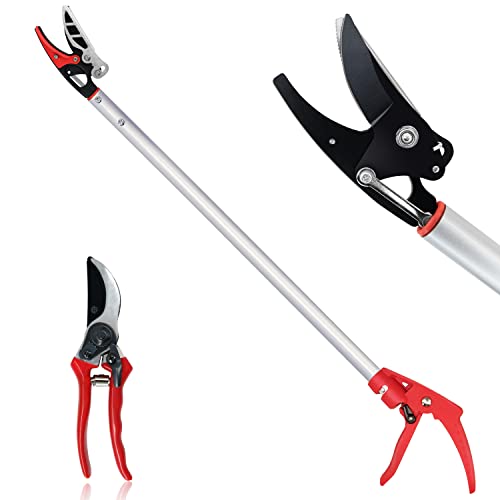
Long Handle Design: 32" handle length of the cut and hold pruners reduces back pain and stress, eliminating the need to bend over for trimming; It can also easily stretches to higher branches or thorns.

SK5 STEEL BLADE WITH TEFLON COATING:The tree branch cutter features a SK5 blade with teflon coating to cut down sap adhesion; cast aluminum anvil holds branches firmly while trimming. A spare blade is provided to support long term orchard maintenance and backyard tree trimming work
Essential Pruning Tools
- Pruning Shears: Choose sharp, bypass pruning shears for clean cuts on small branches. They’re ideal for precise trimming.
- Loppers: Select loppers for thicker branches. Their longer handles provide extra leverage to cut branches up to 2 inches in diameter.
- Handsaw: A handsaw effectively removes larger branches. Use it when pruning branches thicker than 2 inches.
- Pole Pruner: Consider a pole pruner for high branches. It allows you to reach elevated areas without using a ladder.
- Rake and Tarp: Utilize a rake and tarp to collect fallen leaves and branches. Keeping your workspace tidy helps avoid tripping hazards.
- Garden Knife: Use a garden knife for removing suckers and cleaning cuts. Keep it sharp for efficient use.
- Gloves: Wear durable gloves to protect your hands from cuts and scrapes. Choose gloves that offer good grip.
- Safety Glasses: Protect your eyes from flying debris. Safety glasses provide peace of mind when cutting.
- Sturdy Shoes: Opt for closed-toe shoes with good traction. This footwear minimizes the risk of slips while working on unstable ground.
- Hard Hat: If you’re pruning large branches, consider wearing a hard hat. It provides added protection from falling debris.
Gather these tools before starting your pruning project. Being prepared helps you focus on the task and ensures your fruit trees thrive.
Steps To Prune Fruit Trees
Pruning fruit trees involves specific actions that promote healthy growth and a bountiful harvest. Follow these steps for effective pruning.
Recommended Products

★ 1. What you get: Professional convenient grafting tool set including a dual-use grafting pruner tool contain 2 extra replaceable blades, a wrench and a screwdriver, along with 36pcs wide rubber bands, 150 thick rubber bands and 1 grafting tape, packed in a black wallet to meet all your needs

✂Multifunctional -2 in 1 Garden Grafting Tools-Professional grafting set allows you to pruning and grafting at the same time, saving more time and effort than traditional grafting methods, easy to use and more efficient. It allows you to trim away excess leaves and twigs and prepare the plants to be grafted. At the same time, you can make a precise cut into the grafting stock with the special grafting blade.

Pruning Trees Shrubs and Vines No 54 By Gardenway Editors
Timing Your Pruning
Prune your fruit trees during their dormant season, typically late winter to early spring. This timing prevents sap loss and minimizes stress to the trees. For specific types, consider the following:
- Apple Trees: Prune between February and April.
- Peach Trees: Prune in late winter before blooming.
- Cherry Trees: Prune after harvest in summer.
Prune on a dry day to reduce the risk of introducing pathogens.
Pruning Techniques To Use
Utilize these techniques for optimal results:
- Thinning: Remove crowded branches to enhance air circulation. Focus on crossing branches that rub against each other.
- Heading Back: Cut back a portion of a branch to encourage bushier growth. Make cuts above a bud facing the direction you want new growth to emerge.
- Rejuvenation: For older trees, remove up to one-third of the oldest branches to stimulate new growth and improve fruit production.
Use clean, sharp tools for each cut, and ensure that each cut is angled to promote healing. Always apply pruning paint on large cuts to protect against disease.
Specific Techniques For Different Types Of Fruit Trees
Pruning techniques vary based on the type of fruit tree. Here are specific methods for apple, peach, and cherry trees.
Recommended Products

【Effortless Fruit Harvesting】This fruit picker pole fruit picker tool fruit picking tool features a long reach detachable pole design, allowing you to pick apple, avocado, apricot, acorn, mango, orange, peach, pear and more safely from tall trees without using ladders.


Fruit Picker with Fabric Basket: there are 10 parts extension poles, 2 fruit picker cloth bags with 1 storage bag; The spacious and soft fabric pockets can gently cushion fruits, keeping them intact and fresh, allowing you to easily and safely pick apples, mangoes, oranges, and other fruits from trees
Pruning Apple Trees
Prune apple trees during late winter to early spring when they’re dormant. Focus on these steps:
- Remove Dead or Diseased Wood: Cut out any branches that show signs of decay.
- Thin Crowded Branches: Eliminate branches that cross or rub against each other. Aim for a balanced canopy for proper light penetration.
- Shape the Tree: Maintain an open center shape to improve air circulation, which helps prevent fungal diseases.
Apple trees thrive when you encourage lateral branching. Leave about four to six main branches and trim back tips to about a third.
Pruning Peach Trees
Prune peach trees in late winter before new growth begins. Use these techniques:
- Cut Back Previous Year’s Growth: Trim about one-third of last year’s growth to promote bushier branches. This practice directs energy to new fruit-bearing buds.
- Remove Suckers: Cut away suckers emerging from the base or lower trunk. They compete for nutrients and weaken the tree.
- Create an Open Center: Similar to apple trees, an open center structure enhances light exposure.
Look for buds with a slight swelling. Those are the fruit-bearing ones; leave them when pruning.
Pruning Cherry Trees
Prune cherry trees in late winter or early spring, focusing on the following:
- Clear Out Dead or Weak Branches: Effective pruning removes branches that don’t contribute to fruit production.
- Thin Out Dense Growth: Reduce excess branches to allow sunlight to reach the inner parts of the tree.
- Maintain Shape: Form a central leader structure with a few strong scaffolding branches.
Aim for a height that allows easy harvesting. Cherry trees typically possess more fruit on the outer tips, so ensure you maintain those branches.
By applying these specific pruning techniques for each fruit tree type, you promote healthier growth and increased fruit production.
Common Mistakes To Avoid When Pruning
Pruning fruit trees is crucial for healthy growth and fruit production. Avoiding common mistakes can enhance your success.
Over-Pruning Risks
Over-pruning can severely damage trees. Cutting off too much foliage reduces the tree’s ability to photosynthesize, hindering its energy production. Limit yourself to about 20-30% of the tree’s foliage during any pruning session. For example, when shaping an apple tree, remove crowded branches without thinning too much. Focus on maintaining structural integrity and promoting new growth instead.
Ignoring Tree Health Signals
Ignoring signs of poor tree health leads to ineffective pruning. Always assess your tree’s condition before pruning. Look for indicators like yellowing leaves, weak branches, or unusual growth patterns. For instance, if you notice lots of dead wood on a peach tree, prioritize removing that first. Addressing these issues early supports the overall viability of the tree and enhances fruit production down the line.
Conclusion
Pruning your fruit trees doesn’t have to be daunting. With the right tools and techniques you can nurture healthy growth and enjoy a bountiful harvest. Remember to prune during the dormant season and tailor your approach to each type of tree.
By focusing on air circulation and removing dead or crowded branches you’re setting the stage for a thriving tree. Keep an eye on your trees’ health and avoid over-pruning to ensure they remain strong and productive.
With a little patience and practice your fruit trees will reward you with delicious fruits season after season. Happy pruning!
Frequently Asked Questions
What is the importance of pruning fruit trees?
Pruning is essential for promoting healthy growth and increasing fruit production. It improves air circulation, allows sunlight to penetrate, encourages new growth, shapes the tree structure, and removes dead or diseased wood. Proper pruning can lead to a more fruitful harvest.
When is the best time to prune fruit trees?
The ideal time to prune most fruit trees is during their dormant season, typically late winter to early spring. This timing minimizes stress and sap loss, allowing trees to recover efficiently and prepare for a fruitful growing season.
What tools are needed for pruning fruit trees?
Essential tools for pruning include sharp bypass pruning shears for small branches, loppers for thicker branches, and a handsaw for larger limbs. A pole pruner helps reach high branches, while gloves, safety glasses, and a hard hat ensure safety during the process.
How much of a fruit tree should be pruned?
Limit pruning to about 20-30% of the tree’s foliage to avoid harming its ability to photosynthesize. Focus on removing dead or crowded branches while maintaining the tree’s overall structure for healthy growth.
What are common mistakes to avoid when pruning?
Common mistakes include over-pruning, which can damage trees, and neglecting tree health before pruning. Always assess the tree for signs of weakness or disease and avoid removing too much foliage to maintain structural integrity.
