


I enjoy picking out rainbow yarns for my crochet projects now and then.
They make the blanket grow with changing colors that keep me interested.
I found a bunch of patterns that work nicely with these yarns.
Some are quick and others take more time but all show off the colors.
Here are 24 blanket ideas using multicolor yarn that you might want to try.
Rainbow Granny Square Throw

A blanket built from joined granny squares works well when each square is worked in shifting pastel rainbow yarn. The squares are arranged so the color changes flow across the joins rather than stopping at the edges, and the overall shape can be kept rectangular or square depending on how many units are added. This method keeps the stitching simple while letting the yarn create the pattern.
What makes this idea useful is how easy it is to work in small sections and join them later when more time appears. The size can be changed quickly by adding or dropping squares before seaming, which suits baby blankets, lap throws, or even a pet bed. Leftover yarn from other projects can be swapped in without breaking the look, and the finished piece photographs clearly for sharing.
Rainbow Striped Blanket with Bobble Rows and Scalloped Motif Border

A blanket worked in wide horizontal stripes of pastel rainbow yarn uses rows of small bobbles to mark each color change. The lower edge finishes with a border of joined circular motifs that form a repeating scalloped shape. This approach suits a bed throw or large lap blanket where the steady color sequence and added texture stay visible across the full surface.
What makes this idea useful is the clear separation between color sections, which keeps the striping tidy even when yarn shades shift gradually. You can shorten the color bands to fit a smaller throw or repeat the bobble rows more often for extra definition. For gifts, work the same border on a baby blanket size so the scalloped edge stands out without needing extra finishing.
Ripple Stripe Throw Blanket

A ripple blanket works by repeating a simple wave pattern across rows, with each row or pair of rows done in a fresh color to build bold stripes. The textured bumps of the stitches catch the light and make the color changes stand out without any extra patterning. This style produces a medium-weight throw that drapes well over a sofa or the end of a bed. It belongs in the home decor category because the shape and size are flexible and the finished piece serves as a practical layer.
What makes this idea useful is how quickly the stripes let you use up small balls of yarn without buying new skeins. The structure makes this a smart option for adjusting the finished size by simply adding or subtracting waves from the starting chain. For decor, this kind of blanket works especially well as a couch throw because the strong color sequence draws attention even when the piece is folded or rumpled. You can change the stripe order or repeat favorite colors to match an existing room palette.
Star Lovey Blanket with Striped Base

A star-shaped lovey uses a crocheted star motif as the head attached to one end of a rectangular blanket body. The body features horizontal stripes in soft yellow, blue, and cream tones, while the star includes simple embroidered eyes, lashes, and cheeks for the face detail. This creates a compact security blanket that works as both a baby item and a nursery accent because the attached motif stays in place without needing extra sewing or assembly.
What makes this idea useful is the direct attachment of the star to the blanket, which removes the need for separate pieces when gifting or packing. The stripe pattern can be swapped for solids or different color sequences, and the overall size scales easily from a small lovey to a larger toddler blanket. For gifts, keep the star face simple and change the stripe width to match the recipient’s favorite colors. This format also photographs cleanly for project sharing since the shape and color blocks stay distinct.
Rainbow Chevron Throw Blanket

A large afghan worked in wide horizontal chevron stripes that move through the full rainbow spectrum makes a practical blanket or throw. The repeating wave pattern gives the surface texture and movement while the color shifts stay bold and clear. This style suits everyday use on a couch, bed, or as a picnic layer because the size and weight work well for covering without feeling heavy.
What makes this idea useful is that the chevron repeats are simple to scale up or down by adding or removing stitch multiples. You can shorten the length into a baby size or swap in different color sequences to match a room or season. The design photographs clearly for sharing and works as a gift because most people can find a place for a bright striped throw. For decor, the straight edges and even stripes keep it from looking fussy in both casual and tidy spaces.
Rainbow Granny Square Blanket

A blanket made from joined granny squares lets you build a large project one small section at a time using the same multicolor yarn throughout. The squares create a repeating grid that shows off the yarn’s color shifts without needing complicated stitch patterns. This style fits as a throw for a couch or bed and works well when you want a colorful layer that still feels light.
What makes this idea useful is how easy it is to change the finished size by making more or fewer squares. You can rearrange the squares before joining to control where the brighter or softer colors land. A project like this works especially well as a gift because you can match the blanket dimensions to the person who will use it. The square layout also makes it simple to replace a single square later if any section gets worn.
Rainbow Chevron Blanket with Bobble Borders

A chevron blanket builds its pattern through repeating V-shaped stripes that run from one side to the other. This version adds small bobble stitches along the top and bottom edges of each wave, creating a raised dotted line that follows the zigzag shape. The rainbow yarn shifts gradually through the stripes so the colors blend without sharp lines. The result is a medium-weight throw that works for laps, strollers, or sofa backs where the texture shows clearly.
What makes this idea useful is how the chevron repeat stays simple to memorize once the first few rows are done. You can adjust the stripe width or swap the bobble rows for a plain border if you want less texture. The pattern also scales easily to different blanket sizes by adding or subtracting repeats. For gifts, a design like this stands out in photos because the color flow and raised edges show up well even in quick snapshots.
Rainbow Striped Blanket with Cloud and Star Appliqués

A striped baby blanket worked in wide horizontal bands of rainbow colors forms the base, with separate white cloud shapes and small yellow stars attached on top. The design suits a crib blanket or lightweight throw because the color sequence keeps the pattern simple while the appliqués add raised texture. Horizontal stripes make the color changes straightforward to manage, and the scattered motifs break up the flat surface without requiring intricate stitch work.
What makes this idea useful is how the stripe widths and appliqué placement can shift to fit different blanket sizes or color preferences. A project like this works especially well as a gift because the rainbow sequence stays appealing across age groups and the finished piece remains easy to store or pack. You could adapt the same layout to a larger throw by extending the rows or turn it into a wall hanging by adding a hanging sleeve along one edge.
Rainbow Shell Stitch Blanket with Matching Pom-Pom Border

A blanket worked in horizontal rainbow stripes uses a repeating shell stitch to form soft waves of texture across the fabric. The open pattern lets each color band show clearly while the stitches create gentle movement from one shade to the next. Pom-poms in the same color sequence are added along one edge to finish the piece.
What makes this idea useful is how simply the repeat can be widened or lengthened for a crib size or a lap blanket. The pom-pom trim can be made with any leftover yarn in the same palette, so the border stays consistent even if your main colors change. A project like this works especially well as a quick gift because the color changes do most of the visual work.
Rainbow Chevron Stair Runner Blanket

A long rectangular blanket worked in repeating chevron stripes makes an effective stair runner when draped over steps. The design uses a simple zigzag repeat that creates diagonal lines across the width, and the rainbow color sequence shifts gradually from one end to the other. This turns a standard blanket shape into a piece of home decor that covers a narrow, vertical space instead of a bed or couch.
What makes this idea useful is the long narrow proportions, which let the color changes show off the full chevron repeat without extra borders or shaping. You can change the starting width to match your staircase or work fewer rows for a regular throw. The gradient yarn handles the color planning, so the project stays simple while still looking bold on a plain background. For decor, this kind of shape works especially well in hallways or entryways where a regular square blanket would not fit.
Circle Motif Throw From Scrap Yarn

A blanket built from many small circular motifs joined edge to edge makes a flexible lap throw or couch cover. Each circle has a flower-style center worked in rounds, and the mix of warm reds, oranges, yellows, and greens creates a scattered color pattern across the whole piece. The finished size can be adjusted simply by changing how many circles you make before joining.
What makes this idea useful is how well it handles leftover yarn since every circle can use a different color mix. You can scale it down for a baby blanket or widen it for a bedspread by adding more rounds of motifs. The flat shape also works on a bench, picnic table, or chair without bunching, and the color layout stays interesting even if the yarn choices are random.
Bobble-Textured Pastel Stripe Blanket

A crocheted blanket built from horizontal rows of pastel colors, each worked with a repeating bobble or popcorn texture that raises the surface in small clusters. The stripes run in a soft rainbow sequence of pink, yellow, blue, green, and white, keeping the overall look light while the texture provides the main visual detail. This approach suits a baby blanket or small lap throw because the color changes stay simple and the raised stitches create interest without needing complex shaping.
What makes this idea useful is how the row-by-row color changes let you use up smaller yarn amounts without buying new skeins. A project like this works especially well as a gift because the repeat stays easy to track and the finished size stays practical for most cribs or strollers. You could swap the pastel order, shorten the stripe width, or add a solid border to match different room colors.
Heart Motif Striped Throw
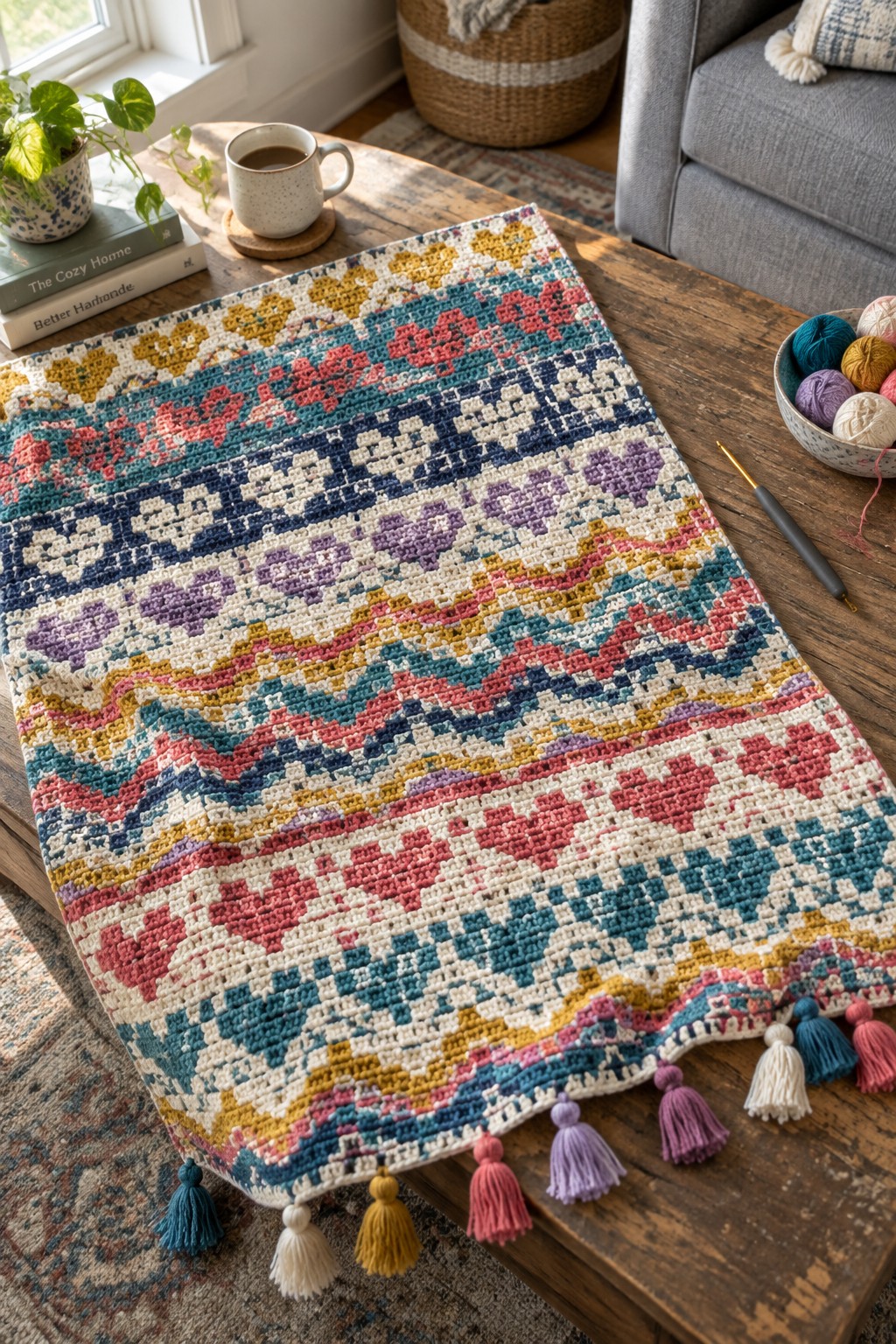
A blanket built from rows of heart motifs set against solid and striped bands creates a clear repeating pattern that reads well from a distance. The hearts sit in horizontal sections separated by wavy lines and geometric blocks, which keeps the design from feeling too busy even with many colors in play. This layout suits a medium throw sized for a couch or bed, and the tassels along the bottom edge give a simple finish that echoes the color changes.
What makes this idea useful is how the heart motif can be swapped for other simple shapes or resized to change the scale of the blanket. You can shorten the length to make a baby version or widen the stripes to use fewer colors if your yarn stash is limited. The sectioned structure also makes it easy to work in shorter sessions since each band stands on its own. For decor, this kind of throw works well layered over neutral furniture where the pattern can show without competing with other prints.
Rainbow Petal Flower Blanket

A flower-shaped blanket made from separate petal motifs joined around a solid center circle gives a clear, graphic result with rainbow color changes. Each petal sits in its own color band, moving from red through orange, yellow, green, blue, and purple, while the brown center anchors the whole piece. The flat construction works well as a small throw, baby blanket, or floor mat because the shape holds without extra borders or shaping.
What makes this idea useful is how simply the size can grow by adding more petal rounds or repeating colors in a shorter sequence. The design fits kids rooms or play areas where bright blocks of color read clearly from a distance. You can swap the center color or limit the palette to four shades if a full rainbow feels overwhelming. For gifts, the motif layout stays easy to adjust to different yarn weights without changing the overall look.
Rainbow Circular Motif Blanket

A blanket built from joined circular crochet motifs uses rainbow yarn to create a repeating pattern of bright centers and contrasting rings. The circles are arranged in rows and connected with narrow borders that separate each motif while keeping the overall layout flat. This approach works well for a throw or picnic blanket because the round shapes add texture and color variation across a large piece without extra shaping.
What makes this idea useful is how simple it is to change the motif size to fit different blanket dimensions. You can swap the color order or repeat fewer shades to match a specific room or season while keeping the same joining method. A project like this stands out for gifts because the bold blocks photograph clearly and make the finished size easy to judge from online images.
Pastel Rainbow Striped Blanket with Scalloped Border

A striped crochet blanket built from wide horizontal bands of pastel rainbow colors produces a clean, graphic look without complicated patterning. Each stripe is worked in the same simple textured stitch, with color changes creating the sequence from yellow through pink, blue, green, and purple. The scalloped border in a single lavender shade frames the rectangle and keeps the edges from curling. This style fits baby blankets or lap throws where the color order carries the design.
What makes this idea useful is how the stripe widths can be changed to use up partial skeins or match a specific room. The same layout scales easily to a larger throw by adding more repeats of the color sequence or switching to a heavier yarn. For gifts, a design like this works especially well because the border requires only basic shell stitches and the blanket stays flat as you work. The color progression also photographs clearly for pattern sharing or selling finished pieces.
Rainbow Patch Blanket with Fruit Appliques

A blanket built from wide joined sections in solid rainbow colors forms the base here. Each section uses a textured stitch that creates a raised bumpy surface across the whole piece. Small separate crocheted fruits such as strawberries, bananas, and oranges are attached at intervals to add scattered detail. This style fits a floor blanket, kids’ throw, or decorative cover.
The color blocks keep the fruit shapes easy to see without extra stitching around them. You can change the scale by making fewer sections for a smaller blanket or by enlarging the fruits for a bolder look. The applique approach also lets you swap motifs later if the original fruits get worn. A project like this works especially well as a gift because the bright sections and added pieces give it clear visual interest on a finished item.
Bobble Stitch Rainbow Baby Blanket

A bobble or cluster stitch blanket worked in wide horizontal rows produces a raised, bumpy texture that shifts color with each section. The rainbow gradient runs continuously from pink through orange, yellow, green, blue, and purple, creating a compact rectangular shape sized for a bassinet or small crib. This project fits the baby decor or giftable blanket category because the simple repeat lets the color changes and texture do the visual work without extra patterning.
What makes this idea useful is how self-striping yarn carries the rainbow sequence so you only manage one color at a time. The rectangular shape scales easily by adding or removing rows for a stroller blanket, lap throw, or changing pad cover. For gifts, a design like this photographs clearly on social media and lets you swap the color order or add a solid border to match different nurseries.
Bobble Stripe Rainbow Throw

This blanket uses wide horizontal stripes in soft pastel rainbow shades, with rows of bobble stitches creating raised dots that break up the flat sections. The design works as a lightweight throw or baby blanket where the color changes and texture sit side by side without extra patterning. It fits the decor category as a simple accent piece that relies on the yarn colors and bobble placement for its look.
What makes this idea useful is how the bobble rows add texture while still letting the rainbow sequence stay the focus. You can adapt the blanket by changing the stripe widths or repeating just a few colors instead of the full rainbow. A project like this works especially well as a gift for a baby shower or as a quick couch throw that does not require complex colorwork. The structure also scales easily if you want to make a smaller version for a pet bed or a larger one for a twin bed.
Floral Granny Square Throw

This blanket is built from individual squares, each centered on a raised flower motif worked in a single color, then joined with wide neutral borders that frame the pattern. The squares repeat across the surface to create a full-size throw suitable for a couch, bed, or lap blanket. The mix of soft pinks, blues, greens, and golds keeps the design lively while the consistent beige joining yarn prevents the colors from clashing. The project fits squarely in the home decor category and works as an easy way to use multiple yarn colors without committing to one shade.
What makes this idea useful is that each square can be finished separately, so you can carry the project in small pieces and adjust the finished size by simply adding or removing squares. The neutral joining color lets you pull from any leftover multicolored yarn you already have without worrying about matching. For gifts, a design like this works especially well because the squares travel well and the finished blanket folds flat. The structure also makes it simple to swap in different flower colors or even change the border width if you want a bolder frame.
Alphabet Square Blanket with Contrasting Letters

An alphabet blanket built from separate squares lets you crochet each letter on its own solid-color block before joining everything together. The large white or light letters stand out clearly against the bright backgrounds, and the grid layout keeps the design easy to follow row by row. This style works as a baby blanket, toddler throw, or play-mat cover.
What makes this idea useful is how easy it is to change the size by adding or removing squares. You can spell out a name instead of the full alphabet or switch the color order to match a nursery theme. For gifts, a design like this stands out on Pinterest because the letters make the finished blanket instantly recognizable as custom.
Striped Shell Stitch Throw for Armchairs

A crochet throw built from repeating rows of shell stitches creates an open, drapey fabric that settles easily over furniture. Colors shift every few rows to form wide horizontal bands that keep the eye moving across the surface. The scalloped border grows naturally from the final row of shells, so no extra edging round is needed. This approach fits the category of decorative throws meant for chairs or sofas rather than heavy bed blankets.
What makes this idea useful is how simple it is to change the stripe order or width to fit whatever yarn you already have. The same shell pattern can be worked narrower for a lapghan or wider for a full sofa cover. Because the openwork lets light through, the blanket layers well over darker upholstery without looking bulky. For gifts, a design like this photographs clearly on Pinterest because the color bands read as stripes even in a small thumbnail.
Rainbow Square Blanket with Fringe Border

This square blanket begins at a tight center spiral and expands through rounds that shift from circle to square. The self-striping rainbow yarn supplies the color changes automatically, creating clear rings of color that stay balanced across the surface. Short tassels added to the final round give the edges a finished, textured look without extra stitching. The finished piece suits use as a lap blanket, baby mat, or small table cover.
The small scale lets you finish the project with one or two skeins and test the pattern before committing to a larger version. You can stop after fewer rounds to make matching coasters or continue outward for a bigger throw. The fringe detail photographs cleanly and gives the blanket a distinct edge that works for gift photos or shop listings. For a different look, switch to two solid colors or omit the tassels and add a simple scalloped border instead.
Frequently Asked Questions
What type of yarn is ideal for creating vibrant rainbow effects without the colors blending too much?
Choose worsted weight acrylic or cotton blends labeled as self-striping or variegated with distinct color sections. These yarns are designed to shift gradually through rainbow hues. Test a small swatch first to see how the colors appear in your chosen stitch pattern. Opt for yarns with longer color repeats if you want bold stripes rather than speckled looks.
How do I avoid uneven color pooling when working with multicolor yarn in a blanket?
Switch to a different stitch like the granny stitch or ripple pattern that breaks up long runs of the same color. Rotate your work every few rows or use multiple skeins from different dye lots and alternate them frequently. This technique helps distribute colors more evenly across the blanket surface for a balanced rainbow appearance.
Which patterns from the ideas suit complete beginners using rainbow yarn?
Start with simple single crochet or double crochet rows in a striped sequence or basic granny square motifs joined together. These allow the yarn colors to shine without complex shaping. Follow free online tutorials that include video guidance for joining squares and adding a border to finish the edges neatly.
How much yarn should I buy for a standard throw size blanket in these styles?
Plan on 1500 to 2000 yards total for a 50 by 60 inch throw depending on the stitch density. Buy extra skeins of each multicolor type to account for any color variations and to ensure you have enough for borders or fringes. Always work a gauge swatch to calculate your exact needs before starting the full project.
What is the best way to care for a finished multicolored crochet blanket?
Wash it by hand in cold water with a gentle detergent made for delicates to preserve the dye vibrancy. Lay the blanket flat to dry away from direct sunlight which can fade the rainbow tones over time. Store it folded in a cool dry place rather than hanging to prevent stretching the stitches.
