

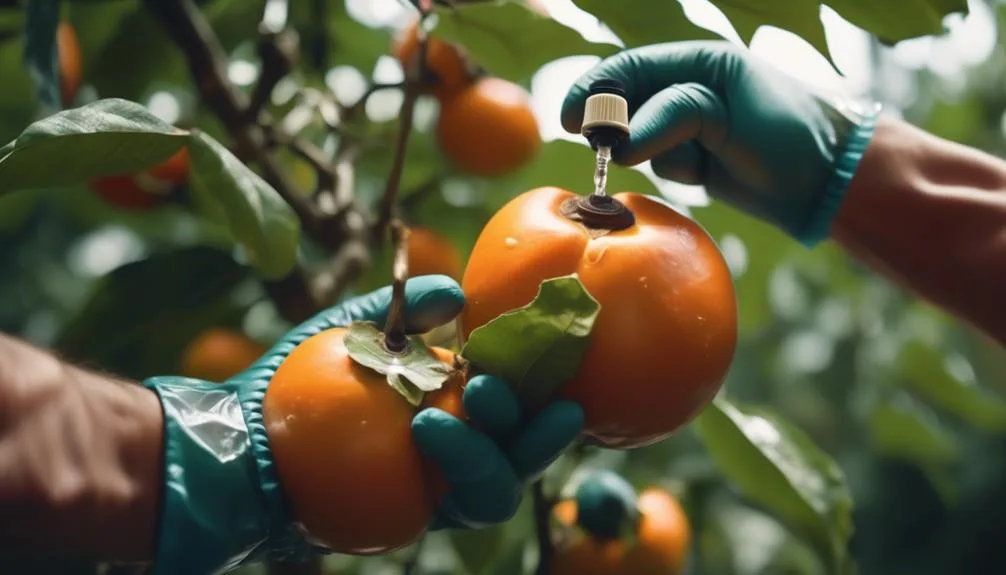
If you have persimmon trees, you should know that they can be attacked by various pests that harm their health and fruit production. From small mites to invasive beetles, these pests can damage the leaves, fruit, and overall well-being of your trees.
But don't worry, there are effective ways to deal with these pests and protect your persimmon trees. Whether you're new to gardening or experienced, it's important to learn how to keep these pests away for a successful harvest.
Key Takeaways
- Regularly inspect persimmon trees for signs of pest damage or infestation.
- Use natural pest control methods such as attracting beneficial insects and companion planting with pest-repelling plants.
- Exhaust natural control options before considering chemical pest control methods.
- Implement cultural practices to create an inhospitable environment for pests and promote tree health and resilience.
Identifying Common Persimmon Tree Pests
To identify common pests on your persimmon trees, carefully inspect the leaves, branches, and fruits for any signs of damage or infestation.
Keep an eye out for aphids, which are tiny, pear-shaped insects that suck sap from the leaves, causing them to curl and distort.
Another common pest is the persimmon borer, identifiable by the sawdust-like frass it leaves at the base of the tree and entry holes in the trunk.
Spider mites may also be present, leaving fine webbing on the leaves and causing them to turn yellow or bronze.
Proper pest identification is crucial for maintaining your tree's health.
Natural Pest Control Methods
Inspecting your persimmon trees regularly for pests and implementing natural control methods can help maintain a healthy and thriving tree.
One effective natural pest control method is attracting beneficial insects to your garden. These insects, such as ladybugs, lacewings, and predatory wasps, feed on harmful pests like aphids and caterpillars, helping to keep their populations in check.
To attract beneficial insects, consider planting pollen and nectar-rich flowers like marigolds, daisies, and alyssum near your persimmon trees.
Another natural pest control method is companion planting. By interplanting your persimmon trees with pest-repelling plants like garlic, chives, and basil, you can help deter pests without the use of harmful chemicals. Additionally, some companion plants can attract predatory insects, further contributing to pest control in your persimmon orchard.
Chemical Pest Control Options
Consider using chemical pest control options only after exhausting natural methods and consulting with a professional to ensure the safety and health of your persimmon trees. Integrated pest management (IPM) combines chemical and non-chemical methods to minimize environmental impact while effectively controlling pests.
When choosing chemical options, select those specifically labeled for use on persimmon trees and follow the instructions carefully. Insecticidal soaps and horticultural oils are examples of low-impact chemicals that target pests while minimizing harm to beneficial insects.
Additionally, systemic insecticides can be applied to the soil, where they're taken up by the tree to control pests that feed on the leaves or fruit.
Always consider the potential effects on pollinators, wildlife, and the surrounding ecosystem when using chemical pest control options, and use them sparingly and responsibly.
Recommended Products

【Targets Body Odor & Elderly Smell】Specifically crafted for adults, the elderly, and children who struggle with stubborn body odor or lingering "old person smell". Our Persimmon Soap Bar effectively neutralizes and eliminates unpleasant odors, providing a long-lasting fresh and clean feeling thanks to its natural deodorizing properties.

Deep deodorization: Our Odor Eliminator Body Wash delivers unbeatable advantage. Contains natural persimmon and tea tree extracts, which can remove body odor while nourishing the skin.Stay fresh, confident

Natural Persimmon Extract – Enriched with authentic persimmon body wash ingredients, known for their potent tannins that break down stubborn odor compounds effectively. Assiting with tea tree oil, oat, almond oil, this persimmon soap body wash provides soothing and moisturizing formula to effectively purify and deodorize, keep skin balanced, freshed and healthy.
Preventing Future Pest Infestations
One effective method of preventing future pest infestations is by implementing cultural practices that create an inhospitable environment for pests.
Proper soil management can help deter pests from infesting persimmon trees. Ensure the soil is well-drained and rich in organic matter to promote tree health and resilience against pest attacks.
Additionally, consider companion planting with pest-repelling plants such as marigolds or garlic around the persimmon trees. These companion plants can help deter pests and create a more balanced ecosystem, reducing the likelihood of infestations.
Recommended Products

🌳 PERSIMMON TREE SEEDS FOR HOME GARDENS: Persimmon tree seeds are ideal for backyard gardens, raised beds, or seed-starting before transplanting outdoors in suitable climates.

Grow your own delicious fall fruit with the Persimmon Tree, one of the best non-astringent varieties available!

Fresh Homegrown Fruit: Grow your own persimmons at home from persimmon seeds and ensure the fresh taste of this unique fruit straight from your garden
Seeking Professional Pest Control Assistance
If you're encountering persistent pest issues despite implementing cultural practices, consulting with a professional pest control service can provide targeted solutions to protect your persimmon trees. Professional pest control companies have the expertise and resources to effectively manage and eradicate stubborn pests that DIY pest control methods might not fully address. Integrated pest management techniques, which focus on environmentally sensitive approaches and long-term prevention, are often employed by these professionals to ensure the health and vitality of your persimmon trees. Here's a quick comparison to help you understand the benefits of seeking professional assistance:
| DIY Pest Control | Professional Pest Control |
|---|---|
| Limited expertise | Specialized knowledge and experience |
| Short-term solutions | Integrated pest management strategies |
| Generalized approach | Tailored solutions for specific pest issues |
| Time-consuming | Efficient and effective methods |
Conclusion
Incorporating regular tree inspections will help maintain the health of your persimmon trees and ensure a bountiful harvest. By staying proactive and considering chemical options as a last resort, you can preserve the well-being of your trees and enjoy delicious fruit for years to come.
Natural pest control methods should also be utilized. This can include introducing beneficial insects, like ladybugs, that prey on pests, using organic sprays and soaps to deter pests, and implementing physical barriers to prevent pests from accessing the trees.
However, it is important to seek professional help when needed. Some pest infestations or tree diseases may require the expertise of an arborist or tree care specialist. They can provide guidance on the best course of action and may recommend targeted treatments to effectively address the issue.
Remember, a vigilant approach to pest control will keep your persimmon trees thriving and pest-free. Regular monitoring and prompt action when signs of pests or diseases are observed can help prevent significant damage and ensure the continued health of your trees.
