

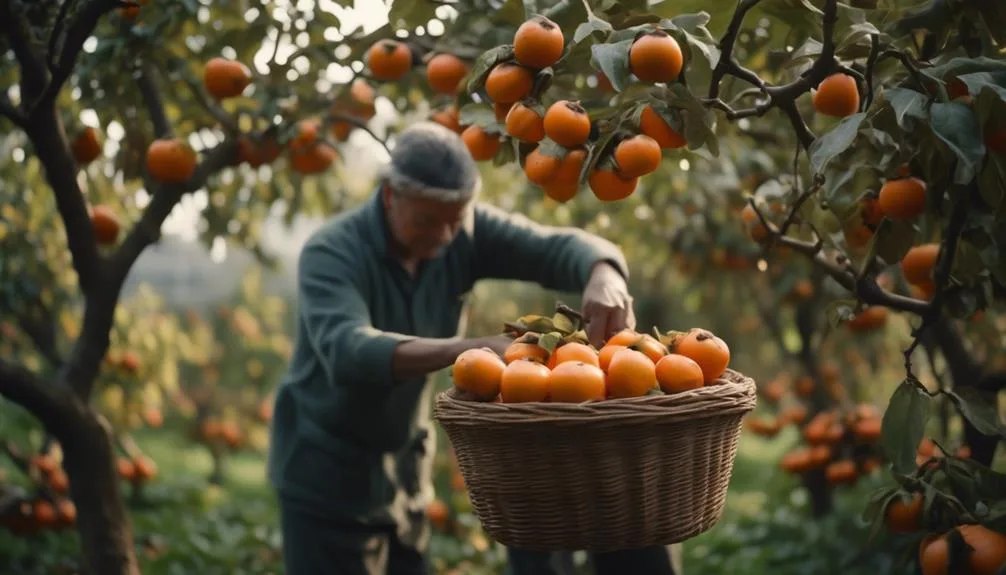
Would you like to learn how to care for your persimmon tree so it can thrive and produce lots of delicious fruit for many years?
From finding the right spot to picking and storing the fruit, there are important steps to keep your tree healthy.
Whether you're new to gardening or have some experience, knowing how to care for a persimmon tree is key for a successful harvest and a happy tree.
Key Takeaways
- Choose a location with at least 6 hours of sunlight for optimal fruit production and well-draining soil to prevent waterlogging.
- Incorporate organic matter into the soil and mulch around the base of the tree to promote healthy growth.
- Apply a balanced fertilizer in early spring and prune the tree to remove dead or diseased branches and promote air circulation.
- Regularly inspect for pests and diseases, and use organic treatments to keep them at bay. Harvest persimmons when fully colored and store them in optimal conditions for ripening.
Choosing the Right Location
When selecting a location for your persimmon tree, consider the amount of sunlight, soil drainage, and proximity to other trees or structures.
Persimmon trees thrive in an ideal climate with plenty of sun exposure. Choose a location that receives at least six hours of sunlight each day for optimal fruit production.
Well-draining soil is essential to prevent waterlogging, as persimmon trees are susceptible to root rot.
Additionally, avoid planting near other trees or structures that may shade the persimmon tree and obstruct sunlight. Adequate sun exposure not only promotes healthy growth but also enhances fruit quality and sweetness.
Planting and Watering Tips
To ensure successful planting and growth of your persimmon tree, it is essential to carefully consider the soil type, watering frequency, and proper planting depth. When preparing the soil for planting, ensure it is well-draining and loamy, with a pH level between 6.0 and 7.5. Incorporate organic matter into the soil and consider mulching around the base of the tree to retain moisture and suppress weeds. For optimal growth, your persimmon tree requires full sunlight, so choose a location that receives at least 6-8 hours of direct sunlight per day. When it comes to watering, establish a consistent irrigation schedule, especially during the tree's establishment period. Use a watering method that allows deep penetration to encourage deep root growth. Here's a helpful table to summarize the planting and watering tips:
| Aspect | Recommendation |
|---|---|
| Soil Preparation | Well-draining, loamy soil |
| Sunlight Requirements | 6-8 hours of direct sunlight |
| Irrigation Methods | Consistent deep watering |
Recommended Products

Accurate Soil Moisture Detection: The XLUX Soil Moisture Meter can tell you if the soil deep inside your pot or garden is dry, moist or wet; whereas your eyes and fingers can only determine the moisture level of the soil surface. The probe is 5.5 inches (14 cm) longer than regular styles, allowing it to measure the soil moisture at the bottom of larger and deeper flower pots.

【4 in 1 function】This is a 4-in-1 multifunctional soil tester.Our soil tester fastly to measure soil moisture, pH, temperature and sunlight to help you take better care of flowers and plants.You can know when you need to water your soil by measuring moisture and pH & Temperature value of the soil and sunlight level of plants with it.

Accurate Soil Moisture Detection: The XLUX Soil Moisture Meter can tell you if the soil deep inside your pot or garden is dry, moist or wet; whereas your eyes and fingers can only determine the moisture level of the soil surface. The probe is 5.5 inches (14 cm) longer than regular styles, allowing it to measure the soil moisture at the bottom of larger and deeper flower pots.
Fertilizing and Pruning Techniques
Enhance the health and productivity of your persimmon tree by implementing effective fertilizing and pruning techniques.
When it comes to fertilizing, apply a balanced fertilizer in early spring before new growth begins. Use a fertilizer with a 10-10-10 ratio, or similar, and spread it evenly around the drip line of the tree.
As for pruning, employ proper pruning methods to maintain the tree's shape and encourage fruit production. Start by removing any dead, diseased, or broken branches. Then, thin out the interior of the tree to allow sunlight and air circulation. Additionally, prune any crossing branches to prevent rubbing and potential damage.
Protecting Against Pests and Diseases
If you want to ensure the continued health and productivity of your persimmon tree, it's crucial to safeguard it against pests and diseases. Preventive measures play a vital role in protecting your tree.
Regularly inspect the leaves, branches, and fruits for any signs of pests or diseases. It's important to remove any affected areas promptly to prevent the spread.
Additionally, applying organic treatments such as neem oil or insecticidal soap can help keep pests at bay without harming beneficial insects.
Creating a healthy environment for your persimmon tree by providing proper nutrition and maintaining good airflow can also strengthen its natural defenses against diseases.
Harvesting and Storing the Fruit
When it comes to harvesting and storing the fruit from your persimmon tree, timing and proper handling are essential for preserving the flavor and quality of the harvest.
Persimmons should be harvested when fully colored and slightly soft. If picked too early, they can be astringent. For non-astringent varieties, you can harvest them when they're still firm.
Once harvested, place persimmons in a single layer in a cool, dark place to complete the ripening process. Optimal conditions include a temperature of around 60-70°F and moderate humidity.
To preserve the fruit, consider methods like drying, freezing, or canning. For storing, use breathable containers to prevent moisture buildup, such as perforated plastic bags or shallow containers lined with paper towels. This will help maintain the persimmons' quality for longer periods.
Conclusion
Incorporating these tips will help you cultivate thriving persimmon trees in your garden, whether you're a seasoned gardener or just starting out.
By selecting the right location, planting and watering with care, regular fertilizing and pruning, and safeguarding against pests and diseases, you can look forward to a plentiful harvest of delicious persimmons.
With these practices in mind, you're on track to nurture healthy persimmon trees in your own backyard.
Happy gardening!
