

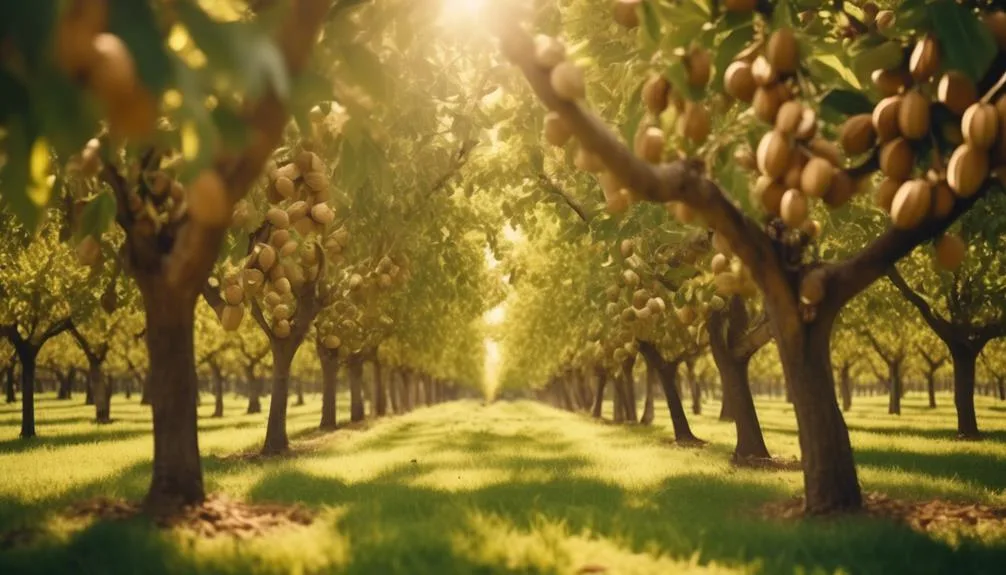
Walnut trees are more than just nut producers in an orchard. Their unique characteristics make them stand out among other trees, and understanding their role is crucial for a successful nut orchard.
Let's explore how walnut trees fit into the ecosystem of a nut orchard and the impact they have on the overall harmony of the orchard.
Key Takeaways
- Soil requirements: Walnut trees thrive in well-drained, deep, loamy soil with slightly acidic to neutral pH, and the soil should be rich in potassium for healthy growth.
- Sun exposure: Walnut trees require full sun exposure for 6-8 hours a day, so it's important to consider the path of the sun when planning the orchard layout.
- Compatibility: Walnut trees are compatible with pecans and chestnuts, but not ideal companions for black walnuts due to the release of toxic substances.
- Impact on orchard yield: Walnut trees can release natural compounds that inhibit the growth of other plants, attract specific pests, and compete for resources like water, sunlight, and nutrients within the orchard. Understanding and addressing these factors is crucial for optimizing orchard yield and walnut tree health.
Ideal Position for Walnut Trees
To ensure optimal growth and productivity, it's essential to carefully consider the positioning of walnut trees within the orchard.
Firstly, soil requirements play a crucial role in determining the ideal location for walnut trees. These trees thrive in well-drained, deep, and loamy soil with a slightly acidic to neutral pH. Ensure that the soil is rich in nutrients, particularly potassium, as this is vital for healthy walnut tree growth.
Secondly, sun exposure is another key factor to bear in mind when situating walnut trees. They require full sun exposure for at least six to eight hours a day to flourish and produce high-quality nuts. When planning the layout of your orchard, consider the path of the sun throughout the day to ensure each tree receives adequate sunlight.
Recommended Products

Kindly NOTE: This soil tester can not be applied to test pH value of any other liquid. If the soil is too dry the indicator will not move, and water it before testing.

Accurate Soil pH Testing: Dewildetradingco Soil pH Test Strips offer measurements of soil pH levels (pH 3.5-9). As an essential tool for every gardener and grower, these test strips help determine the optimal pH for various plants, such as outdoor plants, indoor plants, gardens, grass lawns, fruit trees, flowers, vegetables, and forest shrubs.

Quick, at home results for Soil pH, Nitrogen, Phosphorous and Potash Innovative and inexpensive soil test kit features an easy-to-use capsule system and patented color comparators
Compatibility With Other Nut Trees
When considering the compatibility of walnut trees with other nut trees in your orchard, it's important to ensure that their positioning takes into account their need for full sun exposure and specific soil requirements for optimal growth and productivity.
Walnut trees thrive in well-drained, deep, loamy soils with a slightly acidic to neutral pH. This makes them compatible with certain nut trees such as pecans and chestnuts, which also prefer well-drained, fertile soils.
However, walnuts aren't ideal companions for trees like black walnuts, as they release a toxic substance that can inhibit the growth of other plants.
When planning your orchard, it's essential to consider the soil requirements of different nut trees to ensure they're compatible with the soil conditions and pollination partners necessary for a successful and harmonious nut orchard.
Recommended Products

The information below is per-pack only

LIVE CHINESE CHESTNUT TREE : You’ll receive a live Chinese Chestnut tree, 6-12 inch tall. Each plant is nursery-grown, well-rooted, and ready to thrive in your yard or orchard
Nutritional Benefits of Walnut Trees
Unlock the extraordinary nutritional benefits of walnut trees, enriching your understanding of their remarkable value in your orchard.
Here's what you need to know:
- Health Benefits: Walnut trees provide a rich source of omega-3 fatty acids, antioxidants, and phytosterols, which are essential for heart health and lowering cholesterol levels.
- Culinary Uses: The nuts from walnut trees aren't only delicious but also versatile. They can be used in baking, salads, and as a topping for oatmeal or yogurt, adding a delightful crunch and nutty flavor to your dishes.
- Nutrient-Rich Soil: Walnut trees contribute to the health of your orchard by enriching the soil with beneficial nutrients, promoting the growth of other plants and trees.
- Sustainable Nutrition: Incorporating walnut trees in your orchard ensures a sustainable source of nutrition, supporting both your personal well-being and the ecological balance of the environment.
Considerations for Walnut Tree Placement
Considering the ideal placement for walnut trees in your orchard involves assessing sunlight exposure, soil drainage, and proximity to other trees or structures. When it comes to soil conditions, walnut trees thrive in well-drained, deep soils with good fertility. They're sensitive to waterlogged conditions, so be sure to avoid areas with poor drainage.
As for tree spacing, adequate spacing is crucial to prevent overcrowding and ensure optimal growth. Walnut trees should be planted at least 30-40 feet apart to allow for proper root development and sunlight penetration.
Sun exposure is another critical factor to consider. Walnut trees require full sunlight for the majority of the day, so choose a location that receives ample sunlight.
Additionally, be mindful of root competition from nearby trees, as walnut trees perform best when their root systems have ample space to expand.
Recommended Products

STARTING A TROPICAL GARDEN- Comprised of real horticultural grade ingredients such as shredded coir husk, pine bark, perlite, sand, and garden lime; no pelletized fertilizer

Feed the soil not the plants - stimulate microbial activity in your soil and boost probability of success with all types of plants… like composting but faster

STARTING A TROPICAL GARDEN- Comprised of real horticultural grade ingredients such as shredded coir husk, pine bark, perlite, sand, and garden lime; no pelletized fertilizer
Impact of Walnut Trees on Orchard Yield
To maximize your orchard yield, understanding the impact of walnut trees is crucial for effective management and sustainable production. The presence of walnut trees can significantly influence the overall health and productivity of your nut orchard. Here are key factors to consider:
- Soil Health: Walnut trees release natural compounds that can inhibit the growth of other plants. Understanding their impact on soil health and nutrient availability is essential for maintaining a balanced orchard ecosystem.
- Pest Management: Walnut trees can attract specific pests that may affect overall walnut yield. Implementing integrated pest management strategies is crucial to mitigate potential damage and ensure optimal productivity.
- Competition for Resources: The presence of walnut trees can lead to competition for water, sunlight, and nutrients within the orchard. Managing this competition is vital for sustaining high yields across all nut varieties.
- Tree Placement: Strategic placement of walnut trees within the orchard can impact light distribution and airflow, which in turn affects the yield potential of other nut trees.
Understanding and addressing these factors will help you optimize orchard yield while maintaining the health and vitality of your walnut trees.
Conclusion
Incorporating walnut trees into your nut orchard can enhance the overall nutritional value and diversity of your yield. Careful planning and placement are essential to maximize their benefits and minimize potential impacts on other trees.
By considering the role of walnut trees in your orchard, you can create a harmonious and productive environment for all nut trees to thrive.
