

Have you ever planted a mango tree, eagerly waiting for those sweet fruits to appear? If so, you’re not alone. Many gardening enthusiasts share the excitement of nurturing a mango tree, only to wonder when they’ll finally see the rewards of their patience.
Understanding when a mango tree bears fruit can help you manage your expectations and care for your tree more effectively. This article will guide you through the factors that influence fruiting, from the tree’s age to the climate it thrives in. With this knowledge, you’ll be better equipped to enjoy the delicious fruits of your labor.
Key Takeaways
- Fruit Bearing Timeline: Mango trees typically start bearing fruit between 3 to 5 years after planting, with older trees yielding significantly more fruit.
- Ideal Growing Conditions: For optimal growth, mango trees thrive in warm climates (70°F to 100°F), well-draining sandy loam soil, and require regular watering while avoiding waterlogging.
- Influential Factors: Key factors affecting fruit production include the tree’s age, climate conditions, and soil quality, which all play a vital role in the flowering and fruiting process.
- Mango Varieties: Different mango species have varied fruiting times, with types like Haden, Tommy Atkins, Kent, and Alphonso each exhibiting unique characteristics and timelines for fruit production.
- First Fruit Production: Initial yields of mangoes are generally low, around 5 to 10 fruits during the first production, but can increase significantly as the tree matures and receives proper care.
- Nurturing Trees for Yield: Consistent watering, fertilization, and pruning are crucial to support healthy growth and maximize fruit yield over the years.
Understanding Mango Trees
Mango trees are tropical wonders that require specific conditions to thrive. Knowing their characteristics helps you cultivate healthier trees and enjoy bountiful harvests.
Recommended Products


🌳 Mango Majesty Unveiled: Elevate your Mango Tree care with Gardenera's meticulously crafted Mango Tree Potting Mix, designed to nurture the growth and bounty of your mangoes.

🌳 Mango Majesty Unveiled: Elevate your Mango Tree care with Gardenera's meticulously crafted Mango Tree Potting Mix, designed to nurture the growth and bounty of your mangoes.
Types of Mango Trees
Mango trees come in various types, each with unique traits. Here are some common varieties:
- Haden: Known for rich flavor and a vibrant red and green skin.
- Tommy Atkins: Popular for its long shelf life and resistance to disease.
- Kent: Has smooth flesh and minimal fiber, making it a favorite for fresh consumption.
- Alphonso: Renowned for its sweetness and aroma, often referred to as the “king of mangoes.”
Choosing the right type based on your climate and preference improves your chances of a fruitful yield.
Ideal Growing Conditions
Mango trees thrive in warm climates with plenty of sunlight. Here are the ideal conditions for optimal growth:
- Temperature: Prefers temperatures between 70°F to 100°F (21°C to 38°C).
- Soil: Grows best in well-draining, sandy loam soil with a pH of 5.5 to 7.5.
- Water: Requires regular watering, especially during dry spells, but avoid waterlogging to prevent root rot.
Meeting these conditions ensures a healthy tree that can bear fruit within three to five years after planting.
Lifecycle of Mango Trees
Understanding the lifecycle of mango trees helps you anticipate when they’ll start producing fruit. The process involves several key stages, from germination to flowering.
Germination Stage
Germination marks the beginning of a mango tree’s life. This stage occurs when you plant a seed in warm, well-drained soil. Typically, mango seeds sprout within 1 to 3 weeks, provided temperatures stay between 70°F and 85°F. Keep the soil moist but not soggy. In ideal conditions, you’ll notice tiny shoots breaking through the ground, signaling the start of your tree’s journey.
Vegetative Growth Stage
During the vegetative growth stage, the young mango tree focuses on developing its roots, stems, and leaves. This phase lasts about 1 to 3 years, depending on the tree’s variety and growing conditions. Your tree should receive plenty of sunlight, ideally 6 to 8 hours daily. Regular watering and balanced fertilizers promote healthy growth. By the end of this stage, your mango tree should reach a height of 3 to 5 feet, ready to transition into its next phase.
Flowering Stage
The flowering stage is crucial for fruit production. Generally, this stage occurs around 3 to 5 years after planting, influenced by factors such as tree health, climate, and care. Mango trees typically bloom in spring, producing clusters of fragrant flowers. Proper drainage and consistent watering during this time enhance flower development. If conditions are favorable, you’ll witness the formation of small mangoes within weeks, marking the excitement of future harvests.
Factors Influencing Fruit Bearing
Understanding when your mango tree bears fruit involves several key factors. These factors include the tree’s age, climate and weather conditions, and soil quality, each playing a significant role in the fruiting process.
Recommended Products
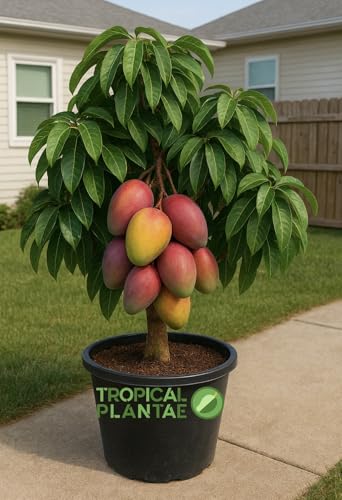
Imagine stepping into your backyard a few months from now and seeing a beautiful grafted Haden mango tree, growing stronger every day — a tree that will soon reward you with one of the most classic, flavorful mangoes ever grown.

Complete 3-in-1 nutrition – includes slow-release granular fertilizer, liquid micronutrient spray, and liquid calcium feed for all-in-one citrus tree care

Tailored for Avocado Trees: Designed specifically for container-grown avocado trees, ensuring they receive the precise nutrients needed for optimal growth and fruitful harvests.\
Age of the Tree
Age impacts fruit production significantly. Typically, mango trees start to bear fruit between 3 and 5 years after planting. Young trees may produce a limited quantity, while mature trees, around 8 to 10 years old, yield a much larger harvest. For instance, a 5-year-old tree may offer a few mangoes, but a 10-year-old tree can produce over 100 fruits in a season. Regular care, pruning, and proper nutrition can enhance fruiting as the tree matures.
Climate and Weather Conditions
Climate and weather directly influence flowering and fruit production. Mango trees thrive in warm climates, ideally between 70°F and 100°F. They require a dry spell before flowering to encourage fruit set. Conversely, excessive rainfall during flowering can lead to flower drop and poor fruit development. For example, if you live in a tropical region with consistent warmth and dry periods, your mango tree is more likely to produce a bountiful harvest compared to areas with frequent cold snaps or heavy rains.
Soil Quality
Soil quality significantly affects mango trees’ growth and fruiting capability. Well-drained, sandy loam soil is ideal for mango trees. It should have a pH level between 5.5 and 7.5. Nutrient-rich soil supports healthy root systems, leading to increased fruit production. You can enhance soil quality by incorporating organic matter, compost, or well-rotted manure. Testing your soil before planting can help determine any necessary amendments, ensuring your mango tree thrives and bears fruit efficiently.
When Does a Mango Tree Bear Fruit?
Mango trees typically begin bearing fruit between 3 and 5 years after planting. Several factors influence this timeline, including species, climate, and proper care.
Typical Time Frames
Young mango trees usually produce fruit after 3 to 5 years. Some trees might flower sooner, but fruiting takes longer. Here’s a typical timeline based on tree age:
| Age of Tree | Time to First Fruit |
|---|---|
| 1 Year Old | Not Fruiting |
| 2 Years Old | Not Fruiting |
| 3 Years Old | Possible Fruiting |
| 4 Years Old | Likely Fruiting |
| 5 Years Old | Frequent Fruiting |
Understanding these general time frames helps manage your expectations and care routines.
Variations by Species
Different mango species may vary in their fruiting times. Here are some common types:
- Haden: Typically fruits in 3 to 4 years; produces large, flavorful mangoes.
- Tommy Atkins: Fruits around 4 to 5 years; known for its long shelf life and good shipping qualities.
- Kent: Generally fruits in 3 to 4 years; offers sweet, green-skinned mangoes.
- Alphonso: Often fruits in 4 to 5 years; highly prized for its rich taste and aroma.
Each species adapts uniquely to its environment, affecting how quickly it bears fruit.
First Fruit Production
When your mango tree first produces fruit, you may notice only a few mangoes. Initial yields can be low, around 5 to 10 mangoes per tree. As the tree matures, typically after about 7 years, yields can increase significantly, sometimes reaching up to 300 fruits or more per season.
Caring for your tree plays a vital role in its productivity. Ensure proper watering, fertilization, and pruning to support healthy growth and fruiting.
By following these guidelines, you position your mango tree for a fruitful future.
Conclusion
Growing a mango tree is a rewarding journey filled with patience and care. You’ll find joy in watching your tree develop and knowing that with the right conditions it’ll start bearing fruit in just a few years. Remember to nurture your tree with love and attention and soon enough you’ll be enjoying the delicious fruits of your labor. Whether you choose Haden, Tommy Atkins, or any other variety your garden will flourish with vibrant mangoes. So keep tending to your tree and get ready for that sweet harvest. Happy gardening!
Frequently Asked Questions
When will my mango tree bear fruit?
Mango trees typically start to bear fruit between 3 to 5 years after planting. The exact timing can vary based on the tree’s variety, with some types, like Haden, fruiting in 3 to 4 years, while others, such as Tommy Atkins, may take 4 to 5 years.
What factors influence mango tree fruiting?
Key factors include the age of the tree, climate and weather conditions, and soil quality. Young trees usually start fruiting in 3 to 5 years, but optimal growing conditions and care can enhance growth and fruit production significantly.
What are the ideal growing conditions for mango trees?
Mango trees thrive in warm temperatures, requiring well-drained, nutrient-rich soil. They need ample sunlight, a dry spell before flowering, and regular watering to ensure healthy growth and productive fruiting.
How can I improve my soil for mango trees?
To enhance soil quality for mango trees, incorporate organic matter, such as compost, into the soil. Well-drained, nutrient-rich soil supports healthy growth and better fruit yields, crucial for successful mango cultivation.
What are the key stages in the lifecycle of a mango tree?
The lifecycle of a mango tree includes germination, which occurs in 1 to 3 weeks, followed by a vegetative growth stage lasting 1 to 3 years. After that, flowering begins between 3 to 5 years post-planting, leading to fruit production.
