

Have you ever wondered when the best time to graft fruit trees is? If you’re looking to boost your garden’s productivity or create unique fruit varieties, understanding the timing of grafting can make all the difference.
Key Takeaways
- Grafting Timeliness: The best times to graft fruit trees vary by season—spring, summer, and winter—each offering unique benefits for successful grafting.
- Species-Specific Needs: Different fruit trees require tailored grafting times; for example, apple trees thrive in spring, while cherry trees are best grafted in summer.
- Enhances Resilience: Grafting improves disease resistance, drought tolerance, and overall productivity of fruit trees, enabling stronger and healthier plants.
- Accelerates Fruit Production: Grafted trees typically bear fruit much faster—often within 1-2 years—compared to seed-grown trees, which may take 5-7 years.
- Maximizes Orchard Space: Using grafting techniques allows for planting multiple fruit varieties in limited areas, optimizing space and enhancing diversity.
- Streamlined Maintenance: Grafted trees are often easier to prune and maintain due to their predictable growth habits, saving time and resources in orchard management.
Importance of Grafting Fruit Trees
Grafting enhances fruit trees’ resilience and productivity. You can combine the best traits of two different plants, resulting in a stronger tree. Grafting helps in disease resistance, drought tolerance, and improved fruit quality.
Variety Development
Grafting allows the creation of unique fruit varieties. You can select a scion from a variety known for flavor and graft it onto a robust rootstock. This practice leads to a diverse orchard, providing more options for harvests.
Accelerated Production
Grafting accelerates fruit production. Trees grown from seeds may take years to fruit, while grafted trees typically produce sooner. You might see fruit in as little as one to two years after grafting, compared to five to seven years for seed-grown trees.
Space Efficiency
Grafting promotes space efficiency in your orchard. You can plant multiple varieties in a small area. Using dwarf rootstocks allows you to manage limited spaces while enjoying a variety of fruits.
Rootstock Benefits
Selecting the right rootstock can provide specific benefits. You can choose rootstocks that enhance growth speed, support specific soil types, or help with pest resistance. These factors lead to healthier trees and better yields.
Simplified Maintenance
Grafted fruit trees tend to be easier to manage. You can prune and maintain them more effectively because you’ll have a better understanding of their growth habits. This means less time and effort spent on upkeep.
Grafting fruits together offers numerous advantages. By timing it right and executing it well, you create healthier, more productive trees, ensuring a bountiful harvest for years to come.
Best Times to Graft Fruit Trees
Timing plays a crucial role in successful grafting. The best times to graft fruit trees depend on the method and specific tree varieties. Here’s a breakdown of the optimal seasons for grafting.
Recommended Products

TREE GRAFTING TOOL - Efficiently prepare scion shoots and understock for grafting with our handy garden tool. This standard manual grafting tool can be used to cut stock up to 1/2” in diameter and comes with an excellent illustrated instruction manual.

【Surgical-Precision Grafting Tools】 Crafted with Japanese SK5 High-Carbon Steel blades (HRC 58-60 hardness) and ergonomic ABS handles, our 2-in-1 pruner delivers clean cuts up to 1/2" diameter branches. Dual-edge Ω/U/V blades prevent stem crushing, boosting grafting success rates by 40%* (*lab test data).

PROFESSIONAL GARDENING GRAFTING TOOLS: Including 2 in 1 grafting pruning tools, 3 replaceable blades, a grafting knife, a screwdriver, a wrench, 2 grafting films, 160 rubber bands, 40 wide rubber bands, and 50 colorful tag cards
Spring Grafting
Spring is one of the most popular times to graft fruit trees. During this season, sap flow is robust, and trees are starting to wake up after dormancy. Aim for late March to early May, just as buds begin to swell.
- Choose Warm Days: Opt for temperatures above 50°F (10°C) for optimal conditions.
- Active Growth: Graft when the rootstock shows active growth, which encourages healing.
- Techniques to Use: Consider methods like whip-and-tongue grafting and cleft grafting, which thrive in spring.
Summer Grafting
Summer offers another suitable window for grafting, especially for specific techniques. Plan summer grafting from late June to early August when the tree is actively growing.
- Select Scions Wisely: Use semi-hardwood or softwood scions for overlap with the current season’s growth.
- Watch for Moisture: Ensure adequate moisture in the environment to support newly grafted unions.
- Techniques to Utilize: Try chip budding or T-budding during this period for successful grafts.
Winter Grafting
Winter grafting involves the use of dormant trees and is often overlooked. This technique can take place from late November to February.
- Store Scions Properly: Keep scions in a cool, moist environment, like a refrigerator to maintain dormancy.
- Easy to Work: The lack of foliage makes it easier to see the grafting site and perform precise cuts.
- Suitable Methods: Employ methods such as dormant bench grafting during this cold season.
By understanding these optimal grafting times, you create an ideal environment for successful fruit tree grafting and improve the productivity of your orchard. Careful timing ensures healthy unions that can thrive for years.
Factors Influencing Grafting Timing
Timing plays a crucial role in the success of grafting fruit trees. Several factors affect when you should graft your trees, including tree species and climate conditions.
Recommended Products

【complete grafting kit】 one 7-ounce tin of professional grafting wax, two 3.15-inch stirring rods, and 2 rolls of grafting tape with a total length of 394 feet. The grafting wax is stored in a premium aluminum can, which provides excellent seal performance and long-lasting preservation. This all-in-one grafting set is perfectly suitable for all kinds of horticultural grafting and plant pruning wound sealing work.

6-Piece Grafting Tool Set: Includes one SK5 steel grafting cutter, one 2CR13 steel grafting knife, three rolls of tape (1 white, 2 green), and one twist tie for complete propagation
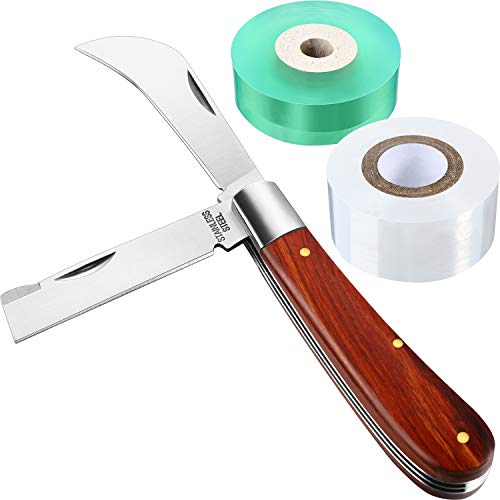
Package includes: you will get 1 double blades garden grafting knife and 2 rolls of grafting tapes in 2 sizes, ideal set for grafting budding, cutting, digging, sprouting, plants, weeding, cutting, sawing, etc.
Tree Species
Different fruit trees require specific grafting times. For example:
- Apple Trees: Best grafted in early spring, during the active growing season.
- Cherry Trees: Prefer summer grafting, particularly from late June to early August.
- Peach Trees: Ideal for winter grafting when trees are dormant.
Understanding the unique needs of each species helps ensure successful grafting. Always check the characteristics of the tree species you’re working with for optimal results.
Climate Conditions
Climate significantly influences grafting timing. Observe the following conditions:
- Temperature: Grafting generally works best when daytime temperatures are between 60°F and 75°F. This promotes effective sap flow.
- Humidity: High humidity levels support the healing process post-grafting.
- Seasonal Changes: Pay attention to seasonal changes in your area. Grafting too early or too late can jeopardize successful union.
Monitor local weather patterns to select the most suitable grafting window, ensuring the best chance for successful growth and development of your fruit trees.
Techniques for Grafting
Grafting fruit trees requires specific techniques to ensure successful unions. Two popular methods are whip and tongue graft and cleft graft. Each technique serves different situations and tree varieties.
Whip and Tongue Graft
Whip and tongue grafting combines two compatible plants by intertwining their cambium layers. This method works well for grafting semi-hardwood and softwood scions.
- Select Your Materials: Choose a healthy scion and a rootstock about the same diameter.
- Make the Cuts: Cut both the scion and rootstock at a 45-degree angle, creating long, sloping cuts.
- Create the Tongue: On both pieces, make a vertical cut (the tongue) about one inch long, from the end of the angled cut toward the center.
- Join the Pieces: Align the cambium layers of the scion and rootstock. Slide the tongues together, ensuring maximum contact.
- Secure the Graft: Wrap the graft union with grafting tape or parafilm to hold it securely.
Whip and tongue grafting allows for greater surface area contact, promoting strong union and quicker healing. This method is often used in mid-spring or early summer when trees are actively growing.
Cleft Graft
Cleft grafting is a straightforward technique ideal for larger rootstocks that require increased variety. This method allows you to add new scions to an established tree.
- Prepare the Rootstock: Choose a healthy rootstock and make a cut around two inches above the soil. Make a straight cut down the center for about two inches.
- Select the Scions: Choose scions that are about the same diameter as your cut rootstock. Ideally, each scion should have several buds.
- Cut the Scion Ends: Cut the scion ends to a wedge shape, removing two diagonal cuts to form a pointed end.
- Insert the Scion: Place the scion into the cleft of the rootstock. Make sure the cambium layers align.
- Secure the Graft: Wrap the graft with tape or parafilm, allowing some exposure for moisture.
Cleft grafting works well in late winter to early spring, providing ample time for the plant to heal before the growing season. This technique promotes healthier growth and establishes functional fruit-bearing branches.
These grafting techniques enable you to diversify your orchard with various fruit tree varieties, ensuring stronger, more robust trees.
Conclusion
Grafting fruit trees can be a rewarding experience that enhances your garden’s productivity and diversity. By choosing the right time and technique, you can create strong unions that lead to healthier trees and quicker fruit production. Whether you prefer spring, summer, or winter grafting, understanding the specific needs of your trees will set you up for success.
With a little patience and care, you’ll enjoy the fruits of your labor in no time. Happy grafting and here’s to a thriving orchard filled with delicious fruits!
Frequently Asked Questions
What is grafting in fruit trees?
Grafting is a horticultural technique that combines parts from two plants to create a new plant. It allows gardeners to enhance traits like disease resistance and fruit quality by joining robust rootstocks with flavorful scions. This process helps produce more productive and resilient fruit trees.
When is the best time to graft fruit trees?
The best time to graft fruit trees varies by method and variety. Spring (late March to early May) is popular due to strong sap flow. Summer grafting (late June to early August) is suitable for semi-hardwood or softwood scions, while winter grafting (late November to February) uses dormant trees.
What factors influence grafting timing?
Grafting timing is influenced by tree species and local climate conditions. Different fruit trees have specific optimal grafting periods: apple trees in spring, cherry trees in summer, and peach trees in winter. Monitoring weather patterns is crucial for successful grafting.
What are common grafting techniques?
Common grafting techniques include whip and tongue graft and cleft graft. Whip and tongue grafts are done in mid-spring or early summer and promote strong unions. Cleft grafts, ideal for larger rootstocks, are typically performed in late winter to early spring and let you add scions to established trees.
How does grafting improve fruit tree productivity?
Grafting enhances fruit tree productivity by combining the best qualities of different plants, leading to improved disease resistance, faster fruit production, and space efficiency. Grafted trees often yield fruit within one to two years, compared to five to seven years for seed-grown trees.
