

Have you ever wondered what fruit a maple tree produces? You might picture the beautiful, vibrant leaves in autumn, but there’s more to these trees than just their stunning foliage. Understanding the fruit of the maple tree can enrich your appreciation for this iconic plant.
When you think of fruit, you might imagine apples or oranges, but maple trees produce something unique. This article will help you discover the fascinating seeds that come from these trees and how they play a role in nature. Whether you’re a tree enthusiast or just curious about your surroundings, you’ll find valuable insights that connect you to the world of maples.
Key Takeaways
- Maple trees produce unique fruits called samaras, which play a crucial role in their reproduction and ecosystem.
- There are several types of maple samaras, including those from Sugar Maples, Red Maples, Silver Maples, Norway Maples, and Black Maples, each with distinct features and dispersal mechanisms.
- The seeds within samaras contain small amounts of vitamins, minerals, and healthy fats, providing ecological value by serving as food for wildlife.
- Maple tree fruits enhance genetic diversity through wind dispersal, ensuring seeds are planted in favorable locations.
- These trees contribute significantly to the economy, particularly through the maple syrup industry and landscaping efforts, generating over $300 million annually in North America.
- Understanding the characteristics and importance of maple tree fruits fosters a deeper appreciation for these remarkable plants in our environment.
Overview of Maple Trees
Maple trees belong to the genus Acer and are primarily known for their stunning foliage and sap. These deciduous trees thrive in various climates but often prefer temperate regions. You can find them in forests, parks, and residential areas, where they provide shade and beauty.
Maple trees can grow into significant sizes, reaching heights of 30 to 100 feet (9 to 30 meters) depending on the species. The most popular types include the Sugar Maple, Red Maple, and Silver Maple. Each type showcases unique characteristics, including leaf shape, color, and growth habits.
The flowers of maple trees bloom in early spring and are small, often yellow or red. These flowers develop into distinctive fruits known as samaras, which are key to the tree’s reproduction. The samaras consist of a paired seed encased in a wing-like structure, allowing them to be carried by the wind and aiding in seed dispersal.
Maple trees play a vital role in their ecosystems. They provide food and habitat for numerous wildlife, including birds, squirrels, and insects. Additionally, their sap is harvested to produce maple syrup, a sweet treat enjoyed worldwide.
Characteristics of Maple Tree Fruit
Maple trees produce unique fruits called samaras, which are crucial for their reproduction. Understanding the characteristics and value of these fruits enhances your appreciation of these remarkable trees.
Recommended Products

In the USA, maple trees can be found throughout the whole country but there are more species located at the north, while less and smaller species can be found at the south, like in Florida for example.

Brilliant Fall Color: these heirloom seeds grow into scarlet maple trees to 80 feet with red fall foliage and reddish twigs, a classic shade tree and fall tree for yards and outdoor gardens.

Sowing: Red Maple seeds require stratification before planting, simulating winter's cold to break dormancy. Sow the treated seeds into prepared soil after the last frost in spring, covering them with a thin layer of soil and keeping it moist.
Types of Maple Tree Fruits
Maple tree fruits are mainly categorized as samaras, which are often referred to as “helicopter seeds” due to their winged structure. Common types include:
- Sugar Maple Samaras: These samaras are typically green at first and turn light brown as they mature. They measure about 1 to 2 inches and have a distinctive, pointed tip.
- Red Maple Samaras: The samaras from the red maple are slightly larger, measuring around 1 to 2.5 inches in length. They are green when young, turning to a reddish hue as they ripen.
- Silver Maple Samaras: These samaras are broader and can grow to about 1 to 2.5 inches. They have a darker green color that shifts to light brown or tan when mature.
These fruits each play a role in how the tree propagates, with the design allowing for wind dispersal across various distances.
Nutritional Value of Maple Tree Fruit
Maple tree fruits, particularly the seeds within the samaras, hold nutritional benefits, albeit in small amounts. Here’s a breakdown:
- Vitamins: They contain vitamins like vitamin E, which supports skin health and immune function.
- Minerals: Nutritional minerals like magnesium and phosphorus are present, contributing to overall health.
- Healthy Fats: While minimal, these fruits provide healthy fats that can benefit heart health.
Though you may not consume samaras regularly, their presence aids in supporting wildlife. Birds and small mammals often feed on the seeds, showcasing their ecological value.
Importance of Maple Tree Fruit
Samaras, the unique fruits of the maple tree, play significant roles in both ecosystems and economies.
Recommended Products

STUNNING COLOR. Sugar Maple is a magnificent deciduous tree known for its stunning autumn foliage. Its large, green leaves transform into vibrant shades of yellow, orange, and red, creating a breathtaking display of colors.

STUNNING RED LEAF: Red maple are a sight to see. Red leaves are beautiful and an iconic sign of the change of the seasons. 50+ Seeds

QUALITY JAPANESE MAPLE SEEDS: 30 seeds of Japanese Red Maple (ACER palmatum) for Bonsai
Ecological Role
Maple tree fruit serves crucial ecological functions. Samaras are lightweight and designed for wind dispersal, allowing seeds to travel substantial distances. This dispersal mechanism enhances genetic diversity by planting seeds in favorable locations. These fruits also provide food for various wildlife, including birds and small mammals, contributing to the overall health of forest ecosystems. For example, species like the Eastern Chipmunk often forage for these seeds, helping to maintain ecological balance.
Economic Significance
Maple fruits also hold economic value. While not widely harvested for human consumption, their role in fostering maple tree growth supports the maple syrup industry, which generates over $300 million annually in North America. As trees grow and mature, they produce sap, the primary ingredient for maple syrup. Additionally, the seeds can be used in some markets, such as landscaping or reforestation efforts, enhancing the economic impact of maple trees on local economies. These factors underline the broader importance of maple trees beyond their striking foliage.
Varieties of Maple Trees and Their Fruits
Maple trees produce distinctive fruits known as samaras. These fruits vary among different species, each with unique characteristics. Here’s a closer look at some common varieties of maple trees and the samaras they produce.
Recommended Products
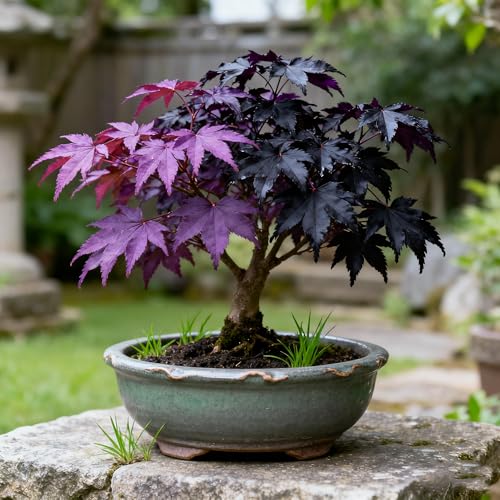
30 Premium Purple Maple Seeds: Grow these stunning ornamental trees with our exclusive collection of 30 purple maple seeds. Create a dramatic focal point in your landscape with these beautiful trees known for their unique purple foliage.

Premium Quantity: Each pack contains 15 high-quality blue Japanese maple seeds curated for gardeners looking to grow their own ornamental Acer Palmatum trees

Raise seedlings for an ornamental tree collection or a future bonsai training project.
Sugar Maple (Acer saccharum)
- Fruit Description: Sugar Maple samaras are small and green at maturity. They turn light brown before falling from the tree.
- Seed Dispersal: These samaras effectively use wind to travel, allowing seeds to spread over considerable distances.
Red Maple (Acer rubrum)
- Fruit Description: Red Maple samaras are slightly larger than those of the Sugar Maple. They initially appear green and mature to a reddish hue.
- Adaptability: This species thrives in a variety of soil types and is often found in wet areas.
Silver Maple (Acer saccharinum)
- Fruit Description: Silver Maple produces broader samaras that transition from dark green to light brown as they ripen.
- Growth Habits: These trees often grow faster than other maple species and are commonly found near rivers and streams.
Norway Maple (Acer platanoides)
- Fruit Description: Norway Maple samaras are distinctive, appearing as a pair with long wings that create a helicopter effect during dispersal.
- Environmental Impact: This tree is often chosen for urban landscaping due to its resilience and tolerance of pollution.
Black Maple (Acer nigrum)
- Fruit Description: Black Maple samaras are similar in appearance to those of the Sugar Maple but tend to have a slight twist.
- Distinguishing Features: This species is often confused with the Sugar Maple but has darker bark and a different leaf shape.
Information on Nutritional Value
Samaras from these maple tree varieties contain small amounts of vitamins, minerals, and healthy fats. While not widely consumed by humans, these seeds serve as important food sources for birds and small mammals.
Ecological and Economic Roles
Maple tree fruits play a vital role in the environment. They distribute seeds, promoting genetic diversity and providing food for wildlife, such as birds and small mammals. Economically, while not typically harvested for human consumption, these fruits support the maple syrup industry and contribute to landscaping and reforestation efforts.
Understanding the varieties of maple trees and their fruits enhances appreciation for these significant plants and highlights their contributions to ecosystems and economies.
Conclusion
Maple trees offer so much more than just beautiful leaves. Their unique samaras play a vital role in nature by ensuring the tree’s reproduction and providing food for various wildlife.
Next time you admire a maple tree, remember the fascinating journey of its fruits. You might even find a new appreciation for how these small seeds contribute to the ecosystem. Whether you’re a tree enthusiast or just curious about nature, maple trees are truly remarkable in their own right.
Frequently Asked Questions
What are samaras, and what role do they play in maple trees?
Samaras are the unique seeds produced by maple trees, featuring a winged structure that helps them disperse through the wind. They are essential for the tree’s reproduction, allowing seeds to travel significant distances and grow into new trees.
What types of maple trees are commonly found?
Common maple tree species include Sugar Maple, Red Maple, Silver Maple, and Norway Maple. Each species has distinct characteristics, such as leaf shape, height, and seed appearance.
How do the samaras of different maple species differ?
Sugar Maple samaras start green and turn light brown, while Red Maple samaras are larger and reddish. Silver Maple samaras are broader and shift colors, and Norway Maple samaras have paired wings that create a helicopter effect during dispersal.
What is the nutritional value of maple tree fruits?
Maple tree fruits contain small amounts of vitamins, minerals, and healthy fats. While they are not widely consumed by humans, they provide essential nutrients for wildlife, especially birds and small mammals.
Why are maple trees important ecologically?
Maple trees play a crucial role in ecosystems by providing food for wildlife and supporting genetic diversity. Their samaras help seed dispersal, promoting new tree growth and maintaining ecological balance.
How does samara dispersal benefit the maple tree?
By enabling wind dispersal, samaras allow maple seeds to spread over large distances, reducing competition among seedlings and increasing the chances for successful germination in various environments.
Are maple samaras economically valuable?
While not typically harvested for human consumption, maple fruits support the maple syrup industry, which contributes over $300 million annually in North America. They also enhance landscaping and reforestation efforts.
