

Have you ever noticed your fruit tree branches growing too close together? It can be frustrating when your tree struggles to thrive and produce fruit. You might even worry about the health of your tree or the quality of your harvest.
Key Takeaways
- Proper Branch Spreading: Enhancing air circulation and sunlight exposure through strategic branch spreading is critical for fruit tree health and fruit quality.
- Understanding Branch Anatomy: Familiarity with the components of fruit tree branches, such as trunks, main branches, and nodes, aids in effective care and maintenance.
- Techniques for Spreading: Employing manual methods and support systems, like stakes and trellises, can effectively position branches for optimal growth without causing damage.
- Timing is Key: Late winter to early spring is the best time for spreading branches, as trees are dormant, reducing stress during manipulation.
- Essential Tools: Utilizing the right tools—pruning shears, garden ties, weights, and supports—is essential for successfully spreading branches and promoting healthy growth.
- Regular Maintenance: Continuous monitoring and adjustment of branch positions and supports ensure branches remain well-distributed and receive adequate light for optimal fruit production.
Understanding Fruit Tree Branches
Understanding fruit tree branches helps enhance tree health and fruit production. This section covers the importance of proper branch spreading and the anatomy of fruit tree branches.
Importance of Proper Branch Spreading
Proper branch spreading maximizes sunlight exposure and air circulation. Good sunlight reaches all areas of the tree, promoting even ripening of fruit. Increased air flow reduces the risk of fungal diseases, which thrive in damp, shaded areas.
Spreading branches also improves accessibility for pruning and harvesting. You’re less likely to encounter entangled branches, making it easier to pick fruit and maintain your tree. Additionally, wider branch spacing can lead to a more attractive tree shape, enhancing your landscape.
Anatomy of Fruit Tree Branches
Familiarizing yourself with branch anatomy helps in understanding tree care. Each branch consists of several components:
- Trunk: The main support structure that holds the entire tree.
- Main Branches: These extend from the trunk and serve as the primary framework.
- Secondary Branches: Smaller branches that grow off main branches, often bearing fruit.
- Shoots: Young growths that can develop into branches during the growing season.
- Nodes: Points along the branch where leaves and flowers develop.
Understanding these structures enables you to make informed decisions about trimming and training branches. Knowing the placement of nodes helps in directing growth and determining where to make cuts for optimal branch spread.
Techniques for Spreading Fruit Tree Branches
Employing effective techniques for spreading fruit tree branches optimizes tree health and boosts fruit production. Here are two common methods.
Recommended Products

What You Will Receive: you will receive 6 pieces of silver tree supports for young trees available in 2 kinds of Y shape supports, sufficient quantity is enough to satisfy your daily use and replacement needs

14 PCS TREE STRAPS FOR STAKING — VALUE PACK — This tree staking kit includes 14 heavy duty tree ties, enough to stake 4–7 young trees at once (use 2–3 tree straps per tree). Each tree stake strap measures 15.8 inches long × 1.5 inches wide, the ideal size for saplings, fruit trees, newly planted ornamentals, and shrubs in your yard, orchard, or nursery.
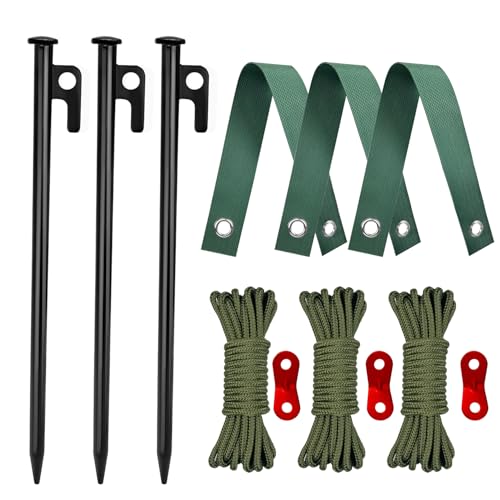
【Value Package】Package comes with 3pcs tree stakes,3pcs tree straps for staking and 3pcs ropes (each 13ft) with 3pcs aluminium tensioners. Complete tree stake kit enable your saplings to grow straight and healthy even in windy conditions
Manual Spreading Methods
Manual spreading allows for precise control over branch positioning. Here’s how to do it:
- Select the Branches: Identify overcrowded branches that hinder growth and sun exposure.
- Gently Bend the Branches: With care, bend the targeted branches outward. Avoid excessive force to prevent breakage.
- Use Ties or Weights: Secure the branches in their new position. Use soft ties to avoid damaging the bark or consider small weights for stability.
- Monitor the Branches: Check progress regularly. Adjust ties or weights as necessary to encourage healthy growth.
Using Support Systems
Support systems can enhance the spreading of branches while minimizing damage. Consider these options:
- Staking: Install stakes evenly around the tree. Tie branches to these stakes to keep them spread.
- Treillis or Cages: For more extensive support, employ trellises or cages. These structures provide a sturdy framework for branches to grow outward.
- Flexible Supports: Utilize adjustable ties or padded clips to secure branches without restricting growth. These allow for gradual adjustments as the tree matures.
- Regular Maintenance: Inspect and adjust supports periodically. Ensure that branches remain well-positioned and receive ample light.
Implementing these techniques promotes healthy growth and improves your fruit tree’s overall yield.
Timing for Spreading Fruit Tree Branches
Timing plays a crucial role in successfully spreading fruit tree branches. The right time ensures healthy growth and maximizes fruit production.
Recommended Products

Durable & Long-Lasting: Crafted from high-quality materials, these fruit tree branch pullers to withstand the rigors of outdoor use season after season. Resistant to rust, weathering, and wear, they provide consistent performance, becoming your go-to tools for maintaining your orchard year after year.

1.Multiple application scenarios: This set of branch limb spreader is specially designed for fruit trees, equipped with limb spreader, which can be flexibly applied to different types of fruit trees, and is a good auxiliary tool for your plantation.

Fruit Tree Limb Spreaders: you will receive 50 7 inches branch pullers; The quantity is sufficient; You can choose to combine them as needed to provide adequate support for the branches of your fruit trees and help your trees grow
Best Time of Year
Late winter to early spring serves as the best time for branch spreading. During this period, trees are in dormancy, which minimizes stress. You can easily manipulate branches without damaging the tree. Observe the weather; choose a dry, mild day for your work. Avoid freezing temperatures and heavy rains, which could hinder your efforts.
Seasonal Considerations
Consider seasonal growth patterns. As the tree begins to bud, spreading branches becomes riskier. You can also consider fruit-bearing times, as branches softening from fruit development complicate spreading. When monitoring your tree, wait for fruit harvest before making adjustments. Doing so maintains the integrity of the branches and prevents damage. Pay attention to new growth in late spring; adjustments during this time may affect the tree’s overall health.
Tools and Materials Needed
Gathering the right tools and materials aids in effectively spreading fruit tree branches. Below are essential and optional items to consider.
Recommended Products

Limb spreaders is good for new/young trees ,are not for branches larger than 1 cm in diameter.Just really check out the size - make sure these are long enough
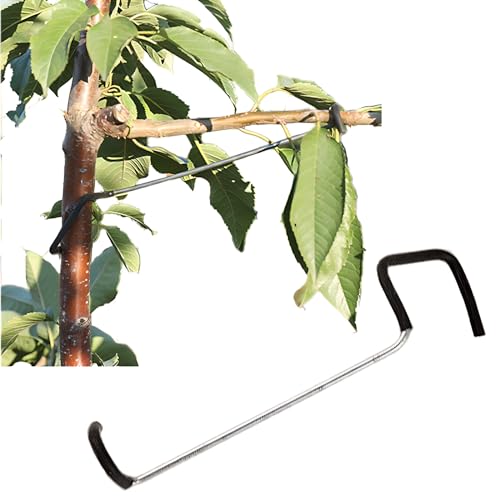
【Not Easy to Damage the Bark】The black part of the branch spreader consists of galvanized iron wire wrapped with the inside of a hose to ensure that the bark does not fray easily. The branch spreader can be reused after removal.

Tree Branch Modelling Too: 15 Pcs 3.94in fruit tree branch puller suitible for 0.4in branch, can pull lower the drooping angle of the tree branch. for orchards with apple trees spaced 1-2 meters and tree age 1-3 years, with a pruning angle of 110-135 degrees.
Essential Tools for the Job
- Pruning Shears: Use sharp pruning shears for cutting any branches if needed. Clean cuts promote healing.
- Garden Ties: Employ soft garden ties to secure branches without causing damage. Adjustable ties provide flexibility as branches grow.
- Weights: Add small weights, like stones, to gently pull down branches. This encourages outward growth.
- Stake or Post: Utilize sturdy stakes or posts to support branches. Position them securely near the base for stability.
- Gloves: Wear gardening gloves to protect your hands while handling branches and tools.
- Flexible Wire: Consider using flexible wire for added support. It bends easily to accommodate branch angles.
- Bamboo Sticks: Employ bamboo sticks as temporary supports for newly spread branches. They provide stability while ensuring growth direction.
- Twine or String: Use twine or string for tying off branches if garden ties aren’t available. Ensure it’s soft and won’t constrict growth.
- Mulch: Apply mulch around the base of the tree to retain moisture. Healthy roots support stronger branches.
- Adhesive labels: Mark branches with adhesive labels for tracking growth progress. This helps in assessing the effectiveness of your spreading technique.
Gathering these tools ensures successful and healthy branch spreading in your fruit trees.
Conclusion
Spreading your fruit tree branches can make a world of difference for both the tree’s health and your harvest. By using the right techniques and tools you can encourage better sunlight exposure and air circulation. This not only enhances fruit quality but also keeps your tree looking great.
Remember to choose the right time for this task and to be gentle with your branches. With a little care and attention your fruit trees will thrive and reward you with a bountiful harvest. Enjoy the process and watch your trees flourish!
Frequently Asked Questions
Why do fruit tree branches grow too close together?
Overcrowded fruit tree branches often result from improper pruning, lack of knowledge about tree anatomy, or natural growth patterns. When branches grow too close, they compete for sunlight and nutrients, which can lead to poor health and reduced fruit quality.
How does overcrowded branches affect fruit production?
Overcrowded branches can hinder sunlight exposure and air circulation, leading to uneven fruit ripening and increased risk of fungal diseases. This can ultimately decrease the quality and quantity of the fruit harvest.
What are the benefits of spreading fruit tree branches?
Spreading branches maximizes sunlight and air circulation, promoting healthier growth and more even ripening of fruit. It also enhances accessibility for pruning and harvesting, resulting in a more attractive tree shape and improved overall yield.
When is the best time to spread fruit tree branches?
The ideal time for spreading branches is from late winter to early spring while the tree is still dormant. This reduces stress on the tree and encourages healthier growth.
What tools are needed to spread fruit tree branches?
Essential tools include sharp pruning shears, soft garden ties, small weights, and sturdy stakes or posts. Optional tools like flexible wire and twine can also aid in the process of spreading branches effectively.
How do I manually spread overcrowded branches?
To manually spread branches, select overcrowded ones and gently bend them outward. Use ties or weights to secure them in place and regularly monitor their progress to ensure they remain well-positioned.
What support systems can I use for branch spreading?
Support systems like staking, trellises, or flexible supports can help maintain proper branch positioning while minimizing damage. Regular maintenance of these supports is crucial for optimal growth and sunlight exposure.
Should I spread branches during bud development or fruit ripening?
It is advisable to avoid spreading branches during bud development or fruit ripening, as these stages can cause stress to the tree. Instead, wait until after fruit harvest for adjustments to maintain branch integrity and tree health.
