


I’ve spent a lot of time working on crochet scarves this season and textured stitches have become my favorite way to add a bit of detail.
They keep the work simple but the end result has more depth than plain rows.
I gathered some ideas that use these stitches for winter wear and wanted to share them here.
Each one is something I think would be nice to make when the weather turns cold.
Gradient Pastel Scarf in Textured Blocks

A long rectangular scarf worked in a consistent raised grid stitch gives the fabric structure and visual depth without needing complex shaping. The yarn moves through a smooth pastel rainbow sequence from pink through purple, blue, green, and yellow, creating a single flowing piece rather than separate color sections. Fringe on one end adds a simple finish that balances the length. This fits the wearable accessory category and layers easily for colder months.
What makes this idea useful is how the gradual color shift handles the pattern interest so you can focus on the stitch texture alone. You could shorten the total length for a lighter neck wrap or repeat the same stitch in a single color for a more understated version. The rectangular shape makes it simple to resize for kids or adjust the width to match different yarn weights. For gifts, a design like this works especially well because the color flow already provides the main appeal.
Striped Bobble Scarf With Alternating Colors

A scarf worked lengthwise in wide stripes of cream and brown yarn uses a raised stitch pattern to form rows of small rounded bumps across the surface. This creates a wearable accessory that adds both texture and simple color contrast without needing extra edging or fringe. The even stripe repeat keeps the design balanced while the bumpy rows give the fabric more visual weight than plain stitches.
What makes this idea useful is how simple it is to adjust stripe widths or swap in leftover yarns for a custom look. The scarf works especially well as a beginner-friendly project because the repeat is straightforward once the texture row is learned. For gifts, the neutral palette and practical length make it easy to match different styles without extra finishing steps.
Floral Motif Scarf With Scalloped Edges

A scarf built from repeating floral motifs creates an open, drapey accessory that still shows clear stitch definition. Alternating rows of mint and blush yarn make the petal shapes stand out and give the fabric a gentle wave. The joined circles naturally form a scalloped edge, so the scarf needs no separate border. This approach fits the wearable accessory category and works for winter because the openwork adds texture without bulk.
The repeat is small enough to lengthen or shorten easily for different styles or recipients. Swapping the two colors lets the same pattern read as soft or bold depending on the palette chosen. A project like this works especially well as a quick gift because the finished shape lays flat and shows the motif detail in photos.
Textured Infinity Scarf in a Neutral Tone

An infinity scarf built from textured stitches creates a thick, looped accessory that sits neatly around the neck without slipping. The raised pattern adds depth across the fabric while the simple oval shape keeps construction straightforward. This style fits the wearable accessory category and works in any medium to bulky yarn that shows stitch definition.
What makes this idea useful is how easily you can change the circumference to match different coat styles or necklines. Shorten the loop for a closer cowl fit or widen the band for more coverage on colder days. The neutral color lets the texture stand out on its own, which helps the finished piece photograph well for pattern sharing or selling.
Bobble-Striped Scarf in Bright Colors

A scarf built from repeating bobble rows in wide color stripes produces a bold, graphic look that stays simple to work. The bobbles sit on a lacy mesh base, so the fabric stays flexible and drapes well around the neck without bulk. This wearable accessory suits winter layers because the texture adds interest while the narrow width keeps it from feeling heavy.
What makes this idea useful is the easy color change every few rows, which lets you use up leftover yarn without careful planning. Shorten the length to turn it into a cowl or add more repeats for extra wraps around the neck. The strong color blocks and raised texture photograph clearly, which helps finished projects stand out when shared.
Two Tone Scale Stitch Scarf

This scarf is built from rows of overlapping shells that form a raised scale pattern across the full length. The design alternates blocks of purple and white yarn so the texture stands out clearly in each section. Worked as a long rectangular piece, it functions as a standard winter accessory that stays flat and drapes easily around the neck.
What makes this idea useful is how simple it is to change the width for a narrower or wider version. You can extend the length for extra wraps or shorten it into a cowl shape without altering the stitch pattern. The color blocking does most of the visual work, so the same structure works in solids, pastels, or high contrast shades. A project like this also photographs well for pattern notes because the rows stay consistent from one end to the other.
Chunky Cable Scarf in Solid Rust

A wide scarf worked lengthwise in a repeating cable texture makes a substantial winter accessory that drapes well over coats and sweaters. The pattern creates strong vertical lines that emphasize length while the thick stitches add depth and weight. This type of project fits the wearable accessory category and works best when kept in one solid color so the texture can stand out.
What makes this idea useful is how the width lets you adjust how many times it wraps without looking bulky. You can shorten the length for a lighter everyday version or add more repeats to create a longer style for colder climates. For gifts, a design like this works especially well because the texture shows clearly in a single color and requires no color changes or complicated finishing.
Lacy Fan Scarf With Open Shell Motifs

A scarf worked in repeating fan motifs creates an open lace fabric that stays light while still adding texture. The pattern repeats a series of shell shapes with spaces between them, giving the piece a delicate but structured look. This style works as a wearable accessory that layers well without adding bulk to winter outfits.
What makes this idea useful is how easily the length can be adjusted to suit different scarf styles or even turned into a shorter cowl. The open stitch pattern lets you use a single color effectively, so the focus stays on the texture rather than needing complicated color changes. For gifts, a design like this works well because it looks detailed but uses a straightforward repeat that can be finished in a reasonable time.
Openwork Triangle Bandana Scarf

A triangular bandana scarf uses a repeating openwork pattern to create a lightweight accessory that sits comfortably around the neck. The shape allows it to tie at the back, making it adjustable for different sizes and outfits. Variegated yarn in shades of green blends the colors naturally across the rows without extra colorwork. This style fits into the wearable accessory category and works for both cooler days and as a decorative layer.
What makes this idea useful is how the small scale lets you finish it in a few hours using one skein or less. You can easily change the size by working more or fewer rows to adjust coverage. The tie ends mean it adapts to any neckline without extra closures. For gifts, a design like this uses up variegated leftovers and pairs well with solid sweaters.
Lacy Fan Edge Scarf with Tassels
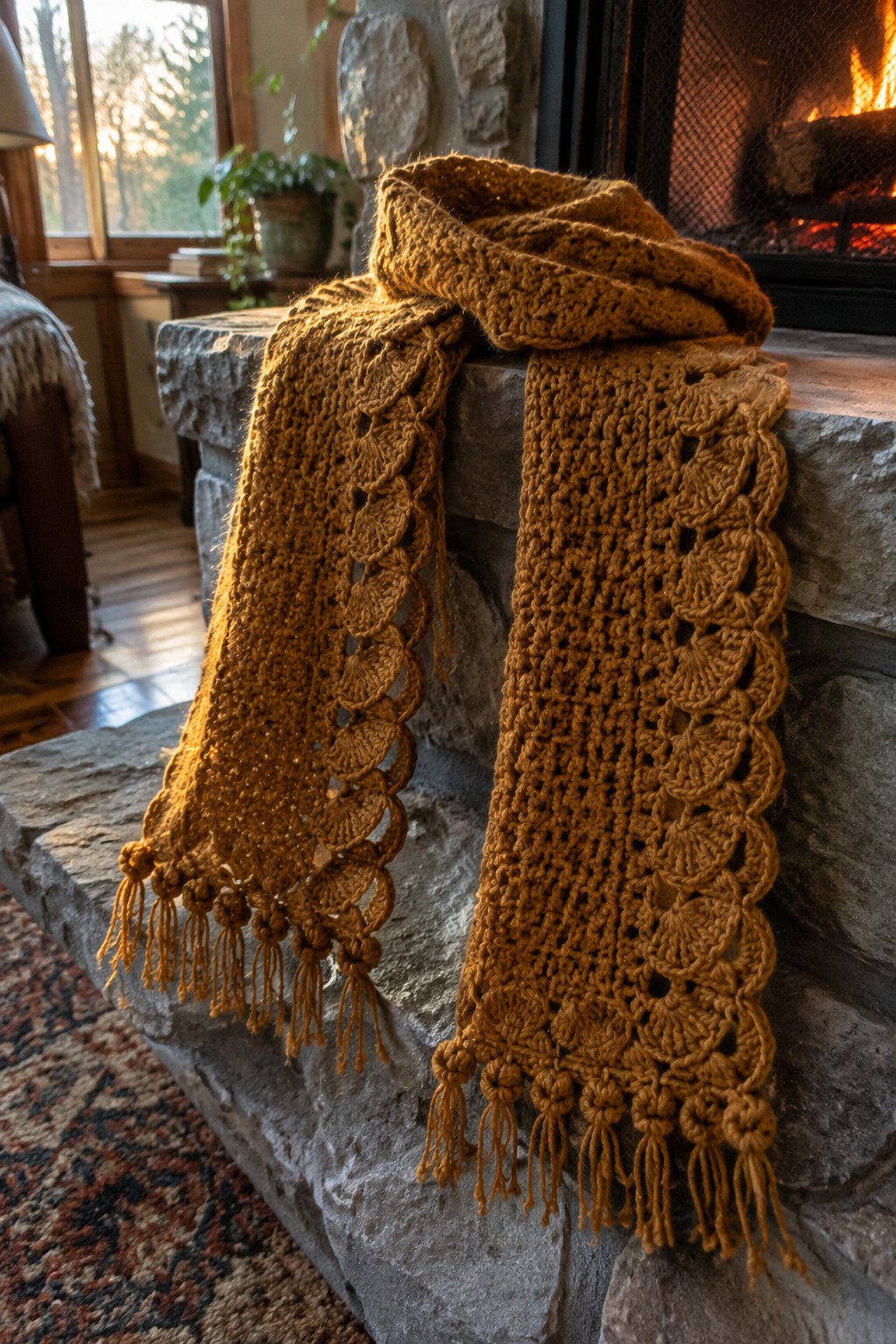
A scarf built from repeating fan motifs produces an openwork texture that drapes softly while still showing clear stitch definition. The scalloped borders run the full length on both sides, giving the piece a finished edge without extra finishing steps. Tassels attached at each end provide weight and a simple decorative accent that matches the open pattern.
What makes this idea useful is how the fan repeat can be widened or narrowed by adding or removing pattern repeats to change the scarf width. The same edging works on a shorter cowl or a longer wrap by adjusting the starting chain. For gifts, this style stands out because the border detail reads as more involved than a plain stitch while still using basic increases and decreases.
Textured Pastel Scarves with Mixed Stitch Patterns

Crochet scarves gain visual interest when you vary the stitch texture across a few versions while keeping the same basic long rectangular shape. One version uses raised bobbles for a chunky surface, the middle one works a tighter grid-like pattern, and the third features open shell stitches with gradual color shifts. These options fit the wearable accessory category and layer easily over coats or sweaters. The soft pastel colors and scalloped edges keep the overall look light rather than heavy.
What makes this idea useful is how simply you can swap the main stitch on the same scarf length to create different weights. Make the bobble version wider for extra warmth or shorten the lace one into a quick neck wrap. The approach also works well for gifts since each scarf uses a similar amount of yarn but looks distinct. You could easily change the color sequence or add fringe to match different wardrobes.
Bobble Border Scarf

A crochet scarf with a border of raised bobbles adds texture through evenly spaced rounded stitches worked into the edge. This style suits winter accessories because the bobbles create dimension on a flat base without adding bulk to the main fabric. The soft purple tone keeps the bobbles visible while blending into everyday wear.
What makes this idea useful is how the bobble row can be added to any basic scarf pattern for quick detail. You could repeat the bobbles in multiple rows or switch to a brighter color for more contrast. For gifts, a design like this photographs clearly and works in different yarn weights.
Open Mesh Infinity Scarf

An infinity scarf made from a long strip of open mesh stitch creates a lightweight layer that drapes in soft folds. The project joins the ends into a continuous loop so the scarf sits close to the neck without extra bulk or slipping. A self-striping yarn in warm orange, pink, and yellow tones lets the color changes run through the grid pattern and emphasize the open texture.
What makes this idea useful is how the mesh stitch adds visual interest without using heavy yarn or dense stitches that can feel too warm indoors. You can shorten the starting chain to make a single-wrap cowl or lengthen it for extra loops around the neck. Working the same stitch in a solid color or cooler palette would shift the focus onto the grid structure itself.
Bunny Ear Scarf with Paw Accents

A standard long scarf gains a distinct shape from two bunny ears attached near the top edge and paw prints formed at each bottom end. The ears sit flat against the scarf body with a cream center panel, while the paws use raised clusters in cream and light pink to create separate pad shapes. This keeps the project firmly in the wearable accessory category while adding structure that shows up clearly when the scarf hangs or drapes.
What makes this idea useful is how the ears and paw sections can be made separately and sewn on after the main scarf length is finished. The same pattern works for adult or child sizes by simply shortening the body or narrowing the width. For gifts, the design stands out because the animal details require only small extra pieces rather than an entirely new stitch pattern. You can also swap the main color and keep the cream accents to match different winter outfits without extra planning.
Lacy Openwork Scarf with Bobble Edging

An open lace scarf built from repeating rows of oval eyelets creates a light, breathable fabric that still shows clear stitch definition. The pattern alternates open sections with narrower solid bands, which gives the scarf enough structure to hold its shape while remaining drapey. A border of small bobbles finishes both ends and adds weight that helps the scarf hang evenly. This approach belongs in the wearable accessory category and works especially well for scarves meant to layer without bulk.
What makes this idea useful is how simply the repeat can be widened or lengthened to match different yarn weights or desired finished sizes. The openwork keeps the project moving quickly even when worked in sport or DK yarn, and the bobble edging can be replaced with fringe or a plain scallop if a different look is needed. A scarf in this style photographs cleanly for sharing because the eyelet pattern creates strong visual contrast. It also serves as a practical gift option since it uses less yarn than a solid scarf yet still reads as complete.
Grid Stitch Cowl for Quick Winter Layers

A cowl worked in a repeating grid texture creates a raised, structured fabric that holds its shape well around the neck. The looped design lets you wear it as a single layer or doubled for extra warmth without adding bulk. This style fits the wearable accessory category and works best in a medium or bulky yarn that shows off the stitch definition clearly.
What makes this idea useful is how easily the width and height can be adjusted to suit different necklines or coat styles. The same grid pattern can be turned into a longer infinity scarf or kept compact for a closer fit. A neutral shade like the one pictured makes it a practical everyday piece, while a brighter color would help it stand out in gift sets or market displays. The texture photographs well, which helps when planning projects to share on Pinterest.
Two-Panel Textured Scarf With Chevron and Open Stitches

A scarf built from two long panels worked in different stitch patterns and joined along one edge. The brown section uses a repeating chevron design that creates raised diagonal lines, while the pink section uses a simpler open grid with small clusters. Placing the denser pattern next to the lighter one gives the scarf visual weight on one side without extra color changes or stripes. This approach fits the wearable accessory category and lets you finish a full-length scarf by working two narrower pieces instead of one wide one.
What makes this idea useful is the chance to combine two stitch patterns you already know without starting over. The straight rectangular shape is easy to resize by adding or removing rows from either panel before joining. You can swap in leftover yarn from other projects since each side stands alone. For gifts, a design like this works well because the finished scarf looks more involved than the actual time required to make the two sections.
Granny Square Scarf with Color Blocks

A scarf built from joined square motifs forms a lightweight accessory with an open texture that layers easily. The pattern uses repeating blocks of yellow and coral to create wide stripes along the full length. Fringe at each end adds movement and completes the shape without extra finishing steps.
What makes this idea useful is how easily you can change the length by adding or removing motif rows to match your yarn supply. The color blocking lets you use up partial skeins while keeping the design balanced. This style works especially well as a quick gift since the motif repeats make it simple to adjust width or switch to a single color for a more understated version.
Ruffled Edge Textured Scarf

A long narrow scarf uses a dense textured stitch for the center panel while ruffles form along both long edges through layered scalloped borders. The ruffles create contrast against the flatter body and give the scarf extra width at the sides without adding bulk to the middle. This style fits the wearable accessory category and works for cooler weather when you want something lighter than a full blanket scarf.
What makes this idea useful is how easy it is to change the ruffle depth by adding or removing rows along the edges. You can shorten the overall length for a child or make it wider for more coverage. The button closure near one end offers a simple way to keep it in place, and switching to a brighter yarn or solid color would make the texture stand out even more. A project like this photographs cleanly for sharing because the ruffles catch light and show the stitch detail well.
Cable Textured Narrow Scarf

A long narrow scarf built around vertical cable repeats creates a strong linear design that stays slim and drapes well. The raised braided sections stand out against the background stitches, giving the fabric structure and interest while keeping the overall shape simple. This approach fits the wearable accessory category and works especially well for winter layering since the texture adds warmth without bulk.
What makes this idea useful is how easily the width can be changed by adding or removing cable repeats to suit different styles. The length also adapts quickly for a shorter neck wrap or a full-length scarf, and the single-color version keeps the focus on the stitch pattern. For gifts, a design like this works well because the repeats are straightforward to follow and the finished piece folds compactly for gifting.
Shell Stitch Rainbow Scarf

A scarf worked in repeating shell stitches builds rows of rounded scallops that create a soft, textured surface. The pastel rainbow yarn shifts gradually across the length, and matching tassels finish one end. This approach suits a lightweight winter accessory that can be worn looped or draped.
What makes this idea useful is the straightforward repeat that lets you change the finished length without altering the pattern. The color flow works with variegated yarn or simple stripes if you want less blending. A project like this works especially well as a gift because the tassels add detail with minimal extra steps.
Frequently Asked Questions
1. What yarn weights and fibers are ideal for creating warm textured crochet scarves? Bulky or super bulky weight yarns in wool, alpaca, or acrylic blends provide excellent insulation and help textured stitches like bobbles or cables stand out clearly. Choose fibers with some stretch for comfort around the neck, and always check the label for drape and washability to match your winter needs.
2. Which textured stitches from the ideas are suitable for beginners? Start with simpler options like the waffle stitch or basic ribbing using front and back post double crochets, as they build texture without complex shaping. Practice on a small swatch first to master tension, then progress to the full scarf pattern for steady results.
3. How can I adjust the patterns to make scarves longer or wider for different styles? Add more rows to increase length or repeat the stitch pattern across additional chains for width, keeping the same hook size to maintain gauge. Measure as you go and account for the scarf’s natural stretch when worn to achieve the perfect fit.
4. What steps help preserve the texture when washing these crocheted scarves? Hand wash in cool water with mild detergent, gently squeeze out excess moisture without twisting, and lay flat to dry while shaping the stitches. Avoid machine drying or high heat to prevent flattening, and use a mesh bag if machine washing on a gentle cycle.
5. How do I add fringes or borders to enhance the finished look of these scarves? Cut yarn strands twice the desired fringe length, fold them in half, and pull loops through edge stitches with a crochet hook before securing. For borders, work a round of single crochet or picot edging around the entire scarf to frame the texture neatly and prevent curling.
