

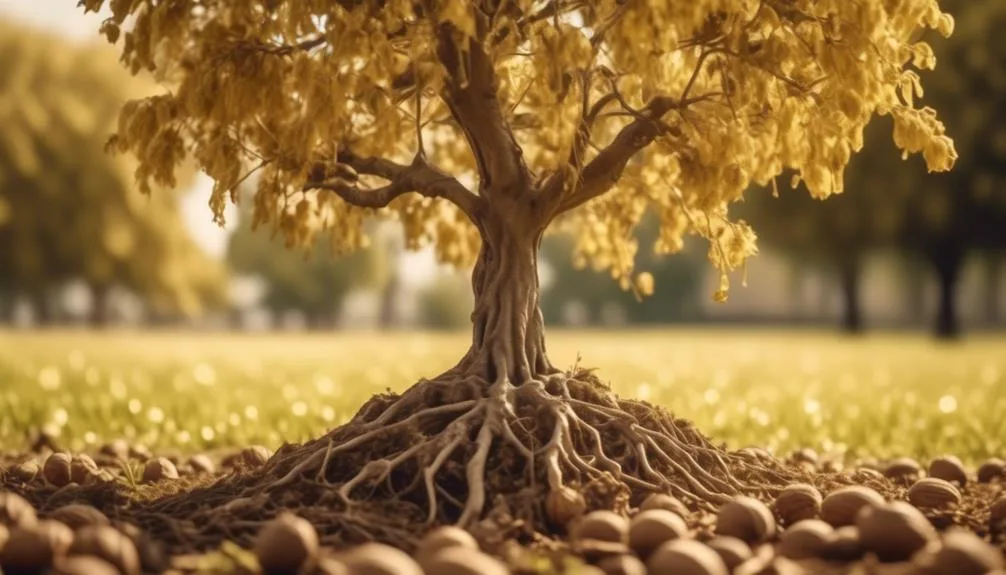
Walnut trees produce juglone, a natural compound that affects nearby plants. This plays a vital role in the tree's survival and the surrounding ecosystem.
Understanding why walnut trees produce juglone gives insight into their defense mechanisms and ecological interactions.
So, what drives walnut trees to produce juglone, and how does it impact the environment?
Let's explore the reasons behind this intriguing aspect of walnut tree biology and its effects on the natural world.
Key Takeaways
- Walnut trees produce juglone as a defense mechanism against competing plants, giving them a competitive advantage for resources like water and nutrients.
- Juglone is an allelopathic substance that inhibits the growth of nearby plants, affecting the composition of the plant community and altering ecosystem balance.
- Juglone also acts as a defense mechanism against pests and diseases, deterring herbivores and suppressing pathogens.
- Understanding juglone's ecological role is crucial for managing plant communities, preserving ecosystems, and selecting appropriate plants for gardens in the presence of walnut trees.
Juglone Production in Walnut Trees
If you have ever wondered why walnut trees produce juglone, it's because the trees use it as a natural defense mechanism against other plants competing for resources. Juglone is a natural chemical compound found in various parts of the walnut tree, such as leaves, roots, and nuts, and it exerts juglone toxicity on many other plant species.
When juglone is released into the soil through the tree's roots or fallen leaves, it can inhibit the growth of nearby plants, giving the walnut tree a competitive advantage for resources like water and nutrients. This phenomenon, known as allelopathy, showcases the complex ways in which plants interact with each other and their environment.
Understanding juglone production in walnut trees sheds light on the intricate mechanisms of plant interaction and the strategies they employ for survival.
Impact of Juglone on Other Plants
When juglone is released into the soil through the tree's roots or fallen leaves, it can have a significant impact on the growth of nearby plants, altering the competitive landscape for resources like water and nutrients. Juglone toxicity, a naturally occurring phenomenon in walnut trees, inhibits the growth of certain plant species by disrupting essential metabolic processes.
The effects of juglone can be observed through wilting, yellowing of leaves, stunted growth, and, in severe cases, plant death. This allelopathic substance creates an environment where only juglone-tolerant plants can thrive, giving walnut trees a competitive advantage in their ecosystem.
Understanding juglone effects is crucial for gardeners and farmers as it influences plant selection and garden planning in areas where walnut trees are present. It's essential to consider juglone's impact when cultivating plants near walnut trees to ensure successful growth and development.
Recommended Products

🌰 PRODUCE VALUABLE WALNUTS Grow your own black walnuts for fresh eating, baking, and wildlife. A rewarding tree that produces nutritious, high-value nuts.

For sale is one Black Walnut tree that is approximately 10-16 inches tall and shipped in a quart pot
Defense Mechanism of Walnut Trees
Walnut trees employ a sophisticated defense mechanism to protect themselves from pests and diseases. One of the key components of this defense is the production of juglone, a natural compound found in various parts of the walnut tree, including its roots, leaves, and fruits. Juglone acts as a potent allelopathic substance, inhibiting the growth of competing plants and deterring herbivores and pathogens. This defense mechanism gives walnut trees a competitive edge in their environment, ensuring their survival and reducing the risk of being outcompeted by other vegetation. The following table illustrates the key components of the walnut tree defense and the juglone mechanism:
| Walnut Tree Defense | Juglone Mechanism |
|---|---|
| Allelopathic properties | Inhibition of plant growth |
| Pest deterrence | Pathogen suppression |
| Competitive advantage | Enhanced survival |
Ecological Role of Juglone
Juglone's ecological role extends beyond the walnut tree, influencing the surrounding plant community and ecosystem dynamics.
The production of juglone by walnut trees creates a competitive advantage, inhibiting the growth of certain plant species in the vicinity. This process, known as allelopathy, helps the walnut tree to reduce competition for resources such as water, light, and nutrients.
By limiting the growth of other plants, the walnut tree can better secure these essential resources for its own growth and survival. However, this can also lead to a shift in the composition of the plant community, affecting ecosystem balance and plant interactions.
Understanding the ecological role of juglone is crucial for managing plant communities and preserving the delicate balance of ecosystems where walnut trees are present.
Managing Juglone in the Garden
To effectively manage juglone in your garden, consider implementing strategies that promote the coexistence of walnut trees and other plant species.
- Select Juglone-Tolerant Plants: Choose plant species that are less susceptible to juglone toxicity, such as yarrow, daylilies, or certain types of grasses.
- Create Physical Barriers: Utilize raised beds or install impermeable barriers to limit the spread of juglone from walnut tree roots into the surrounding soil.
- Opt for Container Gardening: Grow sensitive plants in containers or pots to prevent direct contact with juglone-contaminated soil.
Conclusion
In the end, walnut trees not only provide delicious nuts but also release juglone to protect themselves and compete with other plants.
Understanding the ecological role of juglone can help you effectively manage your garden and coexist with these impressive trees.
Happy gardening and may your garden flourish in harmony with nature.
