

Watering a loquat tree may seem simple, but it's more than just a quick soak. Getting it right is crucial for the tree's growth and fruit production. Understanding their specific needs can make all the difference.
So, how do you make sure your loquat tree gets the right amount of water? Let's explore the key principles and practical tips for watering loquat trees to help them thrive in your garden.
Key Takeaways
- Maintain a consistent watering schedule throughout the growing season.
- Water deeply to reach the 12-18 inch deep roots.
- Check soil moisture regularly and adjust watering schedule accordingly.
- Adjust watering frequency based on seasonal changes to promote optimal growth and prevent stress or root rot.
Watering Frequency
To ensure the health and growth of your loquat trees, it's crucial to maintain a consistent watering schedule throughout the growing season. Understanding the root depth of loquat trees is essential for effective watering.
Loquat tree roots typically extend to about 12-18 inches deep, so it's important to water deeply to reach these roots. Shallow, frequent watering can lead to shallow root development, making the trees more susceptible to stress during dry periods.
Additionally, consider evaporation rates when determining the watering frequency. In hot, dry climates, water may evaporate more quickly, necessitating more frequent watering. Conversely, in cooler, more humid conditions, watering can be less frequent.
Monitoring the moisture level of the soil and adjusting your watering schedule accordingly will help ensure that your loquat trees receive the optimal amount of water for healthy growth.
Soil Moisture Levels
Check the soil moisture levels regularly by using a moisture meter or by manually testing the soil with your fingers. This will help you ensure that the loquat tree's roots are receiving adequate water.
When using a moisture meter, insert the probe to the root depth, typically 6-8 inches, to get an accurate reading. If you prefer manual testing, feel the soil at different depths. The top 2-3 inches may dry out quickly due to evaporation rates, but the soil at root depth should remain slightly moist.
Keep in mind that evaporation rates can vary based on factors such as temperature and humidity. By monitoring soil moisture levels, you can adjust your watering schedule to maintain optimal conditions for your loquat tree's roots.
Watering Techniques
When watering your loquat tree, ensure that the water reaches the root zone to promote deep and healthy root growth. Loquat tree roots can extend quite deeply, so it's important to water deeply rather than frequently.
The root depth of a loquat tree can reach up to 3 feet, so watering should penetrate at least 2 feet into the soil to ensure the entire root system receives adequate moisture. To achieve this, use a slow watering technique such as drip irrigation or a soaker hose, allowing the water to penetrate deeply into the soil.
It's also essential to establish a regular watering schedule, especially during the tree's active growing season. A consistent watering routine helps the roots develop and prevents stress from inconsistent moisture levels.
Recommended Products
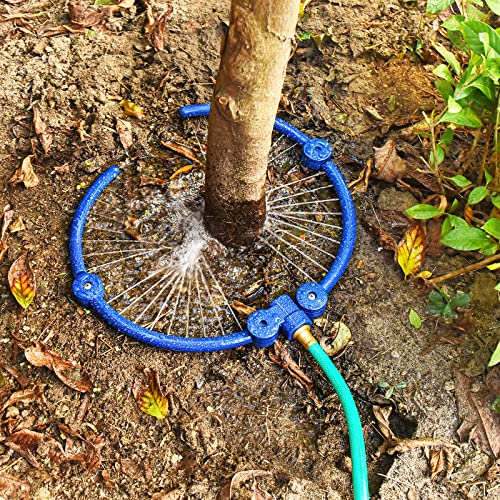
【Specially Designed for Trees and Shrubs】 The Watering Ring is a multi-purpose irrigation ring that attaches to a garden hose to efficiently water young trees shrubs vegetables or flower beds using drip or trickle irrigation.It directs water to the root perimeter of the plant to give them a good start during the first two growing seasons or through periods of drought.

NO MORE HARD INSTALLATION - SET UP IN MINUTES. Tired of struggling with stiff barbed fittings? This drip irrigation system features quick-connect fittings that let you push, lock, and secure tubing effortlessly. No tools, no leaks, just a smooth setup experience. Enjoy a frustration-free installation and get your garden watering system running in minutes.

Automatic Drip Irrigation System Kit: The universal connector adapts to different tubing sizes with a secure, leak-free fit; the dual-channel connector splits a single line into two separate watering paths for multi-zone irrigation. The garden bed watering system includes 100FT 1/4" Water Pipe, Cable Ties x 24, Universal Connector x 1, Dual Channel Connector x 1, Quick Tees x 24, Sealing Tape x 1, Fixing Clips x 24, End Plus x 4, and Brass Nozzles x 24. Simply unbox and start building automatic misting system.
Seasonal Considerations
As you plan your watering schedule for your loquat tree, it's essential to consider the seasonal variations that can impact its water needs. Loquat trees have different watering requirements based on the time of year. Here are some seasonal considerations to keep in mind:
- Spring:
- Loquats experience vigorous growth during spring. Adjust your watering frequency to support the increased demand for water.
- Summer:
- With the intense heat, your loquat tree will require more frequent watering to prevent stress and dehydration.
- Fall and Winter:
- As the tree enters dormancy, reduce watering to prevent root rot and other water-related issues.
Understanding these seasonal changes will help you tailor your watering routine to ensure the health and vitality of your loquat tree, promoting optimal growth and fruit production.
Recommended Products

Accurate Soil Moisture Detection: The XLUX Soil Moisture Meter can tell you if the soil deep inside your pot or garden is dry, moist or wet; whereas your eyes and fingers can only determine the moisture level of the soil surface. The probe is 5.5 inches (14 cm) longer than regular styles, allowing it to measure the soil moisture at the bottom of larger and deeper flower pots.

Trusted Since 2015: Become one of the many plant lovers who rely on the proven accuracy of XLUX. Established in 2015, our soil moisture meter has earned over 60,000+ verified ratings for its consistent performance. While many many newer brands come and go, we provide the long-term reliability and quality that American households have trusted for over a decade.

Accurate Soil Moisture Detection: The XLUX Soil Moisture Meter can tell you if the soil deep inside your pot or garden is dry, moist or wet; whereas your eyes and fingers can only determine the moisture level of the soil surface. The probe is 5.5 inches (14 cm) longer than regular styles, allowing it to measure the soil moisture at the bottom of larger and deeper flower pots.
Signs of Over/Underwatering
If you notice the leaves of your loquat tree turning yellow and wilting, it may indicate that the tree is experiencing either overwatering or underwatering. Yellowing and wilting leaves are common signs of stress in loquat trees.
Overwatering can lead to root rot, causing the leaves to turn yellow and eventually wilt. On the other hand, underwatering can result in dry soil and wilted leaves as the tree is deprived of necessary moisture.
It's crucial to pay attention to these signs and adjust your watering routine accordingly. Checking the soil moisture and the appearance of the leaves can help you determine whether your loquat tree is getting too much or too little water.
Proper watering is essential for maintaining the health and vitality of your loquat tree.
Conclusion
Mastering the art of watering your loquat trees is key to their overall well-being and fruitfulness.
By staying attuned to their watering needs, understanding the soil moisture, and considering seasonal variations, you can ensure your trees receive the right amount of water.
With the proper care and attention, your loquat trees will flourish and reward you with an abundance of delectable fruit.
Keep nurturing your trees, and savor the satisfaction of a thriving orchard.
