

Have you ever wondered how much space your fruit trees really need to thrive? If you’re planning to grow your own orchard or just a few backyard trees, understanding their space requirements is crucial for a healthy harvest.
Imagine planting a beautiful apple tree only to find it cramped and struggling for nutrients. It’s a common issue many gardeners face when they underestimate the space needed for growth. This article will guide you through the ideal spacing for various fruit trees, helping you create a flourishing garden that maximizes your yield. With the right knowledge, you can ensure your trees have the room they need to grow strong and produce delicious fruit.
Key Takeaways
- Understand Space Requirements: Different fruit trees have varying space needs based on size and growth habits, which is essential for healthy growth and optimal fruit production.
- Dwarf vs. Standard Trees: Dwarf trees require 8 to 10 feet of spacing, while semi-dwarf trees need 12 to 15 feet, and standard trees need 20 to 30 feet apart to thrive.
- Growth Habits Matter: Upright growers should be spaced 6 to 8 feet apart, while spreading trees require 15 to 20 feet to avoid overcrowding and ensure adequate air circulation.
- Plan for Root Development: Roots can spread wider than the tree canopy; ensuring proper spacing helps roots access nutrients without competing with neighboring trees.
- Consider Environmental Factors: Adapt spacing according to the planting environment—home gardens require tighter spacing than orchards, where higher yields may allow for denser planting.
- Container Gardening Tips: For container gardening, use large pots (at least 15 gallons) for larger trees and maintain 2 to 3 feet of space between containers to encourage healthy growth and air circulation.
Factors Influencing Space Requirements
Space requirements for fruit trees hinge on various factors related to their growth and characteristics. You must account for tree size, type, growth habit, and spread to ensure your trees thrive.
Tree Size and Type
Tree size significantly affects its space needs. Larger trees, such as apple and pear trees, require more room compared to smaller varieties like dwarf citrus. Here’s a quick breakdown:
- Dwarf Trees: Typically need 8 to 10 feet between them. These trees fit well in small gardens.
- Semi-Dwarf Trees: Generally require 12 to 15 feet apart. This size allows for moderate growth and yields.
- Standard Trees: Usually need 20 to 30 feet between them. These trees can reach considerable heights and widths.
Selecting the right type for your space is essential. Research the maximum size your chosen fruit tree can attain to determine proper spacing.
Growth Habit and Spread
Growth habit and spread also influence the necessary distance between trees. Some trees exhibit a more upright growth pattern, while others spread wider. Here’s how these characteristics shape your planting strategy:
- Upright Growers: Trees like ‘Colonnade’ apples grow tall and narrow. Space them about 6 to 8 feet apart.
- Spreading Trees: Varieties such as peach and cherry trees tend to branch out wide. Plant these anywhere from 15 to 20 feet apart to allow for ample air circulation.
- Vigorous Growers: Trees known for rapid growth may need additional space. For example, plums often spread significantly, necessitating 15 to 18 feet between them.
Careful consideration of growth habits helps prevent overcrowding and promotes healthy fruit production.
Recommended Spacing Guidelines
Proper spacing for fruit trees ensures healthy growth and abundant harvests. Here are clear guidelines to help you determine how much room each tree needs.
Recommended Products

Product Quantity: 180+ premium bonsai fruit seeds across 5 varieties; Individual packs contain 40+ apple, 40+ lemon, 40+ orange, 20+ blueberry, and 40+ cherry seeds; Perfect for starting a diverse miniature orchard

4 FRUIT VARIETIES – 100 SEEDS TOTAL: Includes 30 Apple Seeds, 30 Lemon Seeds, 30 Cherry Seeds, and 10 Banana Seeds, individually separated by variety for an exciting fruit-growing collection.

Complete Fruit Garden Collection: This comprehensive seed set provides everything needed to start a diverse container fruit garden.With 160 total seeds, this collection offers exceptional value for gardeners seeking to grow multiple fruit varieties in containers on patios, balconies, or small spaces
For Different Fruit Trees
- Dwarf Trees: Space them 8 to 10 feet apart. Examples include dwarf citrus, which thrive in tighter spaces.
- Semi-Dwarf Trees: Provide 12 to 15 feet of space for trees like semi-dwarf apples and pears. This spacing allows for ample sunlight and air circulation.
- Standard Trees: Require 20 to 30 feet between them. This category includes larger trees like full-size apple and pear trees, which need room to grow wide.
- Upright Growers: Trees like ‘Colonnade’ apples fit best with a spacing of 6 to 8 feet. Their upright growth habit lets them thrive even in narrower areas.
- Spreading Trees: For trees such as peaches and cherries, allow 15 to 20 feet. This distance ensures branches don’t crowd each other.
- Consider Growth Habits: Observe how the tree grows. Upright varieties may crowd less than sprawling ones, influencing how you space them.
- Mind the Roots: Roots spread wider than the tree’s canopy. Ensure enough space for root development by following recommended guidelines.
- Mulching and Maintenance: Applying mulch around your trees helps retain moisture and reduce weed competition. Keep mulch away from the trunk to avoid rot.
- Plan Ahead: If you anticipate growing more trees in the future, leave extra room. Planning aids seamless growth and reduces the need for later adjustments.
Understanding these spacing recommendations helps you create a thriving fruit tree garden. You’ll maximize growth potential and ensure healthy fruit production by following these guidelines.
Importance of Adequate Space
Providing adequate space for fruit trees promotes healthy growth and maximizes fruit production. Overcrowding hinders their ability to thrive.
Recommended Products

Complete 30-Piece Branch Training Kit: Your kit includes 20 M-shaped branch pullers (10 each in 3.9 inch and 5.1 inch sizes) and 10 tree limb spreaders (5 each in 7.1 inch and 10 inch sizes). This comprehensive set provides multiple tools for precise branch bending and shaping at various growth stages

🍎【6.6FT Reach for Medium-Height Trees】 Ideal for home gardens and medium-height trees. The 6.6FT stainless steel pole lets you pick fruits safely from the ground—no ladder needed for apples, mangoes, oranges, and more.Safely pick fruits from tall trees without a ladder! The aluminum telescoping pole extends up to 13 feet, making it easy to reach apples, mangoes, oranges, and more.

Tree Branch Modelling Too: 15 Pcs 3.94in fruit tree branch puller suitible for 0.4in branch, can pull lower the drooping angle of the tree branch. for orchards with apple trees spaced 1-2 meters and tree age 1-3 years, with a pruning angle of 110-135 degrees.
Nutrient Competition
Crowded fruit trees compete for nutrients, water, and sunlight. When trees are too close, their roots may not access enough nutrients. Optimal spacing allows trees to absorb the required elements from the soil. For example, if you plant an apple tree too close to a peach tree, both may struggle to thrive due to reduced access to resources.
Air Circulation and Sunlight Access
Air circulation and sunlight access are crucial for disease prevention and fruit quality. Proper spacing allows air to flow freely, reducing the risk of fungal infections. Good airflow promotes quicker drying after rain or watering. Sunlight access boosts photosynthesis, leading to healthier foliage and better fruit. For instance, if you place trees too closely together, shaded areas can develop, leading to weak branches and less fruit. Aim for the recommended spacing for each tree type to keep your garden flourishing.
Adjusting Space for Different Environments
Creating the right environment for fruit trees involves understanding their space requirements. Different settings influence how closely trees can grow together while still thriving.
Recommended Products
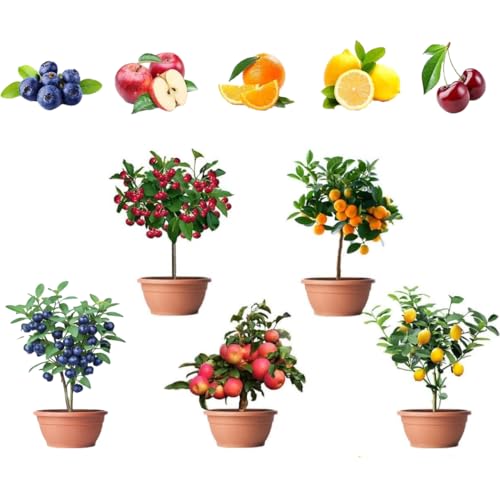
Variety Pack of 5 Fruits: Includes 40 Lemon seeds, 40 Orange seeds, 40 Apple seeds, 20 Cherry seeds, and 20 Blueberry seeds for a colorful and diverse home garden


Home Gardens vs. Orchards
In home gardens, space is often limited. Aim for optimal spacing to allow trees room to grow. For smaller varieties, such as dwarf trees, 8 to 10 feet between each tree works well. Semi-dwarf types, like a standard apple tree, need 12 to 15 feet. In contrast, orchards allow for denser planting. Here, trees can be spaced more closely, but maintaining 20 to 30 feet for standard trees promotes better air circulation and sunlight access. Orchards aim for higher yields, so balancing tree density with health is crucial.
Container Gardening Considerations
Container gardening offers flexibility but requires careful consideration of space. Use larger containers for bigger fruit trees, ensuring at least 15 gallons for dwarf varieties. Smaller containers can stifle growth. Choose compact, upright varieties, like columnar apples, for limited spaces. Allow at least 2 to 3 feet between containers to facilitate airflow and access for maintenance. Regularly check for signs of overcrowding, such as yellowing leaves or stunted growth. Adjust container sizes as needed to keep your trees flourishing.
Conclusion
Understanding the space requirements for your fruit trees is essential for their health and productivity. By giving them the room they need to grow, you’re setting the stage for a bountiful harvest. Whether you’re planting dwarf varieties in a small garden or larger trees in an orchard, proper spacing helps ensure each tree thrives.
Remember to consider the specific needs of each type of tree and their growth habits. With a little planning and attention to detail, you can create a beautiful and fruitful garden that brings joy for years to come. Happy gardening!
Frequently Asked Questions
What is the ideal spacing for fruit trees?
Proper spacing for fruit trees depends on their size. Dwarf trees need 8 to 10 feet apart, semi-dwarfs require 12 to 15 feet, and standard trees need 20 to 30 feet. This spacing ensures they have enough room to grow, access nutrients, and produce fruit effectively.
Why is spacing important for fruit trees?
Spacing is crucial because overcrowded trees compete for nutrients, sunlight, and water, which can hinder their growth and fruit production. Adequate spacing promotes healthy growth, airflow, and sunlight access, reducing the risk of disease and ensuring a better harvest.
How does tree type affect spacing?
Different types of trees have varying growth habits and sizes. For example, upright growers like ‘Colonnade’ apples need 6 to 8 feet, while spreading varieties like peaches and cherries should be spaced 15 to 20 feet apart. Knowing the type helps determine optimal spacing.
Can I plant fruit trees closer together in a home garden?
In a home garden with limited space, it’s still vital to maintain optimal spacing. Dwarf trees should be spaced 8 to 10 feet apart, while semi-dwarf trees need 12 to 15 feet. This ensures healthy growth and adequate resource access despite restricted space.
How does container gardening affect tree spacing?
In container gardening, larger containers should be used for bigger fruit trees, and it’s recommended to allow 2 to 3 feet between containers. This spacing promotes airflow, easier maintenance, and adequate space for roots to thrive without overcrowding.
