

A pear tree is an ornamental tree that produces beautiful white flowers in the spring. The pears that the tree produces are a golden color and are very juicy. The tree typically grows to be about 20 feet tall. Pear trees do not require a lot of care, but they do need to be pruned in order to produce the best fruit.
Pear trees need to be pruned every year to maintain a good fruit production.
Recommended Products

PROFESSIONAL GARDENING GRAFTING TOOLS: Including 2 in 1 grafting pruning tools, 3 replaceable blades, a grafting knife, a screwdriver, a wrench, 2 grafting films, 160 rubber bands, 40 wide rubber bands, and 50 colorful tag cards

Adjustable and Durable Handle - Extendable Loppers: The lopping shears are adjustable from 16 inches to 24 inches, allowing you to handle tall branches easily. The iron arm is more sturdy and durable, and will not bend even when cutting large and thick branches.

Do pear trees have to be pruned?
Training and pruning are essential for growing fruit successfully. Fruit size, quality and pest management are all influenced by training and pruning. Untrained and unpruned trees become entangled masses of shoots and branches that produce little or no fruit and harbor insects and diseases.
Pruning is an important horticultural practice that helps maintain the health and appearance of trees and shrubs. By removing dead, diseased, or damaged branches, as well as crossing or rubbing branches, pruning can help improve the structure of the plant and promote new growth. When pruning to a bud, it is important to slant the cuts so that the new growth will develop beautifully. Every branch has buds pointed in various directions, so be sure to make your cut above a bud that is aimed outward. This will help your tree grow into a spreading shape.
Recommended Products

★ 1. What you get: Professional convenient grafting tool set including a dual-use grafting pruner tool contain 2 extra replaceable blades, a wrench and a screwdriver, along with 36pcs wide rubber bands, 150 thick rubber bands and 1 grafting tape, packed in a black wallet to meet all your needs

✂Multifunctional -2 in 1 Garden Grafting Tools-Professional grafting set allows you to pruning and grafting at the same time, saving more time and effort than traditional grafting methods, easy to use and more efficient. It allows you to trim away excess leaves and twigs and prepare the plants to be grafted. At the same time, you can make a precise cut into the grafting stock with the special grafting blade.
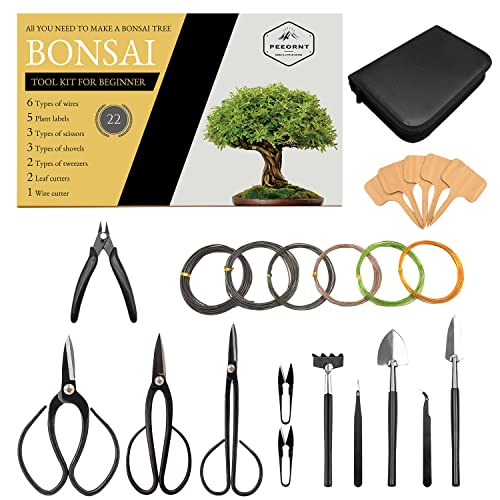
EVERYTHING YOU NEED TO START BONSAI - The bonsai tree kit includes 3 x bonsai scissor, 2 x leaf cutters, 2 x tweezers, 3 x soil shovels/rakes, 6 x bonsai training wires, 1 x wire cutter, 5 x bamboo plant markers. Start your bonsai journey with our bonsai kit.
How often should pear trees be pruned
Pruning is an important part of keeping your pear tree healthy and vigorous. Every two or three years, take a step back and assess the overall shape of your tree. If you see any limbs sticking out awkwardly, or notice that some areas of the tree are too dense with lateral branches for light to penetrate, you can choose to do some pruning. Pruning will help to encourage proper growth and fruiting, and will keep your tree looking its best.
If you want to grow a pear tree, it’s important to choose a spot that gets plenty of sunlight. Pear trees need at least six hours of sun each day to produce sweet fruit. The soil should be well-draining and rich in organic matter. However, you need to be careful not to use too much nitrogen-rich fertilizer. Pear trees that have access to too much nitrogen can be more susceptible to fire blight, a disease that can damage the fruit.
What month should you prune pear trees?
Pruning your pear tree is an important step in maintaining a healthy tree. The best time to prune your pear tree depends on how the tree is being grown. Free-standing trees should be pruned from mid-winter to early March, when the leaves have fallen. If a pear tree is being grown as a cordon, espalier, or fan, it’s best to prune in summer, with just a light tidy up over winter.
Pruning a pear tree in late winter helps ensure that the tree will produce fruit in the coming year. By pruning in late winter, you allow the tree to focus its energy on fruit production.
Should pear trees be topped?
Heavy pruning of a young pear tree will stunt its growth, so it’s important to only lightly prune the upper crown of a mature tree. Topping a pear tree will not encourage fruit production, so gentler alternatives should be used to reduce the tree’s size.
Dwarf pear trees are a great choice for those looking for smaller trees that will still produce fruit. They typically grow 8-10 feet tall and 7 feet wide, and can produce fruit a little sooner than standard trees. When planting, space them 18-20 feet apart.
Recommended Products

Home Orchard in a Pot: Experience the joy of homegrown pears with the American Plant Exchange Bartlett Pear Trees. These live, semi-self-pollinating fruiting trees, standing 3-4 feet tall in a 5-gallon pot, bring the allure of a home orchard to your outdoor landscape.

These are ready to plant and should be put in the ground according to the included instructions upon arrival. All pictures are of fully grown plants. Sizes shipped are in the title and description. Deciduous plants do not have leaves in the winter.

Harvest Season: Produces large, round, golden-brown pears ready for harvest from late summer to early fall
How do you prepare a pear tree for winter
Mulch is a great way to protect fruit trees in winter. A thick layer of mulch will insulate the roots and keep them from freezing. Mulch also helps prevent the ground from heaving, which can damage the roots.
Pruning is a horticultural and silvicultural practice involving the selective removal of certain parts of a plant, such as branches, buds, or roots.
Are pear trees high maintenance?
If you’re looking for low-maintenance fruit trees that will produce plenty of quality fruit, peaches and pears are two great options. Both varieties are relatively easy to care for, and will provide you with years of delicious fruit. So if you’re looking to add some fruit trees to your garden, starting with a peach or pear tree is a great way to go.
Biannual blooming is a phenomenon where a tree will only produce flowers every other year. This can be caused by a number of factors, including the young age of the tree, too few fruits, or the variety of the tree. Some pear varieties will continue to have this problem throughout their life, while others will eventually begin producing flowers annually as they mature.
How many years will a pear tree produce fruit
A pear tree sapling bought from a nursery is usually 1-2 years old and will take a few more years to bear fruit properly. The tree will begin to bear fruit somewhere between 3 and 7 years of age, depending on its size and variety.
Pollination is critical for fruit production in apple and pear trees. Healthy pollen must be received by the flowers during their bloom period in order for pollination to be successful. If pollination is poor, the fruit will be smaller. Overlapping bloom periods of the different varieties is necessary for successful pollination.
How do I get my pear tree to bear fruit?
Weeding and mulching are two important aspects of tree care that can help improve growth. Clearing weeds and grass away from the base of the tree, as well as adding 120g per sq m of growmore each spring, can help boost growth. A thick mulch of organic matter may also be beneficial.
Summer pruning is a pruning technique that is often used on fruit trees, like apples and pears. This method is performed in the summer months, and it allows sunlight to reach the fruit, ripening it. Summer pruning also increases the chances of getting a good crop the following year. This is the main method of pruning for restricted forms such as cordons, espaliers, fans, and pyramids.
Why is my pear tree not producing fruit
If a pear tree is weak, diseased, or stressed, it will produce very little fruit, or the fruit will be of poor quality. If a pear tree has no fruit, it may be because it didn’t receive enough cold weather to break dormancy and encourage new growth.
We’re going to come in here and prune that back. All right, and that way we’ll encourage more growth.
Final Words
It is not necessary to prune pear trees, but doing so can be helpful in promoting fruit production and preventing damage to the tree. Pruning pear trees can also help to shape the tree and control its growth.
You don’t need to prune pear trees, but it’s recommended. Pruning helps the tree maintain its shape and promote fruit production.
