

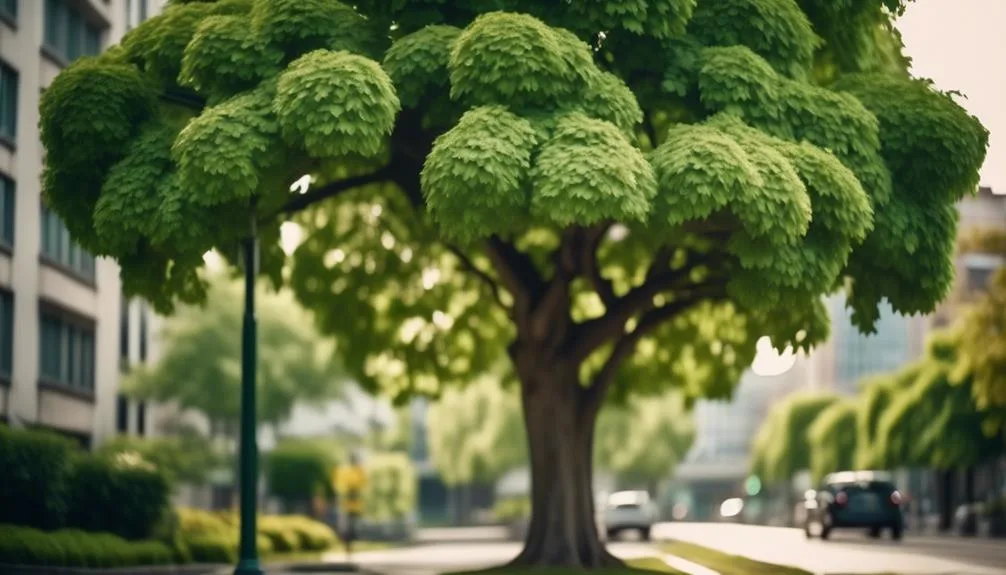
Did you know that walnut trees can thrive in urban areas? Many people think they're only for the countryside, but they can actually do well in city landscapes. As more cities look for ways to add greenery, the adaptability of walnut trees is getting attention.
But before you plant one in your urban backyard, there are some things to think about. Are walnut trees really a good fit for city life? Let's explore the possibilities and challenges.
Key Takeaways
- Walnut trees are adaptable to urban landscapes and can thrive in a variety of soil types.
- Walnut trees provide aesthetic appeal and environmental benefits in urban areas.
- Proper care and maintenance, including suitable soil quality and regular pruning, are essential for the successful growth of walnut trees in urban settings.
- Challenges such as soil contamination, pest infestations, competition for resources, and pollution need to be carefully managed to ensure the health and growth of walnut trees in urban environments.
Suitability of Walnut Trees for Urban Environments
Walnut trees are well-suited for urban environments due to their adaptability, aesthetic appeal, and numerous environmental benefits. When it comes to soil quality and urban pollution, walnut trees excel. They can thrive in a variety of soil types and are known for their ability to tolerate urban pollution, making them ideal for city environments.
Proper tree spacing and root management are crucial in urban areas. Adequate spacing ensures that the trees have room to grow without causing damage to infrastructure or other trees. Additionally, effective root management techniques, such as using root barriers, help prevent issues with sidewalks and underground utilities.
Factors Affecting Walnut Tree Growth in Urban Settings
In an urban environment, the growth of walnut trees can be influenced by a variety of factors, including soil conditions, air quality, and available space.
Soil quality is crucial for walnut trees, as they require well-drained, fertile soil with a slightly acidic to neutral pH. In urban settings, pollution can significantly impact soil quality, affecting the tree's ability to absorb nutrients.
Furthermore, space constraints and competition from other vegetation can limit the growth of walnut trees. Urban areas often have limited space for trees to spread their roots and branches, which can hinder their development. Additionally, competition for resources such as water, sunlight, and nutrients from surrounding plants can affect the overall growth and health of walnut trees in urban settings.
Best Practices for Planting Walnut Trees in Urban Areas
When planting walnut trees in urban areas, consider incorporating sustainable planting practices to promote healthy growth and environmental resilience. Start by ensuring the soil quality is suitable for walnut trees, as they thrive in well-draining, loamy soil with a slightly acidic to neutral pH. Adequate watering is crucial, especially during the tree's establishment period. Once planted, regular pruning is essential to shape the tree, remove dead or diseased branches, and promote air circulation. Keep an eye out for common walnut tree pests such as aphids and caterpillars, and address any infestations promptly. Below is a table summarizing the best practices for planting and maintaining walnut trees in urban areas.
| Best Practices for Planting Walnut Trees | |
|---|---|
| Soil Quality | Well-draining, loamy, slightly acidic to neutral pH |
| Watering | Adequate watering, especially during establishment |
| Pruning | Regular shaping and removal of dead/diseased branches |
| Pests | Monitor for aphids, caterpillars, and other common pests |
Maintenance and Care of Walnut Trees in Urban Environments
To ensure the health and vitality of walnut trees in urban environments, it's crucial to implement a comprehensive maintenance and care regimen that addresses their specific needs and challenges. Here are key maintenance practices to consider:
- Regular Pruning: Prune walnut trees annually to remove dead or diseased branches, improve air circulation, and maintain an open canopy structure.
- Soil Quality: Ensure the soil around walnut trees is well-draining and rich in organic matter. Consider regular soil testing and amendments to maintain optimal nutrient levels.
- Mulching: Apply a layer of organic mulch around the base of the tree to retain moisture, regulate soil temperature, and suppress weeds.
- Pest and Disease Management: Monitor walnut trees for common pests and diseases, and take proactive measures to prevent infestations.
- Watering: Provide consistent and adequate water, especially during dry periods, to support healthy growth and fruit production.
Implementing these practices will help promote the long-term health and productivity of walnut trees in urban environments.
Recommended Products

Restores faded mulch & adds instant curb appeal with a beautiful dark brown color Easy to use, simply mix 2-5 ounces of mulch color concentrate per gallon of water, point and...
Potential Challenges of Growing Walnut Trees in Urban Settings
Growing walnut trees in urban settings presents several unique challenges due to the limited space, pollution, and competition for resources. The table below outlines the potential challenges of growing walnut trees in urban environments.
| Potential Challenges | Description |
|---|---|
| Soil Quality | Urban soil may be compacted, lacking nutrients, and contaminated, impacting the tree's growth. |
| Pests | Urban environments are often conducive to pest infestations, posing a threat to walnut tree health. |
| Competition for Resources | Trees in urban settings must compete for water, sunlight, and space with buildings and other plants. |
| Pollution Impact | Air and soil pollution in urban areas can negatively affect the health and growth of walnut trees. |
These challenges require careful consideration and management to ensure the successful growth of walnut trees in urban settings.
Conclusion
In urban settings, growing walnut trees requires careful attention to factors like soil quality, sunlight, and space. Regular maintenance is essential for their health and growth. With the right approach, walnut trees can thrive in urban environments, offering beauty, shade, and even edible nuts.
How might incorporating walnut trees into our urban landscapes enhance the well-being of our communities?
