

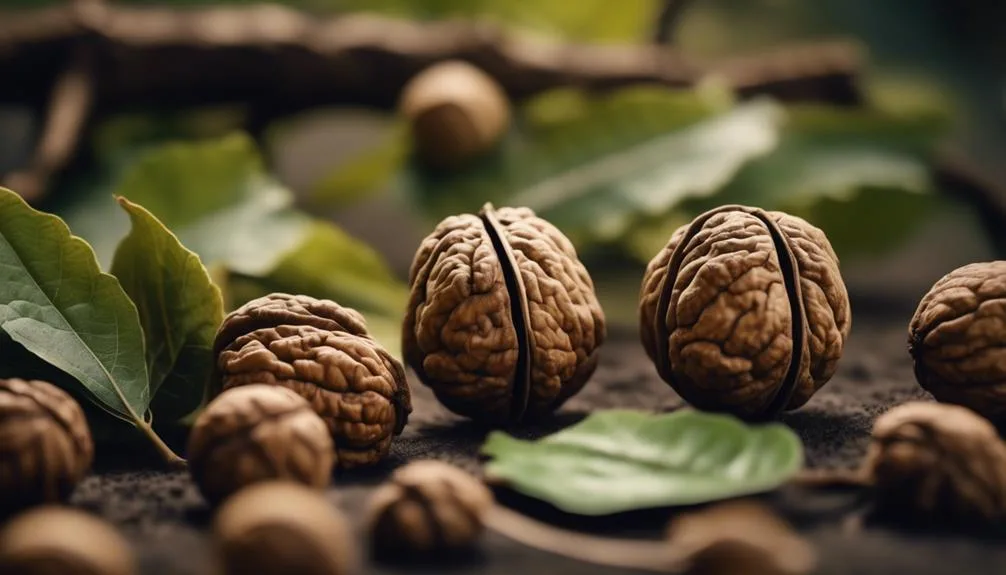
When you're out in the woods, walnut trees stand out with their unique textures and colors. But how can you tell which type of walnut tree you're looking at? Each species has its own special features, from the size and shape of the leaves to the texture of the bark.
By learning how to spot these differences, you can unlock the secrets of the walnut tree world and develop a deeper appreciation for these majestic trees.
Key Takeaways
- Walnut trees can be identified by their broad, spreading canopies and rough, furrowed bark.
- Leaf and fruit characteristics, such as leaf shape, arrangement of leaflets, nut size and color, and seasonal changes in fruit production, can also help in identifying different walnut tree species.
- Black walnuts have round, dark-colored nuts, while English walnuts have lighter, elongated nuts.
- The bark and trunk features, including varying textures, distinct patterns, trunk color, and growth patterns, can provide insights into the age and health of walnut trees.
Physical Characteristics of Walnut Trees
Walnut trees, with their broad, spreading canopies and rough, furrowed bark, are easily recognizable in the forest due to their distinctive physical characteristics.
The leaves of walnut trees are pinnate, meaning they've multiple leaflets arranged on either side of the central stem, resembling the shape of a feather. These leaflets are elongated and pointed at the ends, creating a graceful and symmetrical appearance.
When it comes to nut size, walnuts vary depending on the species, but generally, they're medium to large in size, with a round or oval shape. The outer husk of the walnut is green and fleshy, enclosing the hard, woody shell that protects the edible kernel inside.
These physical traits make it possible to identify different walnut tree species with relative ease.
Recommended Products
Pocket Naturalist Trees by James Kavanagh - 9781583551783

Leaf and Fruit Identification
Easily recognizable in the forest due to their distinctive physical characteristics, the leaves and fruits of walnut trees offer key features for identifying different species.
- Leaf shape: Pay attention to the leaflets' arrangement and shape. Some species have long, lance-shaped leaflets, while others have more rounded or oval-shaped ones.
- Nut size and color: Note the size and color of the nuts. Black walnuts have round, dark-colored nuts, while English walnuts have lighter, more elongated nuts.
- Seasonal changes in fruit production: Walnut trees exhibit seasonal changes in fruit production, with nuts ripening in the fall. Observing the timing and abundance of fruit can help differentiate between species.
Walnut trees play a crucial role in local ecosystems by providing food and habitat for various wildlife species, making it important to accurately identify different walnut tree species.
Recommended Products


Artwork Information – Trees of Texas is a richly illustrated botanical identification chart featuring native and commonly found Texas trees with detailed leaves, branches, flowers, fruits, berries, nuts, acorns, pinecones, seed pods, common names, scientific names, and regional information. Species shown include Texas Live Oak, Southern Live Oak, Post Oak, Blackjack Oak, Bur Oak, Loblolly Pine, Longleaf Pine, Shortleaf Pine, Pinyon Pine, Pecan, Hickory, Bald Cypress, Juniper, Elm, Sycamore, Mesquite, Maple, Walnut, Ash, Cottonwood, Willow, Redbud, Dogwood, Holly, Sabal Palm and more.
Bark and Trunk Features
As you approach a walnut tree, take note of the distinct patterns and textures adorning its bark and trunk, as these features hold key clues for identifying different species.
The bark texture can vary widely among walnut tree species, ranging from smooth to rough, with some species displaying deep furrows and others having more subtle, fine lines.
Additionally, closely observe the trunk color, as it can differ from a light gray to a dark brown, providing important clues for species identification.
Keep an eye out for growth patterns, such as the arrangement and size of lenticels on the trunk, which can offer insights into the tree's age and health.
Geographic Distribution and Habitat
Upon observing the distinct bark and trunk features of walnut trees, one can gain valuable insights into their geographic distribution and preferred habitats.
- Climate preferences: Walnut trees thrive in temperate climates with well-defined seasons. They prefer mild, wet winters and warm, dry summers.
- Soil requirements: They tend to favor deep, well-drained, and fertile soils, often found in river valleys or foothills.
- Human impact, conservation efforts: Human activity has led to habitat loss and fragmentation for walnut tree species. Conservation efforts are vital to protect and restore their natural habitats, including reforestation initiatives and sustainable land management practices.
Walnut trees play a crucial role in ecosystems and offer various environmental benefits. Understanding their geographic distribution and preferred habitats is essential for their conservation and preservation.
Key Differences Between Walnut Species
Distinguishing between walnut species can be accomplished by examining their leaf and nut characteristics, which vary significantly among different types of walnut trees.
When it comes to nutritional value, black walnuts have the highest protein content and beneficial fatty acids, making them a popular choice. English walnuts, on the other hand, are known for their high omega-3 fatty acid content.
In terms of woodworking applications, black walnut wood is highly prized for its rich, dark color and beautiful grain patterns, making it ideal for furniture and cabinetry. Meanwhile, English walnut wood, with its lighter color and fine texture, is often used for carving and making gunstocks.
Understanding these key differences in nutritional value and woodworking applications can help you identify and make the most of the various walnut species.
Recommended Products

RICH EVEN COLOR – Minwax Wood Finish is a deep penetrating, oil-based wood stain that provides beautiful color and enhances the natural wood grain in one coat. It’s perfect for interior staining projects such as wood furniture, cabinets, doors and more.

Pack of 4, Black Walnut Lumber Boards - 3/4" x 2"

BLACK WALNUT HULLS: From the immature fruit of the black walnut tree
Conclusion
In observing the diverse beauty of walnut tree species, it's important to pay attention to their physical characteristics, leaf and fruit patterns, bark and trunk features, and geographic distribution.
By recognizing these key differences, you can deepen your understanding and connection to these majestic trees in their natural environments.
Take the time to appreciate the unique qualities of each species, and continue to explore and learn from the rich tapestry of walnut trees.
