

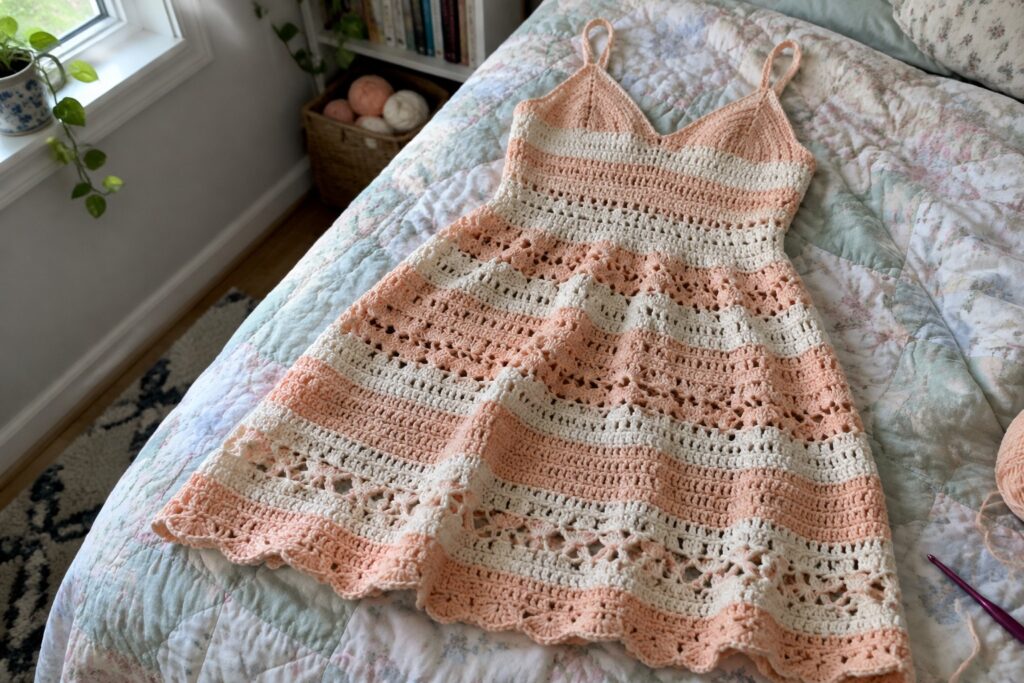
I like to have a few loose cotton dresses ready when the weather turns warm.
Crochet ones feel especially nice because the fabric breathes well.
I have put together some of my favorite lightweight patterns here.
Most of them use basic stitches so they work up fairly quickly.
They are easy to wear with sandals or over a swimsuit.
Striped Openwork Crochet Dress
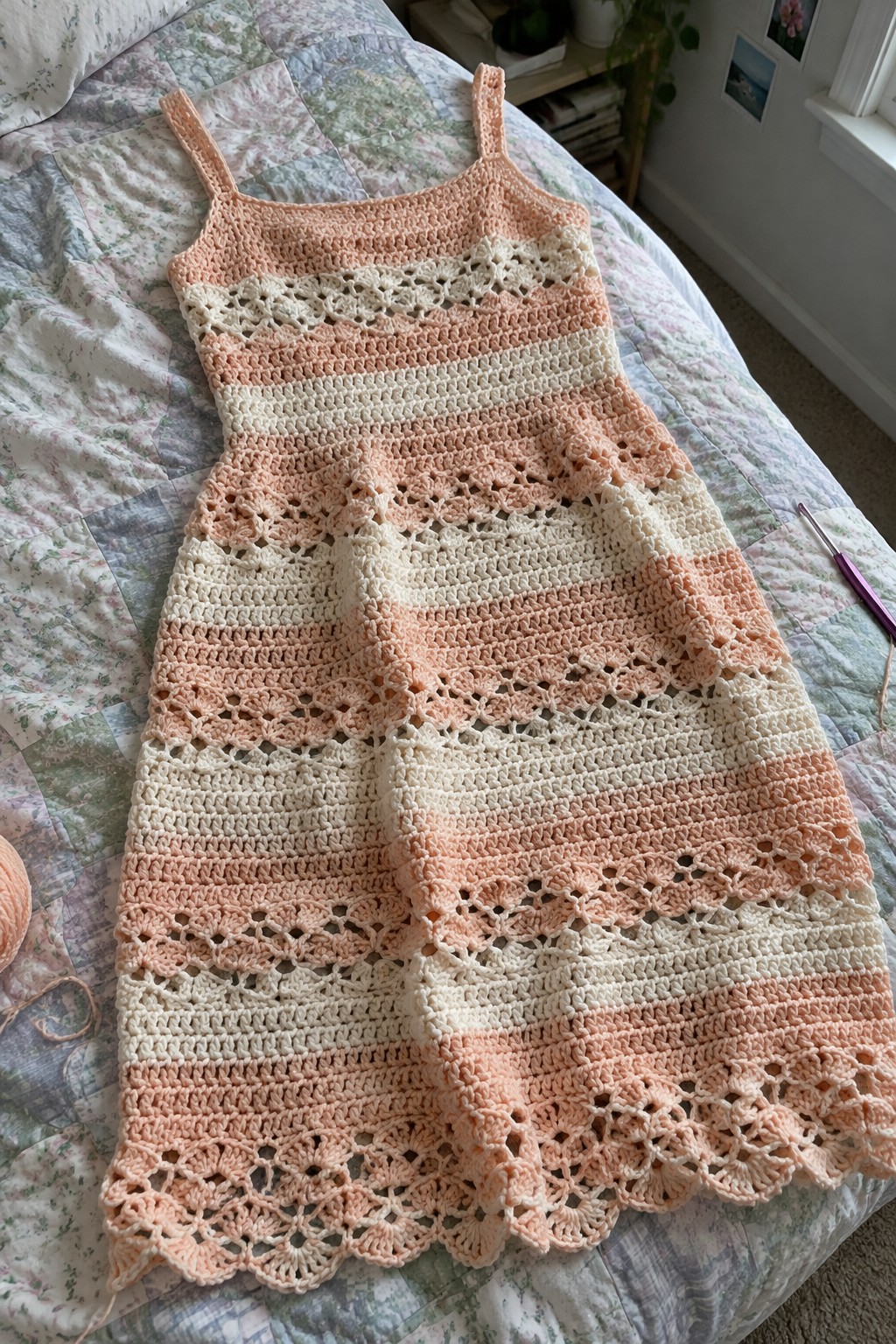
A sleeveless dress built from repeating bands of solid rows and openwork sections creates a breathable summer layer. The horizontal stripes alternate between tighter fabric and decorative gaps that add visual rhythm without extra weight. Thin straps and a scalloped hem keep the overall shape simple while the color changes highlight each section.
This design works especially well as a starting point for other wearables because the stripe repeat makes length easy to adjust. You can swap the two colors for a single shade or add a third tone to shift the look without changing the pattern. The openwork bands also help the dress drape better on different body shapes. A project like this stands out on Pinterest when shown laid flat with the color sequence clearly visible.
Mint Baby Sundress with Bobble Accents
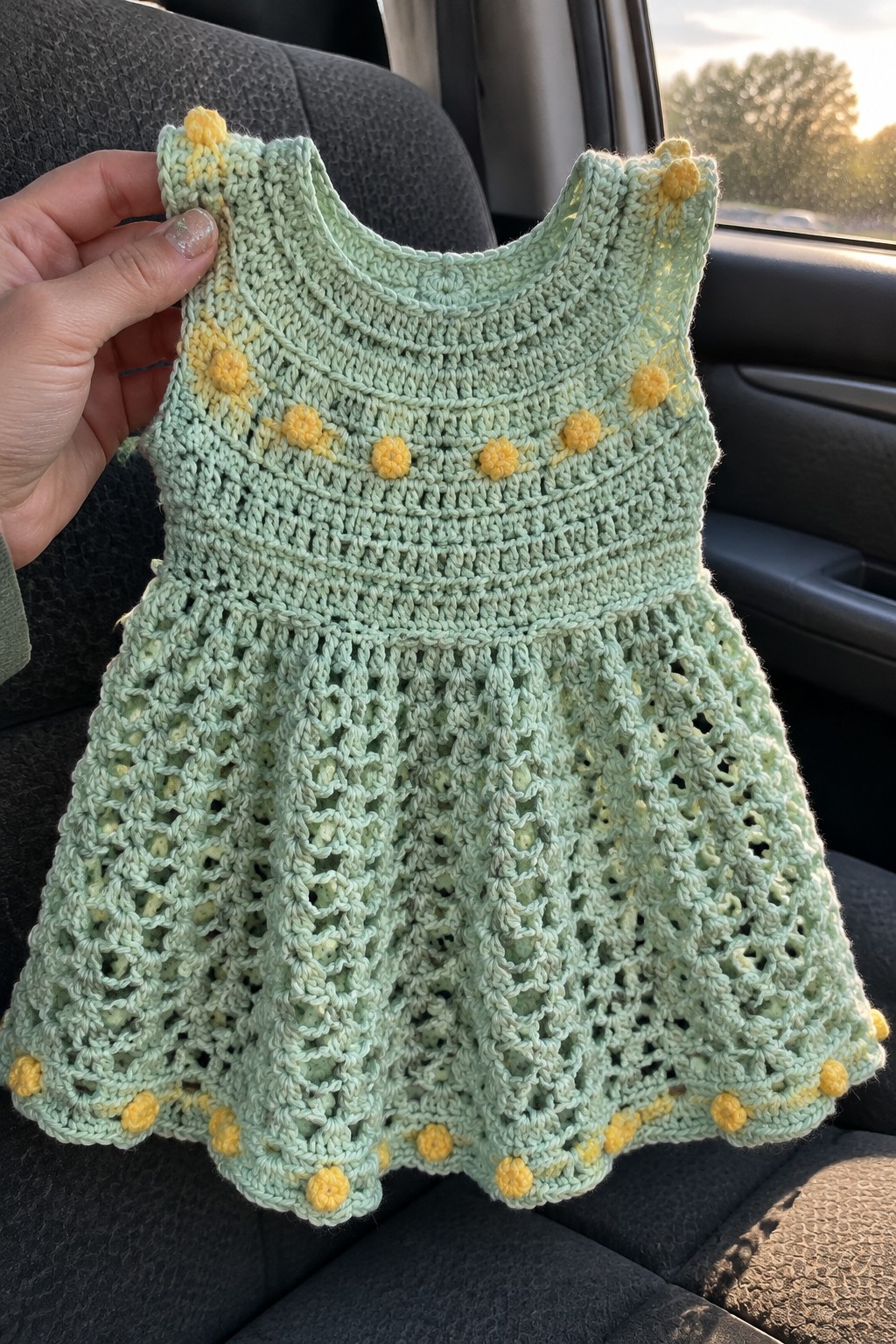
A sleeveless cotton dress uses an open lace pattern across the skirt to create airflow and a light drape. The bodice stays solid with simple rows while small yellow bobbles are spaced evenly around the chest and hem for contrast. The flared shape and scalloped edge keep the overall piece compact and easy to wear on babies or small dolls.
What makes this idea useful is the small scale, which lets you finish the dress quickly with minimal yarn. You can change the bobble color or add more rows to the skirt for a slightly longer fit on toddlers. The openwork section works especially well in cotton for hot weather because it shows off the stitch texture without adding weight. For gifts, this kind of dress photographs clearly and travels well since it folds flat.
Motif Joined Cotton Sundress

A dress built from repeated square motifs creates an open fabric that lets air move through easily on hot days. The motifs connect into a V-shaped top that narrows at the waist then widens into a flared skirt, giving shape without extra seams. Thin straps keep the upper section light while the overall length reaches mid-thigh. This approach belongs in the wearable category as a complete summer garment.
What makes this idea useful is how simple it is to change the finished size by adding or removing motif rows. You can swap motif styles or shift the color order to create different looks from the same base pattern. The open construction pairs well with a slip underneath or works on its own over swimwear. For gifts, a design like this can be quickly adjusted to fit different body lengths by altering the number of motifs used.
Simple Cotton Dress with Floral Scallop Border
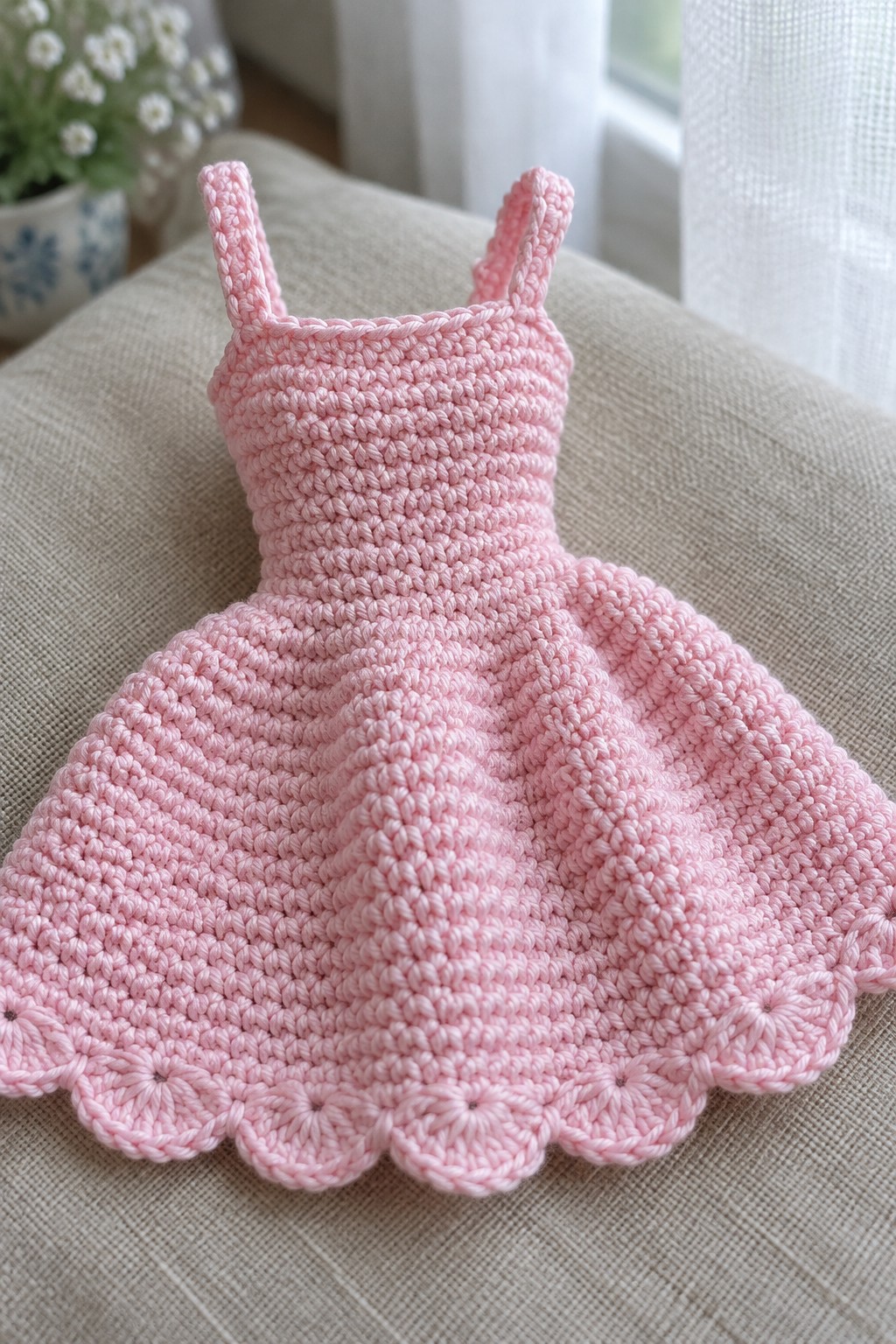
A fitted bodice worked in solid stitches flows into a flared skirt that ends with a border of small joined flowers. This shape keeps the dress light and breathable for summer while the flower edge gives the hem a clean, decorative finish. The thin straps and compact size make the whole piece simple to adjust for different measurements.
The color choice does a lot of the work here since a single soft shade lets the flower border stand out without extra effort. This would be easy to turn into a baby dress by adding length to the skirt or into a doll version by keeping the current scale. For gifts, a design like this works especially well because the border detail finishes the project without needing separate embellishments.
Open Mesh Sundress with Drawstring Waist
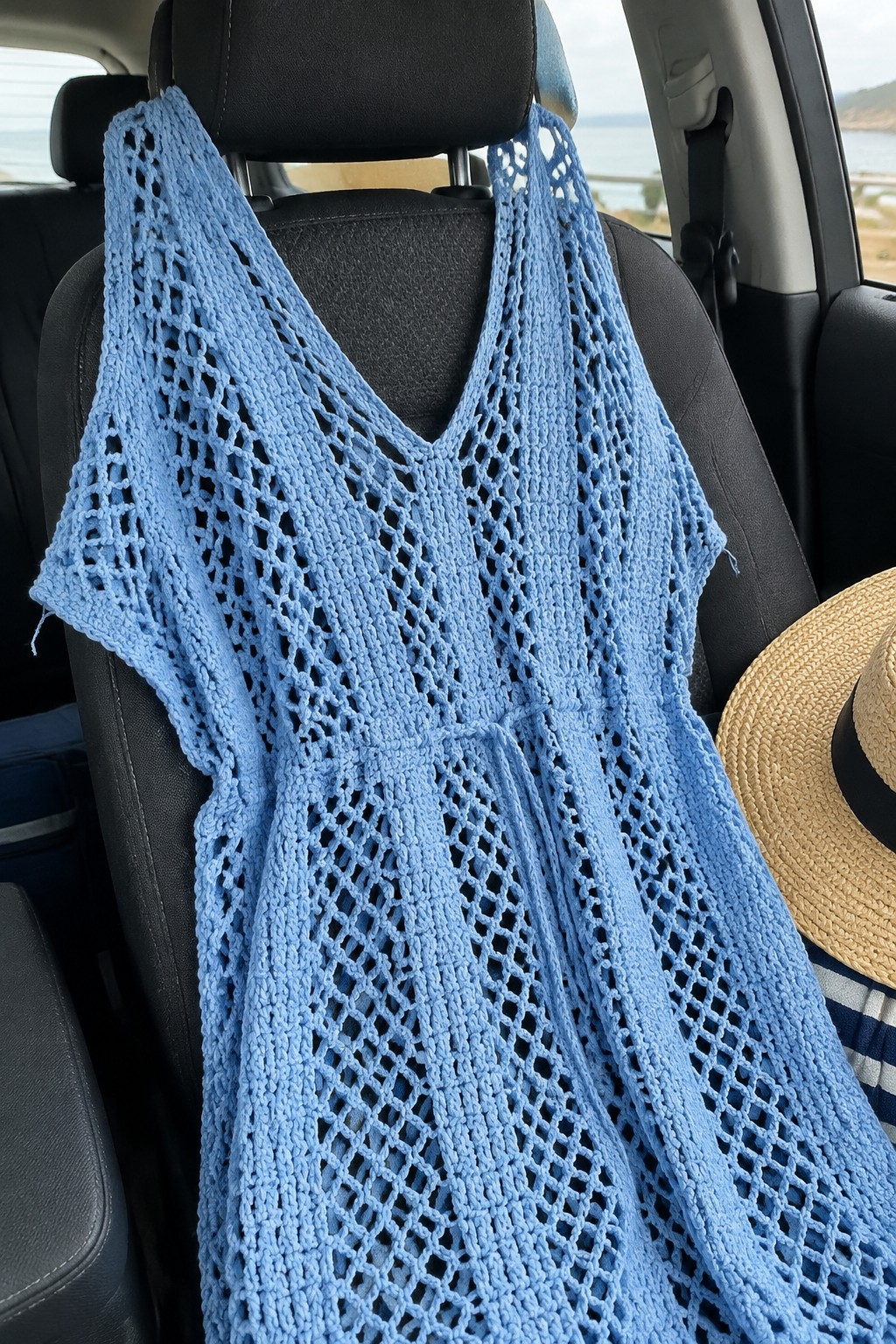
A sleeveless cotton dress worked in a repeating open mesh pattern creates a breathable layer that moves air through the fabric. The shape uses a deep V-neck, wide armholes, and a simple tie at the waist to pull in the loose fabric and create a defined silhouette without extra shaping. This approach works well as either a standalone dress or a cover-up layer over basics.
What makes this idea useful is how the mesh lets you adjust the finished length and fit by changing hook size or adding rows without rewriting the whole pattern. The tie waist adapts to different body shapes while keeping the dress from clinging in heat. You can swap the color for any cotton shade that matches your summer wardrobe and still keep the same open structure. A project like this photographs clearly on Pinterest because the grid pattern shows up well in flat lays and the tie detail gives it an easy focal point.
Granny Square Bodice with Striped Skirt Dress

A cotton sundress built from a fitted bodice of repeating square motifs joined at the center, then worked downward into wide horizontal bands of open and solid stitches that create clean stripes. The straps are simple loops attached at the top corners, and the color changes run consistently across the skirt to keep the stripes even. This approach combines a structured upper section with a lighter, more open lower section, which helps the fabric drape without adding bulk.
The striped skirt pattern makes this dress easy to lengthen or shorten by adding or removing rows while keeping the color sequence intact. You can swap the rust and cream for any two high-contrast shades to change the look without altering the construction. The square motif bodice also works as a starting point for different necklines or sleeve lengths if you want to adjust coverage. A project like this photographs clearly for sharing, which helps when you need to match yarn lots or plan color repeats ahead of time.
Sleeveless Dress with Solid Bodice and Openwork Flared Skirt
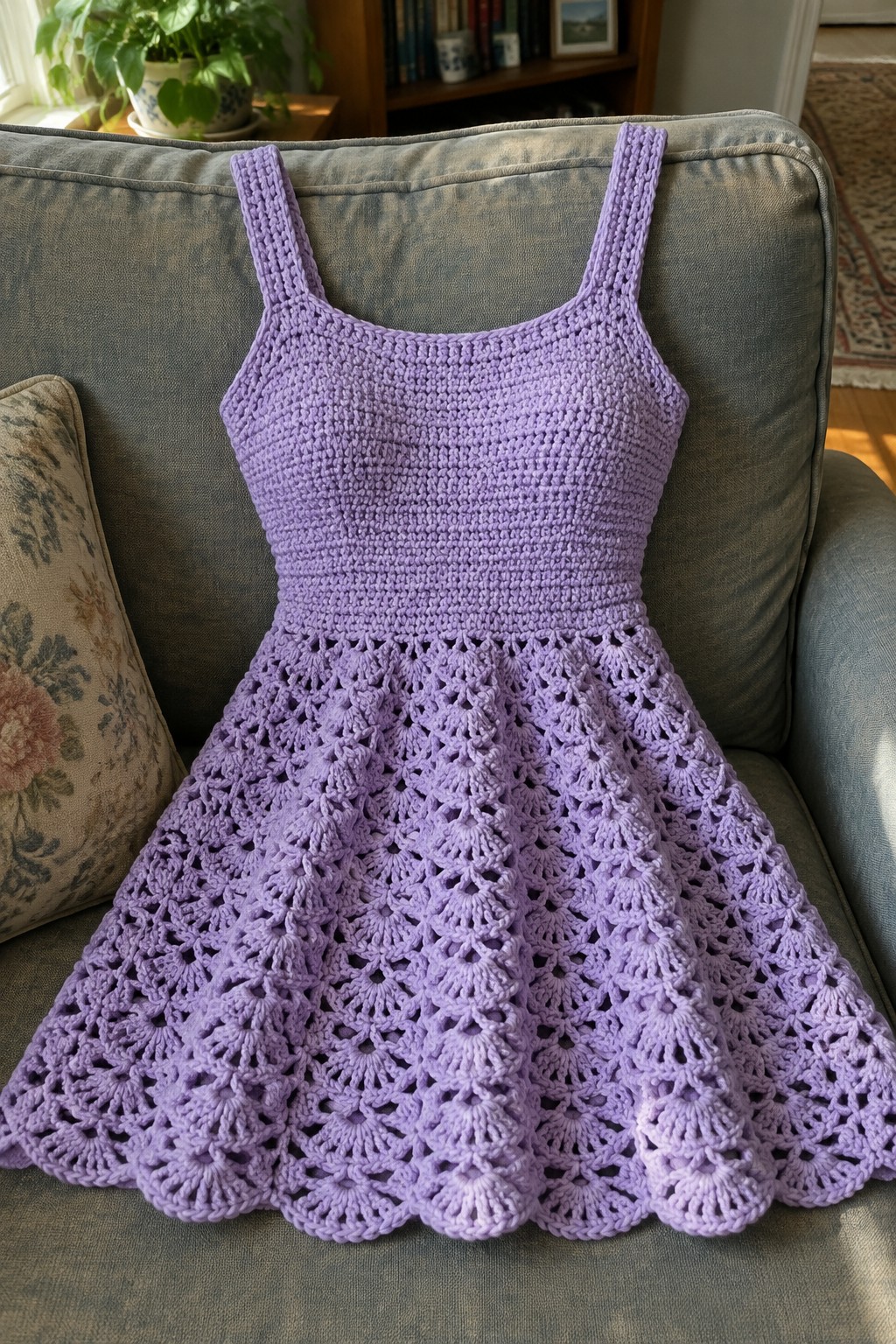
A sleeveless dress uses solid stitches for the upper bodice and straps to create a fitted shape through the torso. The lower section switches to repeating open motifs that form a flared skirt with scalloped edges. This mix keeps the top stable while the skirt adds airflow and movement. The project fits the wearable category as a complete summer garment.
What makes this idea useful is how the skirt pattern can be worked to different lengths without changing the bodice. The open sections make it practical for warm days where you want coverage without weight. You could adjust the strap width or add a simple tie at the back to change the fit. A dress like this works well as a standalone piece or over a slip for extra options.
Crochet Yoke Dress with Scattered Daisy Appliqués
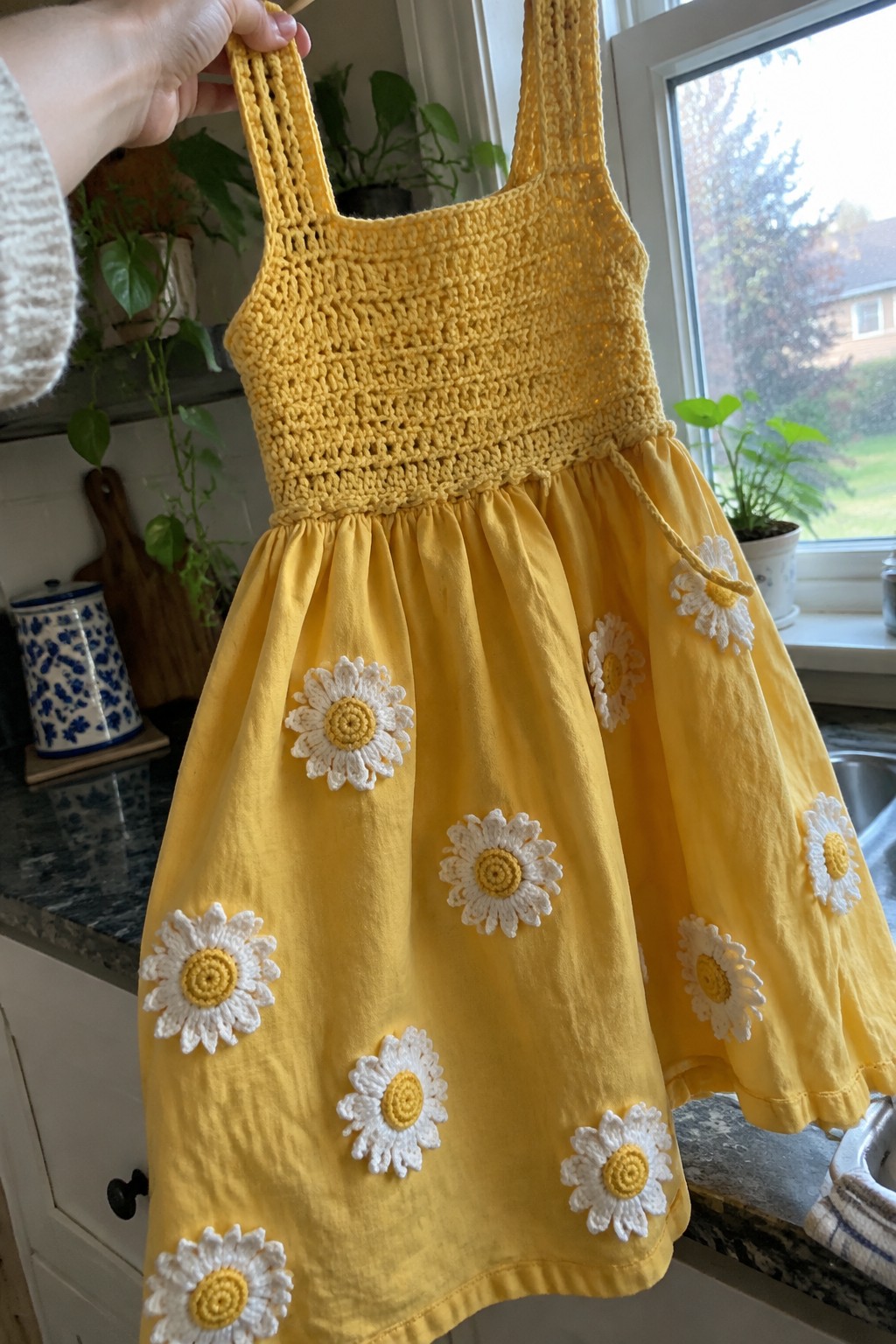
A crocheted bodice in solid yellow yarn forms the top of this lightweight dress, worked in a dense stitch pattern with narrow straps that include open rows for airflow. The bodice attaches directly to a gathered cotton skirt, while small daisy motifs in white and yellow are sewn on at irregular intervals across the fabric. This approach mixes a structured crochet section with a soft, breathable skirt and keeps the floral details as removable accents rather than part of the main construction.
What makes this idea useful is the clear division between the crocheted yoke and the fabric skirt, so you can adjust the bodice length or width without reworking the whole garment. The appliqués let you add or remove flowers easily if you want a simpler look or need to cover a stain later. A project like this works especially well for children’s summer clothes because the cotton skirt stays cool and the crochet top gives a finished shape without heavy fabric layers. You could scale the same yoke pattern for an adult top or swap the daisy colors to match different skirt fabrics.
Openwork Sleeveless Dress with Shoulder Ties
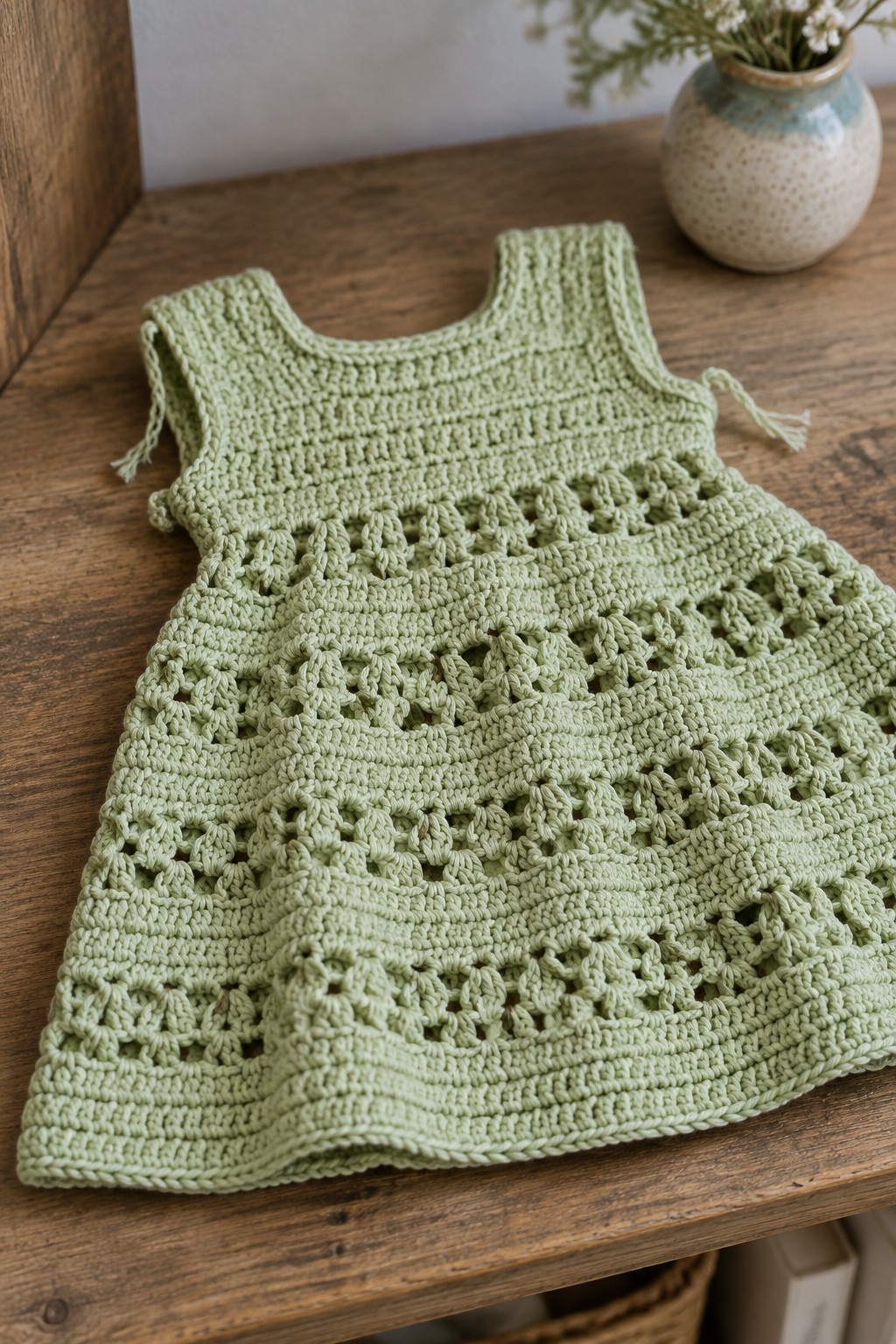
This project is a sleeveless child’s dress that combines a solid upper section with a flared skirt worked in repeating open lace panels. The yoke sits close to the body while the lower half uses spaced stitches to create airflow through the fabric. Shoulder ties allow easy adjustment as the child grows.
What makes this idea useful is how the open skirt pattern reduces bulk and keeps the dress light for warm weather. You can easily change the length by adding or removing lace repeats or swap the color to match different seasons. The straightforward shape works well for quick gifts or market items since it uses basic increases and a single main motif. Scaling the yoke measurements makes it simple to adapt for different ages without redesigning the whole pattern.
Floral Granny Square Midi Dress

A dress assembled from repeated square motifs with flower centers forms a lightweight summer layer that uses open stitches for airflow. The squares connect in straight rows to create both the fitted upper section and the wider lower skirt without complicated shaping. This motif method keeps the overall piece flexible and easy to adjust while highlighting the contrast between the solid flower details and the lacy spaces around them.
What makes this idea useful is the grid layout that lets you change the finished length simply by adding or subtracting rows of squares. The soft coral color reads as a neutral for many wardrobes and can be swapped for other cotton shades without altering the pattern. A project like this works especially well as a first garment because each square can be completed separately before joining.
Color Blocked Skirt on a Simple Sundress

A color-blocked crochet sundress keeps the bodice in one solid shade while dividing the skirt into three vertical panels of different colors. The flared shape comes from basic increases that let the fabric widen toward the hem, and the scalloped edge gives a clean finish without extra edging rounds. Buttoned straps add an adjustable detail that works well on a small garment. This style falls into the wearable category and suits lightweight summer clothing for a child or a decorative piece for a doll.
The color blocking makes it simple to use up leftover yarn from other projects without needing full skeins of each shade. You can shift the panel widths or swap in different pastels to match a specific color scheme. A project like this works especially well as a fast baby gift since the loose fit forgives small sizing differences. Changing the starting chain length lets you scale it for a larger child or keep it as a doll dress.
Halter Dress with Solid Bodice and Open Skirt
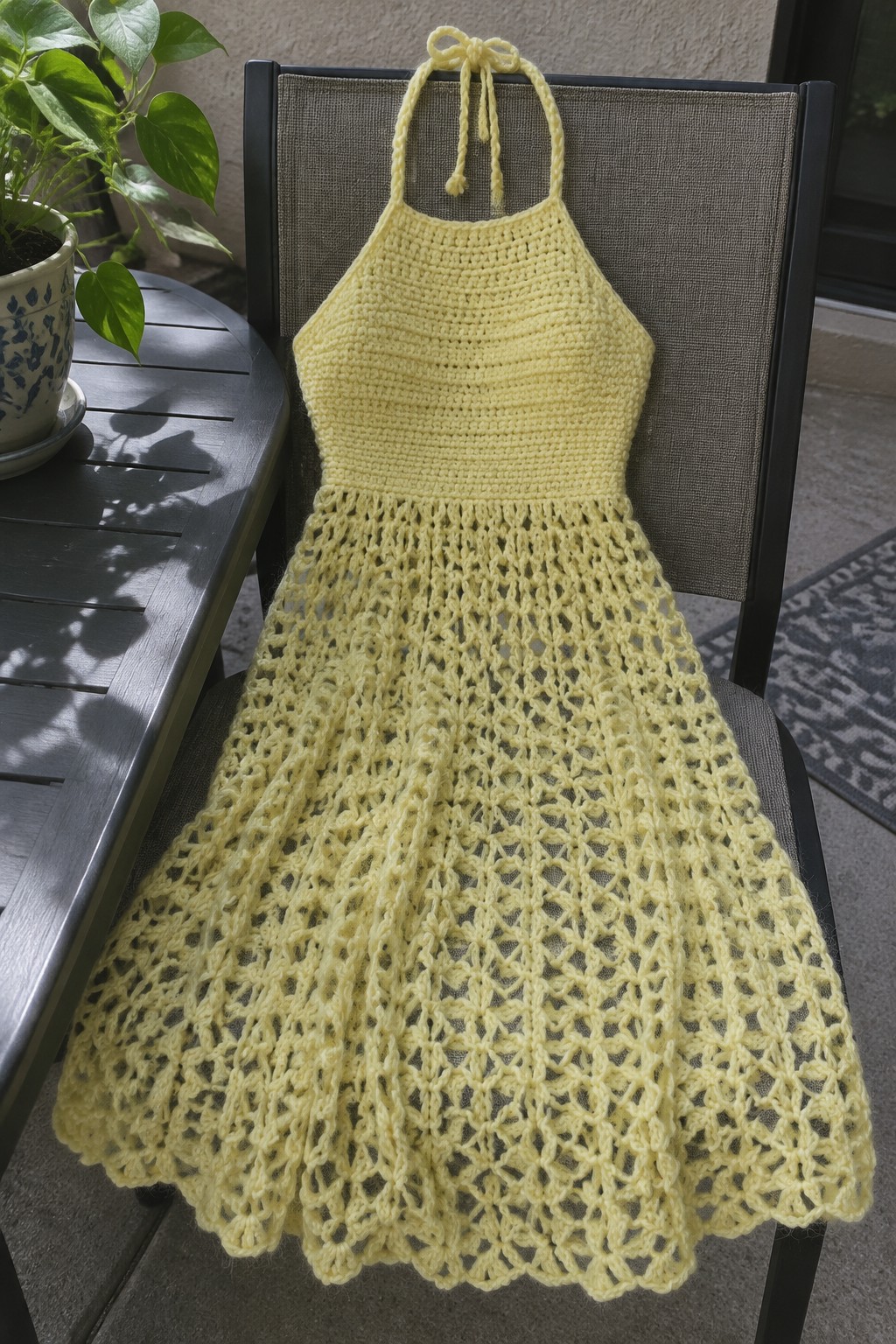
A halter neck dress pairs a fitted upper section worked in solid stitches with a flared skirt made from an open lace pattern. The bodice covers from the waist up while the skirt expands through repeated increases that create the airy texture. A simple tie at the back of the neck lets the top adjust without extra closures or zippers.
What makes this idea useful is the clear split between the two sections, so you can lengthen or shorten the skirt by adding or removing pattern repeats. The same shape works for different sizes by changing the number of starting chains and rows in the bodice. You can also swap the lace motif for a different open stitch or use a lighter cotton to adjust how much the skirt drapes. This style stands out in pattern collections because the contrast between solid and open areas shows up clearly in photos.
Bobble Pinafore with Button Straps
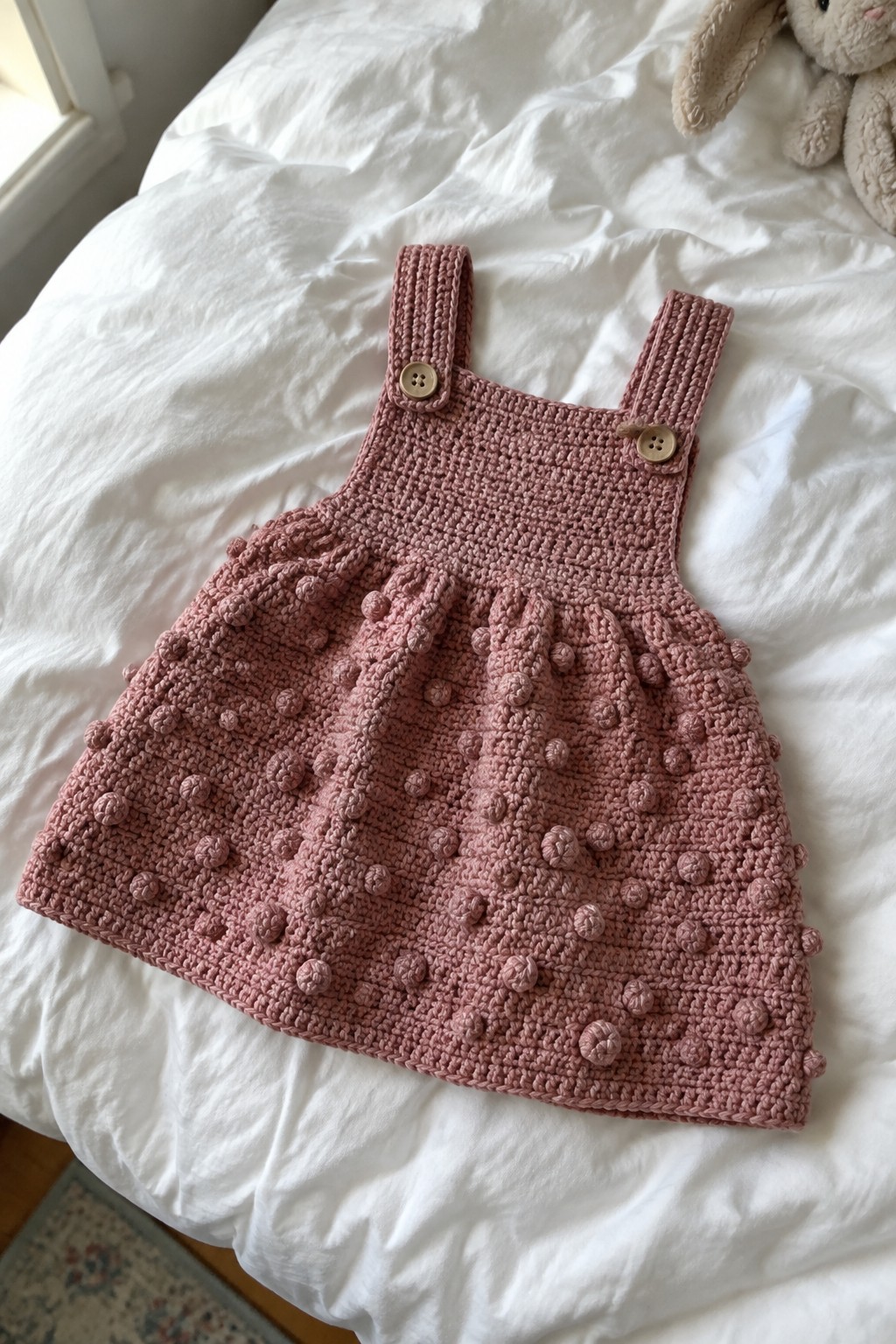
A child’s pinafore dress made in lightweight cotton uses a bobble pattern across the lower skirt for texture while keeping the top section smooth and simple. The design features two wide straps that button onto the front bodice, allowing the fit to adjust as the child grows. The skirt gathers slightly at the waist before flaring out, creating an easy shape that layers well over other clothes. This fits into the wearable category as a quick summer layer rather than a fitted garment.
What makes this idea useful is how the button straps solve the problem of sizing changes without complicated adjustments. You can lengthen the skirt by adding rows or widen it by starting with a longer foundation chain if you want a bigger version. The bobble placement on only the bottom half keeps the dress from feeling heavy while still giving it visual interest in photos. For gifts, this shape works especially well because the open sides and adjustable straps fit a range of ages with minimal changes.
Open-Stitch Floral Dress with Tie Waist

A dress made from repeating floral motifs joined into an open lace pattern gives the fabric breathability while still holding shape through the bodice and skirt. The thin straps and deep V-neck keep the upper section light, and the separate tie at the waist lets the wearer adjust the fit without sewing in extra structure. Short length and slight flare at the hem make it function as both a beach cover-up and a standalone summer piece.
What makes this idea useful is that the motif repeat can be extended or shortened to change the overall length without redesigning the whole garment. The tie belt is simple to omit or replace with a cord in a contrasting color if you want a different look. This style works especially well in cotton because the open stitches prevent overheating and show off the yarn’s natural drape.
Miniature Tiered Dress for Dolls or Ornaments

A small crocheted dress like this uses a fitted bodice with short sleeves and builds volume through stacked rounds that form a flared skirt. The gold edging along the neckline, sleeves, and hem defines each section and keeps the shape clear even at a reduced scale. This approach fits the wearable category when sized for dolls or the giftable item category when used as a hanging ornament or package topper.
What makes this idea useful is how fast it works up, so you can test skirt shaping or trim placement before scaling anything larger. Change the yarn color or add more tiers to match different doll sizes or turn the same structure into a keychain fob. For gifts, a design like this stands out on Pinterest because the finished piece photographs cleanly and shows the stitch pattern without needing a full garment.
Coral Striped Sleeveless Dress with Lace Hem

A sleeveless A-line dress built from simple rows of single crochet creates a lightweight summer layer that drapes without bulk. Horizontal coral stripes placed at regular intervals break up the main beige fabric and keep the eye moving down the length of the piece. Coral edging around the neck and armholes gives clean definition while the wide openwork border at the hem adds swing and prevents the hem from curling.
What makes this idea useful is the straightforward stripe repeat that lets you use up small balls of contrast yarn without planning a full colorwork chart. You can shorten the lace section to a narrow trim or extend the stripes closer together if you want more color impact. This shape works especially well as a beach cover-up or quick day dress because the open hem keeps air moving and the whole garment packs small for travel.
Granny Square Skirt Dress in Cotton

A sleeveless dress made with a solid crocheted bodice and a flared skirt of joined floral granny squares offers a simple way to build a lightweight summer garment. The squares sit in staggered rows that create gentle flare without complex shaping, while the solid top keeps the upper section smooth and fitted. Light blue yarn covers most of the dress, with white and pale yellow centers inside each square adding small blocks of contrast. This style falls into the wearable category and suits cotton yarn projects that need to stay cool and breathable.
What makes this idea useful is how the skirt length adjusts by adding or removing rows of squares to match different heights. The motif layout lets you change colors or square size to fit various body measurements without rewriting the whole pattern. A dress like this works well for everyday summer wear because the open square sections keep it airy while the solid top provides coverage. The clear repeat of the squares also photographs well for pattern sharing or personal project boards.
Lace Panel Short Sleeve Dress
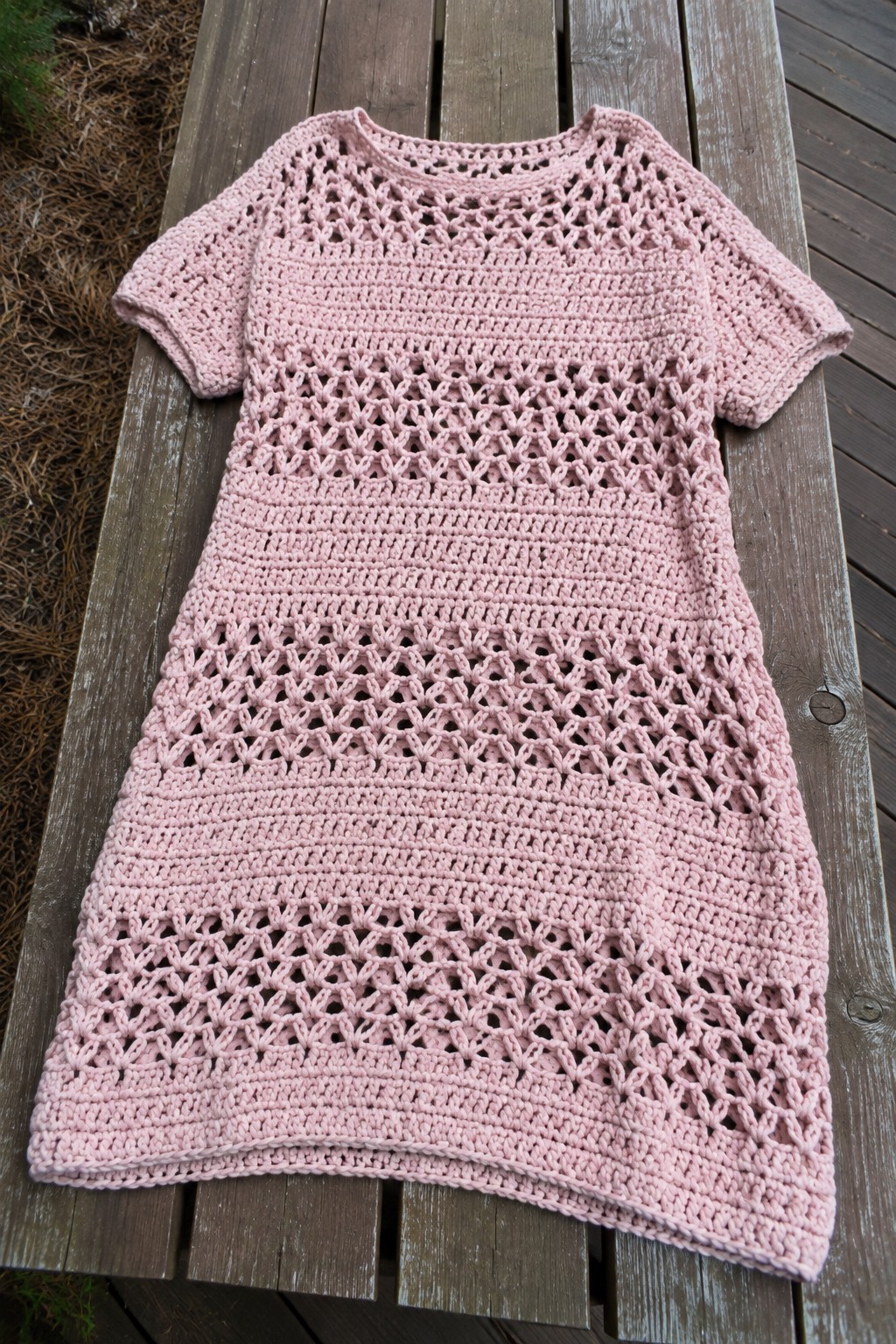
A short-sleeved shift dress uses wide bands of open lace across the bodice and lower skirt with solid stitch sections in between. The openwork creates airflow while the denser rows add structure and coverage through the middle. This layout keeps the dress lightweight and easy to pull on without extra shaping. It fits the category of a simple wearable summer garment.
What makes this idea useful is the balance between open and solid sections that lets air move through while still holding shape. You can lengthen the dress by adding more solid rows or swap the lace pattern for another open stitch without changing the overall fit. The design works well as a beach layer or everyday dress over a slip and adapts easily to different sizes by adjusting the starting chain width. A project like this photographs clearly for pattern sharing because the contrast between sections shows up well in photos.
Striped Toddler Dress with Bobble Yoke
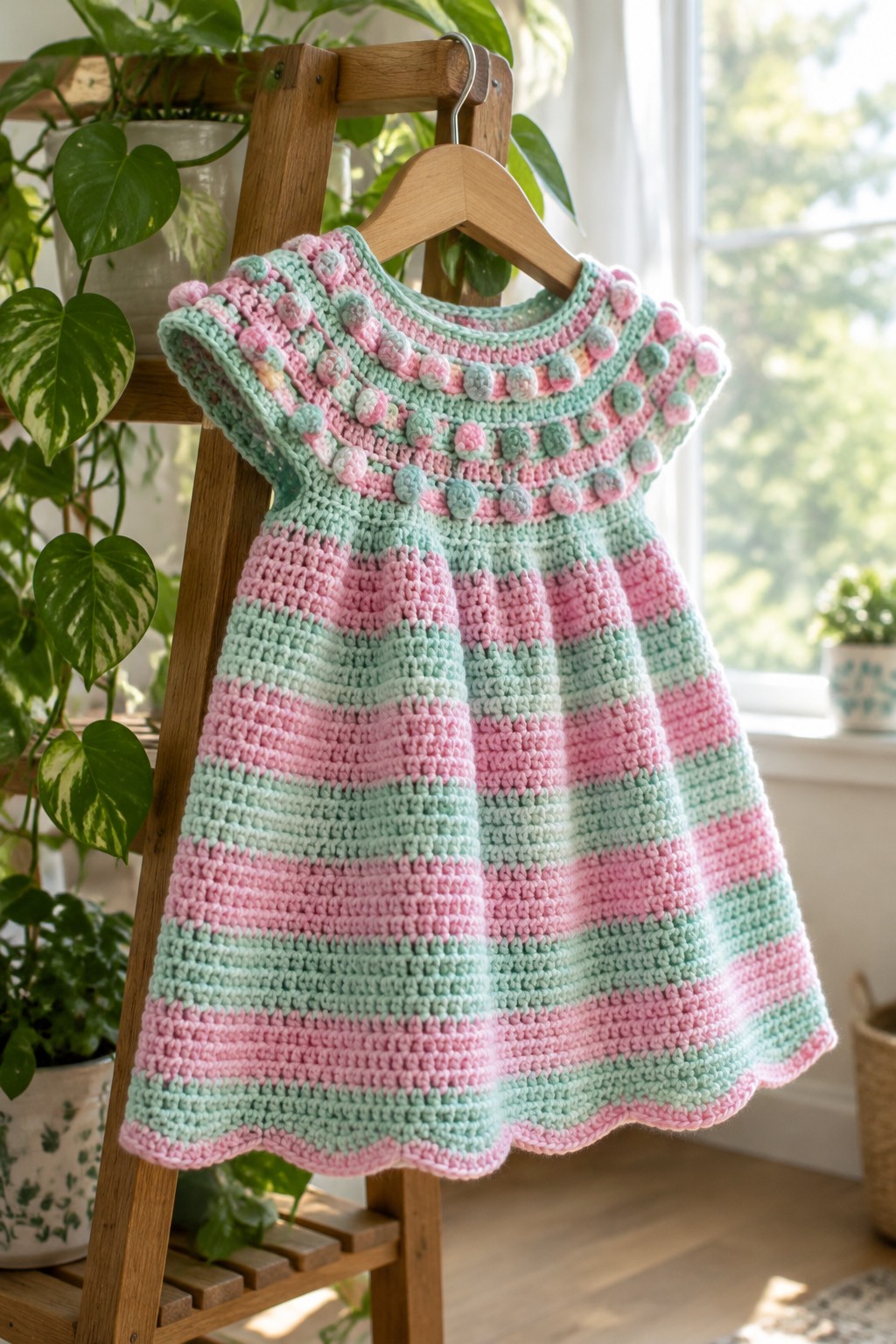
A lightweight cotton dress made with wide horizontal stripes gives a simple shape more structure without extra shaping. The yoke uses several rows of small bobbles in the same two colors to create a finished edge around the neck and arm openings. Keeping the stripes consistent through the flared skirt while limiting the bobble detail to the top only keeps the project from becoming repetitive. This style falls into the wearable category and works best for children because the A-line cut needs little fitting.
What makes this idea useful is how the stripe sequence can be lengthened or shortened to change the size without rewriting the pattern. The bobble rows can be swapped for a different border stitch if the texture feels too time-consuming. Using just two colors throughout makes color changes straightforward and reduces the chance of running out of yarn mid-project. The same yoke and stripe layout could be adapted into a tunic or a larger dress by adding more rows at the bottom.
Sleeveless Dress with Solid Bodice and Open Lace Skirt

This dress uses a dense, horizontally worked bodice that transitions into a flared skirt made from connected circular motifs. The solid upper section gives the piece structure and modest coverage while the lower half relies on openwork to keep the fabric light and breathable. A scalloped edge along the hem finishes the shape without adding bulk.
What makes this idea useful is the clear split between the fitted top and the expandable skirt, so you can lengthen the dress or swap in a different lace pattern without reworking the whole garment. The neutral cotton color works for daily wear because it layers easily over tanks or swimsuits. You could also shorten the skirt into a tunic by stopping the motif section earlier and adding a simple border.
Striped Openwork Dress with Contrasting Bands
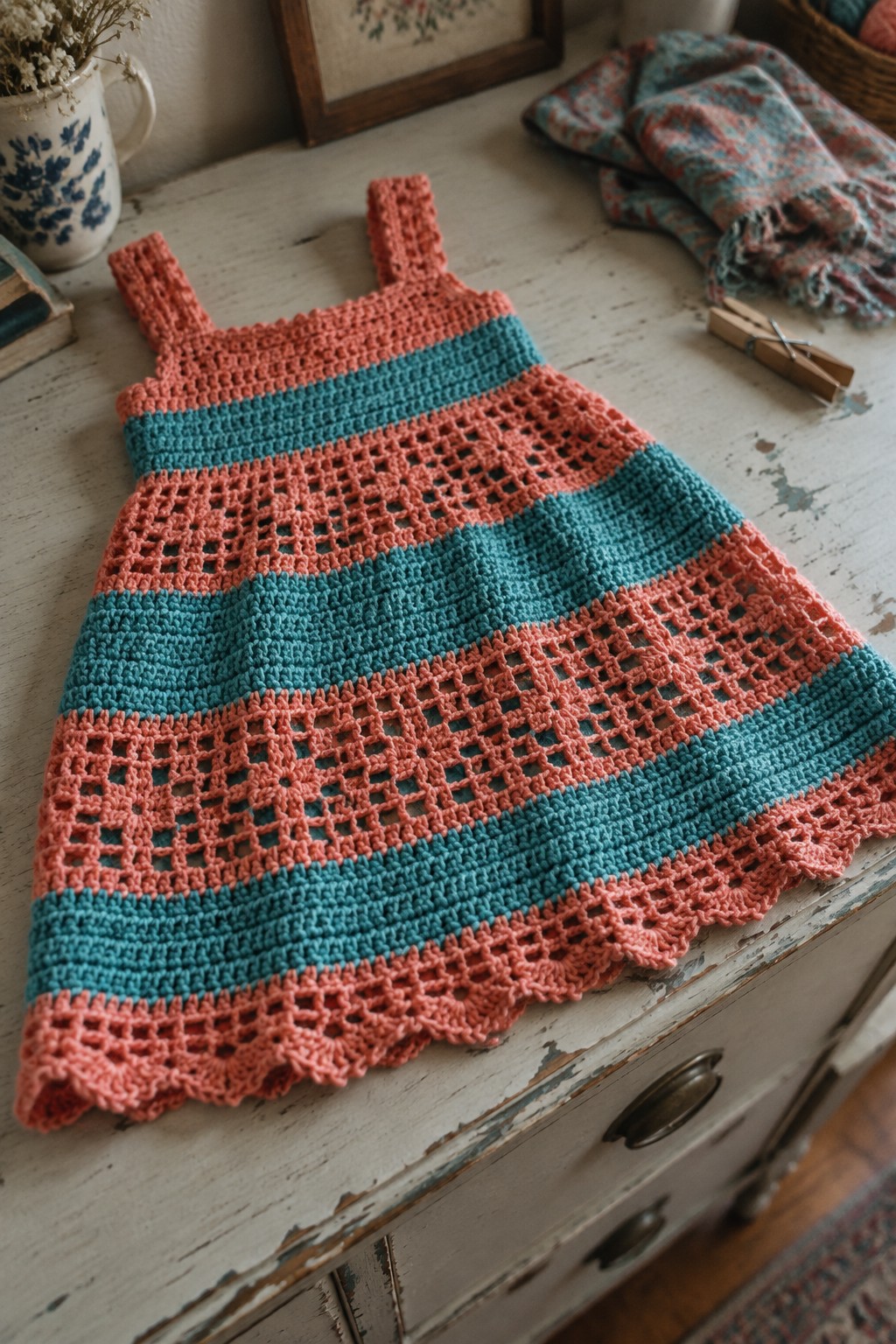
A child’s dress built from horizontal stripes that switch between solid crochet and open lace sections gives the fabric built-in airflow without extra finishing steps. The coral and teal color changes mark each band clearly and keep the eye moving down the length of the piece. Simple straps and a scalloped lower edge finish the shape while keeping the overall weight light enough for summer wear.
What makes this idea useful is how the stripe pattern can be adjusted in height to change the finished length or size. You can repeat the lace band more often for extra breathability or widen the solid sections if you want quicker progress. The two-color layout also makes it simple to use up leftover cotton skeins while still ending up with a coordinated garment.
Frequently Asked Questions
1. How breathable are cotton crochet dresses in humid summer weather? Cotton crochet allows excellent airflow because of its open stitch patterns, which helps moisture evaporate quickly and keeps you cooler than solid fabrics. Choose lighter colors and looser fits to maximize this benefit, and pair the dress with a lightweight slip if you want extra coverage without trapping heat.
2. What is the best way to wash these dresses without damaging the crochet? Turn the dress inside out, place it in a mesh laundry bag, and use a gentle cycle with cold water and mild detergent. Skip the dryer entirely and lay the garment flat to air dry, reshaping it gently while damp to maintain the original fit and prevent stretching.
3. How do I choose the right size when shopping for crochet dresses? Check the product measurements rather than relying only on standard sizing charts, since crochet can stretch differently than woven fabrics. If you are between sizes, size up for a relaxed summer look or consult the seller about the specific stretch of the cotton yarn used in that style.
4. What should I wear underneath a lightweight crochet dress to avoid see-through issues? A simple cotton slip or seamless shorts in a matching neutral tone works well and adds comfort without adding bulk. For beach or casual outings, a swimsuit underneath doubles as a practical layer that also protects against sand or rough surfaces.
5. Can these dresses be dressed up for evening events or kept casual for daytime? Yes, swap sandals and a straw hat for daytime errands with wedges, statement jewelry, and a light cardigan for evenings. The versatile cotton fabric transitions easily between settings when you adjust accessories and outer layers to match the occasion.
