

Have you ever wondered how often your lemon tree will reward you with its tangy fruit? If you’re nurturing one in your backyard or thinking about planting one, understanding its fruiting habits can make all the difference.
Lemon trees can be a delight, but they come with their own set of expectations. Knowing when to anticipate those bright yellow lemons can help you plan your gardening efforts and enjoy the fruits of your labor. This article will guide you through the fruit-bearing timeline of lemon trees, so you can maximize your harvest and enjoy fresh lemons right from your garden.
Key Takeaways
- Juvenile Phase: Lemon trees take 1 to 3 years to develop roots and foliage before starting to bear fruit, typically beginning at age 3 to 5.
- Varietal Differences: Different lemon varieties have unique fruiting cycles; Eureka produces year-round, while Meyer mainly fruits in winter and spring.
- Climate Needs: Lemon trees thrive in warm climates with temperatures between 70°F and 100°F, and may stop blooming if temperatures fall below 50°F.
- Soil Quality Importance: Well-drained, sandy soil with a pH between 5.5 and 6.5 is ideal for optimum growth and fruit production.
- Fertilization and Care: Regular fertilization (3 to 4 times a year) along with consistent watering and pruning can significantly enhance lemon yield.
- Annual Yield Expectation: Mature lemon trees can produce between 50 to 150 lemons annually, with potential for continuous harvesting depending on the variety and care.
Understanding Lemon Tree Growth
Lemon trees thrive in warm climates, preferring temperatures between 70°F and 100°F. They grow best in well-drained, sandy soil. These trees exhibit both vegetative and reproductive growth, influencing how often they bear fruit.
Growth Phases
- Juvenile Phase: When you plant a lemon seed, it enters the juvenile phase, lasting from 1 to 3 years. During this time, the tree develops roots and foliage, but it typically doesn’t produce fruit.
- Mature Phase: After reaching about 3 years of age, the lemon tree transitions into maturity. At this stage, it starts to bloom and bear fruit. The first crop may yield a handful of lemons, depending on conditions.
Factors Affecting Fruit Production
- Age: Lemon trees usually start producing fruit between 3 to 5 years old. They peak in production around 6 to 10 years.
- Variety: Different varieties, like Eureka and Meyer lemons, have distinct fruiting cycles. Eureka bears fruit year-round, while Meyer lemons produce mainly in winter and spring.
- Climate: Warmth encourages flowering. If temperatures dip below 50°F, the tree may not bloom.
- Watering: Consistent moisture is essential. Too much or too little water can hinder fruit production.
- Fertilization: Use a balanced fertilizer 3 to 4 times a year to ensure healthy growth and fruiting.
- Annual Yield: Mature lemon trees often bear fruit annually, averaging 50 to 150 lemons per tree each season.
- Continuous Harvesting: Some varieties can bear fruit continuously throughout the year, especially with optimal care.
Understanding these growth patterns and factors allows you to better anticipate your tree’s fruiting schedule and make necessary adjustments to promote a healthier harvest.
Factors Influencing Fruit Bearing
Understanding the factors that influence lemon tree fruit bearing helps you optimize your care routine. Here are the key elements to consider.
Recommended Products

Balanced Organic Nutrition – Supplies a 6‑3‑3 NPK ratio along with calcium, sulfur, iron, and zinc to foster healthy foliage, flowering, and fruit.

Made for Lemon & Citrus Trees – Formulated to support healthy growth in lemon and citrus plants.

Made for Lemon & Citrus Trees – Formulated to support healthy growth in lemon trees and citrus plants
Climate and Weather Conditions
Lemon trees thrive in warm climates. Ideal temperatures range from 70°F to 85°F during the day. They can withstand brief periods of cooler temperatures, but frost can damage or kill the flowers and fruits. If you live in a region with extreme temperature fluctuations, consider protecting your tree with row covers or planting it in a sheltered location.
Soil Quality and Nutrition
Soil quality significantly impacts fruit production. Lemon trees prefer well-drained, sandy soil enriched with organic matter. Testing your soil can help determine pH levels, which should ideally be between 5.5 and 6.5 for optimum growth. When planting or caring for your tree, use a balanced fertilizer every few months. This provides essential nutrients, promoting healthy growth and abundant fruit.
Pruning and Maintenance Practices
Regular pruning encourages healthy growth and fruit production. For best results, prune lemon trees during the dormant season. Remove any dead or crossing branches to improve air circulation. Additionally, consistent watering—about once a week during dry spells—maintains soil moisture without waterlogging the roots. Using mulch can help retain moisture, control weeds, and provide nutrients as it breaks down.
Frequency of Fruit Production
Understanding how often a lemon tree produces fruit helps you manage expectations and care for your tree effectively.
Recommended Products
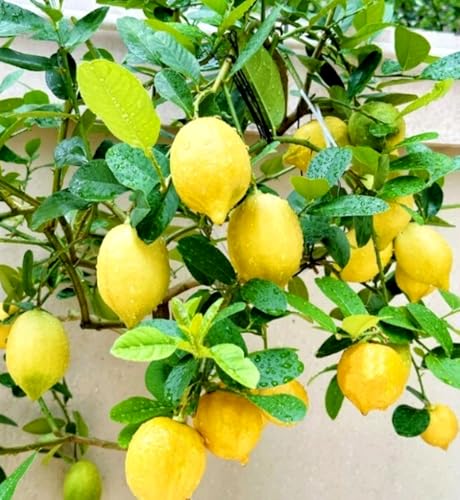
Meyer lemons are a thin-skinned hybrid fruit.


This order contains 1 grafted Meyer Lemon tree
Typical Bearing Cycles
Lemon trees usually follow a specific bearing cycle, producing fruit multiple times each year. During the mature stage, significant blooms occur around spring, leading to fruit formation during late spring to early summer. Depending on the climate, some trees can produce fruit again in fall or winter. Trees may show varying cycles, so it’s wise to monitor your tree’s specific patterns for better planning.
Variations by Lemon Tree Variety
The variety of your lemon tree significantly influences fruit production frequency.
- Eureka Lemons: Produce fruit year-round, ensuring a steady supply.
- Lisbon Lemons: Similar to Eureka, they bear fruit continuously but may peak during spring and autumn.
- Meyer Lemons: Often produce their main crop in winter and early spring and may yield smaller amounts at other times.
Choosing the right variety for your climate and preferences affects how often you’ll enjoy fresh lemons.
Best Practices for Maximizing Yield
Maximizing the yield of your lemon tree involves attention to several key practices. These practices enhance growth and fruit production and keep your tree healthy.
Watering and Fertilization Techniques
Watering regularly keeps the soil consistently moist. Aim for deep watering every 1 to 2 weeks, especially during dry spells. Use mulch to retain moisture and regulate soil temperature.
Fertilize your lemon tree with a balanced fertilizer designed for citrus trees every 6 to 8 weeks during the growing season. Look for fertilizers with a ratio of 5-5-5 or similar. This supports healthy growth and flowering.
Apply organic matter, like compost or well-rotted manure, to enrich the soil. This helps maintain nutrient levels and improves soil structure.
Pest Control and Disease Management
Monitor your lemon tree for pests, such as aphids, spider mites, and scale insects. Inspect the leaves and stems regularly. If you notice pests, use insecticidal soap or neem oil for control. Follow the manufacturer’s instructions for safe application.
Maintain proper airflow around the tree to prevent fungal diseases. Keep the tree well-pruned and avoid overhead watering. If you observe signs of disease, such as leaf spots or wilting, promptly remove affected leaves and treat with appropriate fungicides.
Implementing these practices ensures your lemon tree stays healthy and productive, leading to a more abundant yield.
Conclusion
Growing a lemon tree can be a rewarding experience when you know what to expect. With the right care and conditions your tree can produce a bountiful harvest of lemons multiple times a year.
By understanding the various factors that influence fruit production you can create an environment that encourages healthy growth. Whether you’re enjoying the vibrant blooms of spring or the fresh fruit of summer and fall your lemon tree can bring joy to your garden.
So keep nurturing your tree and soon enough you’ll be reaping the delicious rewards of your hard work. Happy gardening!
Frequently Asked Questions
When do lemon trees start producing fruit?
Lemon trees typically start producing fruit around 3 years of age. However, they go through a juvenile phase lasting 1 to 3 years before becoming mature enough to bloom and bear fruit.
What affects lemon tree fruit production?
Fruit production in lemon trees is influenced by several factors, including the tree’s age, variety, climatic conditions, proper watering, and fertilization practices. Ensuring ideal growing conditions can significantly enhance fruit yield.
How many lemons does a mature tree produce?
A mature lemon tree generally produces between 50 to 150 lemons annually, and some varieties can yield fruit multiple times throughout the year, providing continuous harvest opportunities.
What are the best conditions for growing lemon trees?
Lemon trees thrive in warm climates, specifically between 70°F and 85°F. They prefer well-drained, sandy soil enriched with organic matter, with a pH level between 5.5 and 6.5 for optimal growth.
How often should I water my lemon tree?
Lemon trees should be watered deeply every 1 to 2 weeks. Mulching can also help retain moisture in the soil, contributing to healthy growth and fruit production.
When do lemon trees produce their main blooms?
Significant blooms in lemon trees typically occur in spring. This leads to fruit formation in late spring to early summer, with some varieties possibly producing again in the fall or winter.
What care practices can maximize lemon tree yield?
To maximize yield, provide regular deep watering, apply balanced fertilizer every 6 to 8 weeks during the growing season, and enrich the soil with organic matter. Regular pruning and pest control are also essential.
Do different lemon varieties affect fruiting frequency?
Yes, the variety of lemon tree impacts its fruiting frequency. Eureka and Lisbon lemons can produce fruit year-round, while Meyer lemons mainly yield in winter and early spring, showcasing different harvesting schedules.
