

Are you wondering when to prune your young fruit trees for the best results? You’re not alone. Many new gardeners face the challenge of figuring out the right timing and techniques to ensure healthy growth and a bountiful harvest.
Key Takeaways
- Understand Growth Stages: Recognize the four stages of young fruit tree development (Establishment, Early Growth, Transition, Fruiting) to tailor your pruning practices effectively.
- Optimal Pruning Timing: Prune young fruit trees in late winter or early spring, allowing ample time for recovery before new growth starts, and avoid late fall pruning.
- Climate Considerations: Adjust your pruning schedule based on local climate conditions; colder regions may require earlier pruning while warmer areas can prune later, but avoid extreme heat.
- Essential Tools: Utilize the right tools for pruning, such as hand pruners, loppers, and pruning saws, to ensure clean cuts and minimize damage.
- Effective Pruning Techniques: Apply techniques like heading back, thinning, and clean cuts to promote healthy growth and enhance fruit production.
- Signs for Pruning: Monitor for signs of overgrowth or damaged branches to determine when to prune, ensuring optimal air circulation and light exposure for your trees.
Understanding Young Fruit Trees
Young fruit trees go through specific growth stages that require attention and care. Knowing these stages helps you understand when and how to prune effectively.
Growth Stages of Young Fruit Trees
- Establishment Stage (0-1 Year)
- Focus on building a strong root system.
- Minimal pruning; remove damaged or crossing branches.
- Early Growth Stage (1-2 Years)
- Encourage upward growth and strong branch structure.
- Prune for shape; cut back excessive height and thin out crowded branches.
- Transition Stage (2-3 Years)
- Development of lateral branches begins.
- Prune to maintain an open center for light penetration.
- Fruiting Stage (3+ Years)
- Trees produce their first fruits.
- Prune for fruit production; remove old, non-productive wood.
Understanding these stages helps you tailor your pruning practices to the specific needs of your tree.
Importance of Pruning
Pruning young fruit trees significantly impacts their health and productivity. Effective pruning promotes:
- Healthy Growth: Correct pruning minimizes disease risk by improving airflow and sunlight exposure.
- Shape Formation: Pruning encourages a strong, balanced structure that can support fruit loads.
- Increased Yield: Fruit trees often yield more when properly pruned, as energy is directed to productive branches.
- Better Fruit Quality: Pruning aims for fewer, larger, and better-tasting fruits by reducing competition among branches.
By prioritizing pruning, you set the foundation for a fruitful tree that thrives for years to come.
Best Times to Prune Young Fruit Trees
Pruning young fruit trees at the right times promotes healthy growth and maximizes your harvest. Below are key factors influencing when to prune.
Seasonal Considerations
Prune during late winter or early spring, before new growth begins. This timing allows you to shape the tree and remove any damaged or crossing branches. In cooler regions, target late February to early March. In warmer areas, aim for early spring as the buds start to swell. Avoid pruning in late fall, as this can stimulate new growth that won’t harden off before winter.
Climate Impact on Pruning Timing
Climate significantly influences pruning schedules. Colder climates may require an earlier pruning window to avoid sap loss, which can attract pests. In warmer climates, you can prune later, but don’t wait too long. If you prune during extreme heat, it can stress the tree. Monitor local forecasts for late frosts. It’s best to wait until the risk of frost has passed before pruning to protect young growth.
Techniques for Pruning Young Fruit Trees
Pruning young fruit trees requires specific techniques to encourage healthy growth and fruit production. Understanding the tools and methods makes the process efficient and effective.
Recommended Products

★ 1. What you get: Professional convenient grafting tool set including a dual-use grafting pruner tool contain 2 extra replaceable blades, a wrench and a screwdriver, along with 36pcs wide rubber bands, 150 thick rubber bands and 1 grafting tape, packed in a black wallet to meet all your needs

✂Multifunctional -2 in 1 Garden Grafting Tools-Professional grafting set allows you to pruning and grafting at the same time, saving more time and effort than traditional grafting methods, easy to use and more efficient. It allows you to trim away excess leaves and twigs and prepare the plants to be grafted. At the same time, you can make a precise cut into the grafting stock with the special grafting blade.

[Cut & Hold Pole Pruner for Tree Trimming] This long reach cut and hold pruner makes it easy to grip and remove branches, flowers, or fruit without dropping them. Perfect as a pole fruit picker for harvesting lemons, oranges, apples, or persimmons, and for trimming shrubs and bushes without climbing a ladder.
Tools Needed for Pruning
Using the right tools ensures clean cuts and minimizes damage to young trees. Here’s a list of essential tools:
- Hand Pruners: Ideal for small branches up to ½ inch thick. Choose ones with sharp blades for precision.
- Loppers: Suitable for larger branches, typically between ½ and 2 inches thick. They provide better leverage.
- Saw: Use a pruning saw for branches thicker than 2 inches. A clean cut promotes healing.
- Gloves: Protect your hands from thorns and sharp edges. Choose a durable pair designed for gardening.
- Safety Glasses: Consider wearing these to protect your eyes from debris during pruning.
Common Pruning Methods
Employing effective pruning methods shapes young trees and supports healthy development. Here are key methods to follow:
- Heading Back: Cut back the main stems to encourage lateral branching. This technique helps create a bushier tree.
- Thinning: Remove entire branches at their base to increase sunlight exposure and air circulation. This method reduces overcrowding and promotes fruit production.
- Crown Reduction: Shorten the height of the tree by cutting back the main leader and upper branches. This technique is useful for maintaining a manageable tree size.
- Pinching: Use your fingers or hand pruners to remove soft growth at the tips of branches. This encourages branching and reduces the tree’s height in the early stages.
- Clean Cuts: Always make cuts at a slight angle and just above a bud or branch. This approach prevents water accumulation and encourages quicker healing.
By using the right tools and pruning methods, you promote healthy growth and prepare your young fruit trees for a fruitful future.
Signs That Your Young Fruit Trees Need Pruning
Pruning young fruit trees promotes healthy growth and enhances fruit production. Look for these key signs that indicate when your trees require pruning.
Recommended Products

1:EXTENDABLE REACH FOR LADDER-FREE SAFETY – Acting as both a reliable tree pruner and a fruit picker pole, this tool effortlessly extends from 3.28 to 5.25 FT to reach high branches up to 10 FT from the ground. The innovative rotating and locking head allows for precise angles without unstable ladders or risky stretching, ensuring maximum safety.
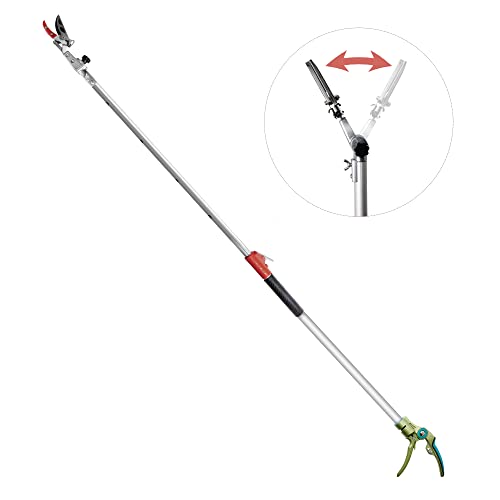
[Helpful Garden Tool] GARTOL brings to you a lightweight and extendable pruning tool to reach out to the least approachable arenas of your garden. You can conveniently get across other plants to remove the fastgrowing brambles and sting nettles without getting scratched or hurt. For gardening lovers, the telescopic pruner cutter head can can be rotated which resolves mobility issues and gives you the pleasure of trimming your garden without bending down or using a ladder to climb and cut them.

Identifying Overgrowth
Identifying overgrowth is crucial for maintaining a healthy tree structure. If you notice branches growing too closely together, it may signal a need for pruning. Excessive branches can block light from reaching leaves and fruit, leading to poor growth. Additionally, if your young tree has multiple upright shoots competing for the same space, these should be trimmed to encourage a strong central leader. Prune these crowded branches back to improve air circulation and allow sunlight to penetrate the canopy.
Recognizing Diseased or Damaged Branches
Recognizing diseased or damaged branches helps maintain the health of your fruit trees. Check for signs of disease, such as discoloration, wilting, or blackened areas on the bark. If you spot any signs, promptly prune away the affected branches to prevent the spread of disease. Also, look for broken or cracked limbs, which can weaken the tree’s structure. Cutting these away not only protects the tree but also opens up space for healthy growth. Always remember to make clean cuts and disinfect your tools to avoid introducing disease to your trees.
Conclusion
Pruning young fruit trees is a rewarding endeavor that sets the stage for a bountiful harvest. By knowing when and how to prune you can help your trees grow strong and healthy. Remember to pay attention to their growth stages and local climate conditions.
Using the right tools and techniques will make a big difference in the long run. Keep an eye out for signs of overgrowth or damage and act promptly to keep your trees in top shape. With a little care and attention your young fruit trees will flourish and provide you with delicious fruit for years to come. Happy gardening!
Frequently Asked Questions
When is the best time to prune young fruit trees?
Pruning is best done in late winter or early spring, ideally between late February and early March for cooler regions. In warmer areas, prune as the buds start to swell. Avoid late fall pruning to prevent new growth that won’t survive winter.
What are the main stages of young fruit trees?
Young fruit trees go through four growth stages: the Establishment Stage, Early Growth Stage, Transition Stage, and Fruiting Stage. Each stage requires different pruning techniques to promote healthy growth and improve yield.
What tools do I need for pruning fruit trees?
Essential pruning tools include hand pruners for small branches, loppers for larger ones, a pruning saw for thicker branches, gloves for protection, and safety glasses to shield your eyes from debris. Using the right tools ensures clean cuts and minimizes damage.
How do I know when to prune my fruit trees?
Signs that indicate your fruit trees need pruning include overgrowth, where branches are too close together, and the presence of diseased or damaged branches. Prune crowded branches for better light and air circulation, and remove any affected areas promptly to maintain tree health.
What pruning techniques should I use for young fruit trees?
Common pruning techniques include heading back to encourage lateral branching, thinning to improve sunlight exposure, crown reduction to manage height, and pinching to promote branching. Each method helps shape the tree for better growth and fruit production.
