

When’s the best time to prune your fruit trees? You’re not alone if you’ve ever stood in your backyard, scissors in hand, unsure of when to make that cut. Pruning can feel daunting, but it’s essential for healthy growth and a bountiful harvest.
Imagine watching your trees flourish with vibrant blooms and juicy fruits, all thanks to a little timely trimming. In this article, you’ll discover the optimal pruning times for different fruit trees and the benefits of each season. By the end, you’ll feel confident tackling your pruning tasks and nurturing your trees to their full potential.
Key Takeaways
- Prune fruit trees during their dormant season (late winter to early spring) for optimal health and growth.
- Utilize specific pruning techniques such as maintenance, structural, and fruit-thinning pruning depending on the time of year and tree type.
- Essential tools for effective pruning include bypass pruners, loppers, and pruning saws, ensuring clean cuts that promote healthy regrowth.
- Signs your fruit trees need pruning include dead branches, overcrowded canopies, and poor fruit production; addressing these issues is vital for maintaining tree health.
- Different fruit trees have unique pruning needs, such as apples in late winter and cherries in mid-summer; tailor your approach accordingly for best results.
- Always prioritize safety by wearing protective gear during pruning to avoid injuries from sharp tools and flying debris.
Understanding Pruning Basics
Pruning involves removing specific parts of a tree to encourage healthy growth and fruit production. It primarily focuses on removing dead or diseased branches, shaping the tree, and increasing airflow and light penetration. Effective pruning enhances both the health and productivity of your fruit trees.
Types of Pruning
- Maintenance Pruning: This involves removing dead, damaged, or diseased branches. Aim to do this annually for overall tree health.
- Structural Pruning: This establishes the tree’s shape and structure. Perform this type of pruning during the tree’s dormant season.
- Fruit-Thinning Pruning: This removes some of the developing fruit to allow the remaining fruit to grow larger and healthier. Conduct this in late spring.
Pruning Timing
- Dormant Season (Late Winter to Early Spring): Prune most fruit trees during dormancy. This timing reduces stress and encourages robust growth when spring arrives. Trees like apples and pears benefit from this approach.
- Summer Pruning: This can control tree shape and size. It’s particularly effective for certain types of trees, like stone fruits (e.g., cherries, peaches), and fosters better air circulation.
Tools for Pruning
- Hand Pruners: Ideal for small branches, hand pruners make clean cuts for healthy regrowth.
- Loppers: Use loppers for branches up to 1.5 inches thick. They provide leverage for more substantial cuts.
- Pruning Saw: For larger limbs, a pruning saw performs well. It ensures a clean cut without damaging the bark.
- Make Clean Cuts: Cuts should be at a 45-degree angle, promoting quicker healing.
- Avoid Topping: Topping removes the top of the tree and creates weak regrowth.
- Observe Tree Growth: Take time to assess your tree’s growth habit before pruning. This helps you understand where to cut for maximum benefit.
By understanding pruning basics, you enhance your fruit trees’ health and productivity.
Best Time to Prune Your Fruit Trees
Pruning fruit trees at the right time boosts health and productivity. Knowing when to prune can maximize your tree’s growth and fruit yield.
Recommended Products

· ULTRA-SHARP SK5 STAINLESS STEEL - Engineered with premium SK5 stainless steel, these heavy duty pruning shears deliver razor-sharp precision and maximum hardness. The rust-resistant blades are designed to stay sharp longer, effortlessly resisting corrosion and sap buildup for smooth, friction-free garden shears performance year after year.
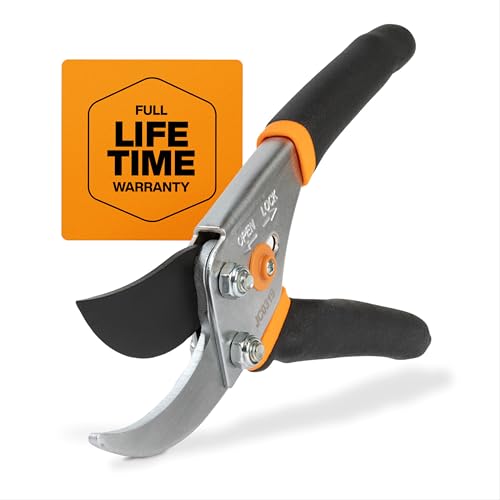
CLEAN CUTS FOR LIVE GROWTH: Bypass blade design is ideal for pruning delicate flower stems and green growth, helping reduce crushing and plant damage while cutting stems and small branches up to 5/8” in diameter

DUAL CUTTING POWER: VERSATILE PRUNING COMBO --- With both Pruning Shears and Pruning Snip, this combo delivers unmatched versatility. Whether you're delicately trimming flowers and shrubs, tackling thicker tree branches, or tending to your vegetable and fruit garden, our combo pack excels in all areas. They're also perfect for landscaping projects and maintaining the health and appearance of indoor plants. With this pack, you have a versatile tool that simplifies your gardening tasks.
Seasonal Considerations
Pruning during the dormant season often yields the best results. For most fruit trees, late winter to early spring marks the ideal window. Pruning then minimizes stress on the tree and helps reduce the risk of disease. In contrast, summer pruning can also be beneficial, especially for certain species. It helps control tree size and encourages fruit development. Evaluate your local climate to decide if late winter or summer fits best for your trees.
Tree-Specific Timing
Different fruit trees have specific pruning needs.
- Apple Trees: Prune in late winter or early spring before new growth starts.
- Cherry Trees: Aim for mid to late summer to prevent diseases.
- Peach Trees: Prune right after harvest in late summer for optimal growth.
- Citrus Trees: Winter works best, focusing on removing dead or weak limbs.
Consider these guidelines for effective pruning timing for each variety, tailoring your approach accordingly for the best outcomes.
Tools and Techniques for Pruning
Pruning fruit trees requires the right tools and techniques to promote healthy growth and maximize fruit yield. Having the correct equipment ensures clean cuts and minimizes stress on the tree.
Essential Pruning Tools
- Bypass Pruners: Use these for small branches. They provide clean cuts and reduce damage to the tree tissue.
- Loppers: Ideal for medium-sized branches, loppers give you extra reach and leverage.
- Pruning Saw: Necessary for larger branches, choose a folding or straight-handled saw for easier handling.
- Hedge Shears: These work well for shaping, but avoid using them on live wood that needs precise cuts.
- Safety Gear: Wear gloves and goggles for protection. Tree branches can be sharp, and flying debris is a risk during pruning.
- Make Clean Cuts: Aim to cut just above a bud or lateral branch. This encourages healthy regrowth.
- Use the Three-Cut Method: For larger branches, make an undercut about a foot from the trunk, then make a top cut. Finish with a cut at the branch collar to reduce tearing.
- Remove Dead or Diseased Wood: Cut these branches back to the trunk or healthy wood to prevent disease spread.
- Shape the Tree: Focus on maintaining an open center. This allows sunlight to reach all parts of the tree and improves air circulation.
- Thin Out Crowded Areas: Reduce dense growth to allow better light penetration. This promotes larger fruit growth.
These tools and techniques empower you to prune effectively, ensuring your fruit trees remain healthy and productive.
Signs That Your Fruit Trees Need Pruning
Spotting signs that your fruit trees need pruning helps maintain their health and productivity. Look for these indicators:
Recommended Products

★ 1. What you get: Professional convenient grafting tool set including a dual-use grafting pruner tool contain 2 extra replaceable blades, a wrench and a screwdriver, along with 36pcs wide rubber bands, 150 thick rubber bands and 1 grafting tape, packed in a black wallet to meet all your needs

Pruning Trees Shrubs and Vines No 54 By Gardenway Editors

Effortless Tree Cutting Operation: Designed for smooth and easy cutting of fruit trees, allowing you to finish girdling work with less effort
Dead or Diseased Branches
Remove any branches that appear dead, brittle, or show signs of disease like dark spots or excessive growths. These branches hinder the tree’s growth and can spread illness.
Overcrowded Canopy
Notice if branches overlap or crowd each other. A crowded canopy limits airflow and sunlight, causing poor fruit quality. Thin out branches to ensure better access to light and air.
Unruly Growth
Identify areas with excessive growth or awkwardly shaped branches. Unruly growth can lead to structural issues. Prune to establish a strong frame that encourages balanced development.
Poor Fruit Production
Evaluate the fruit quantity and size. If your tree produces smaller fruits or fewer overall, it may benefit from fruit-thinning pruning. This process enhances resource allocation to remaining fruits.
Suckers and Water Sprouts
Watch for suckers growing from the base of the tree or water sprouts arising vertically from main branches. These growths divert energy away from productive branches. Remove them promptly.
Seasonal Changes
Observe any variations in seasonal performance. Trees that bloom late or struggle to produce fruit might require structural pruning during dormancy.
Orientation and Shape
Assess the tree’s shape and direction. Trees growing unevenly may require pruning to restore balance and aesthetics. Target overextended branches for removal.
By keeping an eye on these signs, you can determine the best times to prune your fruit trees and ensure they thrive season after season.
Conclusion
Pruning your fruit trees is a rewarding task that pays off in healthy growth and bountiful harvests. By understanding the right timing and techniques for different types of trees, you can help them thrive.
Remember to look for signs that indicate when your trees need attention. Whether it’s during the dormant season or right after harvest, each pruning session is an opportunity to enhance your trees’ health and productivity.
With a little care and the right approach, you’ll be on your way to enjoying the fruits of your labor for years to come. Happy pruning!
Frequently Asked Questions
When is the best time to prune fruit trees?
Pruning is best done during the dormant season, typically late winter to early spring, as it promotes healthier growth and reduces disease risk. Some specific types, like cherry trees, should be pruned in mid to late summer.
What are the benefits of pruning fruit trees?
Pruning helps remove dead or diseased branches, shapes the tree, and improves airflow and light penetration. This leads to healthier trees and can increase fruit yield and quality.
What tools do I need for effective pruning?
Essential tools include bypass pruners for small branches, loppers for medium branches, and pruning saws for larger limbs. Safety gear, such as gloves and goggles, is also advised.
How do I know when my fruit trees need pruning?
Signs that indicate the need for pruning include dead or diseased branches, overcrowded canopies, poor fruit production, and overall chaotic growth. Regularly check your trees for these indicators.
What is maintenance pruning?
Maintenance pruning focuses on maintaining the overall health of the tree. It involves removing dead or diseased branches and improving the tree’s shape to allow for better sunlight access and air circulation.
