

Are your fruit trees struggling to produce the delicious harvest you dream of? You’re not alone. Many gardeners face the challenge of figuring out the right fertilizer to boost growth and fruiting. With so many options available, it’s easy to feel overwhelmed.
This article will help you cut through the confusion and find the best fertilizer for your fruit trees. You’ll learn about the essential nutrients they need and how to apply them effectively. By the end, you’ll have the knowledge to nurture your trees and enjoy a bountiful harvest.
Key Takeaways
- Understanding the right fertilizer type, whether organic (compost, manure, fish emulsion) or inorganic (granular, liquid), is crucial for the growth and productivity of fruit trees.
- Essential nutrients for fruit trees include nitrogen for lush foliage, phosphorus for root development and flowering, and potassium for fruit quality and overall health.
- Optimal timing for fertilizer application is key; spring feeding supports growth while fall feeding prepares trees for winter dormancy and enhances resilience.
- Effective application techniques, such as broadcasting and fertilizer spikes, ensure nutrients reach the roots and promote healthy growth.
- Tailor fertilizer selection and application based on the specific needs of your fruit trees for maximum yield and fruit quality.
Types Of Fertilizers For Fruit Trees
Choosing the right fertilizer significantly impacts the health and productivity of your fruit trees. Understanding the different types of fertilizers helps you make informed decisions.
Recommended Products

NUTRIENT-RICH GROWTH: Premium cow manure compost packed with nitrogen, calcium, and iron. This organic compost fertilizer enriches soil, boosts microbial life, and supports bigger vegetables, greener lawns, and thriving flowers.

General-purpose organic plant nutrients perfect for veggies, herbs, flowers, succulents, trees, shrubs and houseplants.

Odor & Chemical-Free Humus Fish Fertilizer for Large Areas: Our fish fertilizer for plants is a compost soil conditioner with no fishy smell. Each 8-lb bag of fertilizer for indoor plants covers up to 60 sq ft per pound, making it ideal for gardens/lawns.
Organic Fertilizers
Organic fertilizers enrich the soil while promoting long-term health. They consist of natural materials, such as compost, manure, and bone meal.
- Compost: A mix of decomposed organic matter that improves soil structure and adds nutrients. Spread a layer of compost around the base of the tree to nourish it gradually.
- Manure: Well-rotted manure from animals like cows or chickens supplies essential nutrients. Use it sparingly to avoid burning the roots; around 1 to 2 inches applied in early spring works well.
- Fish Emulsion: A nutrient-rich liquid fertilizer made from fish parts. Dilute fish emulsion with water and apply it during the growing season for a quick nutrient boost.
- Bone Meal: A slow-release source of phosphorus and calcium, bone meal encourages root growth and flowering. Mix it into the soil at planting time or around established trees.
Inorganic Fertilizers
Inorganic fertilizers provide concentrated nutrients that help fruit trees grow quickly. They contain synthetic substances and can deliver specific nutrient ratios.
- Granular Fertilizers: These offer a controlled-release option, supplying nutrients over time. Look for formulations specifically designed for fruit trees, such as a 10-10-10 N-P-K ratio.
- Liquid Fertilizers: Easy to apply and fast-acting, liquid fertilizers like urea or potassium nitrate work best when needed in a pinch. Use them during the growing season for immediate nutrient access.
- Slow-Release Fertilizers: These fertilizers gradually supply nutrients for a set period. They reduce the risk of nutrient runoff and provide a steady feeding schedule, ideal for busy gardeners.
- Specialty Fertilizers: Some products are tailored for specific environments, such as acid-loving trees. Use fertilizers designed for blueberries or citrus if applicable, helping to cater to each tree’s needs.
Selecting the right fertilizer—organic or inorganic—impacts your fruit trees’ growth and productivity. Focus on the nutrients your specific trees require for the best results.
Nutrient Requirements For Fruit Trees
Fruit trees thrive on a balanced mix of nutrients. Understanding these requirements ensures healthy growth and abundant fruit production.
Nitrogen
Nitrogen plays a crucial role in developing lush foliage and overall tree vigor. It encourages new growth and green leaves. For optimal results, use fertilizers with a nitrogen content of 10-15% during the early growing season. Organic sources, such as compost and poultry manure, also boost nitrogen levels. A good rule of thumb is to apply one pound of nitrogen per 1,000 square feet of the root zone.
Phosphorus
Phosphorus supports root development and flower production. Its benefits become especially important during the blooming stage. Look for fertilizers containing around 5-10% phosphorus. Bone meal, rock phosphate, and fish meal are excellent organic options. Apply about half a pound per tree for young trees and one pound for mature trees to enhance fruit yield.
Potassium
Potassium strengthens fruit quality and enhances overall tree health. It helps with water regulation and resistance to diseases. Fertilizers should contain 5-10% potassium. Use sulfate of potash or kelp meal as organic sources. Providing one pound of potassium per mature tree during fruiting season can lead to larger, tastier fruit.
Timing Of Fertilizer Application
Fertilizer application is crucial for fruit tree health and productivity. Proper timing ensures maximum nutrient absorption and growth.
Recommended Products
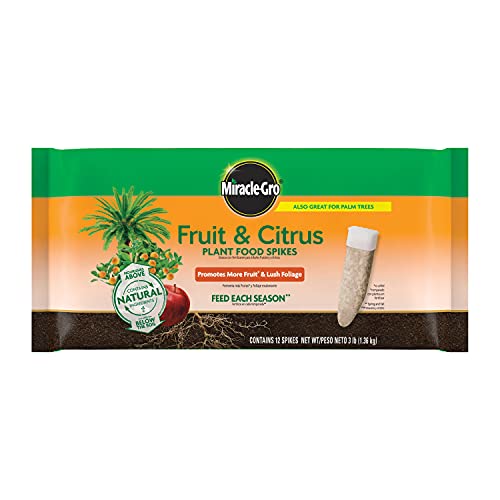
FORMULATED FOR CITRUS AND FRUIT TREES: Use these citrus fertilizer spikes on apple, orange, lemon, lime, and avocado trees; this formula is also great for feeding palm trees

Package contains 15 fruit and citrus fertilizer spikes and is produced to avoid wasteful runoff, mess, hazards and smells

Let our professionally formulated plant food help your fruit tree grow healthy, strong AND abundantly producing
Spring Feeding
Spring marks the start of active growth for fruit trees. Apply fertilizer when buds break and new leaves emerge. This timing allows trees to utilize nutrients effectively during the growing season. Use a balanced fertilizer with equal parts nitrogen, phosphorus, and potassium for optimal results. For young trees, apply about 0.1–0.3 pounds of fertilizer per inch of trunk diameter. Mature trees may require 0.5–1 pound per inch of diameter.
Fall Feeding
Fall feeding prepares trees for dormancy and boosts their resilience against harsh conditions. Apply fertilizer after the last harvest but before the first frost. This timing helps trees store nutrients in their roots for future growth. Use a potassium-rich fertilizer to enhance cold hardiness and fruit quality. For young trees, use 0.1–0.2 pounds per inch of trunk diameter, and for mature trees, 0.5–0.75 pounds. Avoid high nitrogen fertilizers in fall, as they can promote new growth that may not survive winter.
Application Techniques
Effective application techniques play a vital role in maximizing the benefits of fertilizers for your fruit trees. Proper methods ensure nutrients reach the roots, promoting healthy growth and fruit production.
Recommended Products

Specially Formulated for Citrus & Fruit Trees & Shrubs: The 8-4-8 formula -- 8% Nitrogen; 4% Phosphorus; and 8% Potassium -- in these fertilizer plant food spikes was developed to meet the unique requirements of citrus, fruit, nut and berry trees and shrubs.

Package contains 160 fruit and citrus fertilizer spikes and is produced to avoid wasteful runoff, mess, hazards and smells

Broadcasting
Broadcasting is a straightforward method that involves evenly spreading granular fertilizer over the soil surface. For this technique, you’ll want to:
- Choose the Right Time: Apply fertilizer in early spring, just as trees start to show new growth.
- Calculate the Amount: For young trees, use 0.1–0.3 pounds per inch of trunk diameter. For mature trees, use 0.5–1 pound.
- Spread Evenly: Scatter fertilizers in a circular pattern around the tree. Make sure to cover the root zone while avoiding the trunk.
- Water Immediately: After broadcasting, water thoroughly to help the fertilizer absorb into the soil.
This method works well for maintaining soil nutrients across the entire root zone.
Fertilizer Spikes
Fertilizer spikes offer a convenient way to deliver nutrients directly to the tree roots. To use this technique effectively:
- Select Quality Spikes: Choose spikes that contain a balanced mix of nitrogen, phosphorus, and potassium.
- Determine Placement: Insert the spikes into the soil about 6–12 inches from the trunk based on the size of the tree. Follow manufacturer instructions for spacing.
- Keep the Soil Moist: Water the area after inserting the spikes to activate nutrient release.
- Monitor Growth: Observe your trees for signs of growth and adjust spike application as needed.
Using spikes can simplify the feeding process, especially for trees that require less frequent nutrient boost.
Conclusion
Choosing the right fertilizer for your fruit trees can make all the difference in their growth and productivity. By understanding the specific nutrient needs and applying them at the right times, you’re setting your trees up for success. Whether you opt for organic or inorganic options, remember that a balanced approach is key.
With a little care and attention to your trees’ needs, you’ll be rewarded with a bountiful harvest. Enjoy the journey of nurturing your fruit trees and savor the delicious fruits of your labor. Happy gardening!
Frequently Asked Questions
What are the essential nutrients for fruit trees?
Fruit trees require a balanced mix of nitrogen, phosphorus, and potassium. Nitrogen promotes foliage and tree vigor, phosphorus supports root development and flowering, while potassium enhances fruit quality and overall tree health. Using fertilizers with these nutrients is vital for the tree’s growth and fruit production.
How often should I fertilize my fruit trees?
It’s recommended to fertilize fruit trees in the spring when buds break and new leaves emerge. Young trees typically need about 0.1–0.3 pounds of fertilizer per inch of trunk diameter, while mature trees may require 0.5–1 pound. Fall feeding is also beneficial to prepare trees for dormancy.
What types of fertilizers can I use for fruit trees?
You can choose between organic fertilizers like compost, manure, fish emulsion, and bone meal, which improve soil health over time, and inorganic options such as granular, liquid, slow-release, and specialty fertilizers for concentrated nutrient delivery. Both types can effectively support fruit tree health.
When should I apply fertilizer for the best results?
Apply fertilizer in early spring when new growth begins and again in the fall after the last harvest but before the first frost. Avoid high nitrogen fertilizers in the fall, as they can encourage new growth that may not survive winter.
What application methods should I use for fertilizers?
Common methods include broadcasting, where granular fertilizers are spread evenly over the soil surface, and using fertilizer spikes that deliver nutrients directly to the roots. Proper watering post-application is essential to help absorb the nutrients effectively.
