

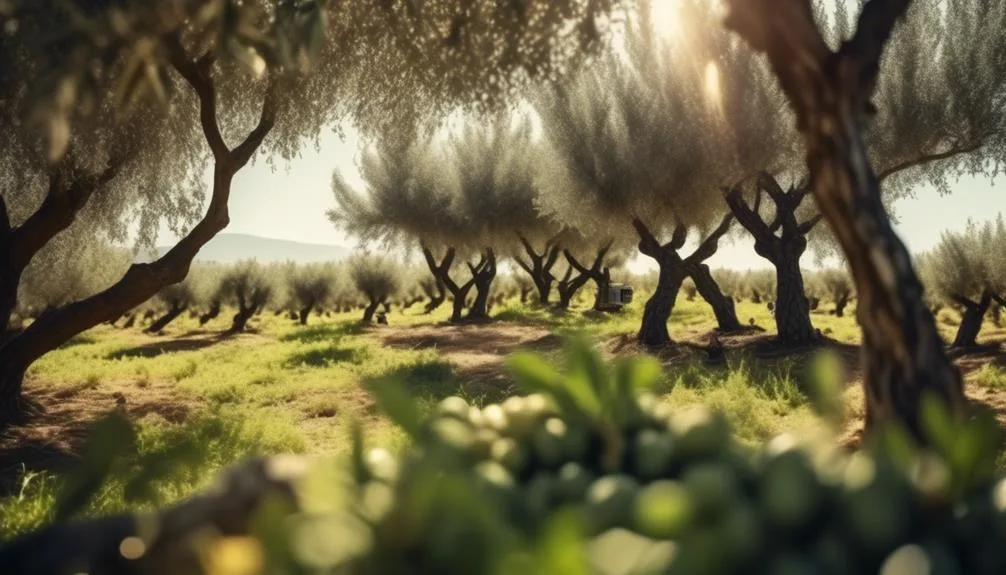
Olive oil production is a complex balancing act, juggling environmental impact, resource management, economic viability, and social responsibility. The question is: can this delicate dance be sustained in the long term?
From the impact of olive groves on the environment to the resilience of olive oil producers, there are many factors to consider. In this discussion, we'll explore the challenges and intricacies of olive oil production to understand if it can endure the test of time.
Key Takeaways
- Soil erosion is a significant concern in olive oil production, but sustainable farming methods like cover cropping and reduced tillage can combat it.
- Efficient resource management, including responsible use of water, soil, and energy, is crucial for the sustainability of olive oil production.
- Economic viability can be achieved through efficient cost management, staying attuned to market demand, and diversification into related markets.
- Social responsibility in olive oil production involves ethical sourcing, community engagement, and collaborative efforts to protect natural resources and support farmers' livelihoods.
Environmental Impact
When considering the environmental impact of olive oil production, it's crucial to assess the effects on soil health, water usage, and biodiversity.
Soil erosion is a significant concern in olive oil production. Improper farming practices, such as excessive tilling or monoculture planting, can lead to soil erosion. This degradation of the soil reduces its fertility and increases the risk of landslides.
To combat soil erosion, sustainable farming methods like cover cropping and reduced tillage can be implemented. These practices minimize erosion and help maintain soil health.
Biodiversity conservation is also vital in olive oil production. Intercropping with native plant species and preserving natural habitats can help support diverse ecosystems. This provides homes for various wildlife and promotes a healthy balance within the environment.
Recommended Products

✅ 🌿 Unleash Olive Tree Excellence: Our premium potting mix enhances growth, health, and productivity, resulting in flourishing olive trees.

100% Natural: Special custom blend for olive trees in containers

100% Natural: Special custom blend for olive trees in containers
Resource Management
To ensure the sustainability of olive oil production, efficient management of resources is essential, encompassing responsible use of water, soil, and energy throughout the cultivation and extraction processes. Efficient utilization and conservation practices are crucial for minimizing environmental impact and ensuring the long-term viability of olive oil production. By implementing sustainable resource management strategies, olive oil producers can reduce their ecological footprint while maintaining high-quality yields. The table below provides an overview of key resource management practices in olive oil production.
| Resource Management Practices | Description |
|---|---|
| Drip Irrigation Systems | Efficient water usage, reducing water waste |
| Cover Crops | Soil conservation, erosion prevention, and improved soil health |
| Renewable Energy Sources | Use of solar or wind energy to power production facilities |
| Integrated Pest Management | Minimizing pesticide use through natural pest control methods |
| Recycling and Reusing Waste | Utilizing byproducts for composting or energy production |
Implementing these resource management practices not only benefits the environment but also contributes to the overall sustainability of olive oil production.
Economic Viability
Ensuring the economic viability of olive oil production involves implementing efficient cost management strategies and exploring market opportunities to maintain profitability and foster growth in the industry. To achieve this, consider the following:
- Market Demand: Stay attuned to the evolving preferences of consumers, which may include a shift towards organic or sustainably produced olive oil.
- Industry Trends: Keep abreast of technological advancements and sustainable practices that can enhance productivity and reduce costs.
- Diversification: Explore opportunities to expand product lines or venture into related markets to mitigate risks and maximize revenue streams.
- Strategic Partnerships: Collaborate with suppliers, distributors, and retailers to optimize supply chains and access new markets, contributing to long-term economic stability.
Social Responsibility
As you focus on maintaining economic viability in olive oil production, an essential aspect to consider is the social responsibility of your operations, which encompasses the well-being of the community and environment in which you operate.
Ethical sourcing of olives is crucial for ensuring fair treatment and compensation for farmers. By engaging in ethical sourcing practices, you contribute to the sustainability of local olive oil production and support the livelihoods of farmers.
Community engagement is equally vital. Establishing strong ties with the community not only fosters a positive relationship but also allows you to understand and address any social or environmental concerns.
This engagement can lead to collaborative efforts to protect natural resources and promote the well-being of the community, thereby fostering a sustainable and mutually beneficial environment for olive oil production.
Future Sustainability
Considering the evolving environmental and economic landscape, implementing innovative technologies and sustainable practices is vital for ensuring the long-term viability of olive oil production.
The future sustainability of olive oil production relies on several key factors:
- Technology Advancements: Embracing advanced machinery for harvesting and processing can improve efficiency and reduce waste, contributing to the overall sustainability of olive oil production.
- Consumer Demand: Responding to the growing consumer demand for sustainably produced olive oil is critical. This involves transparent labeling, certification of sustainable practices, and educating consumers about the environmental and social benefits of supporting sustainable olive oil production.
- Water Management: Implementing water-efficient irrigation systems and conservation practices is essential for maintaining the health of olive groves and ensuring long-term water availability.
- Soil Health: Prioritizing soil conservation and regenerative agricultural practices can enhance the resilience of olive orchards and contribute to long-term sustainability.
Conclusion
Incorporating sustainable practices like water conservation and organic farming is crucial for the long-term viability of olive oil production.
It not only minimizes environmental impact but also ensures economic stability.
Embracing sustainability in this industry isn't just a choice, but a necessity for preserving natural resources and securing the well-being of future generations.
