

Ever struggled to reach those high branches while pruning your trees? Wondering how to make your yard work easier and more efficient? In this article, you’ll discover the secrets to mastering the pole pruner like a pro.
Picture this: You’re in your backyard, staring up at those pesky branches just out of reach. Frustrating, right? Well, fret no more! With the right techniques and a bit of know-how, you can tackle those branches with ease using a pole pruner.
Choosing the Right Pole Pruner
When selecting a pole pruner, consider the following factors to make your pruning tasks easier and more efficient:
- Reach: Opt for a pole pruner that can extend to the height you need without overreaching.
- Cutting Capacity: Choose a tool with the appropriate cutting capacity to handle the size of branches you typically encounter.
- Comfort: Prioritize ergonomically designed models that reduce strain on your arms and back during use.
Keep these points in mind to ensure you find the perfect pole pruner for your tree pruning needs.
Recommended Products

2-In-1 for Versatile Tree Cutting: This 2-in-1 pole pruner with saw combines sharp pruning shears for smaller branches and a durable saw blade for thicker limbs, making it a practical tree pruning tool for various cutting needs. Designed as a manual pole saw and pruner combination, it allows you to trim twigs and branches efficiently while reaching higher tree limbs from the ground, reducing tool changes and improving overall pruning efficiency.

【Multi-purpose Tree Pruner】The telescopic pole pruner has a shearing function and can be used for picking fruit and trimming high branches. The sharp blade of the fruit picking rod can easily cut branches up to 1/2 inch in diameter, and the included serrated saw blade uses double-sided cutting technology, making it easy to cut through thicker tree trunks. Its versatile design makes it an indispensable tool for gardening.
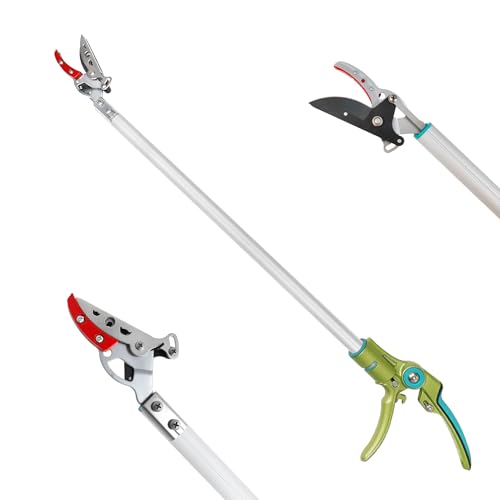
[REACH HIGH & STAY SAFE](No Ladder Required) Say goodbye to wobbly ladders! This 32inch long reach pole pruner offers an extra 30 inches of safe reach, allowing you to prune high branches or tall fruit trees while standing firmly on the ground. It’s the perfect extension tool for maintaining your backyard without the risk of falling.
Understanding the Components
When it comes to using a pole pruner, understanding its components is crucial. Here’s a breakdown of the key parts:
- Pole: It’s the long, extendable part of the pruner that allows you to reach high branches without the need for a ladder.
- Pruner Head: This is where the cutting happens. It typically consists of a saw or a cutting blade.
- Trigger: Found on the handle, the trigger controls the cutting action.
To operate your pole pruner effectively:
- Extend the Pole: Ensure it’s at the right length for the task at hand.
- Position the Pruner Head: Aim it carefully at the branch you want to cut.
- Engage the Trigger: Press it to make the cut. Make sure to follow the pruner’s specific instructions for best results.
Understanding these components will help you use your pole pruner efficiently and safely.
Preparing for Pruning
To effectively use a pole pruner, preparation is key. Follow these steps to get ready for your pruning task:
- Inspect Your Pole Pruner: Before starting, check for any damage or wear on the pole, pruner head, and trigger mechanism.
- Choose the Right Spot: Find an area with enough space to maneuver the pole pruner safely around the tree.
- Wear Safety Gear: Put on gloves, eye protection, and if needed, a hard hat to protect yourself.
- Adjust the Pole Length: Extend the pole to the appropriate length for the height of the branches you’ll be pruning.
- Secure Your Grip: Hold the pole pruner with a firm grip to maintain control during pruning.
- Check the Cutting Blade: Ensure the pruner head is sharp and ready to make clean cuts.
- Test the Trigger: Verify that the trigger responds smoothly to control the cutting action.
- Plan Your Approach: Visualize the cuts you need to make and the best way to reach each branch safely.
Now that you’re prepared, you’re ready to move on to the actual pruning process.
Recommended Products
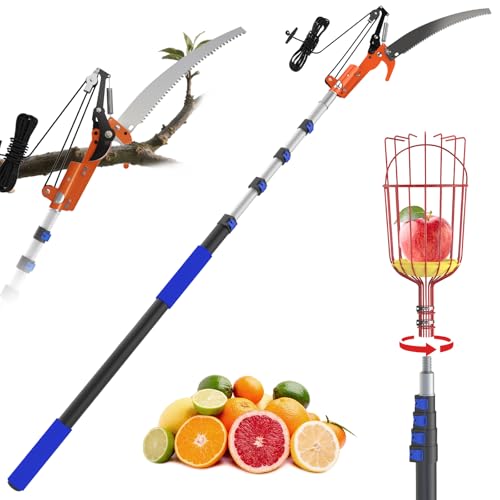
2-in-1 Extendable Tree Pruner & Pole Saw - This pole saws for tree trimming combines a 13.8" sharp steel blade and scissors for all your tree trimming needs. The manual pole saw features sharpened teeth made of high-quality carbon steel, delivering high cutting power while being lightweight. A non-stick coating ensures smooth, efficient branch trimming, saving you time and effort. Perfect for cutting trees, bamboo, PVC pipes, and more.

Sharp Mn Steel Blade for Fast & Clean Cuts: This pole saw uses a sharp three-sided edge with a double-sided barb design to grip branches securely and cut smoothly from multiple angles. The Mn steel blade is durable, rust-resistant, and lightweight, delivering fast, clean cuts. This is a manual pole saw with detachable pole sections for adjustable reach, not pruner, not a telescoping pole; it is neither electric nor battery-powered.
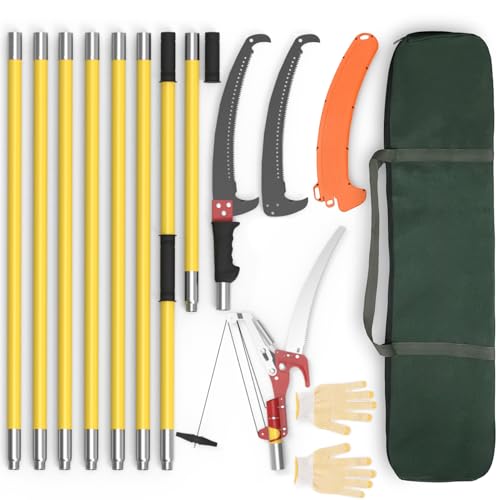
Package Includes: Our pole saw and pruner set contains 7 long poles, 1 head with saw, 1 pruner head, 1 spare saw with sheath, and a carry bag. Its extandabe range is about 7.3 to 27 ft (2.24 m to 8.24 m).
Proper Pruning Techniques
When it comes to pruning your trees with a pole pruner, mastering proper techniques is key to achieving your desired results. Here are some essential tips to help you prune effectively:
- Start with the Three-Cut Method:
- Make the first cut on the underside of the branch, a few inches away from the trunk.
- Create the second cut just beyond the first, on the top of the branch.
- Finally, make the third cut to remove the stub left behind.
- Cut at the Right Angle:
- Slice the branch at a slight angle to help water drain off easily and prevent disease.
- Avoid Tearing the Branch:
- Cut cleanly and avoid ripping or damaging the bark to promote quicker healing.
- Mind the Collar:
- Leave the collar (the swollen area where the branch meets the tree) intact to aid in healing.
- Remove Dead and Diseased Branches:
- Trim away any dead or diseased branches to keep your tree healthy and vibrant.
- Step Back and Assess:
- Periodically step back to evaluate your work and ensure you’re shaping the tree as desired.
- Follow the Natural Shape:
- Work with the tree’s natural growth pattern when pruning to maintain its health and aesthetics.
- Dispose of Trimmings Properly:
- Clean up and dispose of ** trimmed branches** safely to avoid any hazards in your yard.
Recommended Products
2-In-1 for Versatile Tree Cutting: This 2-in-1 pole pruner with saw combines sharp pruning shears for smaller branches and a durable saw blade for thicker limbs, making it a practical tree pruning tool for various cutting needs. Designed as a manual pole saw and pruner combination, it allows you to trim twigs and branches efficiently while reaching higher tree limbs from the ground, reducing tool changes and improving overall pruning efficiency.

Pay Attention!Tool only,No battery! This Electric Pruning Shears is just compatible with De-Walt 20V Max Battery.

IDEAL BRANCH TRIMMER: Interchangeable design delivers full pruning action in 5 distinct configurations. The X3 Double-hooked Saw features an aggressive triple-grind profile with sawdust reliefs for faster, smoother cutting.
Maintenance Tips
When it comes to using a pole pruner, proper maintenance is key to ensuring its effectiveness and longevity. Here are some essential tips to keep your pole pruner in top condition:
- Regular Cleaning: After each use, make sure to clean the blades and surfaces of your pole pruner. Remove any debris or sap buildup to prevent rust and maintain cutting efficiency.
- Sharpening the Blades: Dull blades can make pruning more difficult and cause damage to branches. Regularly sharpen the blades of your pole pruner to ensure clean cuts and preserve the health of your trees.
- Checking for Wear and Tear: Inspect your pole pruner for any signs of wear, such as loose screws or damaged parts. Address these issues promptly to prevent further damage and maintain safety during operation.
- Applying Lubrication: Keep moving parts of your pole pruner well-lubricated to prevent rust and ensure smooth operation. Use a suitable lubricant recommended by the manufacturer for optimal performance.
- Storing Properly: When not in use, store your pole pruner in a dry place away from moisture and direct sunlight. Follow manufacturer guidelines for proper storage to prolong the life of your tool.
| Proper Cleaning | After each use |
| Blade Sharpening | Regular maintenance |
| Wear and Tear | Routine inspections |
| Lubrication | Keep moving parts lubricated |
| Storing | Dry place, away from moisture |
Conclusion
Now that you’ve learned the essential pruning techniques for using a pole pruner, you’re well-equipped to tackle tree maintenance with confidence. Remember to apply the Three-Cut Method, cut at the correct angle, and pay attention to the tree’s natural shape for optimal results. By following these tips, you’ll promote the health and beauty of your trees while ensuring their longevity. Don’t forget to maintain your pole pruner regularly by cleaning, sharpening the blades, and storing it properly. With these practices in place, you’ll be able to enjoy a well-maintained garden and thriving trees for years to come. Happy pruning!
Frequently Asked Questions
How important is using proper pruning techniques with a pole pruner for tree maintenance?
It’s crucial to use proper pruning techniques with a pole pruner to maintain tree health and appearance. Techniques like the Three-Cut Method and cutting at the right angle promote drainage, prevent disease, and aid in quicker healing to keep trees healthy.
What are essential tips for using a pole pruner when pruning trees?
Some essential tips include avoiding tearing branches, minding the collar, removing dead/diseased branches, assessing progress periodically, and following the tree’s natural shape for better health and aesthetics. Dispose of trimmed branches safely to complete the pruning process effectively.
How can maintenance tips for pole pruners enhance their effectiveness?
Regular cleaning, blade sharpening, checking for wear and tear, applying lubrication, and proper storage practices can enhance the effectiveness and longevity of pole pruners. Maintaining your tools properly ensures they remain in good working condition for efficient tree pruning.
