

Have you ever found yourself struggling to reach those high branches with your pole pruner? Picture this: you’re faced with overgrown trees, and your pruner just can’t quite make the cut. What if there was a simple solution to extend your pole pruner’s reach and make your gardening tasks a breeze?
Understanding Pole Pruners
When it comes to pole pruners, having a good grasp of their design and functionality can help you make the most of your gardening experience. Here are a few key points to keep in mind:
- Primary Function: A pole pruner is a tool designed to trim branches that are out of reach. By utilizing a long pole with a cutting head at the end, it allows you to prune branches at a height without the need for a ladder.
- Types of Blades: Pole pruners typically come with two types of cutting blades – bypass and anvil. Bypass blades are ideal for cleaner cuts on live branches, while anvil blades are better suited for deadwood and thicker branches.
- Extension Reach: Standard pole pruners have a predefined length limit for reaching branches. However, by modifying your pole, you can extend its reach and tackle taller or more distant branches with ease.
- Safety Considerations: As with any gardening tool, it’s crucial to prioritize safety when using a pole pruner. Be mindful of your surroundings, wear appropriate protective gear, and follow the manufacturer’s instructions for safe usage.
By understanding the ins and outs of pole pruners, you’ll be better equipped to handle various pruning tasks in your garden effectively.
Common Limitations of Standard Pole Pruners
When using a standard pole pruner, reach can often be a limitation. These pruners are designed with a fixed length, making it challenging to access branches that are too far or too high. Accuracy may also be compromised when trying to cut branches that are out of reach, leading to inefficient pruning.
Additionally, the weight of standard pole pruners can become cumbersome over time, especially when working on lengthy pruning tasks. This can lead to fatigue and discomfort, affecting your overall pruning experience.
Moreover, standard pole pruners may not have the flexibility needed to maneuver around obstacles such as dense foliage or other branches. This lack of agility can hinder your ability to make precise cuts and navigate through the garden effectively.
To address these limitations and enhance your pruning capabilities, modifying your standard pole pruner to extend its reach can be a game-changer. By making adjustments to your pruner, you can overcome these common limitations and improve your overall gardening experience.
Remember, understanding the constraints of standard pole pruners is the first step towards finding solutions to optimize your pruning process.
Tools and Materials Needed for Modification
To extend your pole pruner, you’ll need a few essential tools and materials. Here’s what you’ll require:
- Pole Extension: Look for a sturdy pole extension that is compatible with your current pole pruner model. Ensure it provides the desired additional reach without compromising stability.
- Fasteners: Gather screws, nuts, bolts, or any fastening materials necessary to securely attach the pole extension to your pole pruner.
- Measuring Tape: A measuring tape will help you determine the exact length needed for the extension and ensure a precise modification.
- Safety Gear: Don’t forget to prioritize safety. Have gloves, protective eyewear, and possibly a helmet to safeguard yourself during the modification process.
- Work Area: Set up a well-lit and spacious work area where you can comfortably work on the modification without any obstructions.
- Additional Support: Depending on the complexity of the modification, you may need additional support such as a workbench or clamps to hold the equipment in place.
- Optional: If you want to further customize your pole pruner, consider adding grips or ergonomic handles for improved comfort and control while pruning.
Tools and Materials Needed for Modification
Recommended Products

1:EXTENDABLE REACH FOR LADDER-FREE SAFETY – Acting as both a reliable tree pruner and a fruit picker pole, this tool effortlessly extends from 3.28 to 5.25 FT to reach high branches up to 10 FT from the ground. The innovative rotating and locking head allows for precise angles without unstable ladders or risky stretching, ensuring maximum safety.

High-quality PR-20 Tree Pruner rope: Measuring 20 feet long, this product is a sturdy tree pruner rope that is compatible with Jameson Fiskars pruners.

Innovative flexreach system makes it easy to saw, prune and trim
Step-by-Step Guide to Extending Your Pole Pruner
So, you’re ready to extend your pole pruner for those hard-to-reach branches. Follow these simple steps to get the job done smoothly:
Step 1: Gather Your Materials
- Extendable Pole
- Fasteners
- Measuring Tape
- Safety Gear (Gloves, Protective Eyewear)
Step 2: Secure the Extension
- Measure the gap where the extension will fit
- Attach the pole extension securely with the fasteners
Step 3: Test Stability
- Ensure the extension is firmly in place
- Gently shake to check for any wobbling
Step 4: Adjust for Comfort
- Tweak the height for an ergonomic fit
- Consider adding grips for better comfort during pruning
Step 5: Safety First
- Clear the work area
- Put on your safety gear before starting
- Turn on good lighting
- Begin pruning those out-of-reach branches safely
Recommended Products

Extra-Long Adjustable Reach: Our tree trimmers is engineered with a telescoping design, offering an extensive adjustable range that extends from 5 to 20 feet. This length allows you to effortlessly access and trim high branches in trees with our pole saws for tree trimming, eliminating the need for a ladder and ensuring your safety while working at elevated heights. Whether it's a towering oak or a tall palm, our tree pruner gives you the flexibility to reach every branch with ease

[Cut & Hold Pole Pruner for Tree Trimming] This long reach cut and hold pruner makes it easy to grip and remove branches, flowers, or fruit without dropping them. Perfect as a pole fruit picker for harvesting lemons, oranges, apples, or persimmons, and for trimming shrubs and bushes without climbing a ladder.
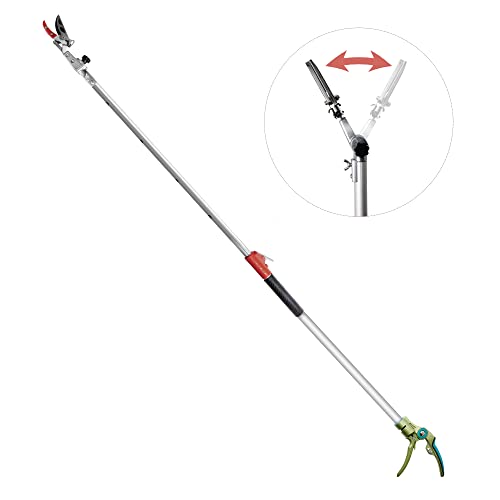
[Helpful Garden Tool] GARTOL brings to you a lightweight and extendable pruning tool to reach out to the least approachable arenas of your garden. You can conveniently get across other plants to remove the fastgrowing brambles and sting nettles without getting scratched or hurt. For gardening lovers, the telescopic pruner cutter head can can be rotated which resolves mobility issues and gives you the pleasure of trimming your garden without bending down or using a ladder to climb and cut them.
Testing and Fine-Tuning Your Extended Pole Pruner
When testing your extended pole pruner, make sure to:
- Check stability and balance.
- Confirm reach and flexibility.
- Assess comfort and ergonomics.
Consider fine-tuning your extended pole pruner for optimal performance:
- Make adjustments for comfort and ease of use.
- Ensure secure and stable connections.
- Test the extended pole pruner for reliability and safety.
Remember to prioritize safety and precaution throughout the testing and fine-tuning process to prevent accidents or injuries.
Recommended Products

TONYINGO All-in-One Pole Saw, Tree Trimmer & Pruner for High Branches: Our extendable manual pole saw functions as a complete branch cutter, tree trimmer, and pruner in one tool. The 5–20 FT adjustable pole reaches up to 26 FT overhead, letting you safely trim tall branches without climbing ladders
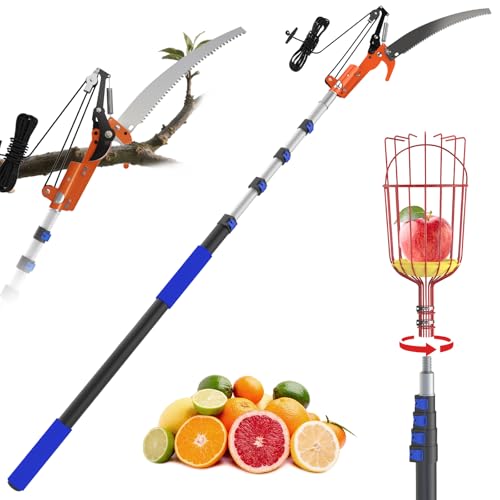
2-in-1 Extendable Tree Pruner & Pole Saw - This pole saws for tree trimming combines a 13.8" sharp steel blade and scissors for all your tree trimming needs. The manual pole saw features sharpened teeth made of high-quality carbon steel, delivering high cutting power while being lightweight. A non-stick coating ensures smooth, efficient branch trimming, saving you time and effort. Perfect for cutting trees, bamboo, PVC pipes, and more.
TONYINGO All-in-One Pole Saw, Tree Trimmer & Pruner for High Branches: Our extendable manual pole saw functions as a complete branch cutter, tree trimmer, and pruner in one tool. The 5–24 FT adjustable pole reaches up to 30 FT overhead, letting you safely trim tall branches without climbing ladders
Conclusion
Ensure to thoroughly test and refine your extended pole pruner to guarantee its stability, balance, reach, flexibility, comfort, and ergonomics. Make necessary adjustments for optimal performance, focusing on secure connections, reliability, and safety. Always prioritize safety and caution during testing and fine-tuning to prevent any potential accidents or injuries.
Frequently Asked Questions
What should I focus on while testing my extended pole pruner?
During testing, focus on stability, balance, reach, flexibility, comfort, and ergonomics for optimal performance.
Why is it important to make adjustments during testing?
Making adjustments ensures secure connections and helps in fine-tuning the extended pole pruner for reliability and safety.
Why prioritize safety and precaution during testing and fine-tuning?
Prioritizing safety helps in avoiding accidents or injuries when using the extended pole pruner.
